Neuhaus Castle: A Medieval Fortress in Gais, Italy

Site at a Glance
- Rating
- 4.5
- Popularity
- Low
- Country
- Italy
- Primary era
- Medieval
- External website
- Open
- Eras represented
- Medieval, Early Modern
- Civilizations
- Habsburg, Holy Roman Empire
- Site type
- Military
- Remains
- Castle
On this page9 sections
History
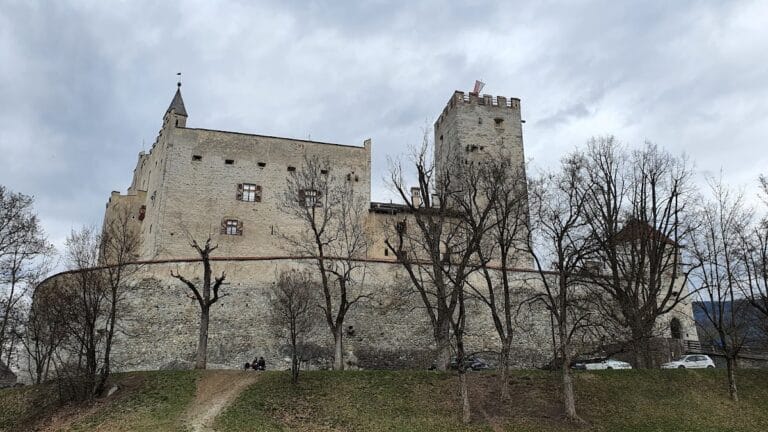
Neuhaus Castle is a medieval castle in Italy, in the municipality of Gais at the entrance to the Tures Valley in South Tyrol. The lords of Taufers built it between 1240 and 1245 during conflicts with the lords of Rodank, although another tradition places its construction in the twelfth century. The castle’s name referred to the earlier fortified seat of Tures, now represented by the larger Tures Castle. The lords of Taufers did not live at Neuhaus.
Foundation and medieval ownership
In 1248, Egno, bishop of Brixen, proposed demolishing Neuhaus, but the plan was never carried out. After the Taufers line became extinct, the castle passed to the counts of Gorizia-Tyrol. The late-medieval Tyrolean poet and composer Oswald von Wolkenstein served as its steward from 1422 and held it as a pledge from the counts until about 1426.
Private ownership and later development
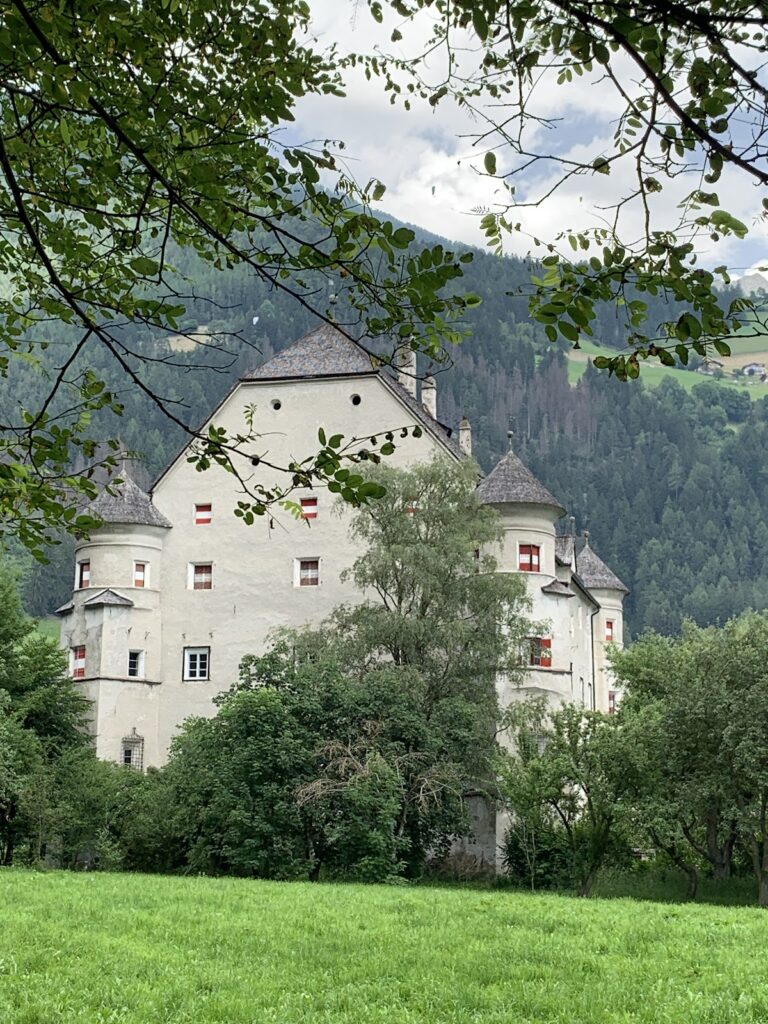
Johann Jakob Söll von Aichberg purchased Neuhaus as free property in 1600 or 1601. His family retained it for about 150 years. In the mid-eighteenth century, Count Alexander Künigl acquired the castle and its castle jurisdiction, meaning the area and legal authority administered from the castle. In 1752, he built the Pfleghaus, a residence or administrative building for an estate steward, at the foot of the hill.
The Pfleghaus later became the property of the Bacher family of artists, who adapted it as an influential artistic workshop. In 1924, Count Cäsar Straßaldo-Grafenberg acquired the property and gave it much of its present appearance. After a long period of decline, the ruinous castle was rebuilt in the early twentieth century, a reconstruction attributed to Johannes Graf Thun.
Twentieth-century associations
During the Second World War, the American poet Ezra Pound and his family found refuge at Neuhaus. Before the war, the fascist-era Italian translation Castel Casanova had been introduced for the German name Neuhaus. The castle is privately owned, and its current owner is Siegfried Hofer, a member of the Brugger farming family from Lutago. It is recognized as a cultural-heritage monument in South Tyrol and as an Italian cultural property. The modern Knights of Neuhaus periodically hold dinners there, maintaining traditions associated with historical knights who celebrated victories at the castle.
Remains
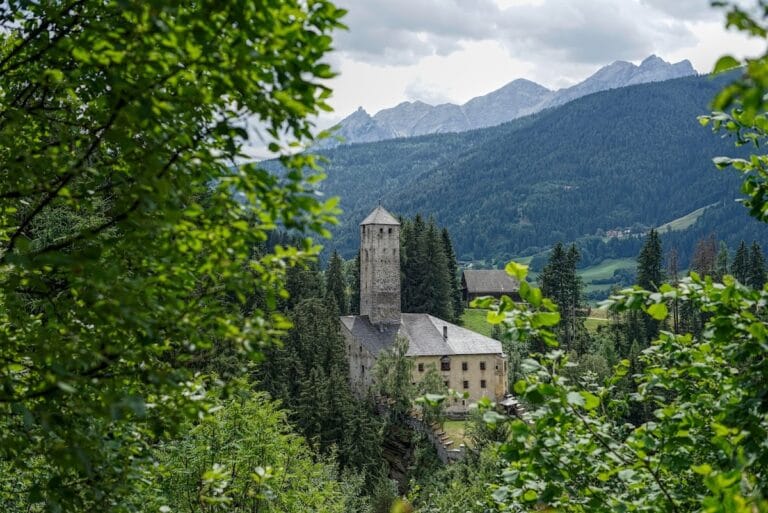
Neuhaus Castle stands at approximately 947 metres above sea level. The surviving medieval fabric includes the keep, the principal fortified tower that served defensive and residential purposes, together with part of the perimeter walls. Later restoration and rebuilding have substantially shaped the castle’s present form, particularly the palace reconstructed in the early twentieth century on the site of the former residential wing.
Medieval castle
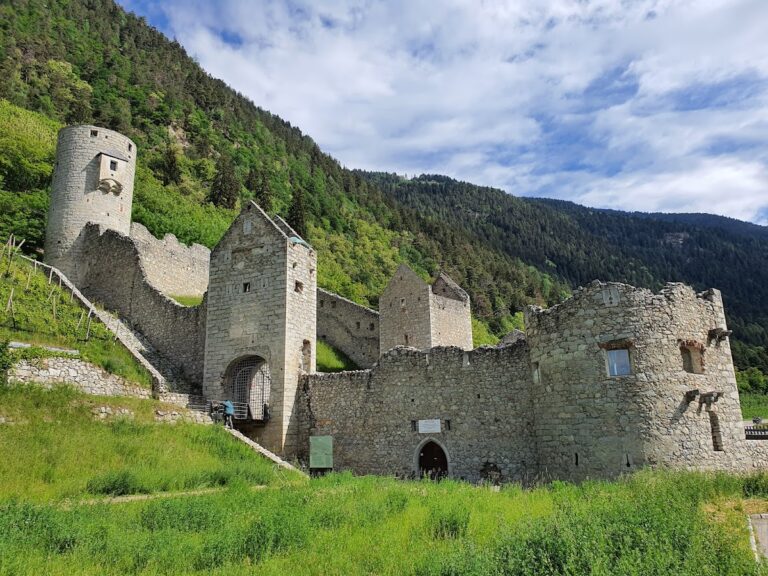
The keep and surviving sections of the perimeter walls form the main medieval remains. Their present condition reflects both the castle’s earlier decline and the restoration and remodelling that followed. The palace occupies the former residential wing and was rebuilt in the early twentieth century, so the visible complex combines medieval fabric with later reconstruction.
Associated buildings
Chapel
A small chapel was built in the lower castle square in 1601. It belongs to the early modern phase of the site and forms part of the lower area of the castle complex.
Pfleghaus
The Pfleghaus is a separate Baroque building constructed in 1752 at the foot of the hill. Baroque architecture was a European style of the seventeenth and eighteenth centuries known for dramatic forms and elaborate decoration. The building served as a residence or administrative house associated with Neuhaus before later being adapted as an artists’ workshop.