Byblos Castle: A Crusader Fortress in Lebanon
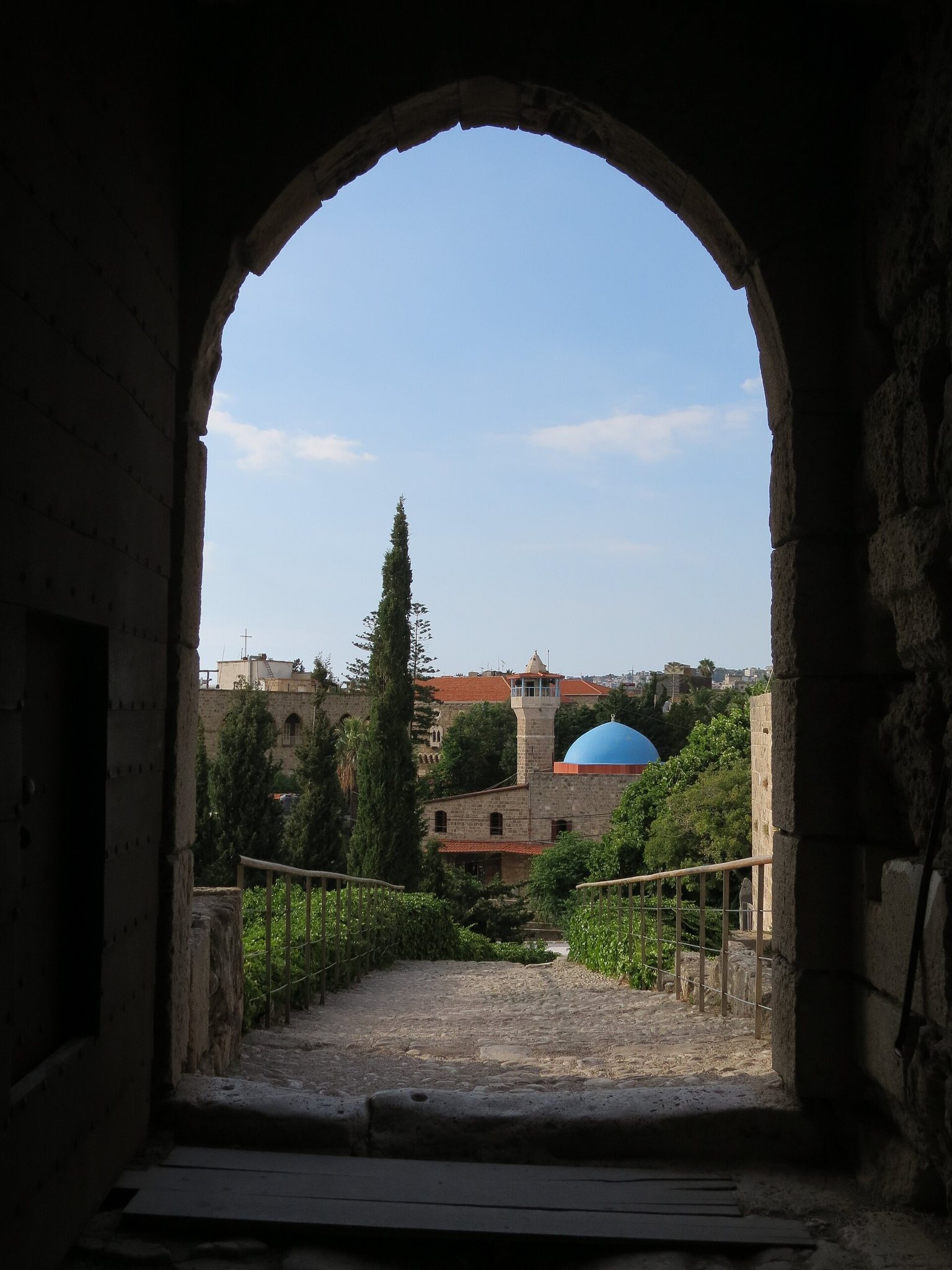
Site at a Glance
- Rating
- 4.7
- Popularity
- Medium
- Country
- Lebanon
- Primary era
- Medieval
- Eras represented
- Medieval
- Civilizations
- County of Tripoli, Crusader
- Site type
- Military
- Remains
- Castle
On this page7 sections
History
Byblos Castle is a Crusader fortress in Byblos, Lebanon, built after the city was conquered on 28 April 1103 by Raymond of Toulouse with help from a Genoese fleet commanded by William I Embriaco. Western European Christian forces established the castle to protect Byblos, a strategically important point in their chain of fortifications in the Levant. The city was also known by the Crusader names Gibelet and Giblet.
Genoese Lordship and the County of Tripoli
The castle and the surrounding lands initially passed partly, and then entirely in 1109, into Genoese control. William I Embriaco’s son, Hugh I Embriaco, became administrator and the first lord of Gibelet. The Embriaco family gradually made the office hereditary and held the lordship until 1302, apart from periods when outside powers occupied the town.
Gibelet was a fief, or territory held by a lord under a higher-ranking ruler, within the County of Tripoli, one of the principal Crusader states in the Levant. It stood at the county’s southern boundary beside the lordship of Beirut, which belonged to the Kingdom of Jerusalem. In 1138, the Latin Church, the Western Christian branch associated with medieval Rome, established a bishopric at Gibelet, making the town its seat.
The Embriaco succession ran through Hugh I Embriaco from 1109 to 1135, William II Embriaco from 1135 to 1159, Hugh II Embriaco from 1159 to 1184, and Hugh III Embriaco from 1184 to 1187. Guido I Embriaco held the lordship from 1197 to 1238, followed by Henry I Embriaco from 1238 to 1271, Guido II Embriaco from 1271 to 1282, Peter I Embriaco from 1282 or 1287 to 1298, and Maria Embriaco from 1298 to 1302.
Sieges, Repairs, and Political Conflict
Saladin, the Muslim ruler who united much of the region and defeated major Crusader forces in the late twelfth century, took the town and castle in 1187 after a siege. He dismantled part of the walls. In 1190, after learning that the German contingent of the Third Crusade under the Holy Roman Emperor Frederick Barbarossa was approaching, Saladin ordered the castle demolished. The order was only partly carried out.
A Crusader force associated with the later crusade of Henry VI, another Holy Roman Emperor, retook the town and castle in 1197. Guido I Embriaco then repaired the castle and strengthened its defenses. The political position of the lordship remained unsettled. During the War of Saint Sabas, which began in 1256 as a conflict involving Genoese and Venetian interests in the eastern Mediterranean, Henry I Embriaco rebelled against the Count of Tripoli and declared himself independent with Genoese support.
In 1282, Count Bohemond IV of Tripoli captured Gibelet Castle and executed Guido II Embriaco and his brothers, John and Baldwin. Guido’s son and heir, Peter I Embriaco, regained effective control after Bohemond IV died in 1287. When the Mamluks, a military ruling elite whose sultanate controlled Egypt and much of the Levant, captured and destroyed Tripoli, Botrun, and Nephin in 1289, Peter had already agreed to submit to Sultan Qalawun in return for paying tribute. The Mamluk sultans left the Embriaco family in control until the family apparently surrendered the lordship peacefully no later than 1302.
Later Rule and Conservation
A fleet from Famagusta in Cyprus attacked and plundered the castle in 1369. Byblos and the castle later came under Ottoman rule, which lasted from 1516 until the British conquest of the area during the First World War.
Twentieth-century archaeological excavations examined the castle and the surrounding historical sites. Conservation work followed, and the castle and nearby archaeological remains were designated as heritage sites. The Lebanese government established a museum inside the castle to present the history of the fortress and the surrounding sites. Some excavated finds are displayed at the National Museum of Beirut.
Remains
Fortress Layout and Construction
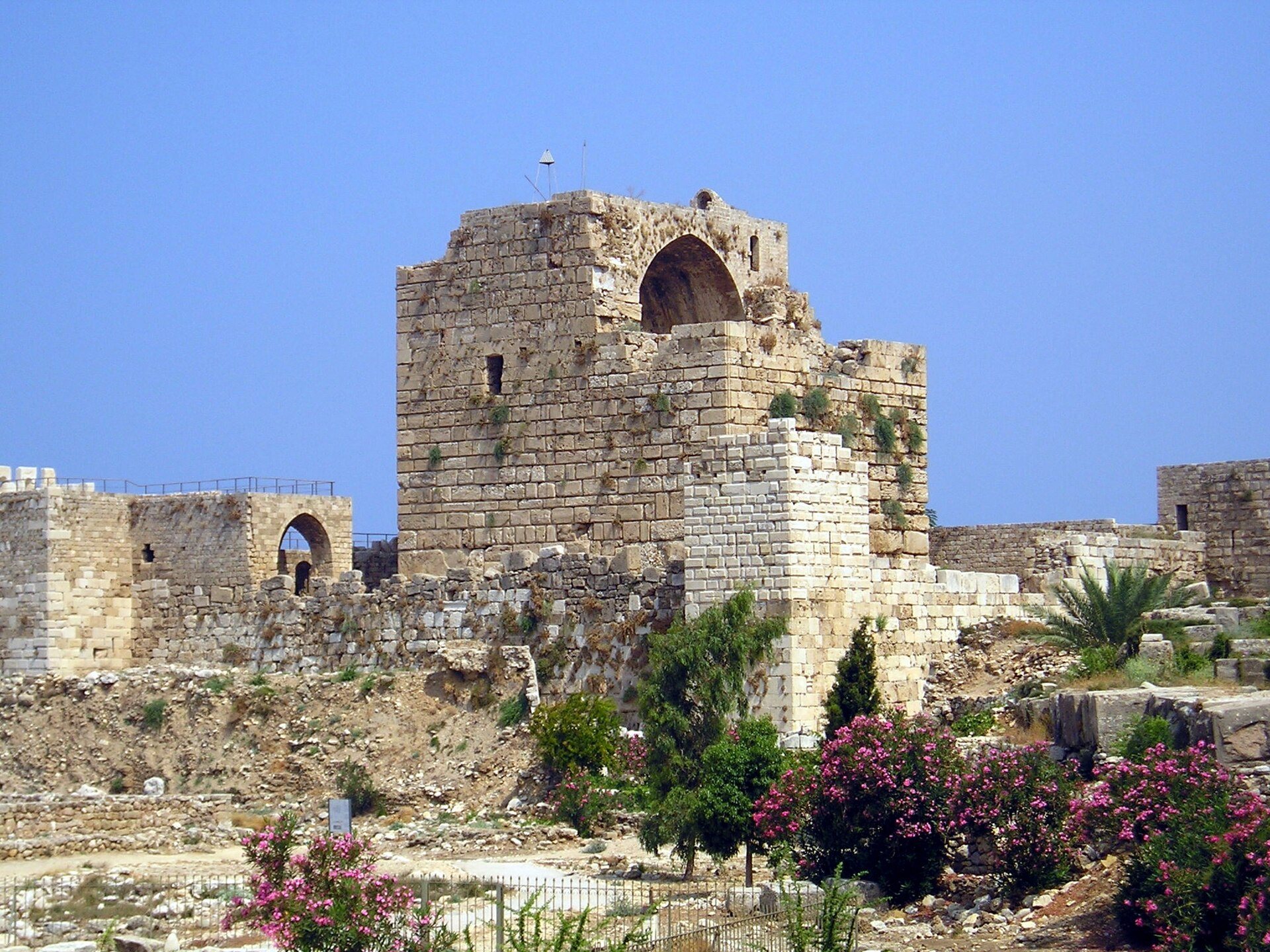
Byblos Castle is a stone fortress within the urban area of ancient Byblos. Local limestone forms the main construction material, while roughly hewn natural-stone blocks give the walls their substantial masonry. Builders also reused stones from earlier Roman remains and an ancient temple complex. Columns from ancient temples were incorporated into the castle walls, reinforcing the medieval structure with material from the older settlement.
The defensive plan combines an approximately square or rectangular enclosure wall with a central donjon, the principal fortified tower of a medieval castle. Rectangular towers occupy or strengthen the corners, creating an outer defensive layer around the central building. A rectangular curtain wall surrounds the donjon, and a water-filled moat encircles the outer defenses. Loopholes, narrow openings used by defenders to fire through the walls, appear in the external walls and towers, especially around the entrance gate.
The donjon originally measured 17.6 by 21.3 metres and contained two stories. The first story also served as living space and could be reached only by a ladder. Vaulted stories gave the tower additional stability, while its massive masonry strengthened its defensive and residential functions. The castle has been classified as a twelfth-century hybrid design combining the enclosed castrum, or fortified complex, with the turris, or tower-centered fortress. Its enclosure walls and corner towers formed two defensive layers around the central donjon.
Byblos Archaeological Area
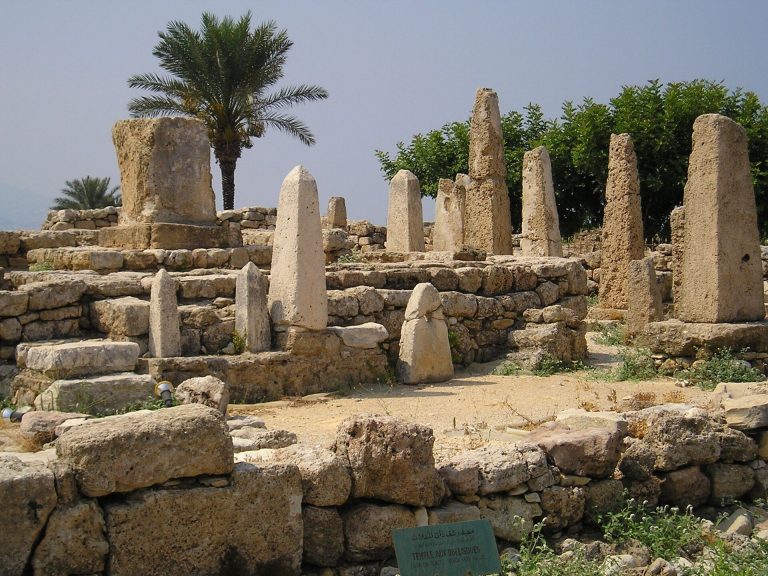
The castle borders or lies beside the Byblos archaeological area, where remains associated with Egyptian, Phoenician, Bronze Age, and Roman periods surround the medieval fortress. The archaeological area includes the Temple of the Obelisks, a Bronze Age religious structure, the temple of Baalat-Gebal, a Phoenician goddess associated with Byblos, a Phoenician royal necropolis, Egyptian temples, and a Roman amphitheatre.
The castle museum presents material from excavations in the Byblos archaeological reserve. The displays use thematic panels to trace the history of Byblos from prehistory through the Middle Ages, while the most important excavated finds are held at the National Museum of Beirut.