Temple of the Obelisks: A Bronze Age Sanctuary at Byblos, Lebanon
Site at a Glance
- Rating
- 4.1
- Popularity
- Very Low
- Country
- Lebanon
- Primary era
- Bronze Age
- Eras represented
- Bronze Age
- Civilizations
- Unclassified
- Site type
- Religious
- Remains
- Temple
On this page12 sections
History
The Temple of the Obelisks is a Bronze Age temple at Byblos, Lebanon, built and used by the ancient inhabitants of the city during the second millennium BCE. It formed part of the Byblos archaeological site, now a World Heritage Site, and is regarded as perhaps the most spectacular of the ancient structures at Byblos.
The Early Bronze Age predecessor
The temple complex began with an earlier structure known as the L-shaped Temple. It was built around 2600 BCE, during the Early Bronze Age, roughly two centuries after the Temple of Baalat Gebal. Baalat Gebal, also called the Lady of Byblos, was the goddess associated with the city. The earlier building stood east of the King’s Spring, a spring within the ancient settlement, and about 100 metres east of the Temple of Baalat Gebal.
The L-shaped Temple had two rooms and a courtyard arranged in an L-shaped plan. Its walls were comparatively well built. The building was associated with Byblos’s male tutelary god, the deity who served as the city’s protector. It may have been burned at the end of the Early Bronze Age, possibly during an Amorite capture of Byblos.
The later sanctuary
The Temple of the Obelisks was constructed over the earlier temple during the second millennium BCE. It preserved the predecessor’s general outline but replaced its three-part central arrangement with a single cella, the principal enclosed room of a temple. Its use continued from the Middle Bronze Age into the Iron Age or later.
The later sanctuary may have served a Syro-Palestinian cult and may have been dedicated to Resheph, a Canaanite deity associated especially with war and death. This proposed identification remains debated. An inscription on one of the temple’s obelisks has been interpreted as a dedication to the Egyptian god Heryshaf, but the relationship between Heryshaf and Resheph is not certain.
The sanctuary probably supported ritual activity in an open-air setting. The quantity of objects recovered from it, together with the presence of a jeweller’s workshop, has also led to the suggestion that the temple hosted trading or other important economic activities. It stood beside the Temple of Lady Byblos, whose Egyptian material contrasts with the Syrian-inspired designs associated with the Obelisk Temple and its predecessor. These differences suggest that separate monuments or neighbourhoods at Byblos maintained distinct regional contacts.
The temple belonged to a wider pattern at Byblos. Seven principal cult buildings were built or rebuilt around the city’s central spring and artificial lake during broadly similar periods. They appear to have formed separate neighbourhoods surrounded by clusters of houses. These communities competed for resources while also taking part in their redistribution.
Excavation and interpretation
The French archaeologist Maurice Dunand first identified the temple and excavated it between 1924 and 1973. Because the later sanctuary covered the L-shaped Temple, he dismantled and moved the upper structure so that the earlier levels could be examined. The upper temple was relocated 40 metres east.
Dunand’s excavations produced 1,306 Byblos figurines, including faience figures, weapons, and dozens of bronze figures covered with gold leaf. Almost all of the objects recovered from the temple are now displayed at the National Museum of Beirut. Interpretation of the sanctuary has been complicated by problematic excavation records, limited stratigraphic information in earlier publications, and Dunand’s unfinished publications.
Remains
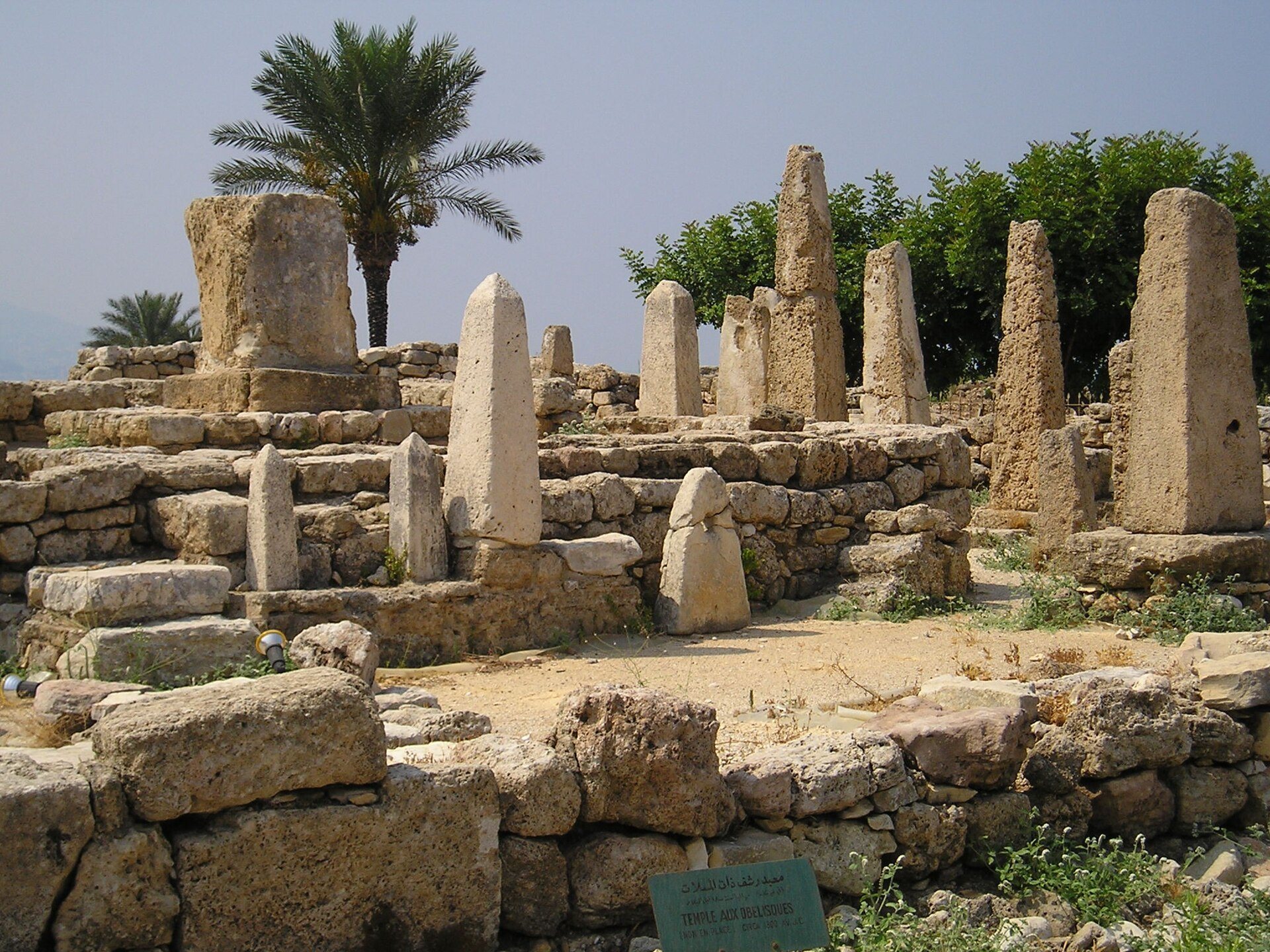
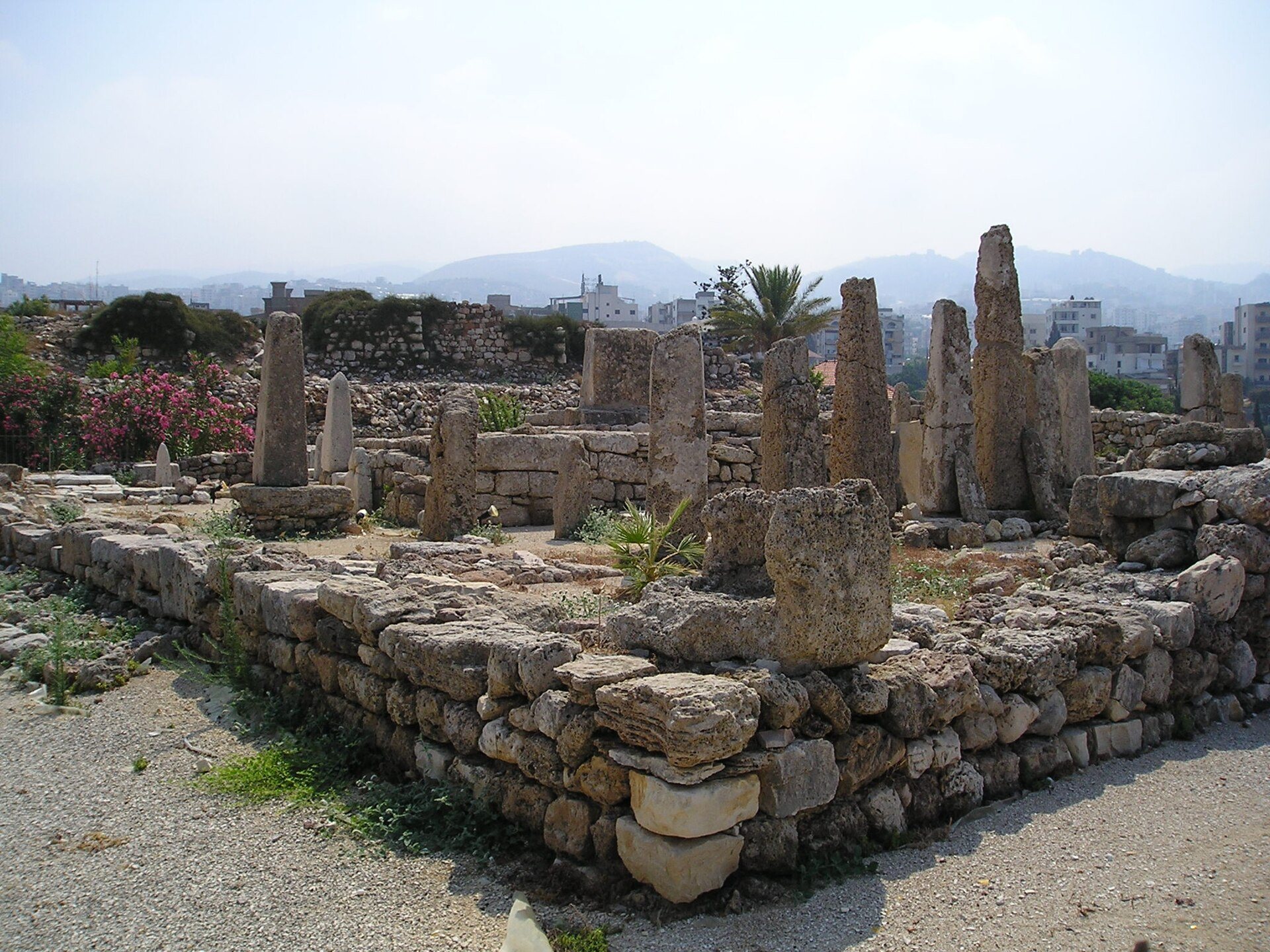
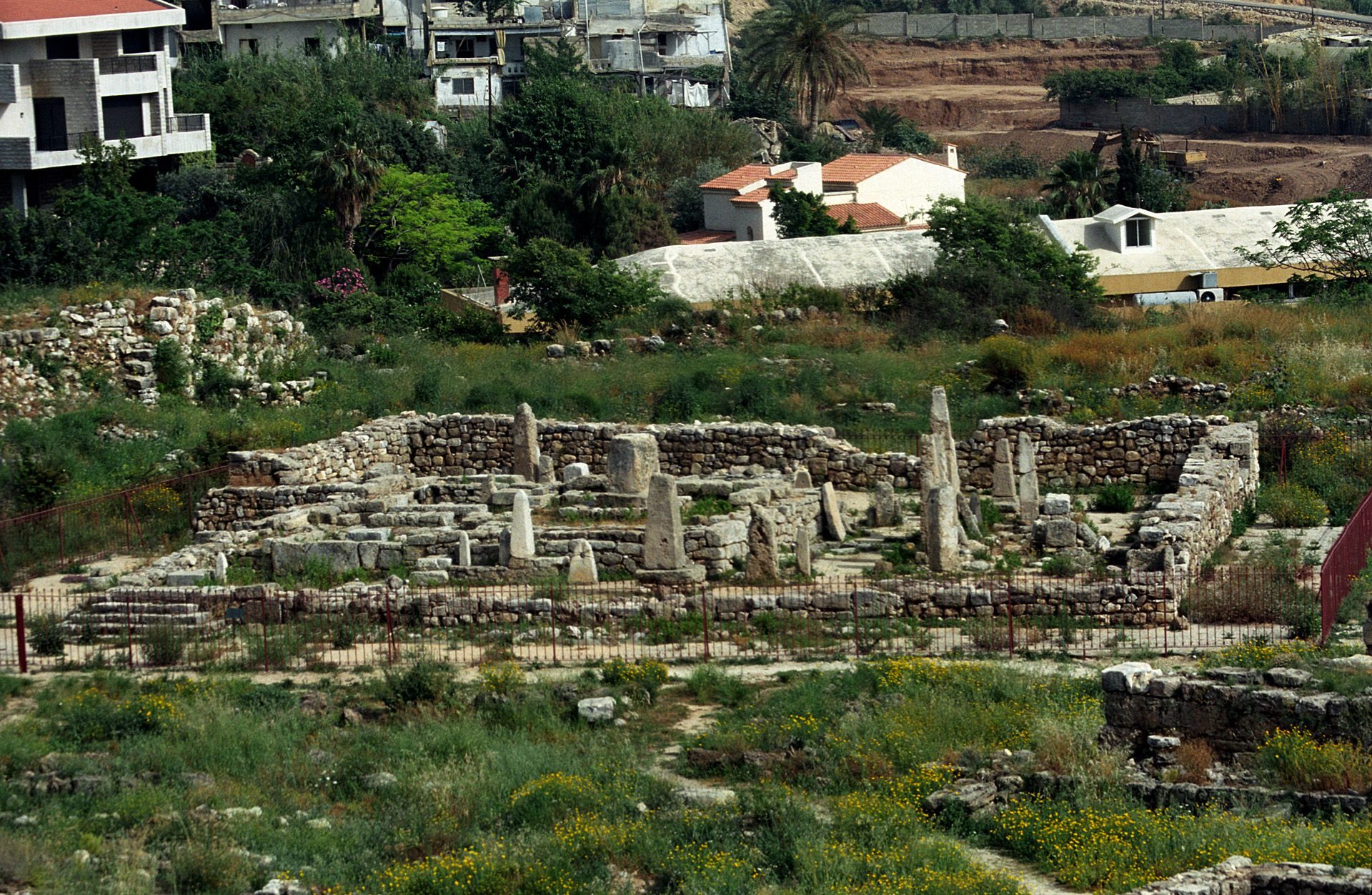
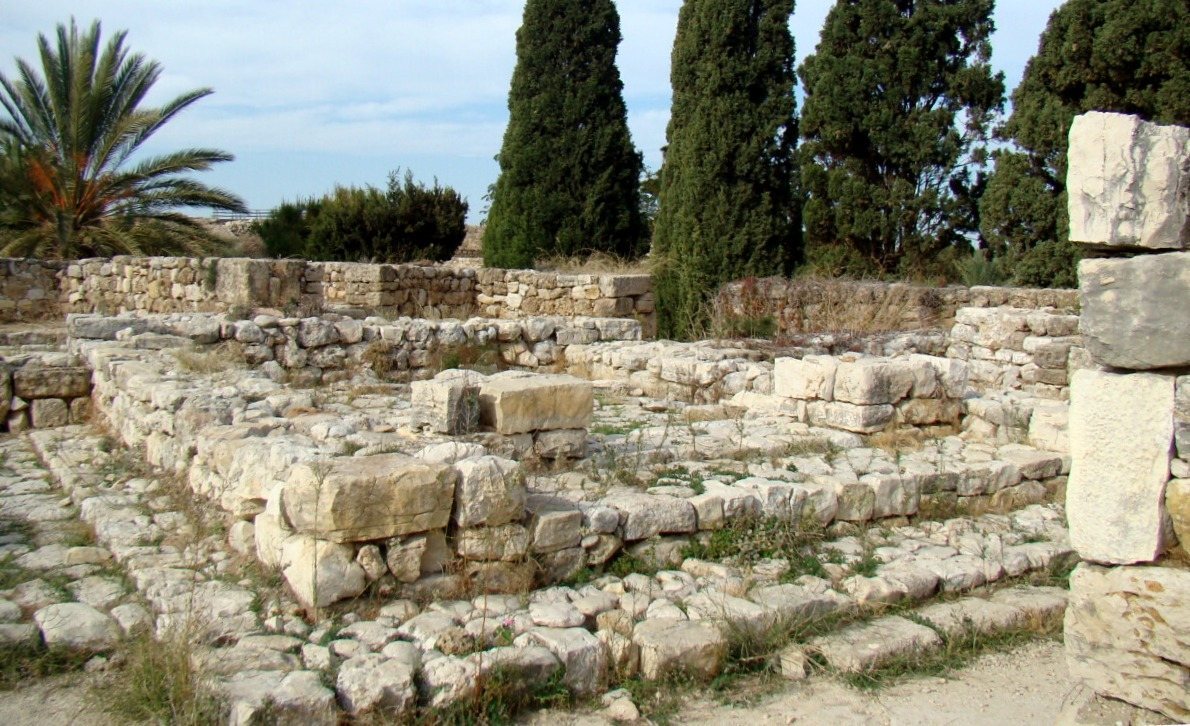
The surviving complex consists of two archaeological parts. The lower remains are identified as the L-shaped Temple, while the upper remains are known as the Temple of the Obelisks. The original complex was organized around courtyards and enclosed rooms, with the later sanctuary preserving the earlier building’s broad outline while using more irregular wall construction.
The temple structures
The L-shaped Temple
The lower temple comprised two rooms and a courtyard arranged in an L-shaped plan. It stood east of the King’s Spring and was built with comparatively regular, well-constructed walls. The building represents the earlier phase of the complex, dating to around 2600 BCE, and its remains may bear the effects of the fire that possibly ended its Early Bronze Age use.
The Temple of the Obelisks
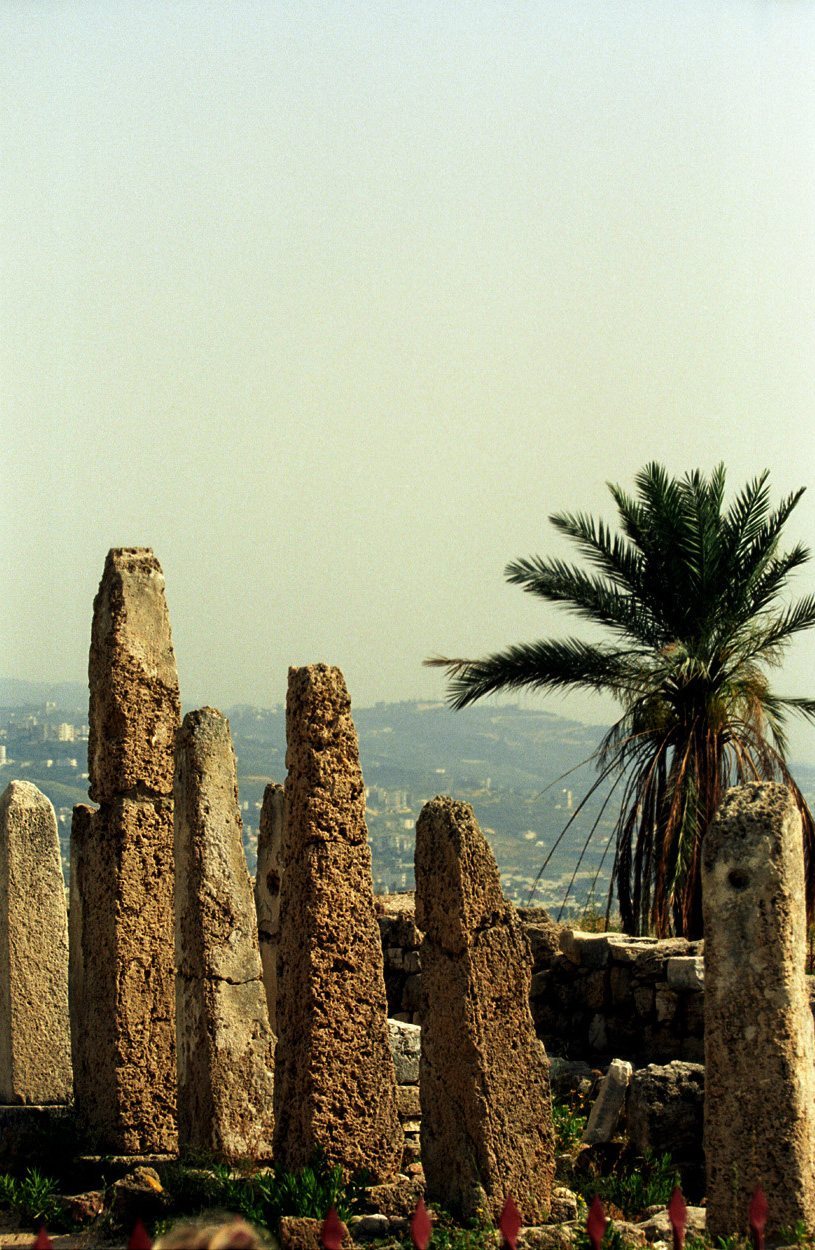
The later temple was arranged around a single cella and an open court. Approximately 30 obelisks and standing stones were found in the court. The walls were more irregular than those of the earlier temple. During excavation, the upper structure was dismantled and moved 40 metres east to expose the building beneath it, so its present position forms part of the modern archaeological arrangement rather than the temple’s original location.
Obelisks and votive deposits
The Abishemu Obelisk
The Abishemu Obelisk is a limestone monument dating to around 1800 BCE. It commemorates Abishemu I, a Bronze Age king of Byblos, and carries an inscription in Egyptian hieroglyphs. The text has been interpreted as a dedication to Heryshaf, the Egyptian deity also known as Harsaphes. The proposed connection between this dedication and Resheph remains a matter of interpretation.
Standing stones and offerings
Most of the obelisks were discovered upright below ground and in their original positions. A smaller number had been placed in a favissa, a pit used for depositing votive offerings. The sanctuary also contained bronze figures, some covered with gold leaf, which were found in the foundations and in jars. Other offerings included anchor-shaped ex-votos, objects dedicated as part of religious practice. These offerings were buried when spaces were cleared for later deposits.
Artefacts and workshop activity
The excavated assemblage includes faience figurines, weapons, bronze-and-gold-leaf figures, and other votive objects. Their concentration within the temple helps explain the importance of ritual deposition at the sanctuary. The jeweller’s workshop provides further evidence for craft activity within the complex and has contributed to the interpretation that religious functions may have existed alongside economic activity.