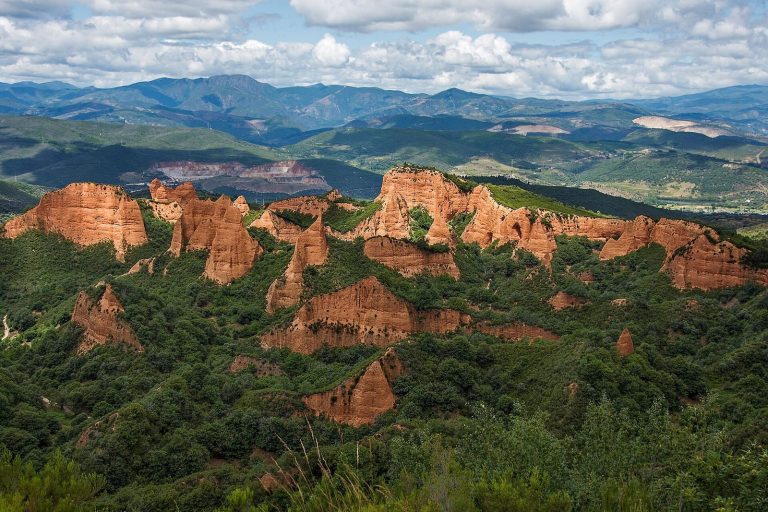
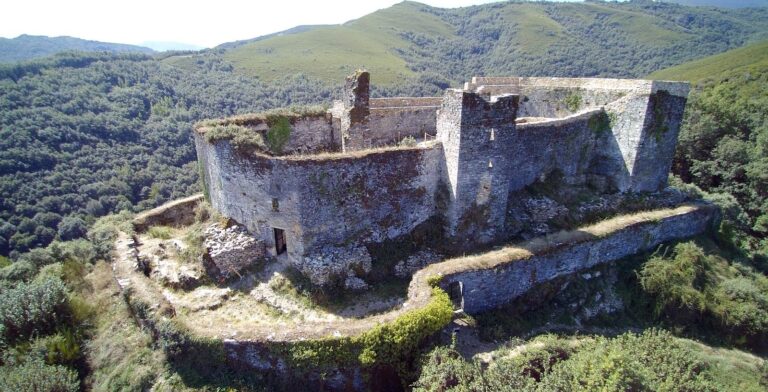
Castro Ventosa: A Fortified Hilltop Settlement in Spain
Site at a Glance
- Popularity
- Medium
- Country
- Spain
- Primary era
- Unclassified
- Eras represented
- Unclassified
- Civilizations
- Unclassified
- Site type
- City
On this page8 sections
History
Castro Ventosa is a fortified hilltop settlement near Villafranca del Bierzo in León, Spain, occupied before Roman rule and later associated with the Roman center of Bergidum. Its earliest known community was called Bergdunum, a name interpreted as meaning a fortified town on high ground.
Pre-Roman and Roman settlement
Archaeological evidence confirms that people lived at the site before the Roman conquest. Compared with nearby hillforts of the same period, Bergdunum appears to have been large and may have served as a center of regional power. Roman forces probably captured Bergidum around 25-23 BC during the Astur-Cantabrian Wars, Rome’s campaigns to conquer northern Iberia. Florus and Orosius describe Bergida as overcome by hunger, after which its inhabitants fled to Mount Vindicus, probably in the Ancares and Fornela mountains.
Under Roman rule, Bergidum became an important commercial and administrative settlement where roads to Bracara (Braga), Asturica Augusta (Astorga), and Lucus Augusti (Lugo) met. The Antonine Itinerary, a Roman compilation of routes, places the settlement at this junction. During the Flavian period, under the dynasty founded by Emperor Vespasian, Bergidum received Latin rights, a status short of full Roman citizenship, and took the name Bergidum Flavium. It belonged to the regional judicial district of Asturica and was probably a municipium, a self-governing Roman town.
A second-century statue base found at Tarragona refers to Bergidum Flavium and identifies Gaius Valerius Arabinus as a native of Bergidum. It lists his civic offices and a priesthood in the imperial cult, the worship of Rome and the emperor, supporting the settlement’s probable municipal status. The precise location of Roman Bergidum Flavium remains disputed: it may have been Castro Ventosa or La Edrada, on the plain at Cacabelos. Remains at La Edrada date to the reigns of the emperors Claudius and Vitellius. A move from the hilltop to the plain has been proposed, but is unconfirmed.
Late antiquity and Visigothic rule
After the Suebi, Vandals, and Alans entered the Iberian Peninsula in 406, Vandals and Suebi occupied El Bierzo. The area remained under Vandal control until it became part of the Suevic kingdom. The Visigoths, who later ruled much of the peninsula, conquered that kingdom under King Leovigild in 585.
Bergidum had a Christian community and church in the fifth and sixth centuries. Later references name churches dedicated to Saint Mary, Saint Acisclus, and Saint Julian. The Suevic Parish List, a church register dated to 572-585 during the reign of King Miro, includes Bergido as a parish. The settlement also appears in the Division of Wamba, an ecclesiastical territorial record dated to 672-680. The Christian writer Saint Valerius described Bergidum as the capital of the territory now known as El Bierzo. A gold coin associated with the Visigothic king Sisebut names Bergio as a mint.
Asturian stronghold and decline
Bergidum continued to exist into the period of the Muslim conquest of the Iberian Peninsula. In 714, Muslim forces reached León, Astorga, and Bergidum along the Roman road from Caesaraugusta to Asturica. By 737, El Bierzo had become a defensive outpost of the Asturian kingdom, and Castro Ventosa served as a stronghold for administration and defense. In 791, the Asturian king Bermudo I was defeated near the site in a conflict with the Muslim commander Yusuf ibn Bujt. Raids increased during the reign of Alfonso III.
In 857, the lands of El Bierzo were granted to the monks of Samos. Ninth-century records mention about 17 settlements, while Bergido disappears from use as a city name and records instead refer to El Bierzo. From the tenth century, Castro Ventosa declined toward near-depopulation. Possible causes included punishment by Alfonso III, Muslim raids, and the limited water supply on the hilltop. Villafranca and Cacabelos subsequently gained importance.
Repopulation and later accounts
A donation by Todindo and his sister Todil to the monastery of Santa Maria de Carracedo in 994 indicates that the site was not deserted at that time. In 1172, Domingo Perez gave the monastery a plot at Castro Ventosa beside the church of Saint Julian. Efforts to repopulate the site accompanied the growth of settlements along the Way of St James, a network of pilgrimage routes leading to Santiago de Compostela, and the arrival of Frankish settlers. Kings Ferdinand II and Alfonso IX promoted resettlement. After forced settlement harmed local people, a royal order halted further efforts and granted stones from the wall for construction at Carracedo. Alfonso IX later renewed the initiative, as shown by donations in 1204 and 1209, but abandoned it amid opposition from nearby monasteries and towns. A document of 1210 described the site as having been deserted since ancient times.
In the eighteenth century, Jovellanos and the historian Father Flórez became interested in the site after hearing about it from monks of Carracedo. Flórez described its condition, and Jovellanos visited and noted remains of an ancient castle. The writer Enrique Gil y Carrasco described the site and its landscape, noting that monks used it as a source of building stone. The Prussian naturalist and traveler Hans Friedrich Gadow recorded its appearance, legends, and folklore.
Excavations by Spain’s National Research Council have investigated whether Roman Bergidum Flavium stood at Castro Ventosa or La Edrada. Spain declared Castro Ventosa an Asset of Cultural Interest, a protected heritage designation, in the monument category on 3 June 1931.
Remains
Hilltop layout and structures
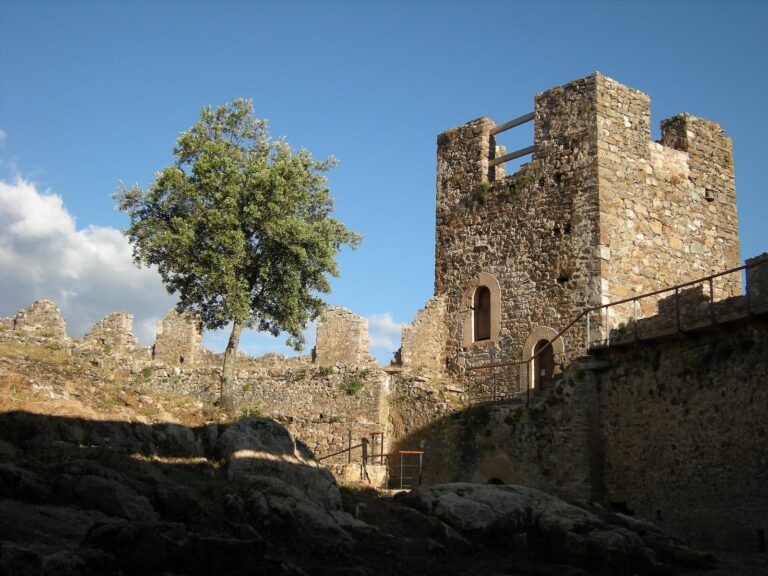
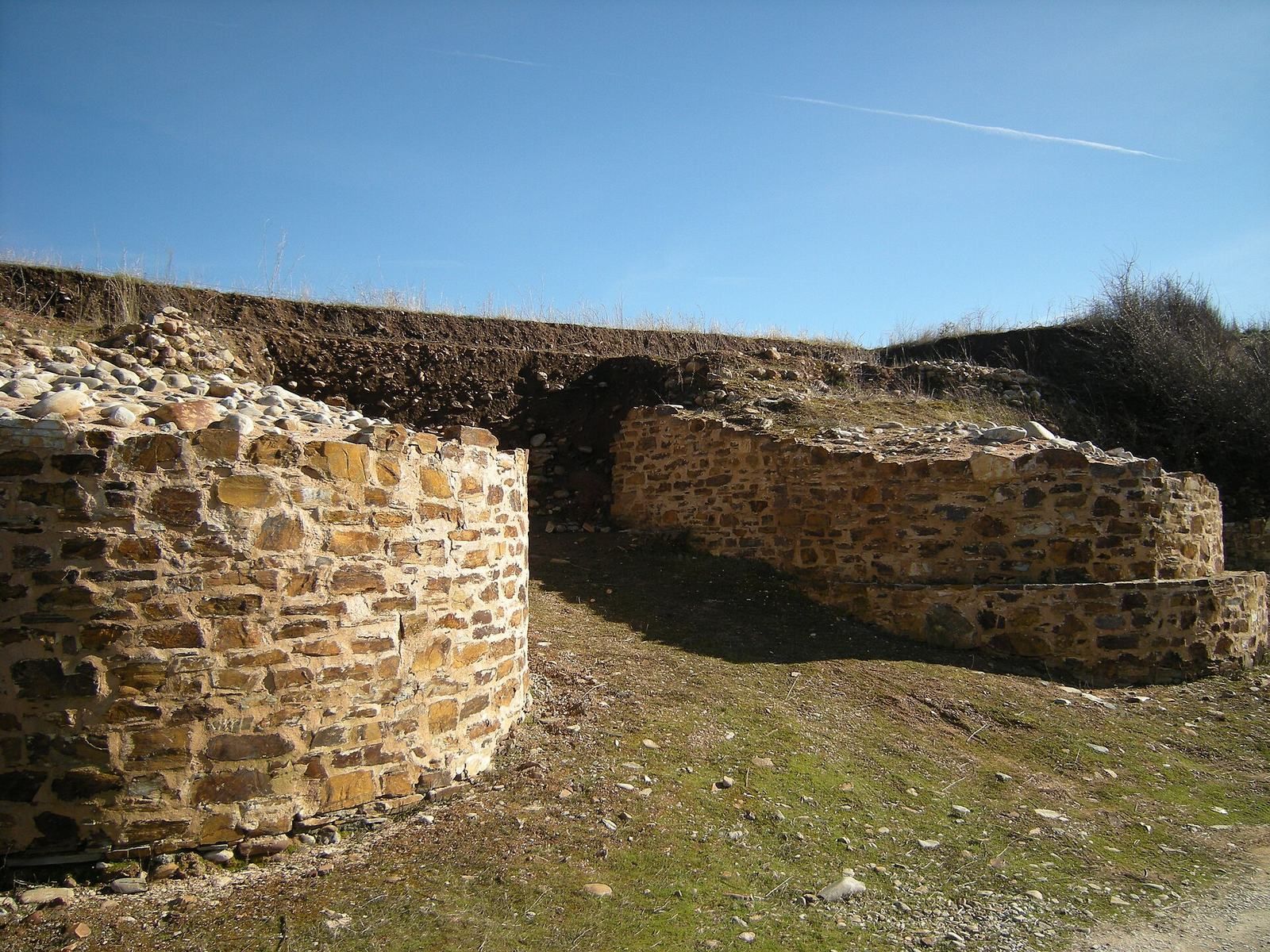
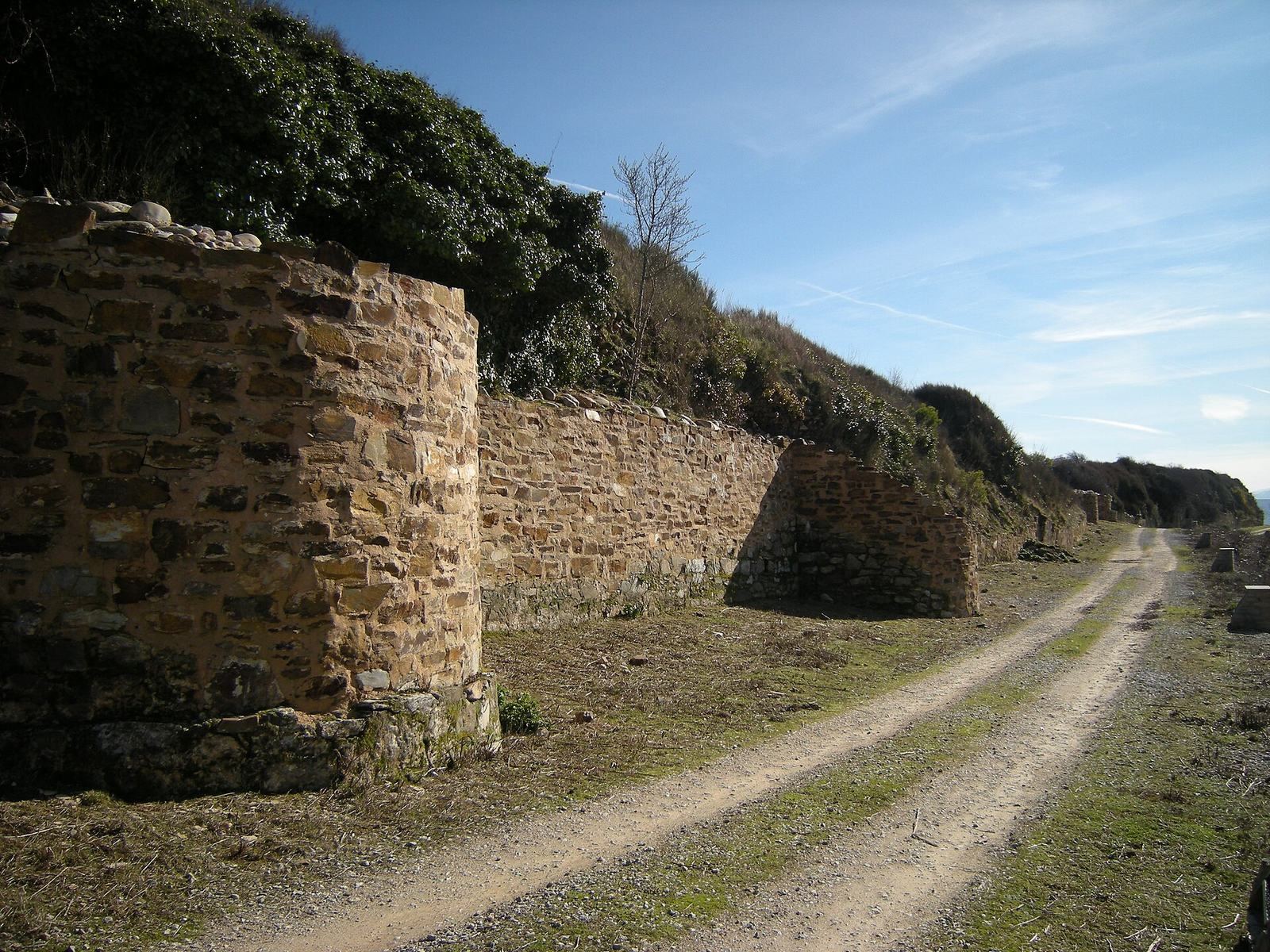
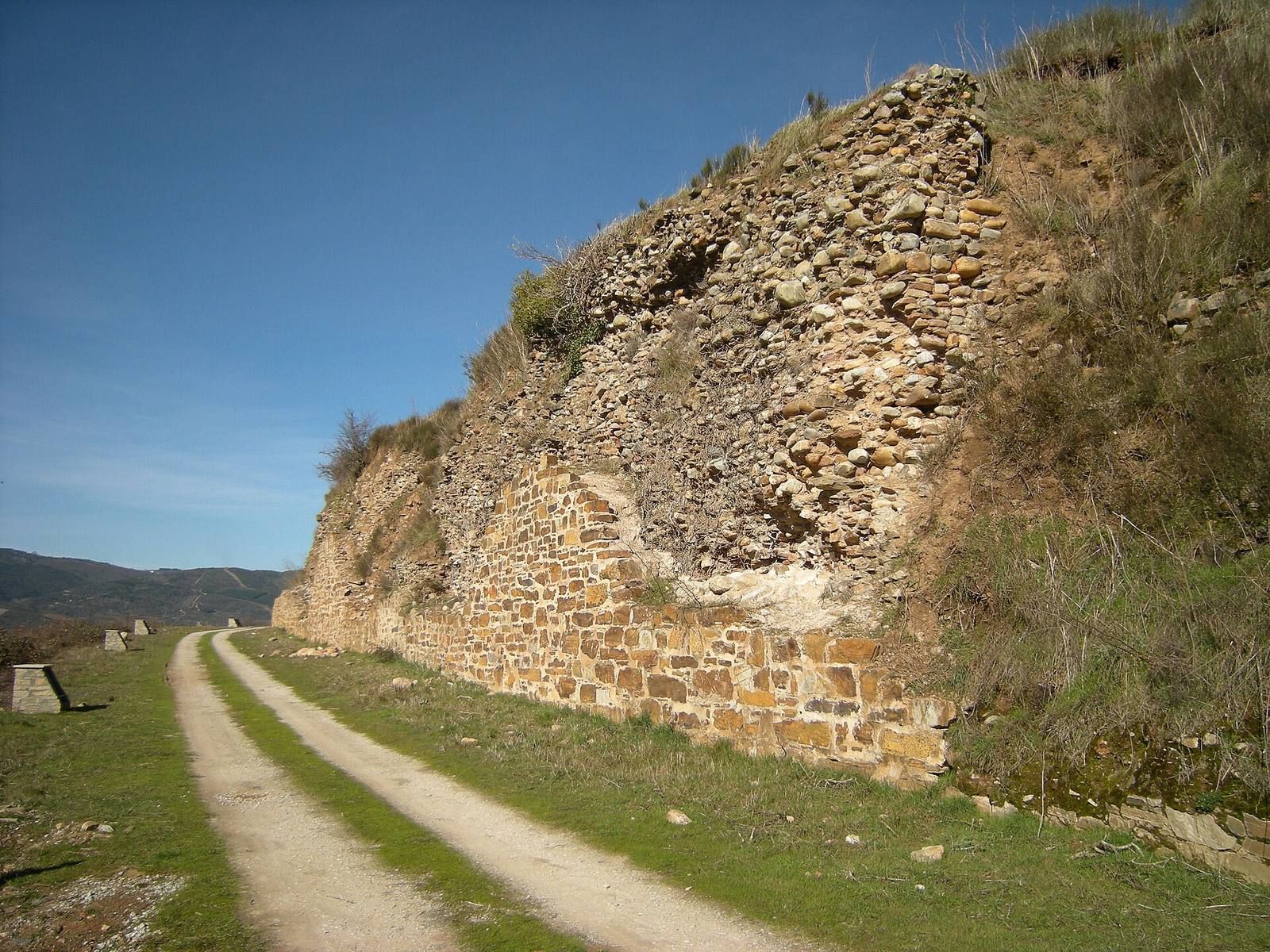
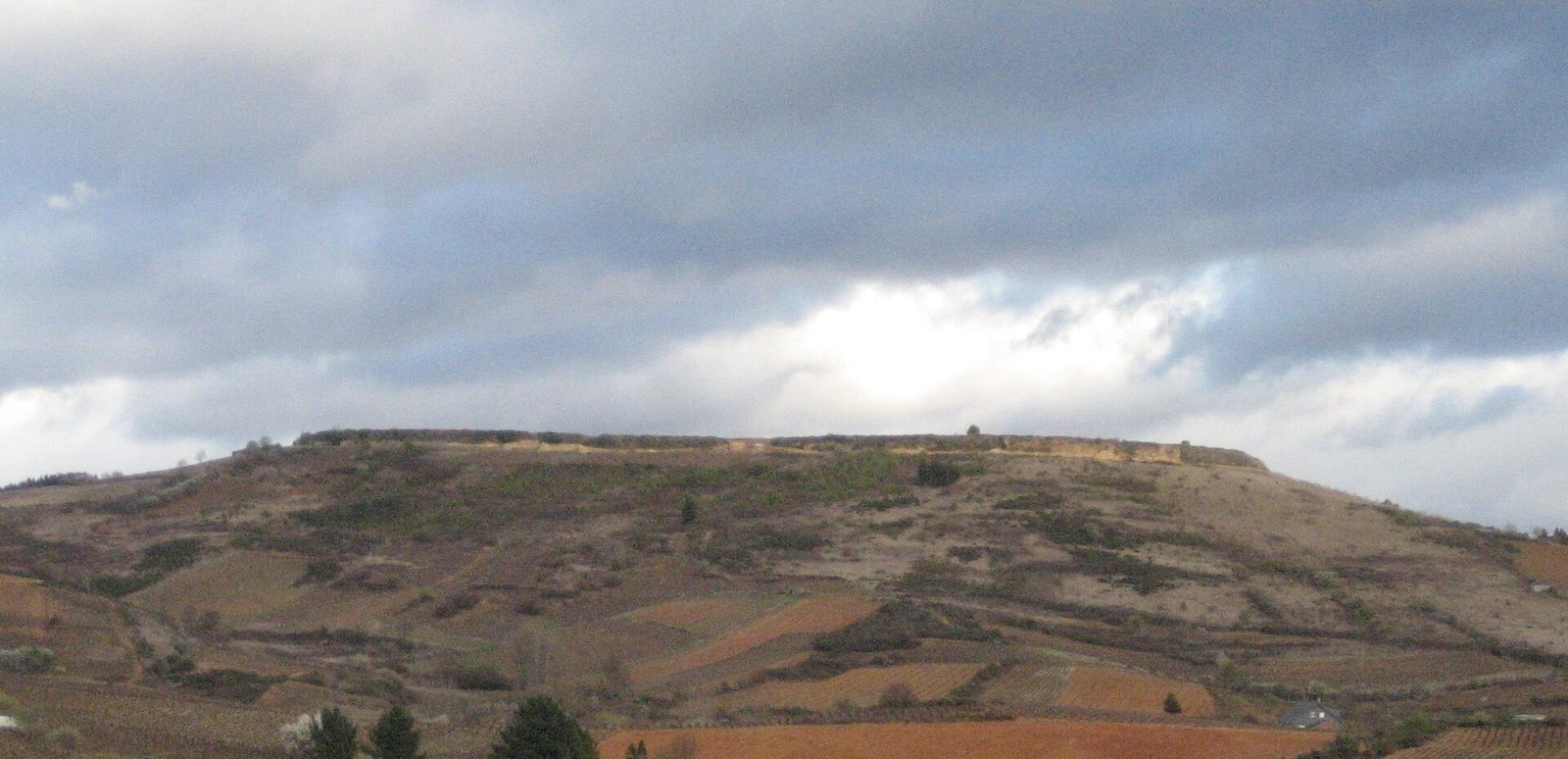
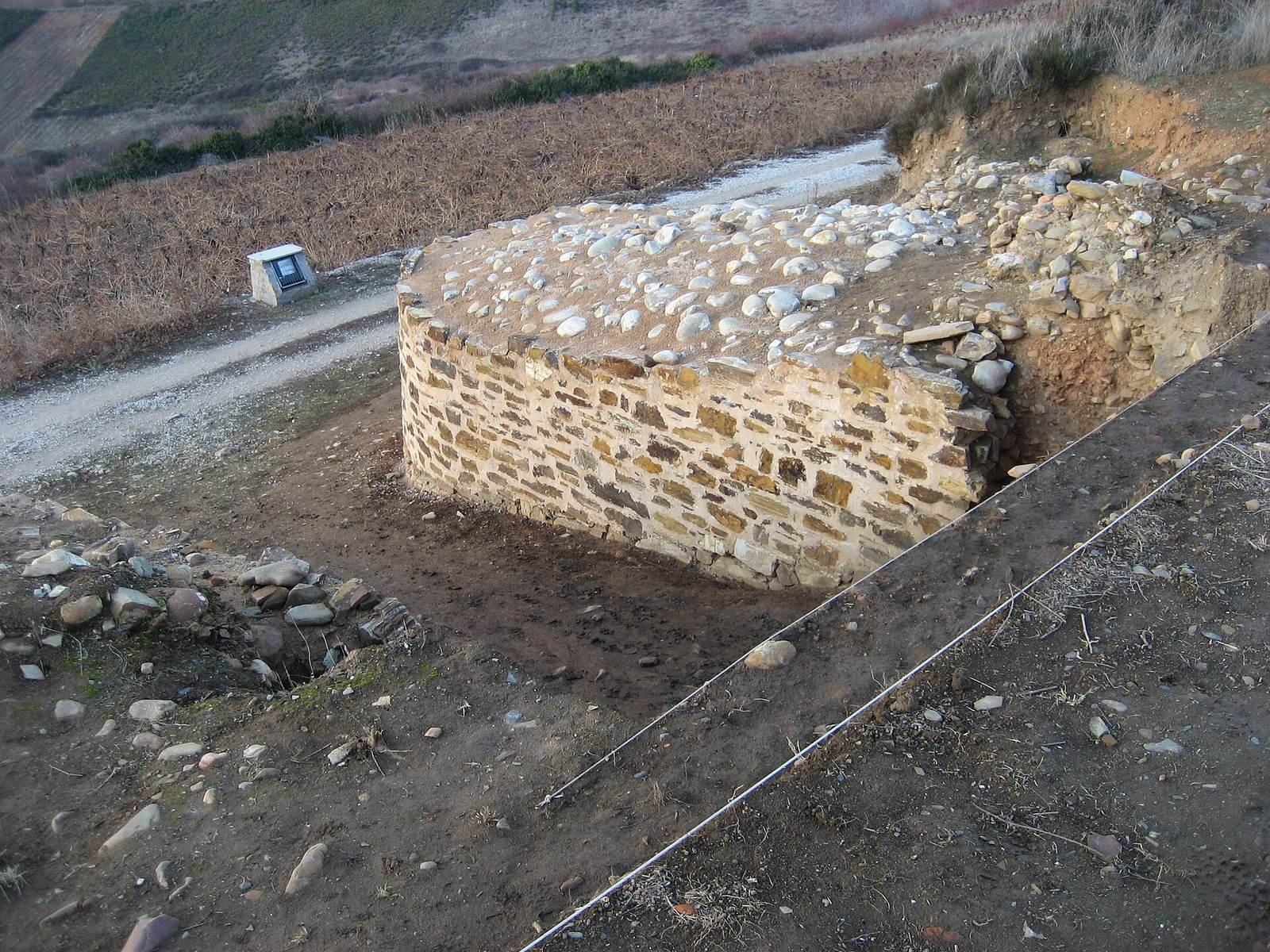
Castro Ventosa occupies elevated ground between Valtuille de Abajo, in the municipality of Villafranca del Bierzo, and Pieros, in the municipality of Cacabelos. Its position gives views over the surrounding area and was considered easy to defend. The surviving remains include circular stone structures from the pre-Roman occupation and a western wall that forms part of the site’s fabric.
Finds
Finds from Bergdunum held at the Cacabelos Archaeological Museum include spearheads, boat-shaped and circular stone millstones, brooches, ornaments, and pottery. A bronze Roman coin called an as, associated with Augustus, was found at the site. A bone comb, assigned to the second third of the fourth century and the first half of the fifth century, is associated with the Chernyakhov culture, an archaeological culture of late antiquity in eastern and southeastern Europe, and may indicate a Visigothic presence. An inscribed slab of black slate, discovered at Castro Ventosa in 1895 and dated to AD 179, is held by the Museum of León.