Excisum at Eysses: A Roman Road Junction and Settlement in France
Site at a Glance
- Popularity
- Low
- Country
- France
- Primary era
- Classical
- Eras represented
- Classical
- Civilizations
- Celtic, Roman
- Site type
- City
On this page8 sections
History
Early occupation and Roman roads
Excisum, the Roman settlement at Eysses near Villeneuve-sur-Lot in southwestern France, was occupied from the second century BC and developed at the meeting point of major Roman roads. The site lay within the territory of the Nitiobroges, a Gallic people of southwestern Gaul whose region included the area around Agen. Prehistoric routes also crossed here.
The Roman settlement was built between the reigns of Tiberius (AD 14–37) and Hadrian (AD 117–138). One road ran north from Agen through Périgueux toward Argenton-sur-Creuse; another connected Cahors and Bordeaux. Excisum appears in two ancient records of Roman routes, the Peutinger Table and the Antonine Itinerary. Local historian J.-R. Marboutin proposed that its name came from the Latin phrase ad excisum fluvium, meaning “at the cut in the river.”
Military interpretations and decline
Two funerary inscriptions refer to soldiers who served in auxiliary troops, prompting the suggestion that an early imperial Roman camp stood at Excisum. Other interpretations propose a smaller garrison or a guarded station on the cursus publicus, Rome’s official communications and transport system. A further possibility is that soldiers were not based at the settlement and that local workshops made military equipment instead.
Excisum declined gradually from the third century. This change probably followed the first Germanic invasions, though the connection is uncertain.
Excavations and protection
In 1971, archaeologist Jean-François Garnier led a rescue excavation with volunteers from the Archaeological and Historical Society of Villeneuve-sur-Lot. The work took place on land intended for a hospital, about 200 metres from the Roman tower. The same teams carried out further campaigns, and local elected officials requested additional excavations in 2013 and 2014. The tower was registered as a historic monument in 1926, followed by registration of the ancient settlement site in 1997.
Remains
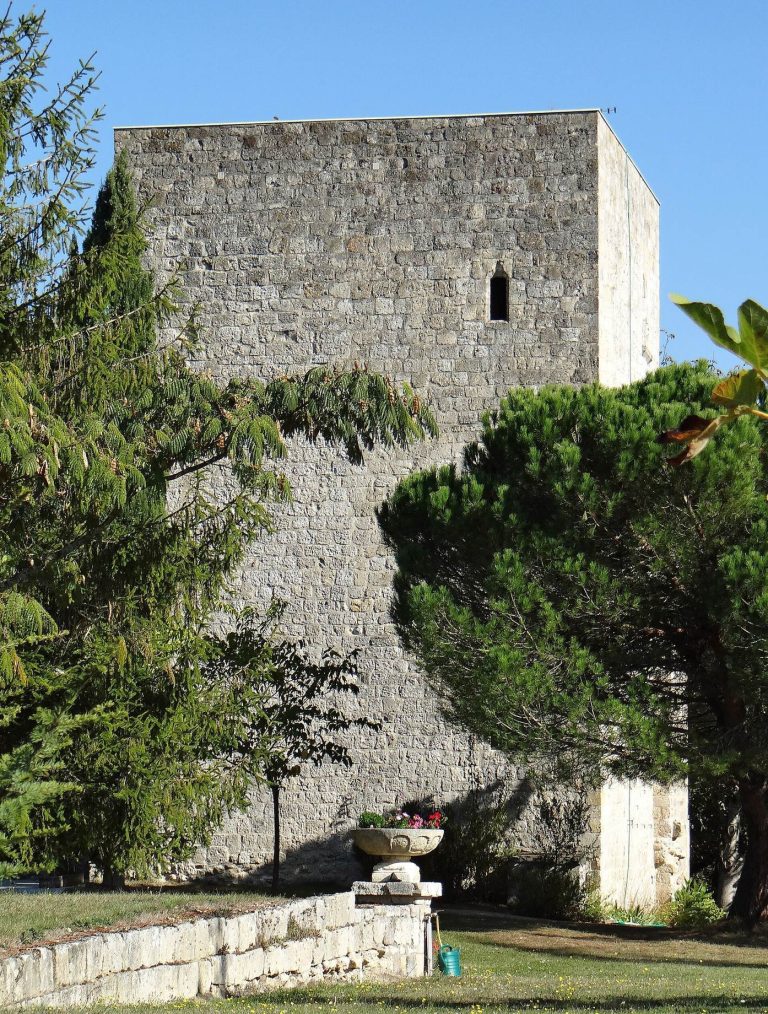
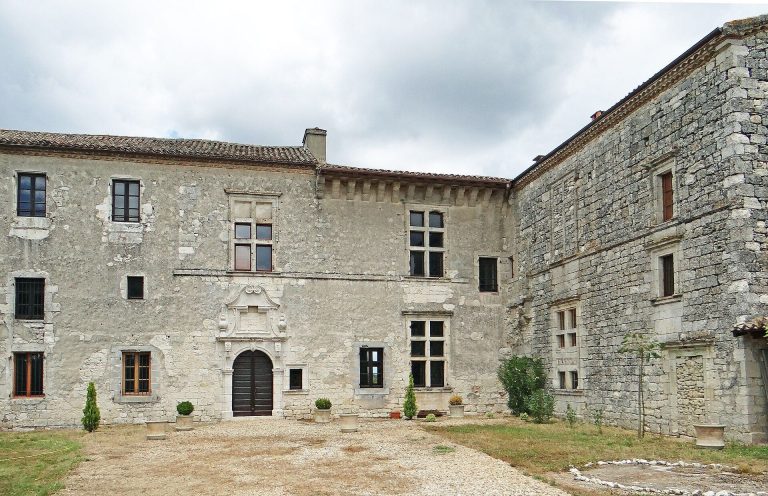
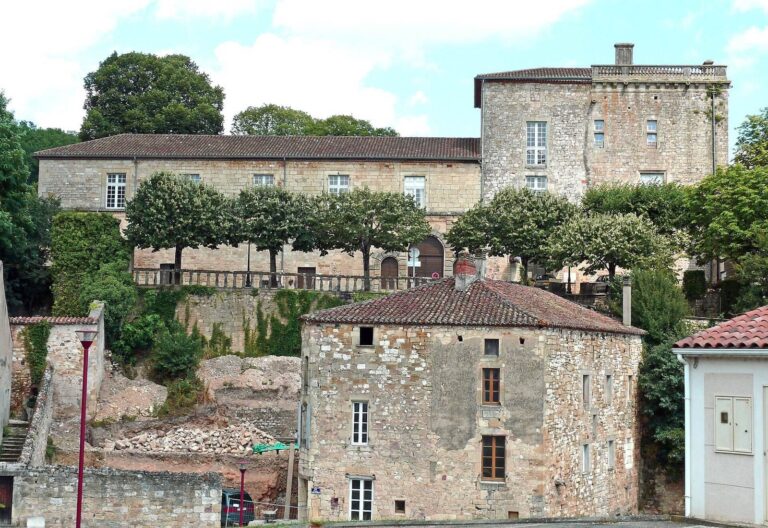
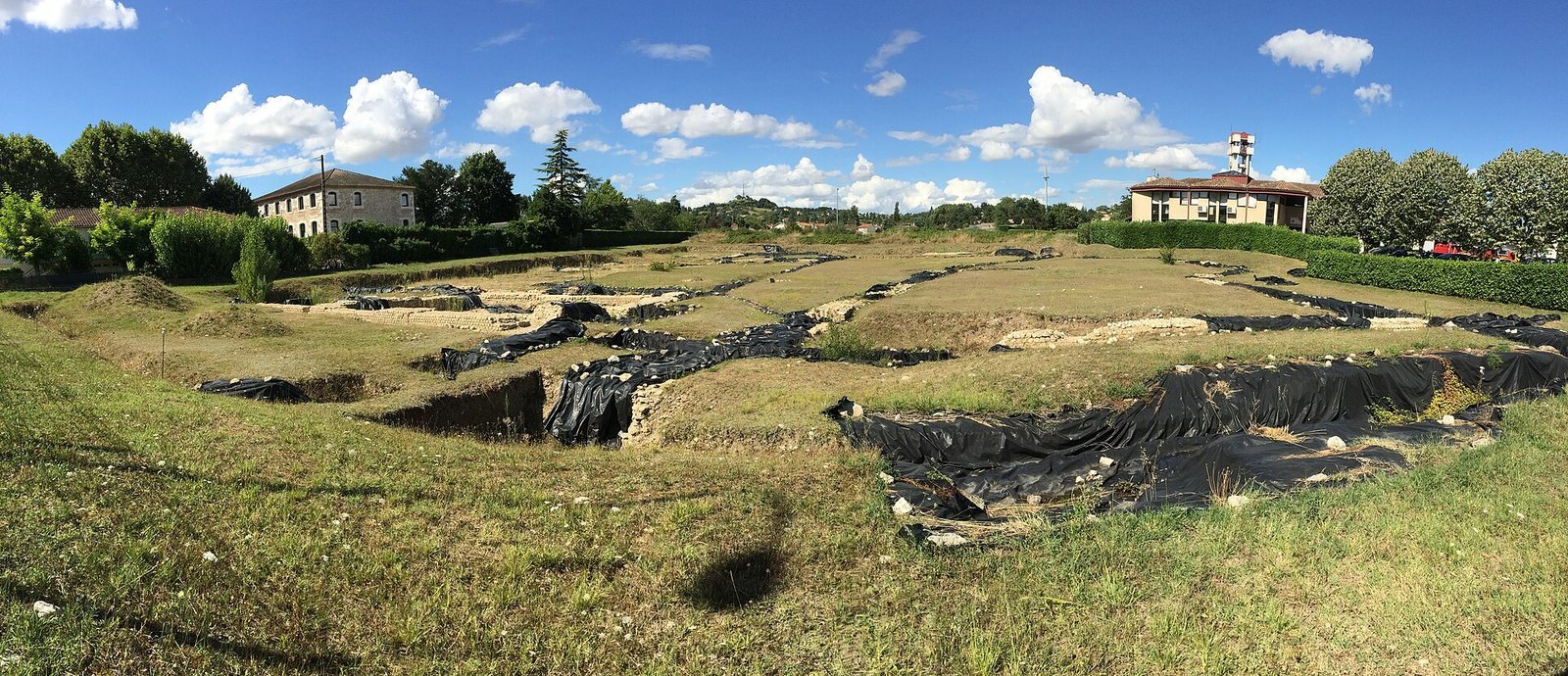
The settlement covered about 50 hectares, roughly 1.5 kilometres from the centre of Villeneuve-sur-Lot. Its most visible excavated area lies about 100 metres north of Saint-Sernin church. Buildings adjoining the church once housed a Benedictine abbey in the ninth century and later served as a school and a prison. A circular Roman tower and the remains of a civic complex are among the site’s features.
The tower and civic centre
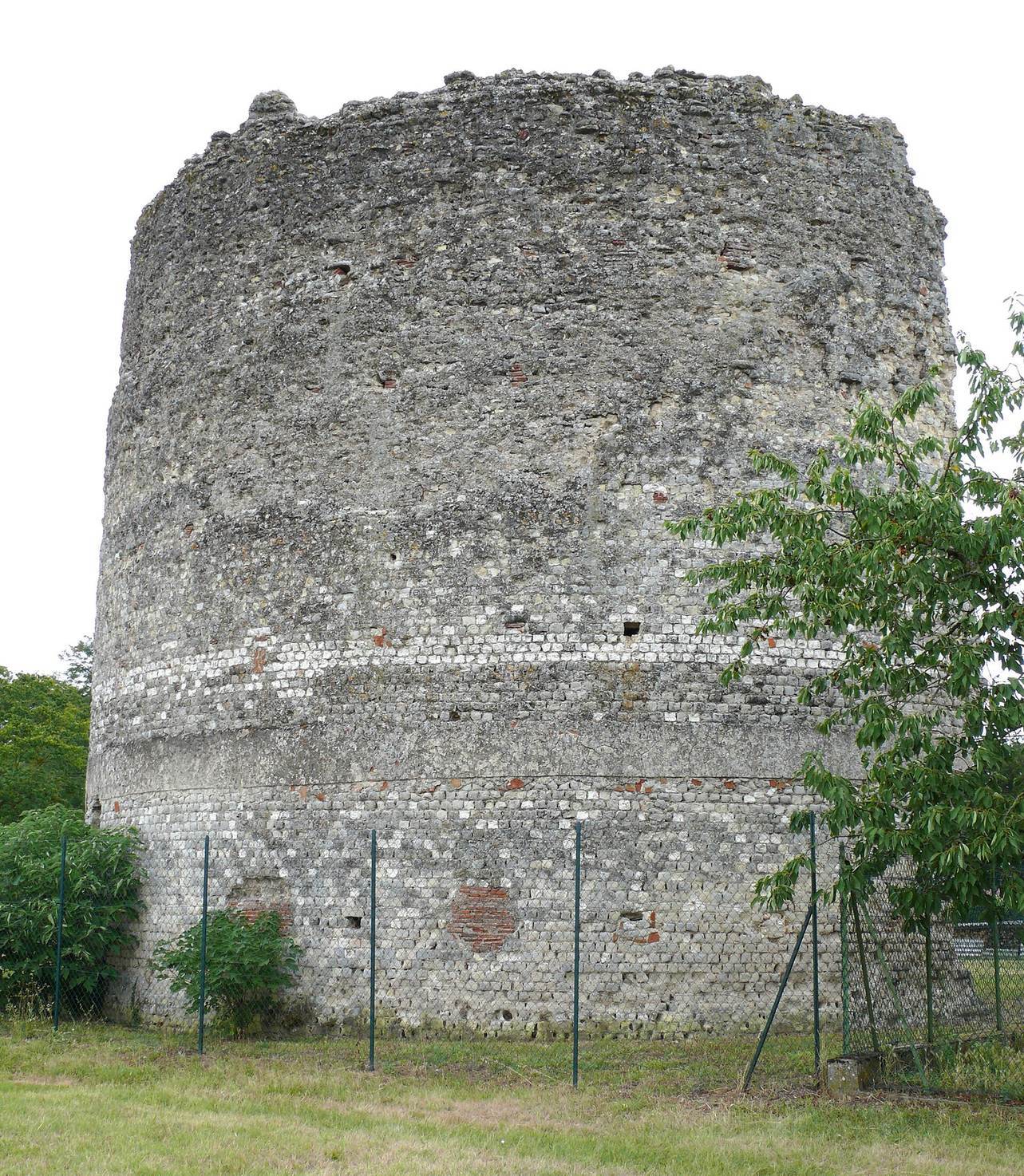
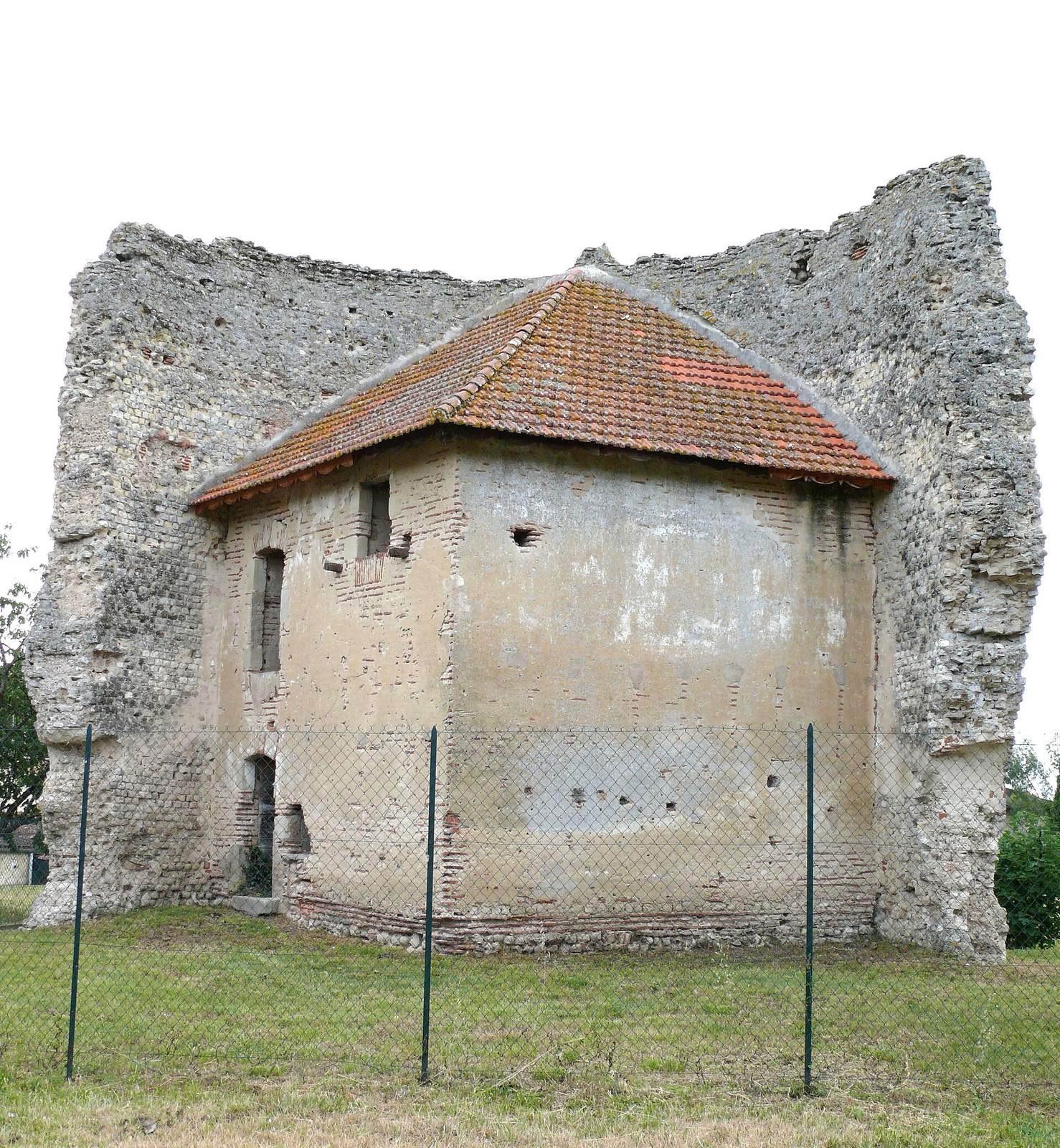
The circular tower is built of small blocks of masonry. Its walls are 1.1 metres thick, its interior measures about 11 metres across, and it survives to a height of about 10 metres. It is identified as a remnant of the settlement’s former curia, a civic meeting place. Excavations also exposed the curia’s apse, its rounded end, where magistrates responsible for administering the settlement met. Georges Tholin compared the tower with the Tower of Vesone at Périgueux and interpreted it as a fanum, a Gallo-Roman sanctuary.
Shops, temple, and forum
In front of the curia, shop galleries surrounded a courtyard with a temple to Mars, the Roman god of war, at its centre. North and south pavilions stood at the ends of the porticoes and were linked by walls. The forum lay in front of this complex and terminated on its eastern side in an exedra, a recess or projecting space that could be semicircular.
Workshops and excavated finds
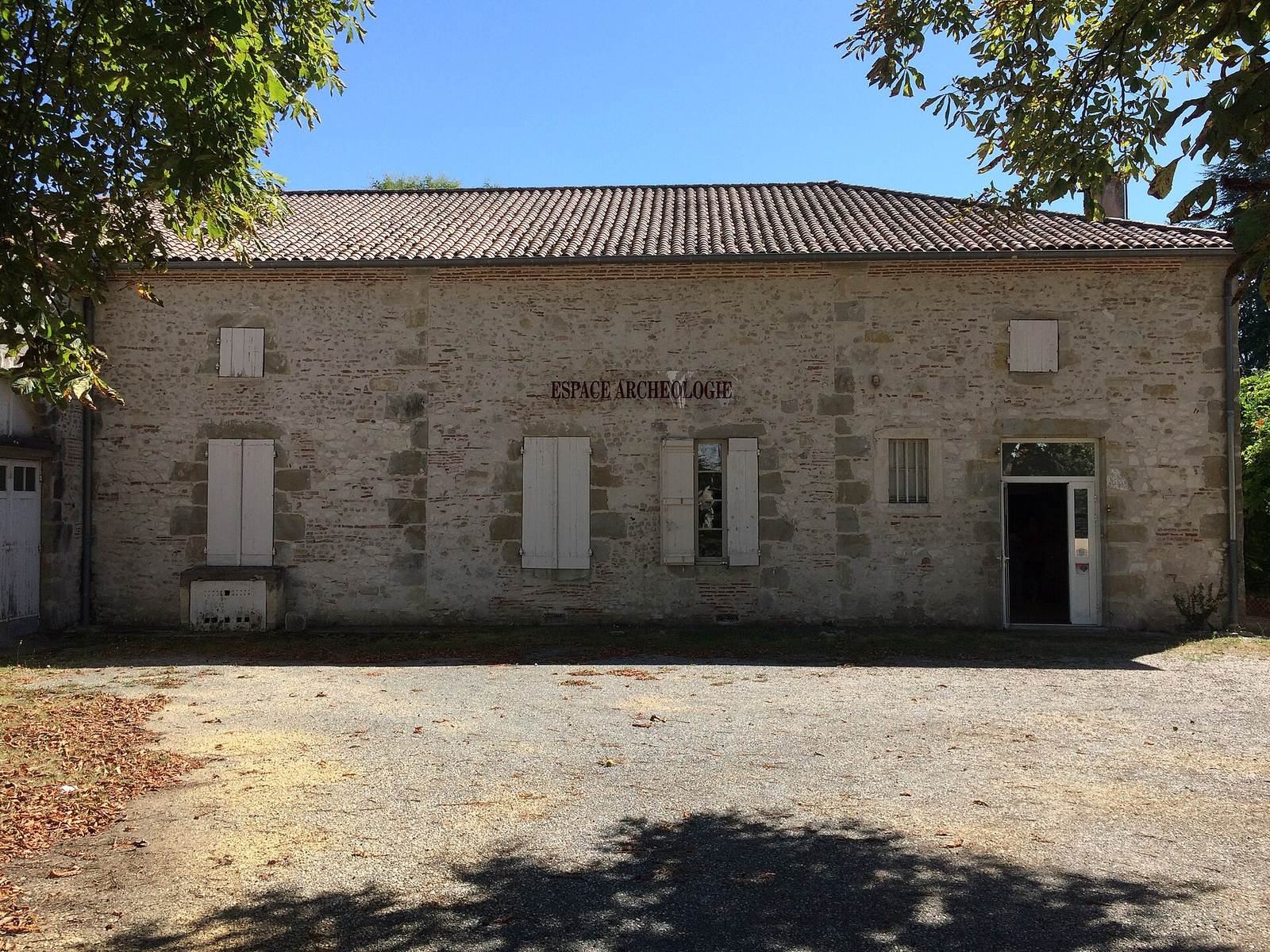
A sealed refuse deposit from the early Flavian period (AD 69–96) contained more than 100 military objects, including fittings from horse harnesses and infantry weapons. The excavations also revealed workshops used by smiths, bronze workers, and bone workers. Finds included common pottery, terra sigillata, a fine Roman pottery with a smooth surface, and coins from the High Empire. Some excavated objects are displayed in a museum space in the former presbytery of Saint-Sernin church.