Vitskøl Abbey: A Cistercian Monastery in Denmark
Site at a Glance
- Popularity
- Medium
- Country
- Denmark
- Primary era
- Medieval
- Eras represented
- Medieval, Early Modern
- Civilizations
- Danish
- Site type
- Religious
- Remains
- Monastery
On this page10 sections
History
Foundation and early expansion
Vitskøl Abbey is a Cistercian monastery near Ranum in North Jutland, Denmark. King Valdemar I founded it around 1157–1158, and construction began in 1158. The Cistercians were a monastic order that followed the Rule of St Benedict and emphasized shared religious life. The abbey later became a major regional landowner and cultural center.
Valdemar granted the monks crown land after defeating his rival Sweyn III at the Battle of Grathe Heath in 1157, part of their struggle for the Danish throne. Tradition connects the foundation with a vow Valdemar made after winning the throne. A foundation charter drafted at Roskilde soon after the victory survives in a 17th-century copy.
Archbishop Eskil of Lund supported the new monastery. His close ties to Bernard of Clairvaux, an early Cistercian leader, and his role in establishing Herrevad Abbey in 1144 helped encourage the choice of order. Vitskøl became a daughter house, a monastery founded by or dependent on another, of Esrom Abbey, which was affiliated with Clairvaux, a leading Cistercian abbey.
The first monks arrived from Varnhem Abbey in Sweden in early April 1158. Their abbot, Henrik, had become caught up in conflict with Swedish nobles. Eskil persuaded him to lead the community at Vitskøl. The Varnhem monks later returned to Sweden, and monks from Esrom took their place, while Henrik remained abbot.
From 1165, the community tried to establish a daughter house of its own. Attempts at Sabro, Sminge, Veng, and Kalvø met with difficulties. Poor farming conditions hindered settlement at several sites, while disputes over land claims forced the monks to leave Veng. They settled at Øm in 1172.
Regional influence and the Reformation
Royal privileges and gifts from local nobles helped Vitskøl prosper. By the 14th and 15th centuries, its holdings included Livø and land across several parishes, with a total of 260 farms. The abbey served as a regional cultural and economic center, and its school was considered important. Its estates also included a market at Trend Strand and three mills known as the First, Second, and Third Mills. The Third Mill is thought to have given Trend village its name; the village’s present mill was first built in 1777.
In 1536, Denmark adopted the Reformation, and Vitskøl’s property passed to the Crown, which leased it out. The monastery continued for a time under new rules: worship had to follow Lutheran teaching, and the monks could not accept novices. Henrik of Sorø helped secure this continuation. He had been abbot at Vitskøl from 1494 to 1502, then became abbot of Sorø, an inspector of Danish Cistercian monasteries, and a royal adviser to King Christian III. The last monks left in 1563.
From monastery to estate
In 1573, the Crown granted the estate to the nobleman Bjørn Andersen, who converted two former convent buildings for residential use and renamed the property Bjørnsholm. The abbey church continued in parish use, but its size and deteriorating condition made it difficult to maintain. Services moved to the abbey’s west wing in the early 17th century. After the church was abandoned in 1668, local people took building materials from it for houses and farms.
The estate changed hands repeatedly, underwent substantial alterations, and lost land through sales. The state acquired the property in separate parts in 1934 and 1942 and used it for youth-support institutions for several decades. In 1942, the principal building regained the name Vitskøl Abbey, while the farm kept the name Bjørnsholm. The property passed to the Vitskøl Abbey Foundation in 2012.
The name Vitskøl is associated with the earlier village name Withscuele and has also been explained as a reference to land confiscated by the Crown after an offence by a former owner. The Latin Vitae Schola, meaning “School of Life,” echoes the name’s sound rather than translating it.
Remains
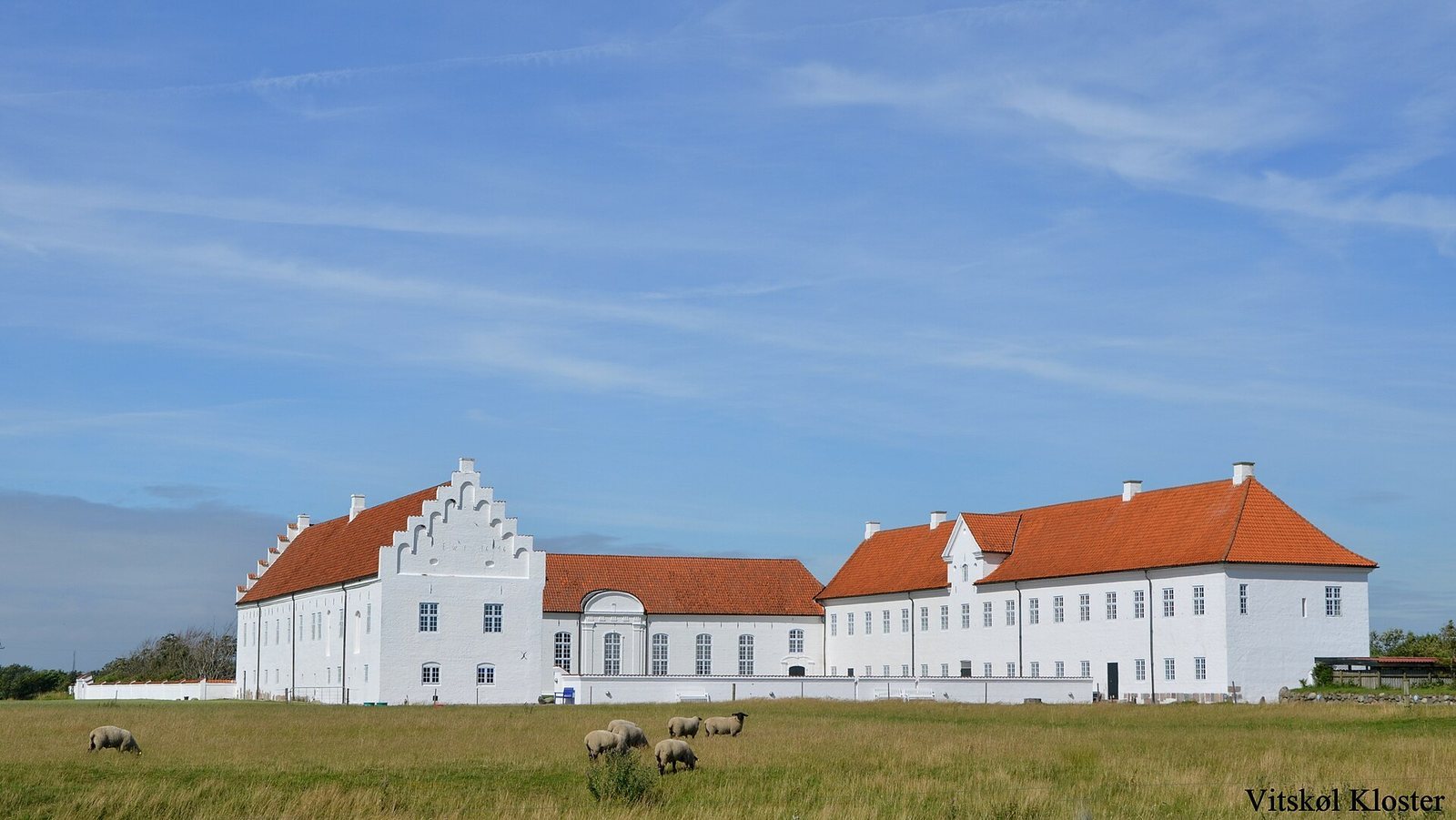
The original complex had four wings, with the church forming the north side. Vitskøl stood at the mouth of Bjørnsholm Å, where the water made fishponds possible, beside an important historic trade route. A canal linked the stream with Vilsted Sø and supported movement through the surrounding area.
Church and convent buildings
Abbey church
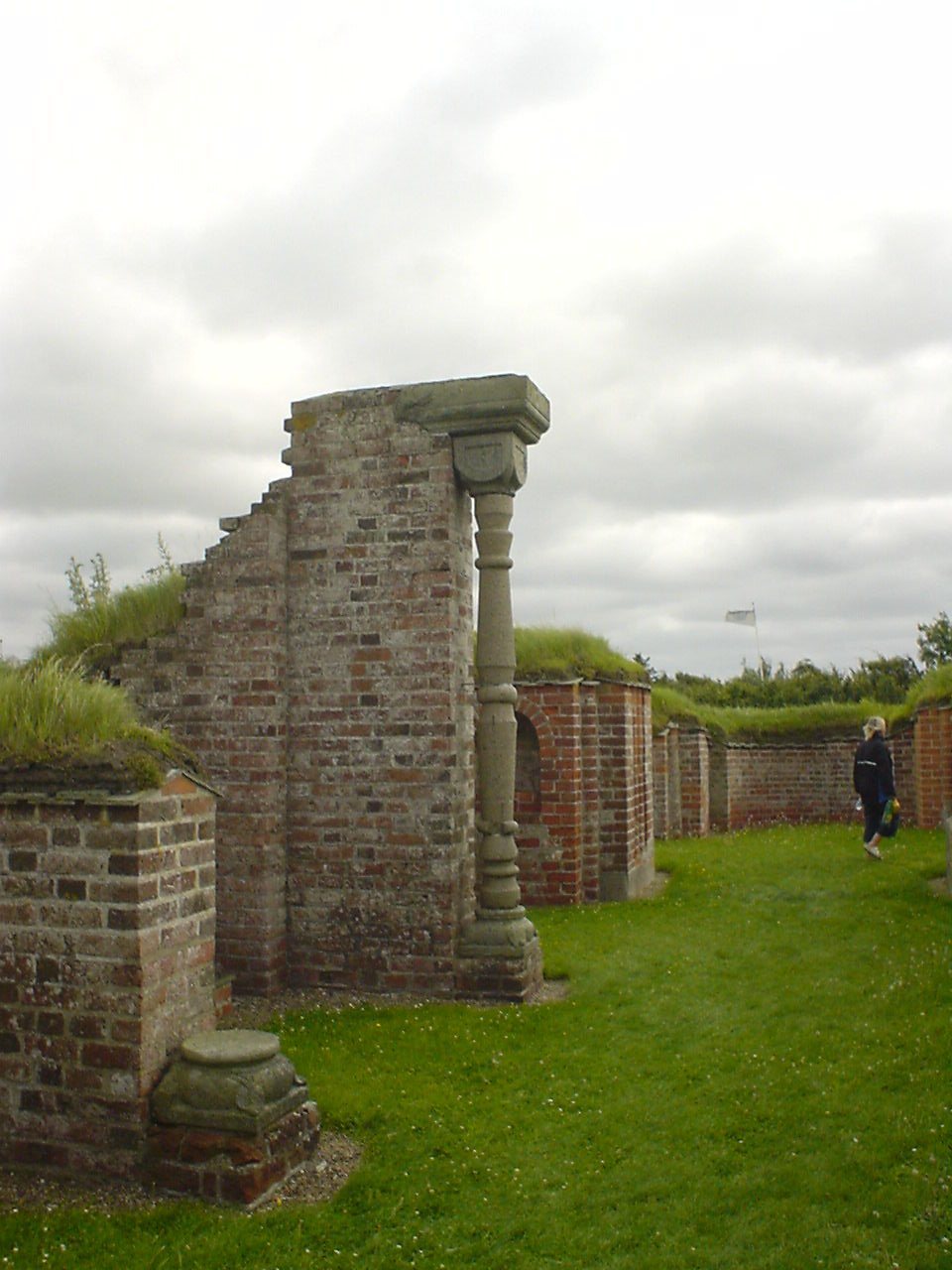
The church was planned as a three-aisled, cross-shaped building, with a transept (crosswise arm) and an apse (rounded end). Its intended scale would have made it Scandinavia’s largest church. The choir design included an ambulatory, a passage around the choir, and several apses, an arrangement that ran counter to Cistercian building prescriptions. The church ruins include foundation stones and a few other remnants, which have been stabilized.
West and east wings
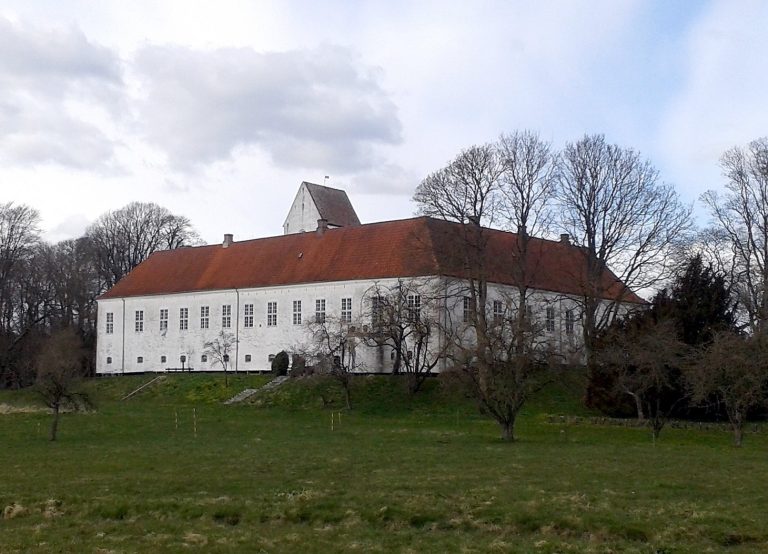
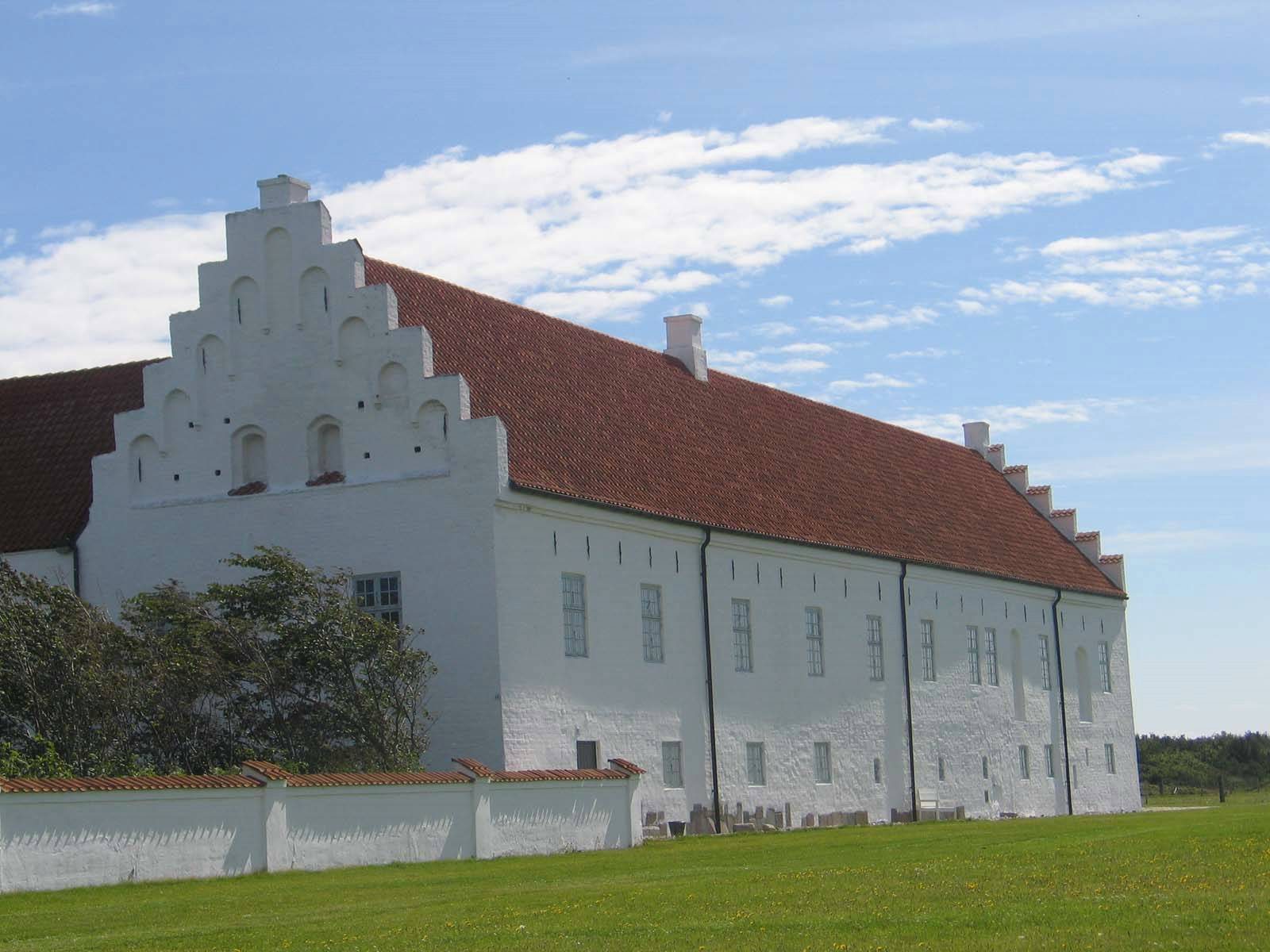
The surviving west wing formed part of the cloister south of the church and was converted into a manor house. The east wing has been partly rebuilt and retains Rococo interior fittings, an example of the ornate decorative style that flourished in 18th-century Europe. The abbey buildings have been restored and are used for conferences and educational purposes.
North wing
A later north wing was built south of the former church to connect the east and west wings. Its chapel served as the parish church until 1916. The south wing was demolished around 1800, changing the former four-wing layout into a three-wing complex.
Gardens
The grounds include a herb garden modeled on the Plan of St Gall, an idealized plan for a medieval monastery. More than 100 medicinal herbs grow there, alongside a schnapps-herb garden with over 60 herbs, shrubs, and trees used to make spiced schnapps. Some plants once cultivated by the monks continued to grow wild on the grounds. The gardens have been partly restored and are used for plant research.