Neposi Castle: A Byzantine Fortress in Halkidiki, Greece
Site at a Glance
- Popularity
- Very Low
- Country
- Greece
- Primary era
- Medieval
- Eras represented
- Classical, Medieval
- Civilizations
- Byzantine, Roman
- Site type
- Military
- Remains
- Fort
On this page14 sections
History
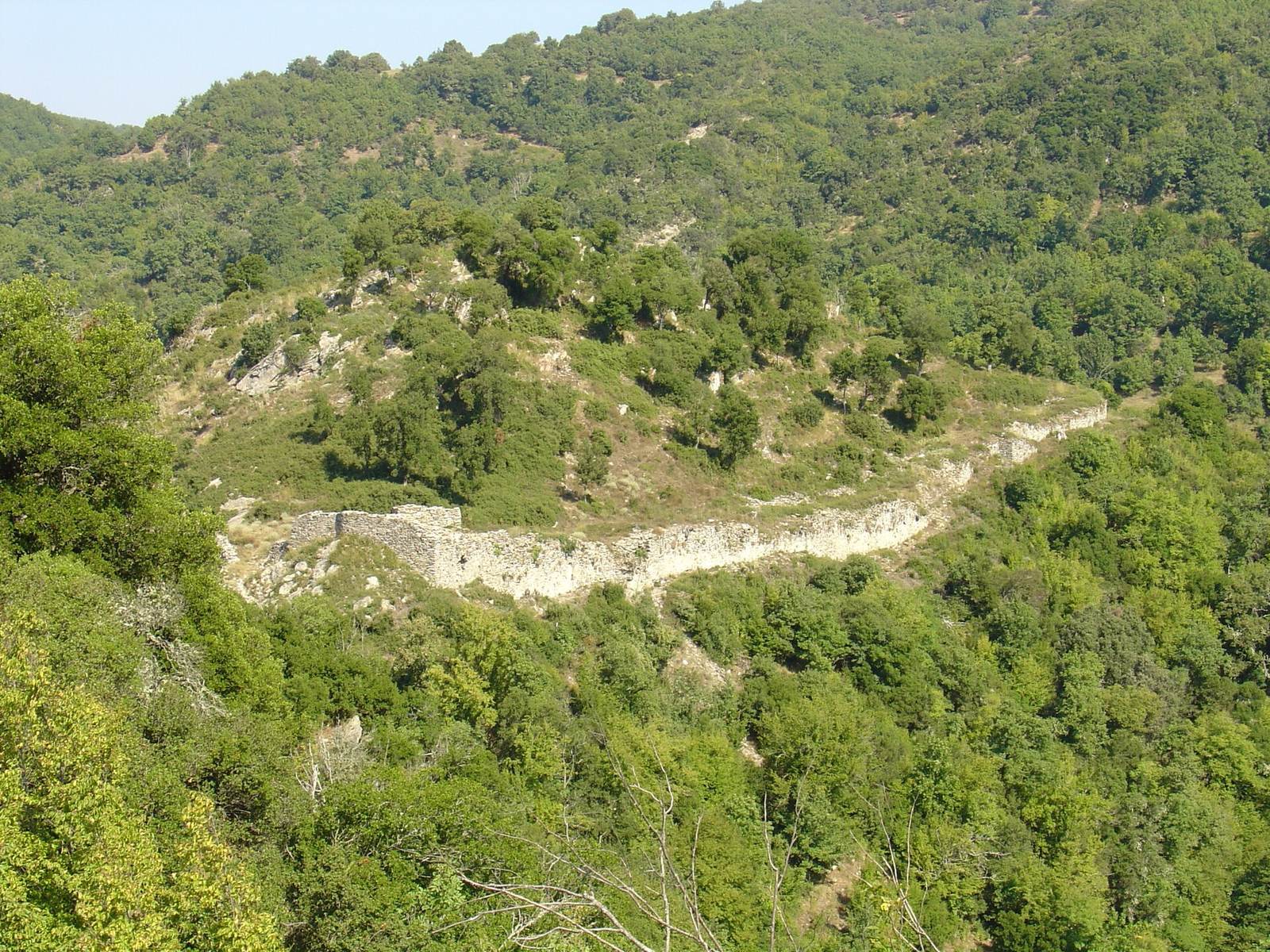
Neposi Castle, also known as the Castelli of Paleochori, is a fortress on Kasteli Hill southwest of Paleochori in central Halkidiki, Greece, built in the fifth century AD. It is described as the largest fortress in Halkidiki and probably formed part of Byzantine defenses during Bulgarian raids in the later tenth century. The Byzantine Empire, the eastern continuation of the Roman Empire centered on Constantinople, later repaired the stronghold.
Early occupation and fortress development
People had inhabited the site by at least 1500 BC, long before the fortress was built. Activity also continued during the Hellenistic period, the era between Alexander the Great’s conquests and Roman rule, and in Roman times.
The fortress wall appears to have developed in three phases: an early Christian phase, a Middle Byzantine phase (the empire’s middle historical period), and a probable later repair. An earthquake may have damaged the early wall. The fortress also suffered serious damage, possibly in the sixth century, and may have been abandoned before later repairs brought renewed occupation.
Middle Byzantine repairs and abandonment
Repairs had restored the fortress by the 910s. A building inscription dated to 917/918 associates this work with Constantine VII, a young Byzantine emperor, and his mother Zoe, who shared authority during his minority. It also names Michael, a patrician, or high-ranking Byzantine official. His possible connection with regional administration or the repairs remains uncertain.
Bulgarian raids in the second half of the tenth century brought further damage. The church was probably destroyed by an earthquake and later rebuilt, perhaps during that same century. Before the fortress’s final abandonment in the fourteenth century, it underwent two more repairs, one a minor intervention after further damage. Its destruction and abandonment may have been connected with Paleochori’s emergence as a settlement.
Names, traditions, and modern interpretation
Local legend tells of a powerful king named Nepos. Together with the proposed fifth-century construction date, the story has prompted a tentative identification of the fortress with Flavius Julius Nepos, a late Western Roman emperor. This connection remains conjectural. Another uncertain proposal links the fortress to the fourth-century BC Athenian general Chabrias through the name of the nearby Habria River.
The name Neposi probably comes from the Latin nepos, meaning ‘grandson’ or, in Late Latin, ‘nephew.’ Other proposed explanations derive it from a word for dense fog or from a Slavic term meaning ‘fearless’ or ‘brave.’
Archaeologist Joachim Papangelos directed excavations in 1998 and 2003 for the Tenth Ephorate of Byzantine Antiquities, a regional Greek archaeological service responsible for Byzantine sites and monuments. In 2011, a document by Ecumenical Patriarch Bartholomew I, the senior bishop of the Eastern Orthodox Church, affirmed continuity between the fortress and Paleochori.
Remains
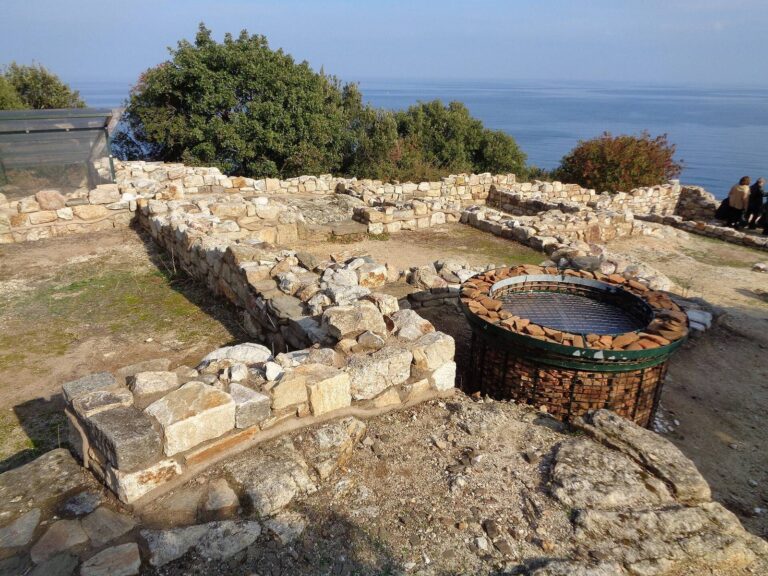
The roughly 1.5-hectare site occupies Kasteli Hill in the Cholomontas Mountains. Its enclosure contains a settlement area in the west and a church. The Paleochori River borders the site on three sides, running through a gorge 30 to 40 metres deep. A narrow, steep path provides access from the mountain, and dense vegetation covers the wider landscape.
Defenses and settlement
Circuit wall
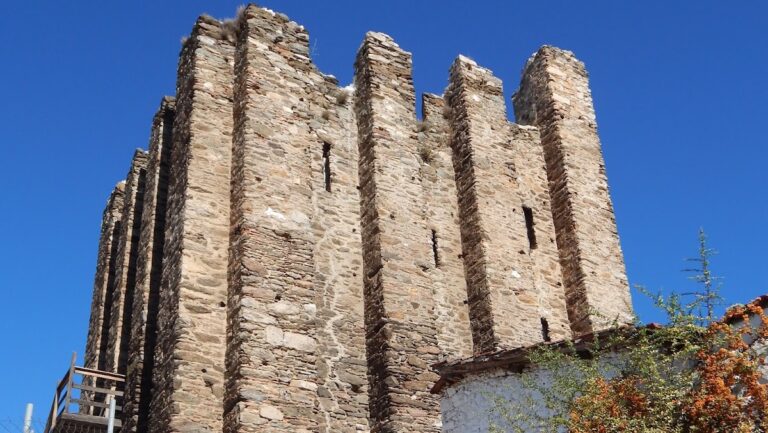
The circuit wall extends about 800 to 1,000 metres. It is built from unworked stone set with lime mortar and is described as roughly four to five metres high, with surviving sections reaching about four metres. Differences in the wall’s height distinguish its three construction phases.
Settlement
A settlement occupied the western part of the fortress. By the 910s, a substantial village had developed within the enclosure.
Church, tomb, and burials
Basilica
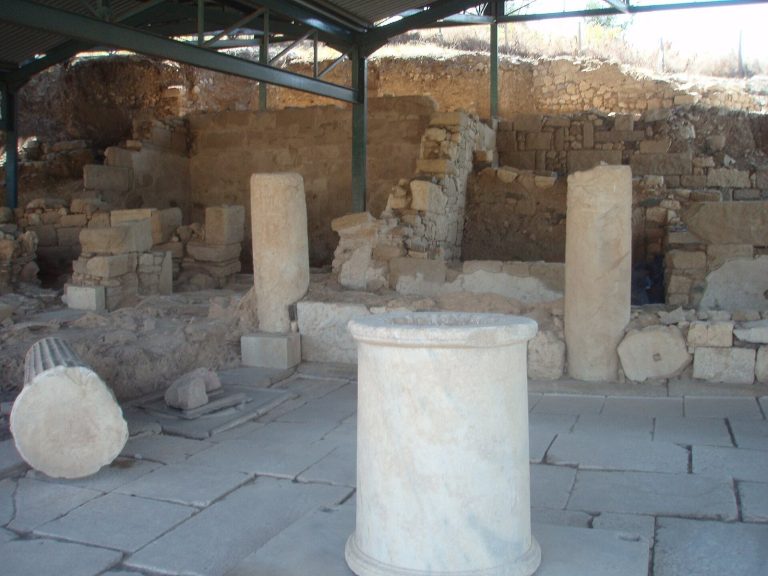
The sixth-century church was a three-aisled basilica, a long building divided into parallel aisles. It had a wooden roof and a marble altar.
Tomb and burials
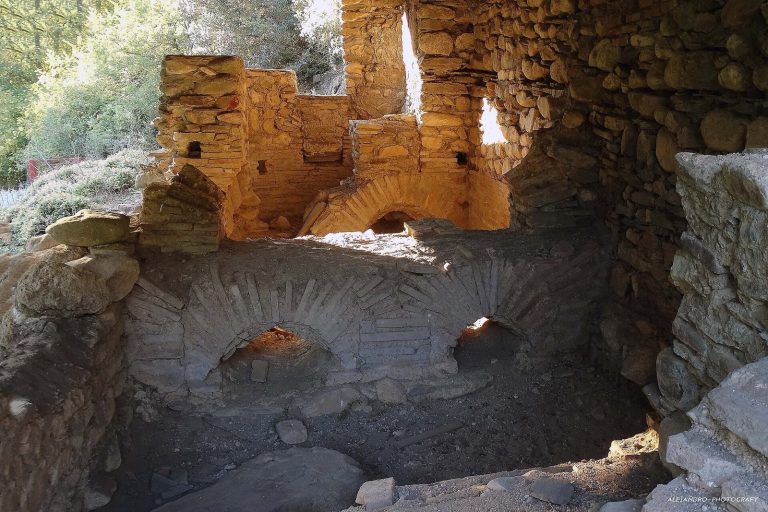
Below the church’s narthex, the entrance area at its western end, lies a vaulted underground tomb with two beds. A sixth-century inscription on marble, probably from the tomb, names a man called John as buried there; its lettering is poorly executed. A copper ring found at the tomb is characteristic of the Middle Byzantine period and suggests the tomb was reused then. Many Middle Byzantine burials were found in and around the church.
Finds and inscriptions
Pottery and coins
Finds include handmade prehistoric pottery and a black-glazed Mycenaean sherd, from a Bronze Age Aegean civilization, regarded as the oldest known find from the area. Hellenistic pottery fragments and Roman coins provide evidence of later activity. Coins from the reigns of the Byzantine emperors Anastasius and Justinian point to occupation in the fifth and sixth centuries. Glazed ceramic fragments show vitrification, a heat-driven change that makes material glass-like, and provide evidence of settlement in the fourteenth century.
Building inscription
A second inscription on a marble block survives only in its right half. It refers to the ‘God-protected castle’ and names Constantine, Zoe, and Michael the patrician. Its date is read as 917/918, and it is probably connected with a Middle Byzantine repair.