Altkönig Ringwall: A Prehistoric Hillfort in Germany
Site at a Glance
- Popularity
- Medium
- Country
- Germany
- Primary era
- Iron Age
- Eras represented
- Iron Age
- Civilizations
- Celtic
- Site type
- Military
- Remains
- Fort
On this page12 sections
History
The Altkönig ringwall is a prehistoric hillfort on the summit of the Altkönig near Kronberg, Germany, dating to around 400 BCE in the Early La Tène period, an Iron Age culture associated with Celtic communities.
Early La Tène hillfort
The fort’s precise purpose is uncertain. Its outer enclosure and southwest annex may have served as refuge areas, while comparison with similar fortifications has also led to the suggestion that it housed a local ruler. Sparse finds and limited settlement deposits point to light occupation; larger groups may have used the defenses temporarily for protection.
By the Late La Tène and Early Roman periods, the fort appears to have fallen into decay. A separate fortification of Late La Tène date stood at nearby Heidetränk, a large fortified settlement of the kind called an oppidum.
Late antique reuse
The mountain saw renewed use in the fourth or fifth century CE, during the Migration Period, an era of population movements and political change in Europe. This activity may have involved people controlling the area in front of the Danube-Iller-Rhine frontier, perhaps with Roman approval or under Roman orders.
Early modern accounts
In the sixteenth century, the German writer Erasmus Alberus wrote verses about the mountain’s old walls. During French raids in the region in 1792, local people took shelter within the ramparts and built huts there. The troops were led by General Adam-Philippe de Custine.
Excavation and protection
Karl August von Cohausen proposed in 1860 that the great stone ramparts were remains of masonry. His excavations in 1882 and 1883 confirmed this interpretation and helped establish the construction principle of the post-slot wall. Christian Ludwig Thomas undertook further excavations in 1894 and 1911. The ramparts are protected as an archaeological monument under Hessian heritage law and bear the cultural-property emblem associated with the Hague Convention, an international agreement for protecting cultural property during armed conflict.
Remains
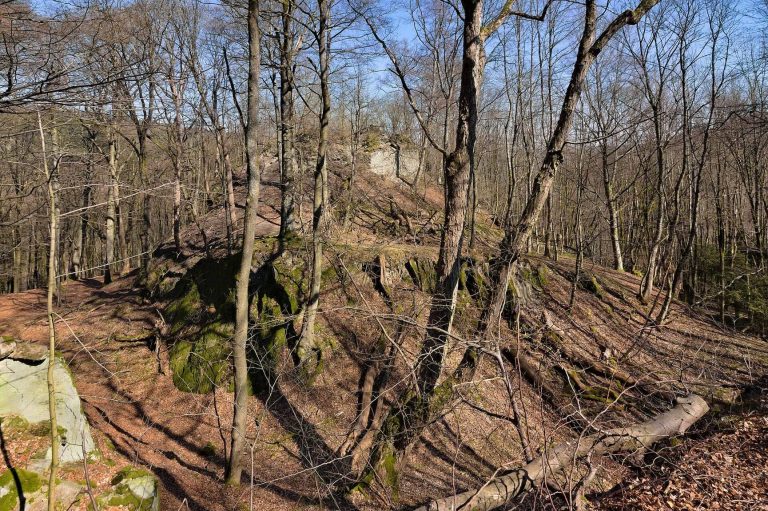
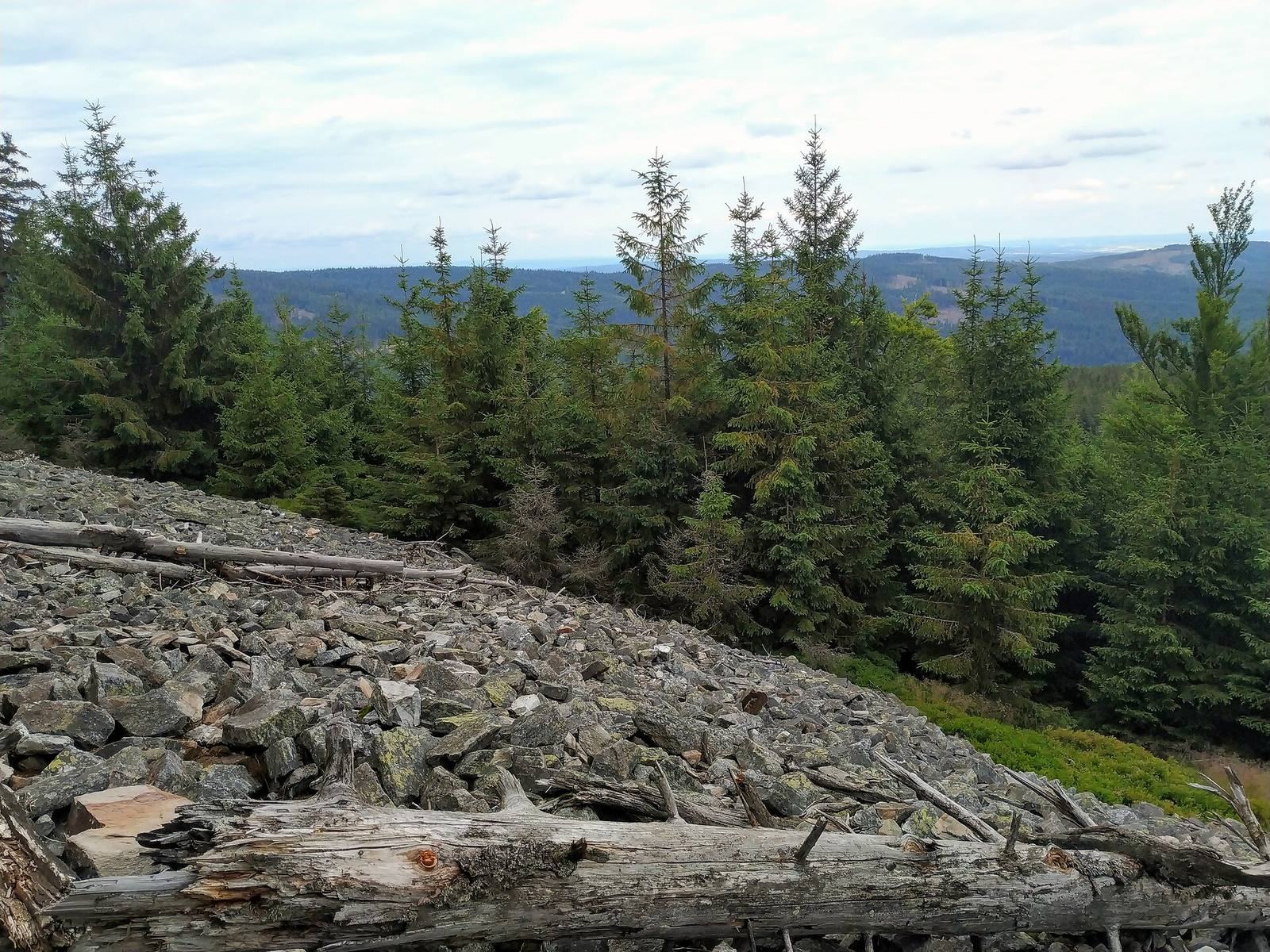
At about 798 m above sea level, the hillfort occupies the summit of the Altkönig. The mountain is the Taunus’s third-highest peak and rises above the Vordertaunus, the range’s southern foothills. From this height, the site overlooks the southern Wetterau and the Main Plain, an area of fertile land important for transport. Two roughly oval ramparts and a southwest annex enclose about 26 hectares. The annex covers about 11 hectares and contains a spring that still flows at times.
Ramparts and entrances
Enclosing walls
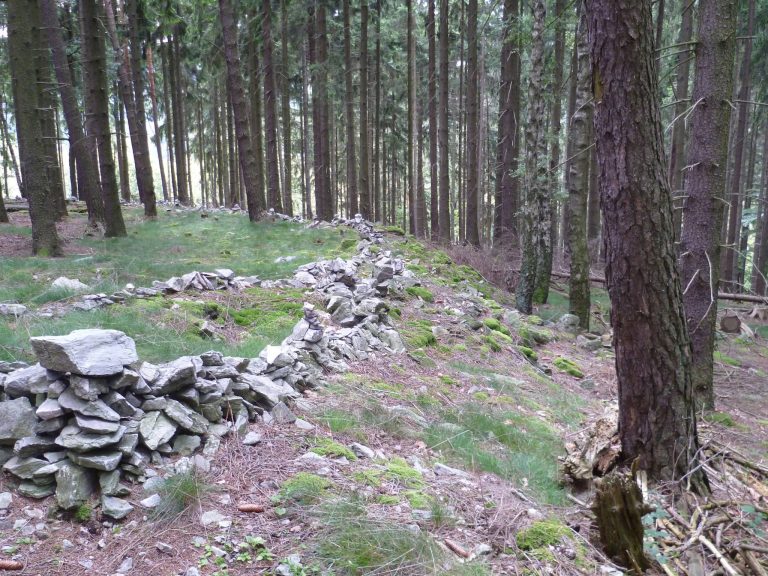
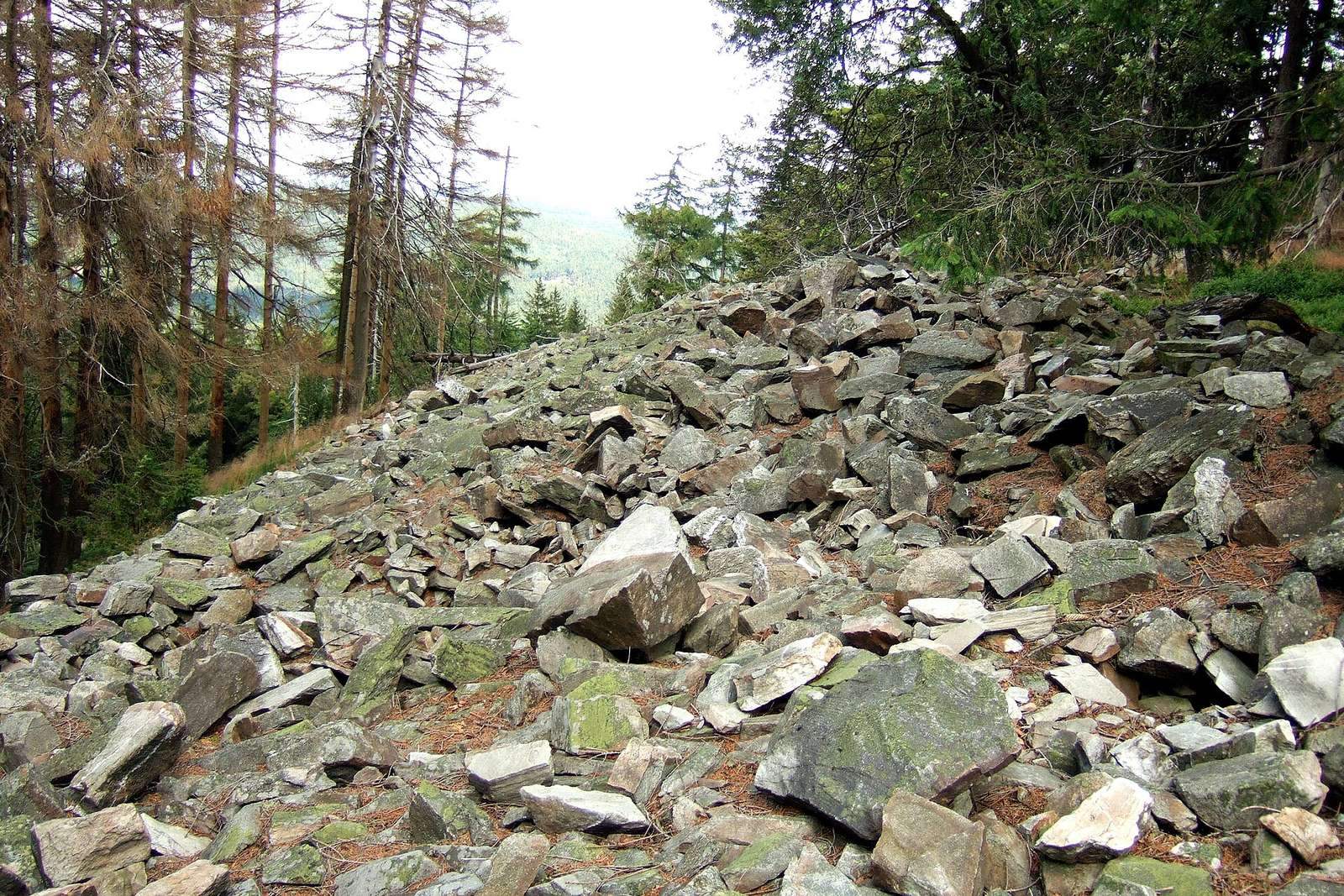
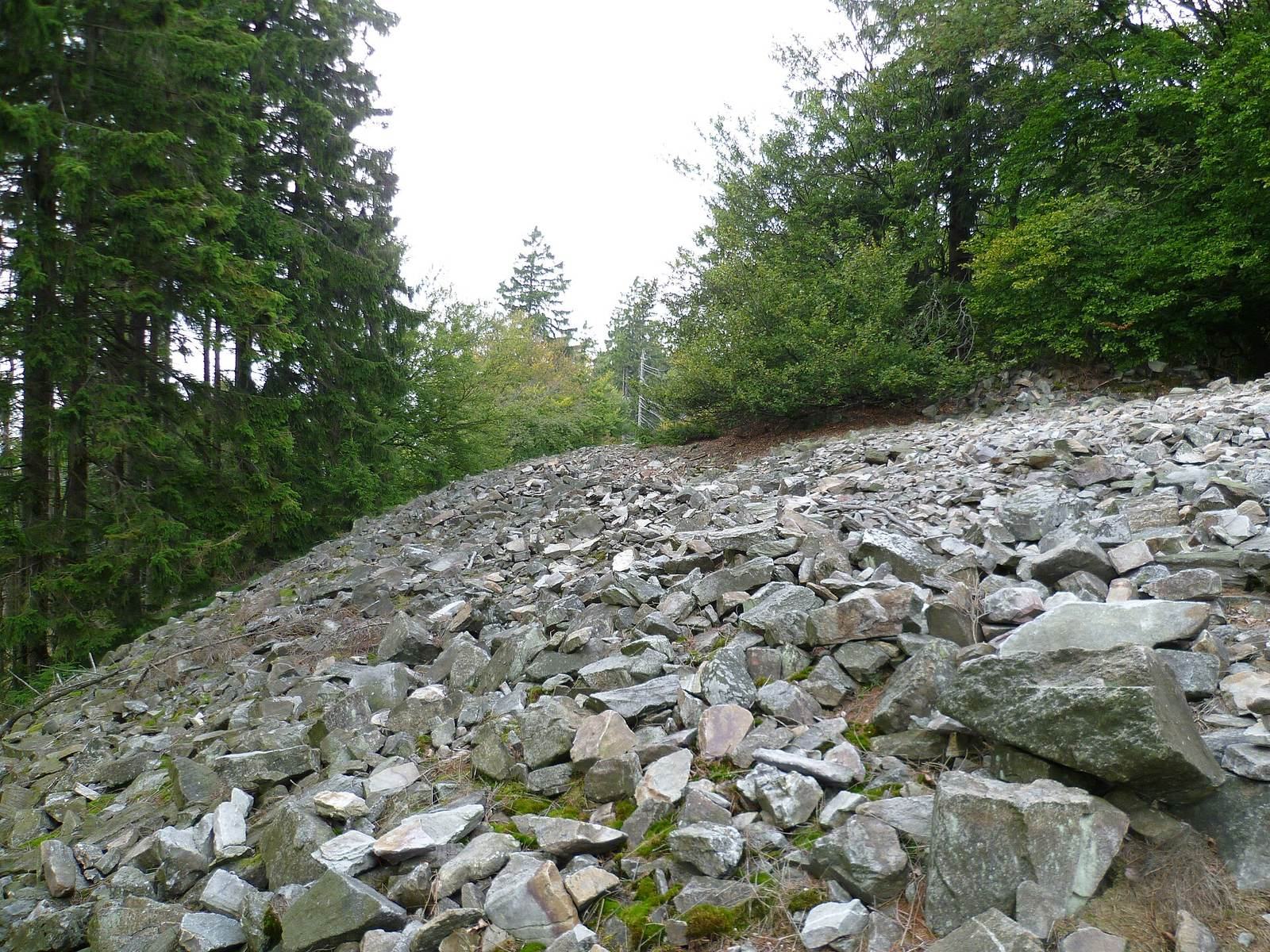
The inner rampart runs for about 950 m and the outer one for about 1,390 m, with 50 to 80 m between them. The rampart around the southwest annex was originally about 1,000 m long. The walls were built of Taunus quartzite. The inner wall was 6.5 to 6.7 m wide; estimates for the outer wall range from 2.5 to 4 m. The inner wall, and probably the outer one as well, used dry-stone construction, with stones laid without mortar, in a post-slot design. This type of wall incorporated upright posts set into slots in the masonry, and was first investigated at Altkönig and Preist.
Gates and junction
The outer rampart had gates to the southeast and southwest, with the latter opening into the annex. Overlapping ends of the walls strengthened both entrances. A simpler gate stood on the eastern side of the inner rampart. At the annex’s southern junction with the outer rampart, a gap about 60 m wide remains; it is unclear whether a gate once stood there.
Other defenses and archaeological finds
Inner defenses and fire evidence
Minor traces of another fortification lie within the inner enclosure, though its form is unclear. Only minimal masonry survives in parts of the inner rampart. A stone block beside the inner rampart’s eastern gate has burn marks. Whether fire fused stones in either or both ramparts remains disputed. Fused stone fragments examined from the ramparts have instead been identified as residues of ironworking, carried out at an unknown date.
Excavated objects
Excavated objects include a bronze brooch shaped like an animal, a fastener used to secure clothing. Metal finds from the fourth or fifth century CE include coins and other objects made in the Roman world.