Dolmen of Viera: A Neolithic Corridor Tomb near Antequera
Site at a Glance
- Popularity
- Medium
- Country
- Spain
- Primary era
- Stone Age
- Eras represented
- Stone Age, Modern
- Civilizations
- Unclassified
- Site type
- Burial
- Remains
- Tomb
On this page10 sections
History
Neolithic construction and meaning
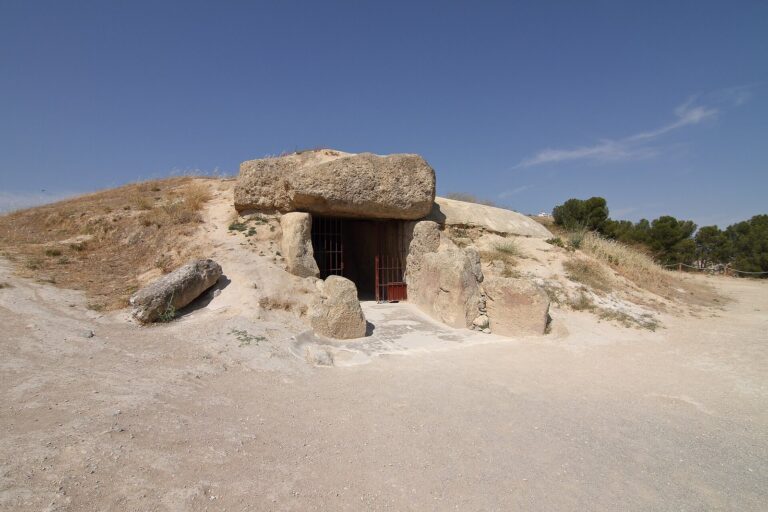
The Dolmen of Viera is a Neolithic corridor tomb, a passage leading to a burial chamber, near Antequera, Spain. Farming communities built it as part of the region’s megalithic tradition. Neolithic, or later Stone Age, and Chalcolithic communities, when people used copper alongside stone tools, occupied the fertile valley around Antequera from about 5000 to 2200 BC and built its megaliths.
Construction of Viera is commonly dated to about 3510–3020 BC, although another estimate places it around 3250 BC. Older estimates put its age at roughly 4,000–4,500 years, while later studies have suggested about 5,000–5,500 years. Viera and the nearby Dolmen of Menga are considered close in date.
The tomb’s solar alignment has been linked to seasonal cycles important to farming communities. Equinoctial illumination has also been interpreted as carrying ritual meaning, symbolizing passage between life and death and between light and darkness.
Discovery and naming
Municipal employees José and Antonio Viera Fuentes discovered the tomb in February 1903. They first called it the “Little Cave,” distinguishing it from the larger Menga. Archaeologist Manuel Gómez-Moreno Martínez later gave it the name Dolmen of Viera, honoring its discoverers.
Conservation and recognition
A restoration in 1941 cleaned the passage, added three access steps, rebuilt the mound’s slopes with stone, and repaired the gate. Water entering through the mound prompted further conservation in 2004. The structure was consolidated and drainage improved.
Viera and Menga were jointly declared National Monuments in 1923. In 2009, Viera became part of an archaeological zone covering the Antequera dolmens and the circular, domed tomb at El Romeral. It was included in the UNESCO World Heritage-listed Antequera Dolmens Site in 2016.
Remains
Setting and overall form
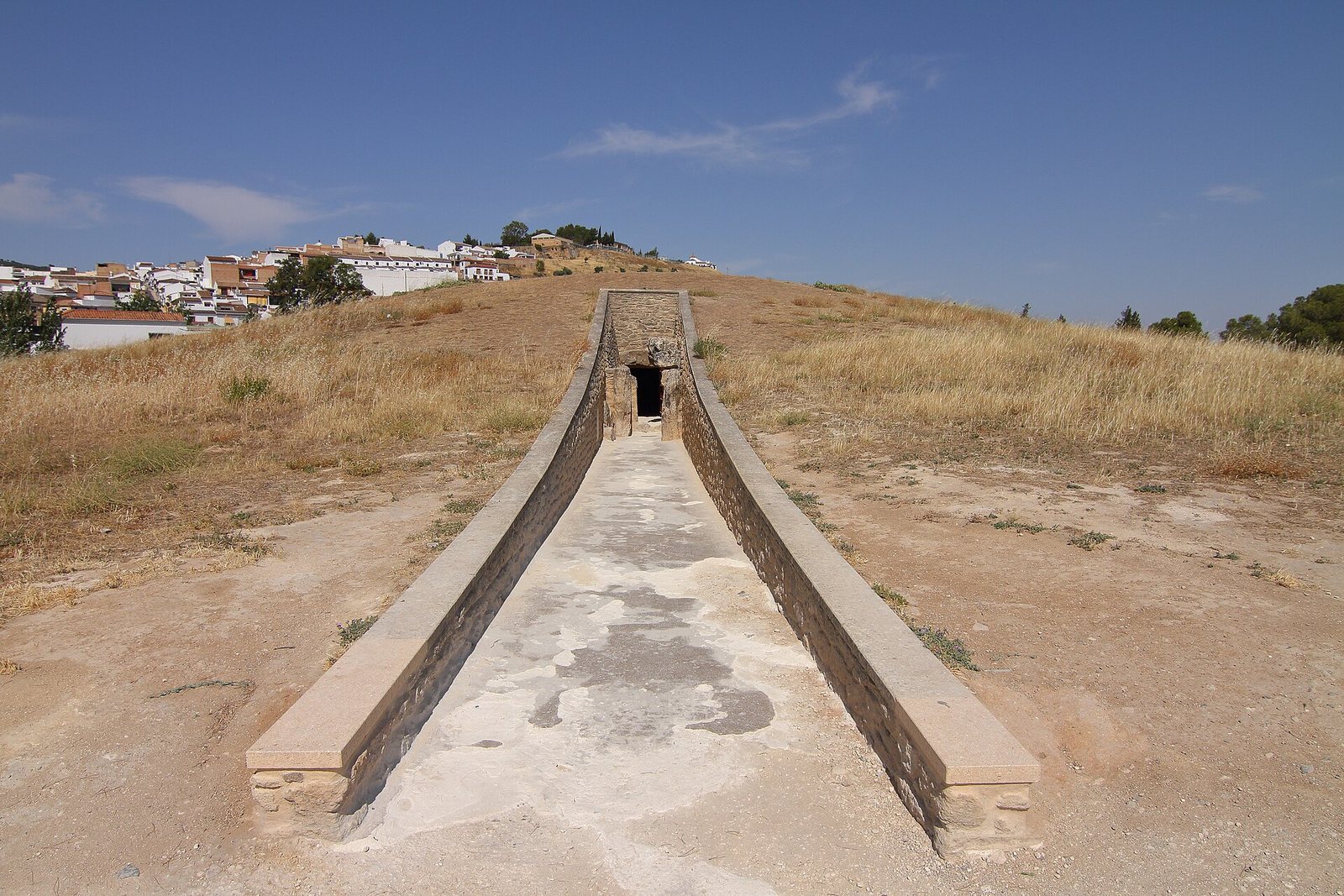
The tomb is made of upright stones and roof slabs, and is covered by a mound of earth and stones about 50 metres in diameter. It stands in the first enclosure of the Antequera Dolmens Site, in the area known as the Field of the Burial Mounds, beside Menga, about 70–90 metres away. The broad valley lies northeast of Antequera. Cerro de Marimacho, a small hill about 200 metres east, contains the nearest remains of a Neolithic settlement; the stones used for the tomb may have come from there. Viera is associated with the Atlantic megalithic tradition, a broad grouping of prehistoric stone monuments in Atlantic Europe, and is described as a prototype of corridor tombs on the Iberian Peninsula. Its entrance faces east-southeast, at an angle of about 96 degrees. At dawn on the spring and autumn equinoxes, sunlight reaches the edge of the chamber. The mound was raised and an entrance space formed during the 2004 conservation work, shaping the exterior seen today.
Passage and chamber
The passage
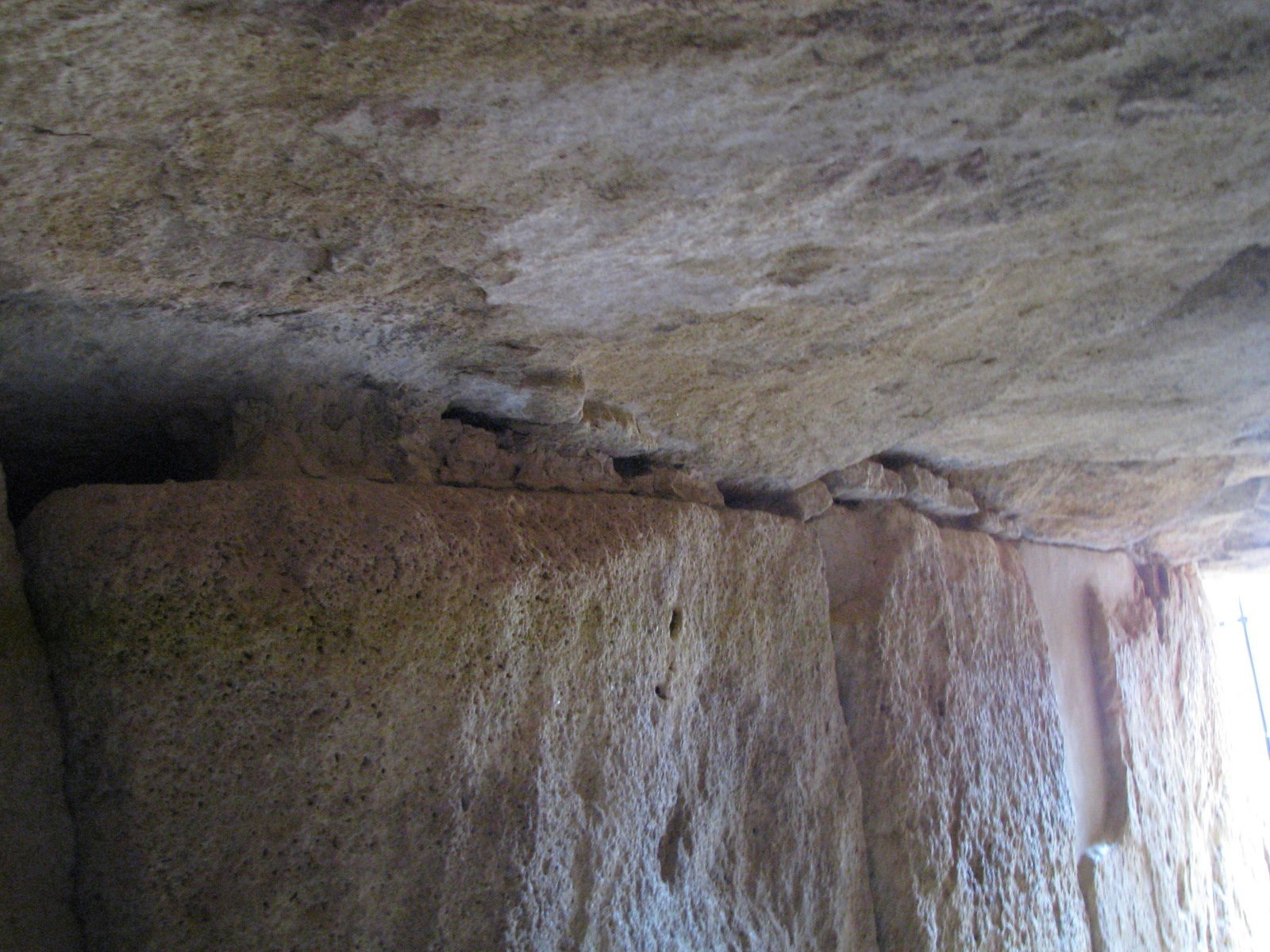
The passage was originally about 22 metres long and now measures just over 21 metres. It widens from about 1.3 metres at the entrance to 1.6 metres near the chamber. Its average height is reported as just over 2 metres, while another stated measurement is 1.85 metres. The stones are about 20–50 centimetres thick. The sides appear originally to have comprised 16 slabs each; 14 remain on the left and 15 on the right. Five roof slabs are intact, and two more survive in fragments. The side stones are more carefully shaped than the roof stones and fit into recesses in the entrance stones and floor. Erosion, probably caused by rain and wind, exposed stones near the front and damaged them. The restored entrance area follows approximately the original dimensions and includes partly damaged upright stones and worked roof blocks.
The chamber
A transverse stone at the passage’s end has a rectangular central opening about 60 by 80 centimetres. Beyond it, the square chamber measures about 1.8 metres in both width and depth, and 2.05–2.10 metres in height. Three other large stones surround it. The chamber is presumed to have served as a burial space.
Markings and finds
Some upright stones along the outer northern part of the passage have cup-shaped hollows associated with schematic art. Traces of reddish paint and oxide remain inside the hollows. Silica-based and bone tools, along with ceramics, were found in the chamber.