Ancient Theater of Chaeronea: A Classical Theater for Civic and Dramatic Use
Site at a Glance
- Popularity
- Low
- Country
- Greece
- Primary era
- Classical
- Eras represented
- Classical
- Civilizations
- Ancient Greek, Roman
- Site type
- Entertainment
- Remains
- Theatre
On this page7 sections
History
Classical period
The Ancient Theater of Chaeronea in Greece was built during the Classical period, associated with the height of ancient Greek culture in the fifth and fourth centuries BCE. It probably hosted civic assemblies and dramatic performances and remained in use throughout the fourth century BCE. A dedicatory inscription names Apollo Daphnephoros, meaning “laurel-bearing,” and Artemis, identified by an epithet.
Ancient Chaeronea occupied a natural passage between southern and northern Greece, near the Phocian cities of Panopeus and Daulis. The surrounding valley saw major battles, including the Battle of Chaeronea in 338 BCE, whose outcome influenced political and social developments in Greece.
Hellenistic and Roman phases
In the Hellenistic period, which followed Alexander the Great’s campaigns and preceded Roman dominance in Greece, the auditorium was reshaped and its seating expanded. This work took place in the third or second century BCE.
The theater’s last major phase extended from the late first century BCE to the early first century CE. Chaeronea was flourishing, and settlement spread toward the plain. Roman-period work increased the theater’s capacity and slightly changed its appearance. A permanent stage building may also have been constructed during this phase.
Archaeological investigations
Greek archaeologist and historian Georgios Sotiriadis investigated the theater in the early twentieth century. In 2008, the Ninth Ephorate of Prehistoric and Classical Antiquities carried out small-scale trial trenching to determine whether a stage building had existed and, if so, to examine its form and date.
Remains
Rock-cut auditorium
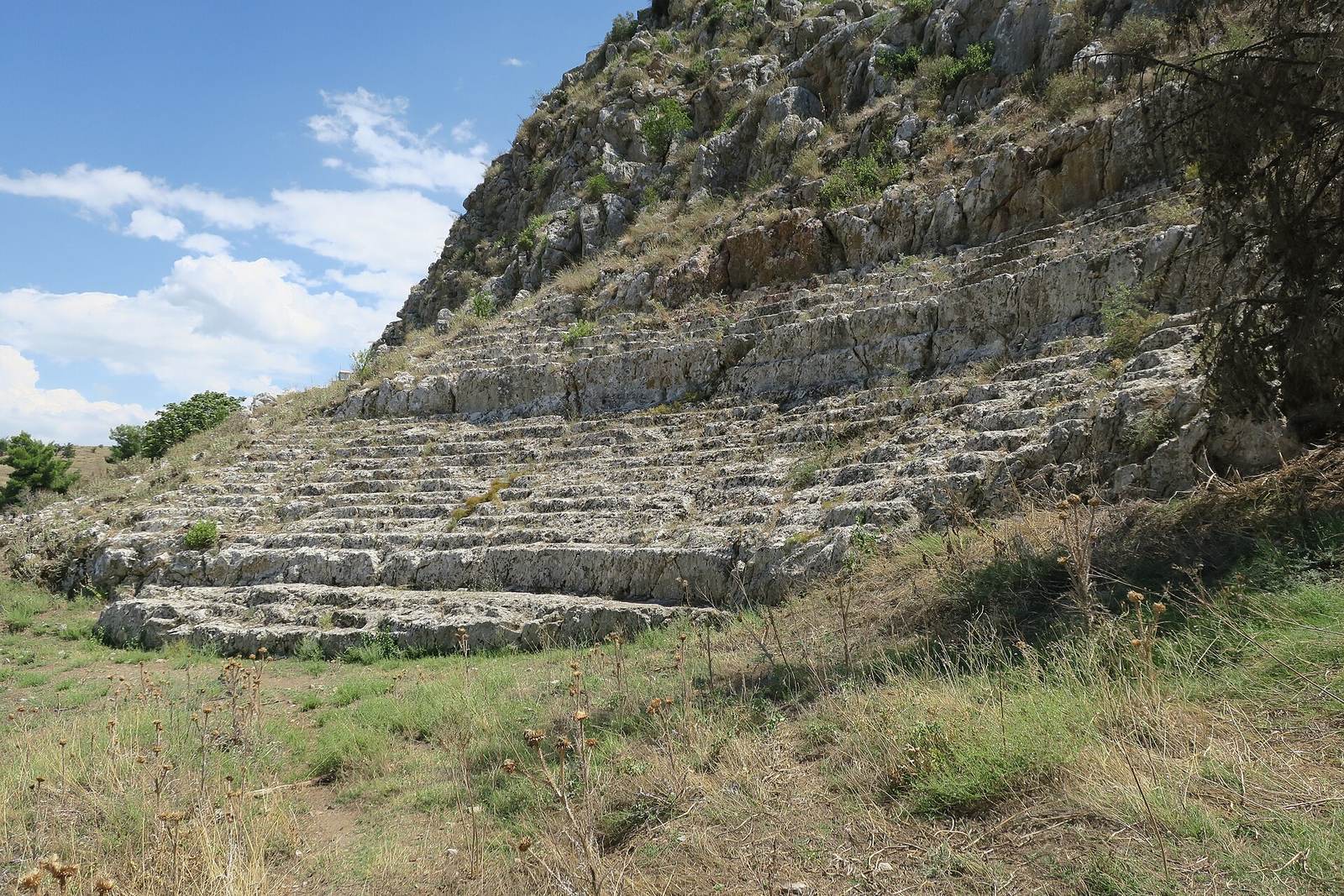
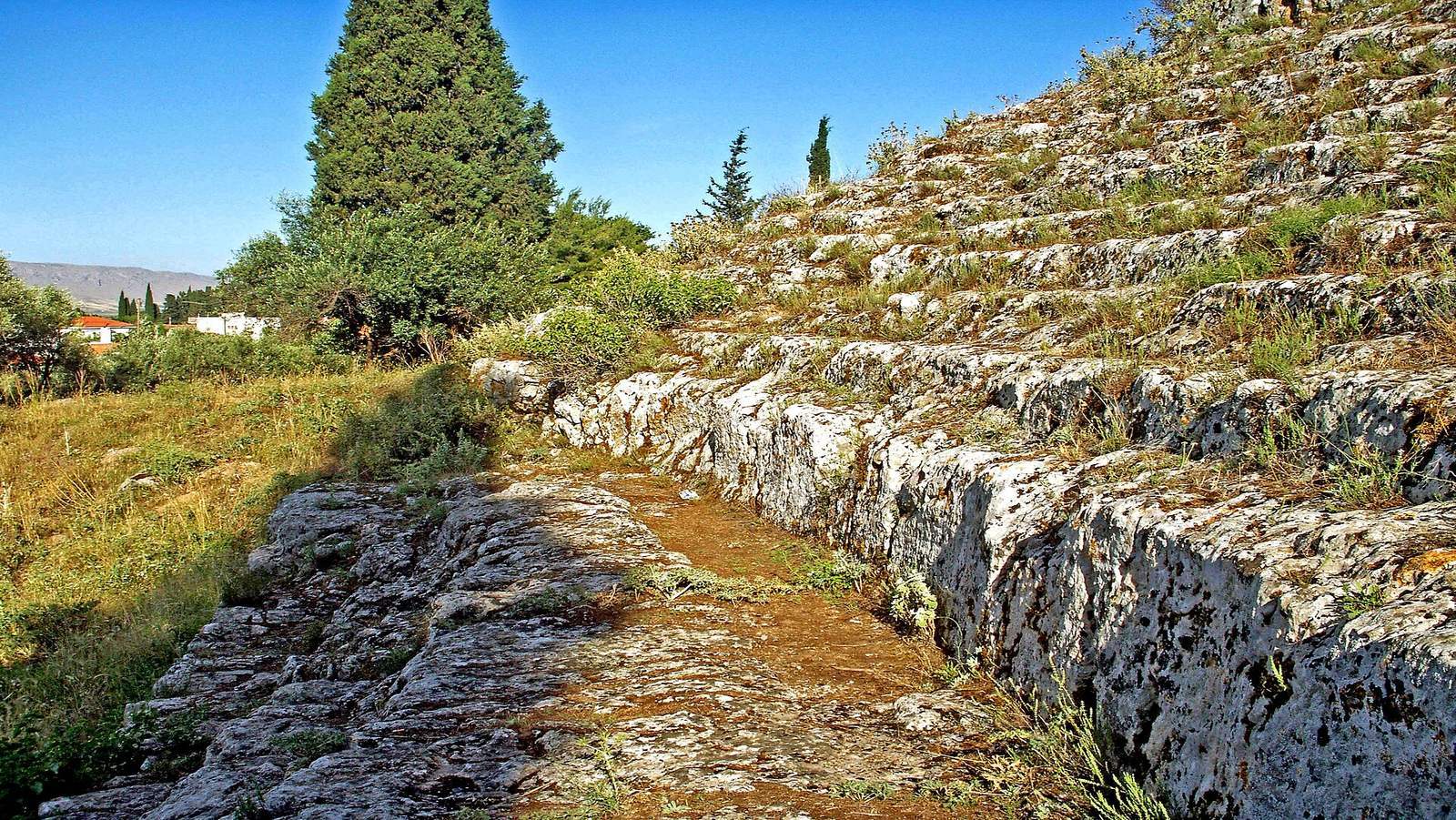
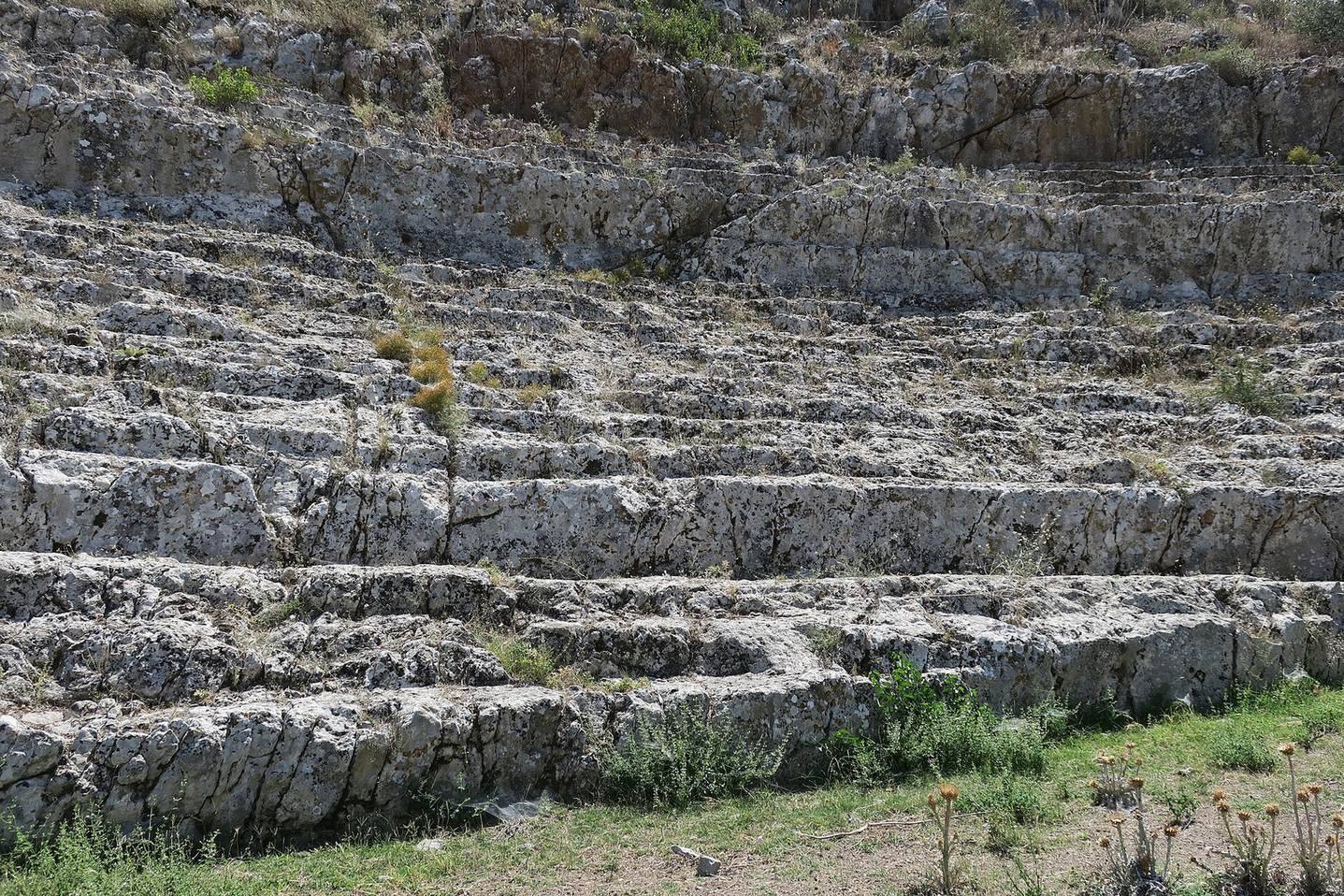
The surviving auditorium is carved into natural rock at the foot of the twin hill of Petrachos, north of the Lion of Chaeronea monument. Two horizontal passageways divide its seating into three tiers, which could hold about 500 spectators. The original auditorium appears to have been straight rather than semicircular. It took a semicircular form in the Hellenistic period, while its visible shape reflects the Roman phase.
Stage area
A substantial Roman-period wall lies in the southeastern part of the theater area, where the stage is thought to have stood. It may have supported the southern side passage. The form of the stage building remains uncertain: it may have been portable, perhaps made of wood, and arranged to suit individual plays. An inscription now in the Archaeological Museum of Chaeronea records that a private couple funded the proskenion, a structure in front of the stage building.