The Convent of San Francesco a Folloni: A Franciscan House in Montella, Italy
Site at a Glance
- Popularity
- Medium
- Country
- Italy
- Primary era
- Early Modern
- Eras represented
- Medieval, Early Modern
- Civilizations
- Kingdom of Naples, Kingdom of Sicily
- Site type
- Religious
- Remains
- Monastery
On this page16 sections
History
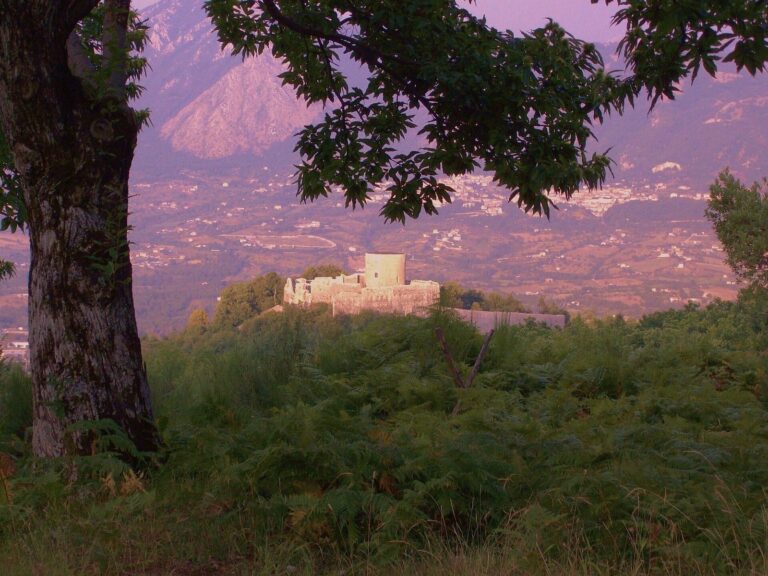
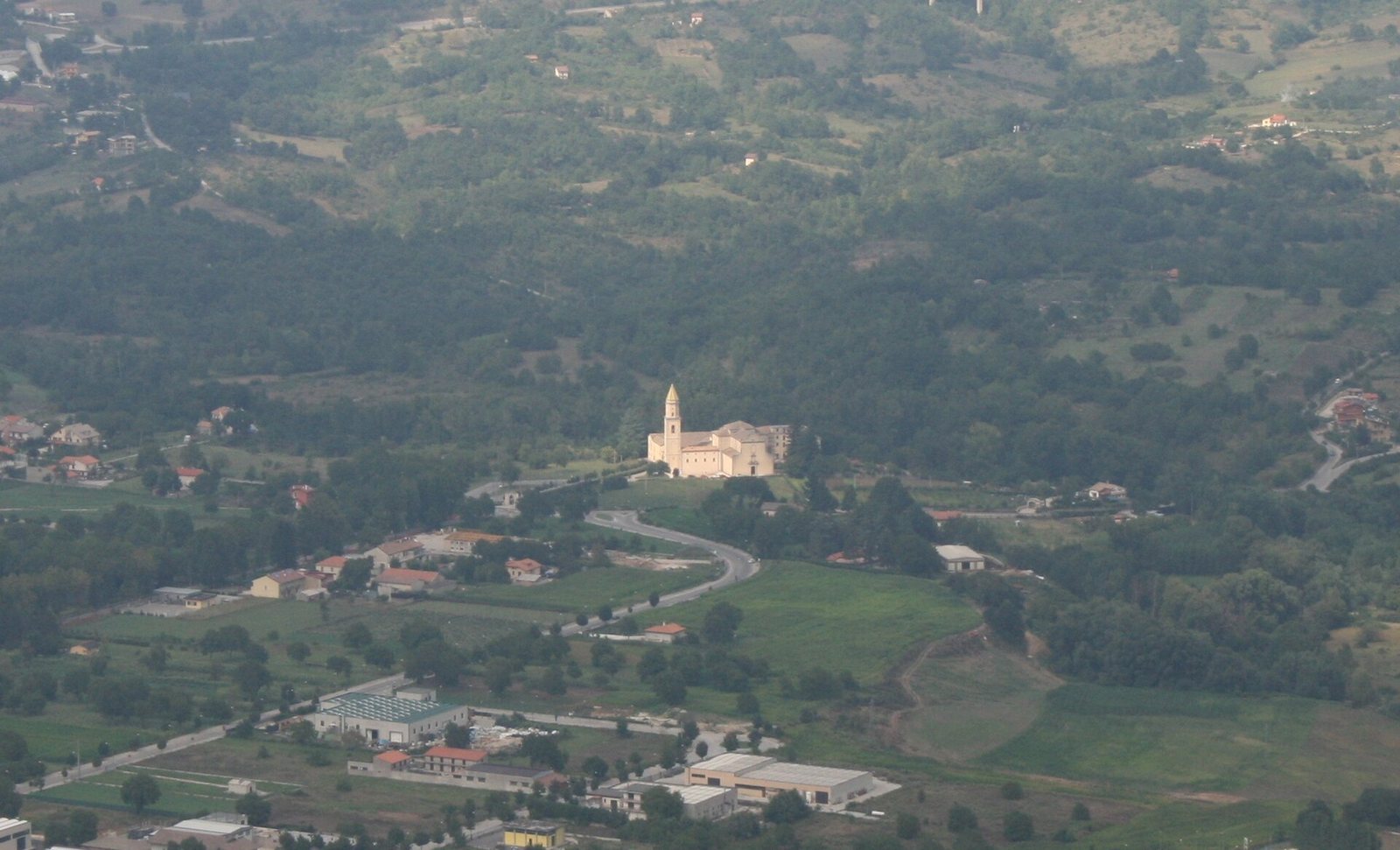
The Convent of San Francesco a Folloni is a Catholic Franciscan house in Montella, Italy, traditionally founded in January 1222 and later shaped by Baroque-Rococo building. Recognized as a national monument, it developed through medieval privileges, local patronage, rebuilding, and archaeological investigation.
Traditional foundation and medieval privileges
Tradition attributes the convent’s foundation to Francis of Assisi, the medieval religious leader whose preaching inspired the Franciscan order. It places the event during his journey toward the Sanctuary of Saint Michael on Mount Gargano. According to the founding legend, people in Montella turned Francis and his companions away, and they sheltered under a holm oak in Folloni forest. Heavy snow supposedly left the tree and their sleeping place untouched. The next morning, local residents asked Francis to leave two friars to establish a convent and a small church dedicated to the Annunciation.
A separate tradition tells of friars caught in the forest during the winter of 1224, short of food and threatened by wolves. They supposedly found a sack of bread at the church door, marked with a French lily emblem. Francis was then at the court of Louis VIII of France, and the story says angels brought the bread. The cloth served as an altar covering for about three centuries before being cut into relics and distributed during the sixteenth century.
Charles I of Anjou became king of Naples in 1266 and restored freedoms to monastic orders in agreement with Pope Clement IV. The convent’s earliest written evidence, dated 5 January 1322, renews an earlier privilege granted by Philip I of Taranto, an Angevin prince, and his wife Catherine of Valois. It allowed the friars to fish in the Calore River, collect wood in Folloni forest, and use Montella’s mill. In 1374, Queen Joanna I of Naples confirmed and expanded concessions made by earlier Angevin rulers.
From 1482, the convent also housed a lay religious association devoted to Saint Bernardino of Siena, which managed property. Around 1600, the association moved to two chapels in Montella’s main church.
Cavaniglia patronage and rebuilding
Grants from successive rulers of Naples and gifts from local feudal lords helped the convent expand. The Cavaniglia family supported a major transformation of the complex during the sixteenth century. After the earthquake of 1732, extensive reconstruction was required, and the convent underwent substantial renewal in the middle of the eighteenth century.
Suppression, restoration, and archaeological investigation
French rule in the Kingdom of Naples, from 1806 to 1815, brought the convent’s suppression and the dispersal of many possessions, including library books. The house reopened in 1828. Surviving books and manuscripts were assembled in the former refectory, and the bishop of Nusco divided the remaining sackcloth relic between the convent church and Montella’s main church. The portion kept at the convent was lost when its sealed container was opened. A fragment held by the Archconfraternity of the Blessed Sacrament, a lay religious association with higher ecclesiastical standing, was returned to the convent in the early 2000s at the request of its guardian, Agnello Stoia.
In the 1930s, the royal household funded restoration of the convent and church. Umberto II stayed at the convent several times, including during the Second World War. The 1980 Irpinia earthquake led to further work and archaeological investigation. In 2004, research rediscovered human remains and garments near the memorial to Diego Cavaniglia, supporting their attribution to the count. Excavations from 2005 to 2010 revealed the walls of an earlier church and a medieval cemetery beneath the cloister.
Remains
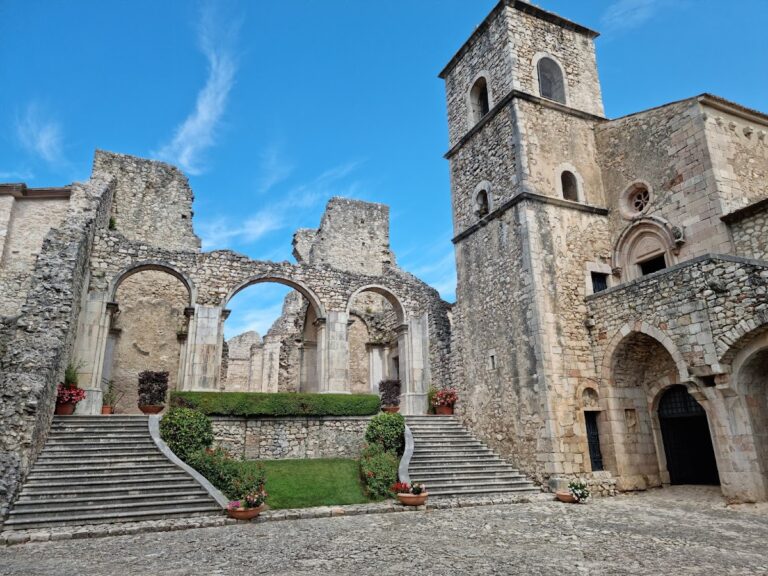
The convent brings together successive church spaces, a cloister, and rooms used by the Franciscan community. Its present church is Baroque-Rococo, while elements of earlier churches have been incorporated into later convent spaces.
Churches and cloister
Eighteenth-century church
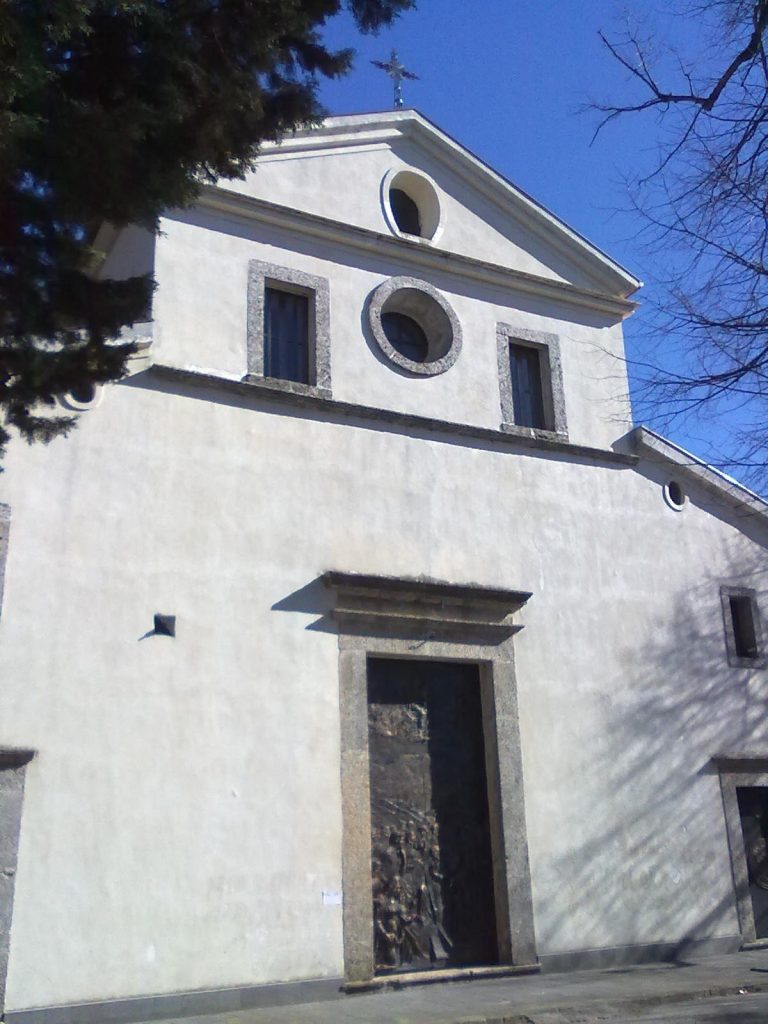
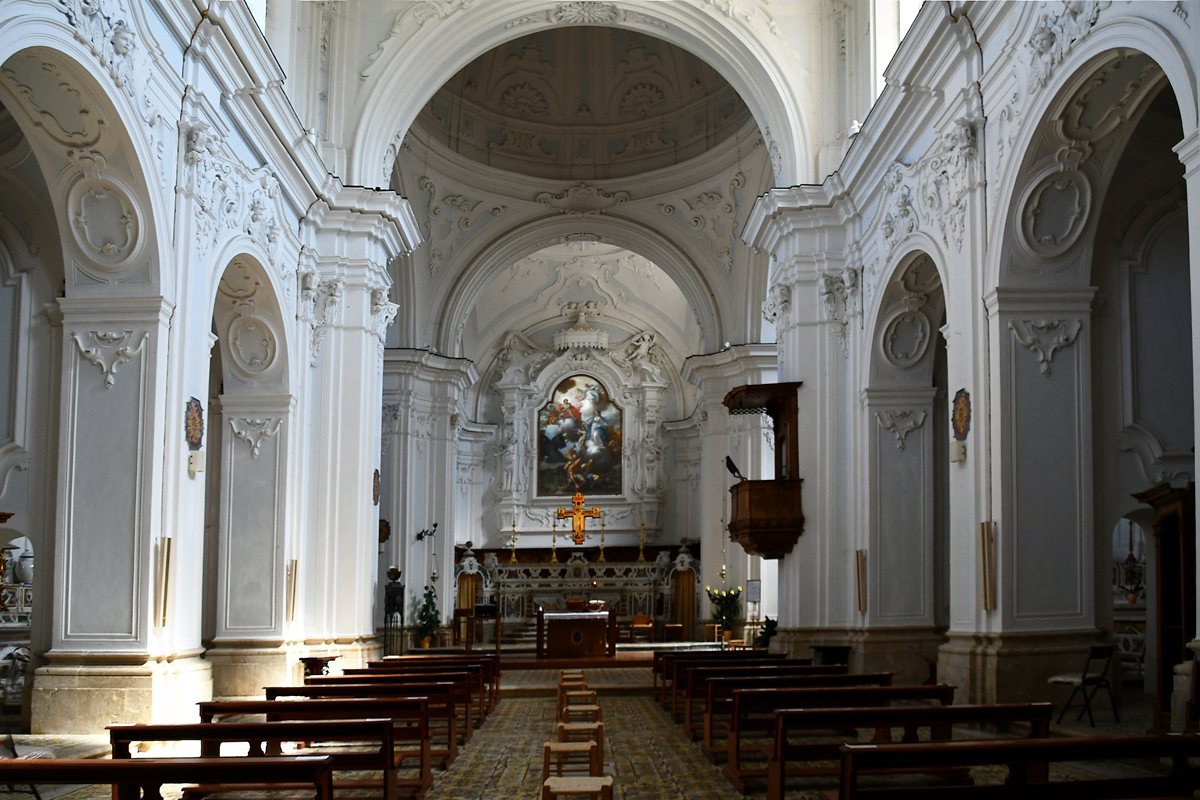
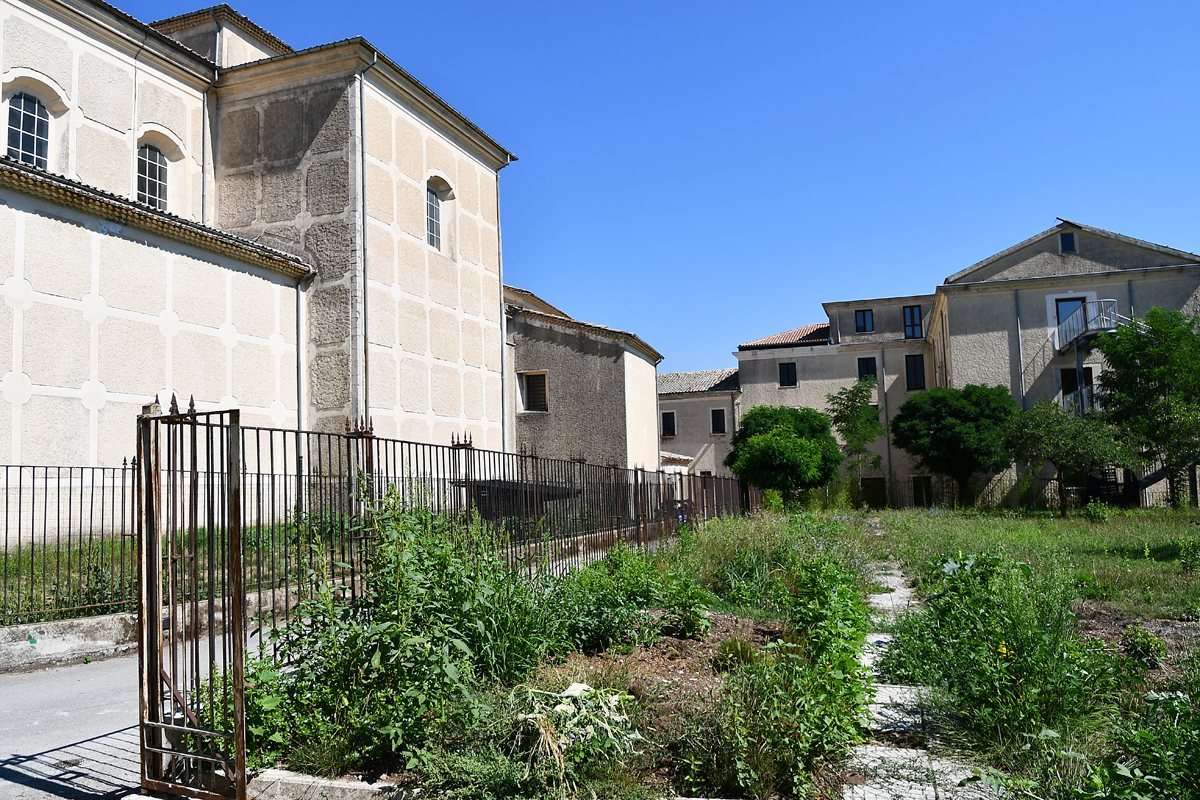
The present church, built in the eighteenth century, has a single nave and side chapels. It is rotated by about 90 degrees from the earlier church and stands roughly 1.8 metres higher. Francesco Conforto executed its stucco work, and its floor is paved with decorated glazed-pottery tiles dating to 1750. A statue of Francis, donated by Umberto II, stands in a niche above the portal.
Earlier churches and convent spaces
The earliest church, dating to the thirteenth century, is thought to have stood where the friars’ cells are now. A second church, built in the fifteenth century, occupied the area of the present entrance and cloister. It had a single nave with numerous side chapels. The refectory was built between the two church sites, and its sixteenth-century room now houses the library.
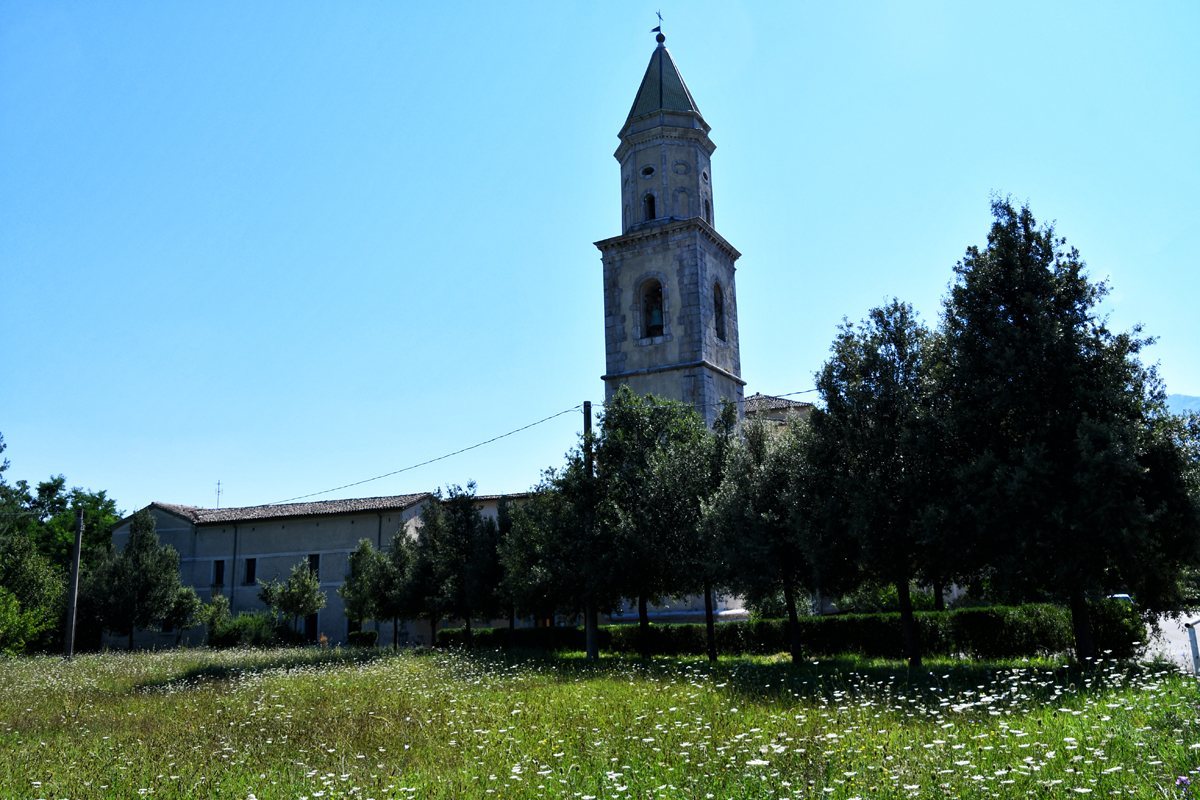
Part of the earlier church’s outer entrance space now serves as the convent’s entrance portico. Its curved sanctuary end became the lower-level Chapel of the Crucifix, while the bell tower retains its arrangement from the second half of the fifteenth century. The cloister lies between the earlier church areas, on a site associated with an ancient church that has been archaeologically investigated. Other parts of the complex are used by the Conventual Friars Minor, a branch of the Franciscan order.
Burials and memorials
Medieval cemetery
Excavation beneath the cloister floor uncovered a Franciscan cemetery with burials dated from 1190 to 1550. Several hundred people were recovered and studied; most came from Montella. The dead were buried with their arms crossed over their chests and their heads resting on stone pillows. One individual identified as non-local was radiocarbon-dated to AD 1050-1249. He may have been one of Francis’s traveling companions, but that identification remains uncertain.
Diego Cavaniglia’s memorial and remains
The convent sacristy contains the stone coffin of Diego I Cavaniglia, Count of Montella, made by sculptor Jacopo della Pila and also known as the Monument of the Lovers. Diego died in 1481 during the battle to recover Otranto after its Ottoman conquest in 1480. His widow, Margherita Orsini, commissioned the monument and later asked to be buried beside him. She died in 1521, and her grave slab was moved during eighteenth-century construction work; it is now set into the floor on the eastern side of the transept.
During consolidation work after the 1980 earthquake, workers found a skeleton near Diego’s monument, wrapped it in plastic, and placed it in a cavity behind the structure. Agnello Stoia’s research led to its rediscovery in 2004, along with funerary garments. The University of Pisa’s team studying health and disease in human remains described the skeleton as male, about 30 years old, approximately 175 centimetres tall, and robustly built. These observations and further analyses, considered alongside earlier DNA studies of members of the Aragonese court, supported its identification as Diego’s remains.
Relics, collections, and associated spaces
Bread-sack relic
A surviving fragment associated with the bread-sack tradition is displayed in a purpose-made container in the Chapel of the Crucifix, to the right of the church altar. Radiocarbon analysis dated part of the cloth to AD 1220-1295. Tests also detected ergosterol, a fungal compound used as a marker for the former presence of bread.
Museum collection
The convent museum preserves objects gathered over the centuries, including sixteenth-century silk-brocade vestments, wooden furnishings and objects, ceramics, silverware, textiles, prints from the fifteenth to nineteenth centuries, and relics. The fifteenth-century garments recovered with Cavaniglia’s remains include a giornea, a historical outer garment, and a farsetto, a fitted doublet. Restored after its discovery in 2004, the giornea has been exhibited in the museum since 2011 and is described as the only surviving example of its kind.
Library and Umberto II’s rooms
Established in the fifteenth century, the adjoining library holds about 20,000 volumes, including works published in Italy and abroad from the early sixteenth through the eighteenth centuries. Nearby rooms associated with Umberto II include an antechamber, bedroom, and washroom, with their original furnishings.
Fountain of the Miracle
The remains of the Fountain of the Miracle lie northwest of the convent in Folloni forest. Tradition says Francis caused a clear spring to emerge at the foot of a Turkey oak because the Calore River was muddy and workers needed drinking water. The surviving fountain consists of two sections of masonry wall and its pavement.