Tombs of Via Latina: A Roman Funerary Complex in Rome
Site at a Glance
- Popularity
- Medium
- Country
- Italy
- Primary era
- Classical
- Eras represented
- Classical, Modern
- Civilizations
- Italian, Papal States, Roman
- Site type
- Burial
- Remains
- Necropolis
On this page14 sections
History
The Tombs of Via Latina are a Roman funerary complex in Rome, Italy, whose tombs date chiefly to the second century AD. The ancient road connected Rome with Capua and passed the site at the third milestone from Rome. Archaeological remains in the area span the Republican period, before imperial rule, and the early Middle Ages, the centuries following the end of the Western Roman Empire.
Roman and early Christian phases
The Tomb of the Pancratii dates to the reign of Hadrian (AD 117–138). Its name derives from an inscription referring to a funerary association, an organization that arranged burials for its members. The Tomb of the Barberini takes its name from a family that owned the property and is also known as the Tomb of the Cornelii. A sixteenth-century drawing by Pirro Ligorio reproduces an inscription naming Quintus Cornelius as a family forebear, supporting the tomb’s association with the Cornelii. The Tomb of the Valerii is traditionally linked to that ancient Roman family, but the attribution is unconfirmed and the name alone does not establish who was buried there.
A large villa behind the Tomb of the Pancratii began to be built between the late first and early second centuries AD. Around the middle of the second century, it passed to the senatorial Servili Silani family, then entered imperial ownership under Commodus, who ruled from AD 180 to 192. Commodus may have had a member of the Silani family executed. About a century later, the villa passed to the Anicii, another prominent Roman family.
In the fifth century, Demetriade, a descendant of the Anicii, commissioned the Basilica of Saint Stephen the Protomartyr. It was an early Christian church dedicated to Stephen, traditionally regarded as the first Christian martyr. The basilica became a pilgrimage destination and remained in use for that purpose until the thirteenth century, when it was abandoned.
Later use and archaeological work
The Tomb of the Barberini was later used as a hayloft. During the eighteenth century, its floor between the two above-ground levels was removed. The Cube-shaped Tomb was discovered in 1856 between the third and fourth milestones.
Pope Pius IX authorized Lorenzo Fortunati, a schoolteacher who pursued archaeology, to excavate at his own expense in 1857–58. Fortunati sold some of the finds and shared the proceeds with the landowners. The removal of large sarcophagi badly damaged tombs. Disputes over his conduct and a conflict with the Pontifical Commission of Sacred Archaeology, a Holy See body concerned with protecting Christian remains, followed the discovery of the early Christian basilica. His permission to excavate was revoked in 1859. Fortunati had discovered the Tomb of Fortunati 25 and the Tomb of Baccelli in 1857.
An above-ground protective structure was built over ancient walls at the Tomb of the Valerii between 1859 and 1861. Excavations near the surviving road paving beside that tomb took place in 1865. Finds were made at the Tomb of Fortunati 25 in 1876, and the Italian state acquired part of the area in 1879. Further finds were recovered near the Tomb of Baccelli that year. Excavations under the supervision of archaeologist Rodolfo Lanciani began in 1900. The Tomb of Baccelli suffered collapses in 1959, and reinforcing supports were installed in 1963. In 1998, the Italian state began further excavation at the Tomb of Fortunati 25. The site is now part of the Appia Antica Archaeological Park and is designated an Italian National Monument.
Remains
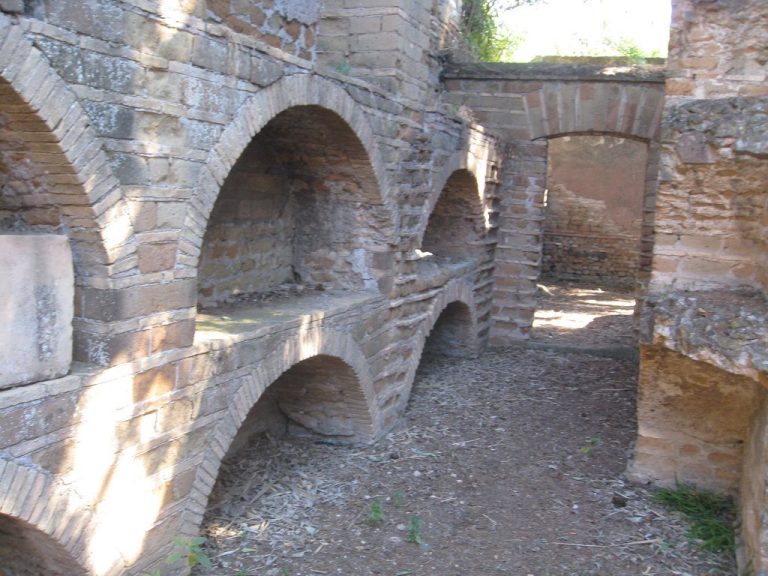
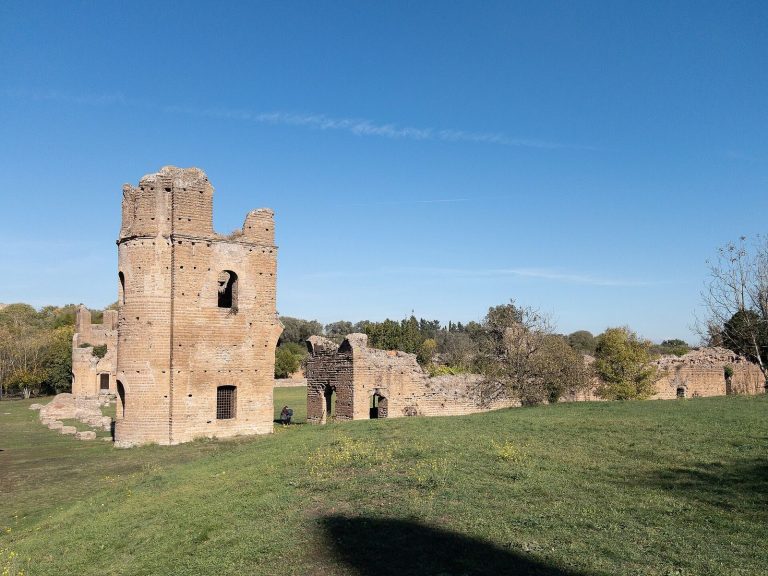
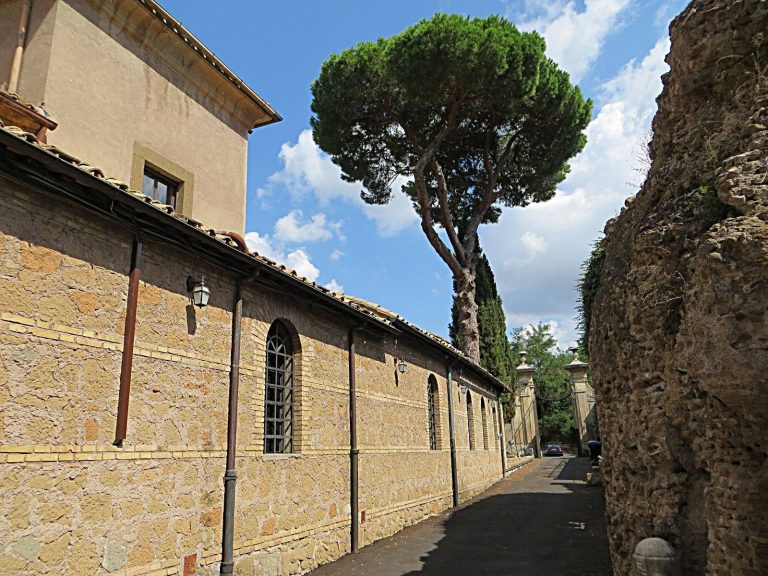
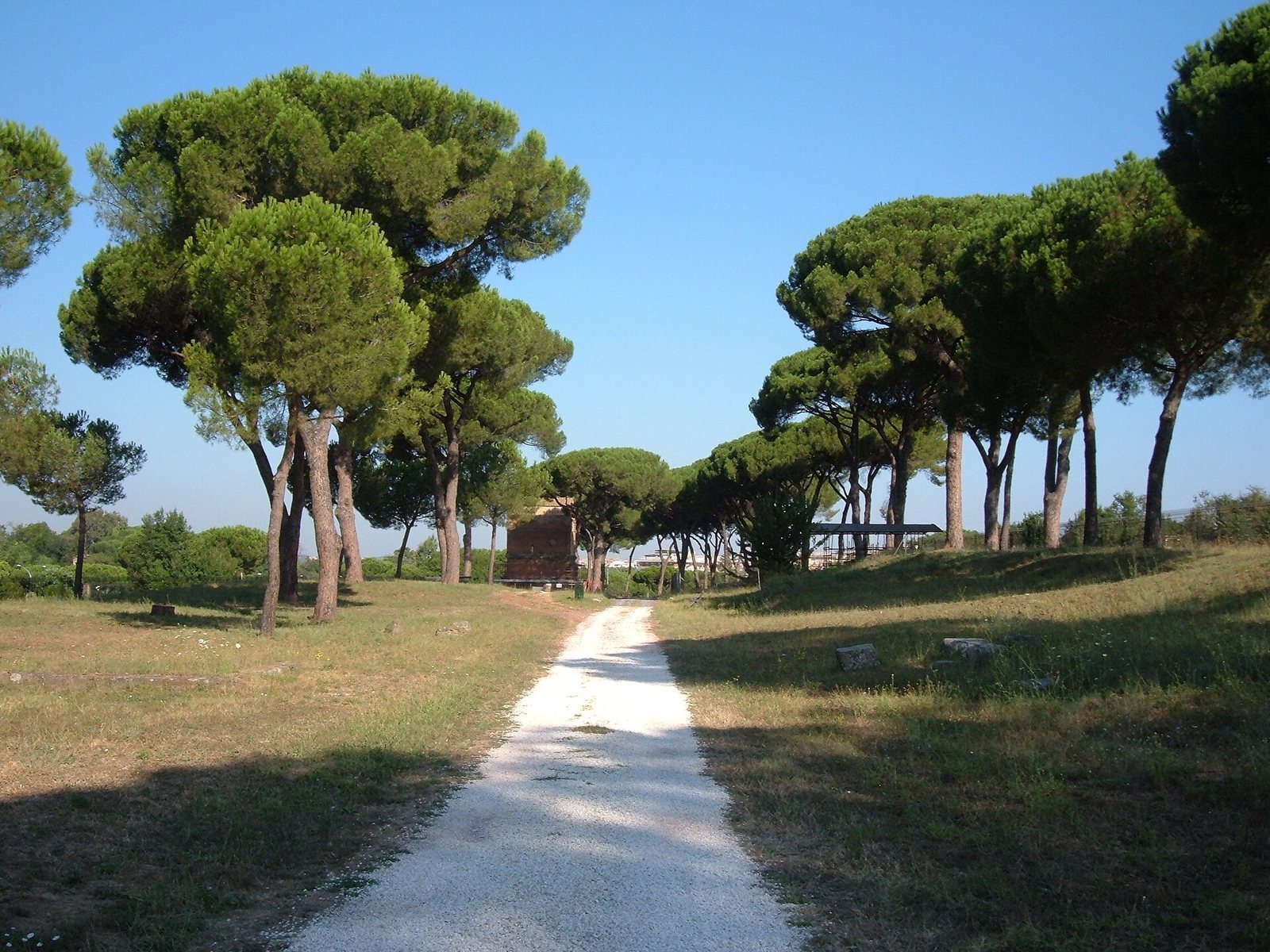
The archaeological park covers about 10,000 square metres and extends roughly 450 metres along the ancient road. About 500 metres of original paving at the road’s third mile have been uncovered, preserving much of the road’s original appearance. Brick tomb structures and their underground burial chambers form the principal surviving architecture.
The principal tombs
Tomb of the Barberini
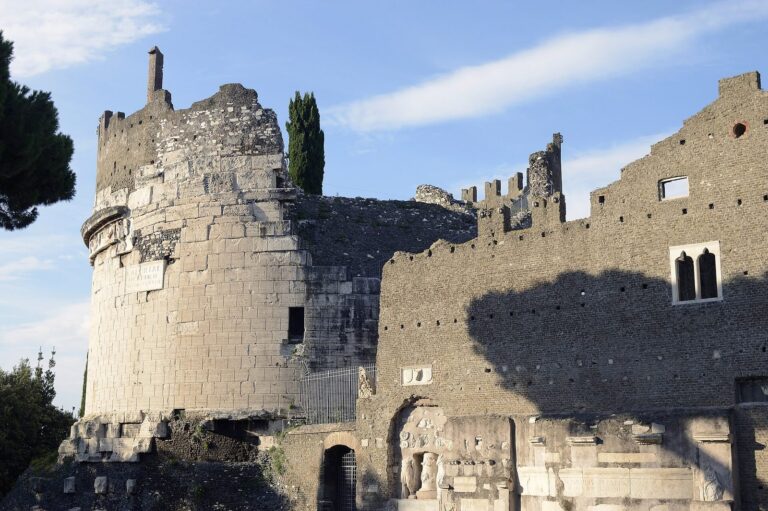
The Tomb of the Barberini has two above-ground levels, used for funeral ceremonies, above an underground burial chamber. Built of red and yellow brick, the façade is damaged, with gaps and infilled sections. Terracotta architectural decoration survives, and its original surfaces were colored with pigments. The entrance faces away from the Via Latina.
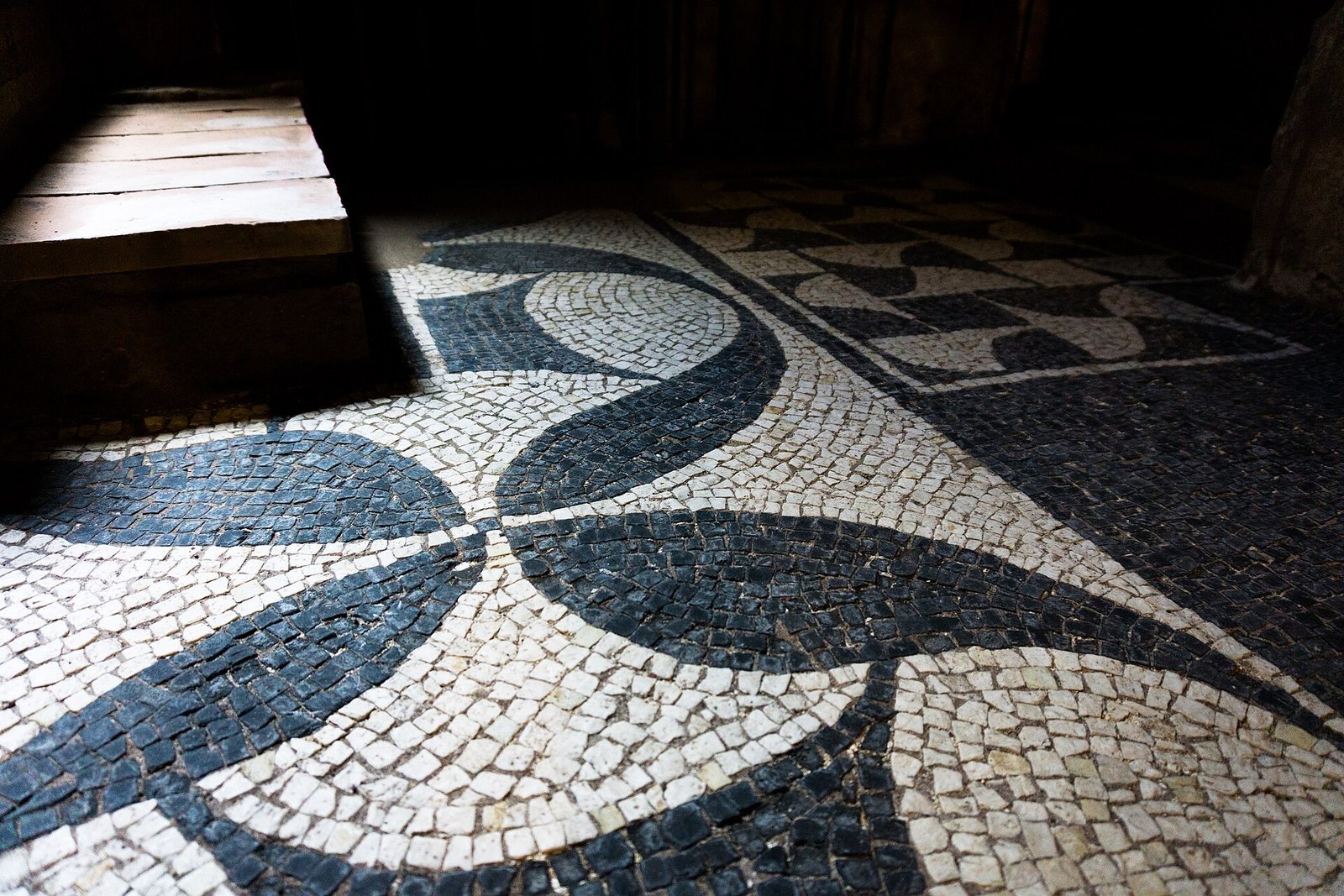
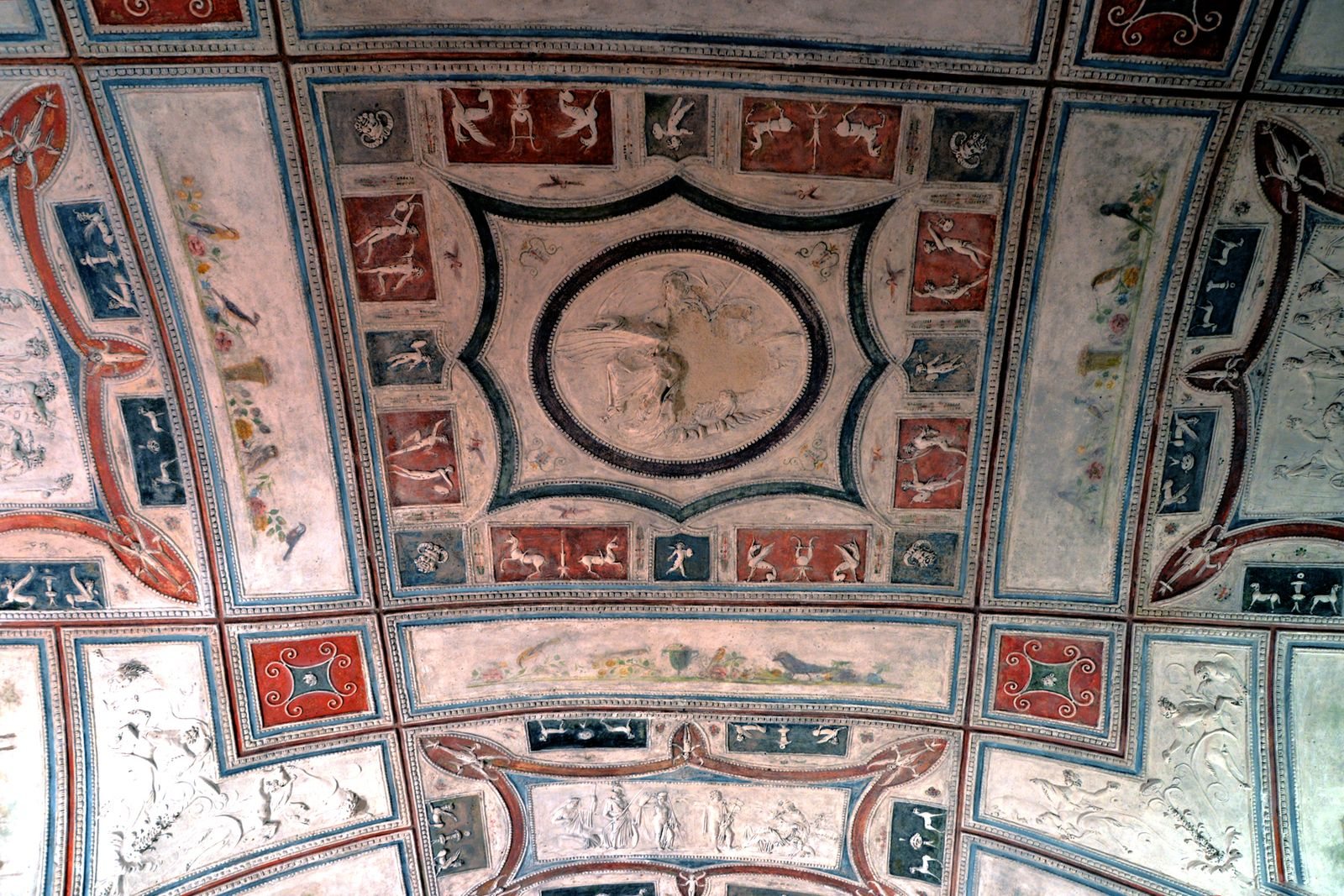
The burial chamber held the remains of several dozen people and is surrounded on all four sides by a corridor. Its floor retains a black-and-white mosaic. Paintings on the vaulted ceiling show figures, birds, and sea creatures against a brick-red ground, with blue bands and stucco, or molded plaster, details. A modern structure provides access to the restored underground chamber. A stone coffin found in the tomb, carved with the Greek hero Protesilaus and his wife Laodamia, is now in the Vatican Museums.
Tomb of the Pancratii
A modern building protects the Tomb of the Pancratii, where ancient fabric survives to about a metre above ground. The entrance room has a black-and-white mosaic with marine scenes. A staircase on the left descends to two underground chambers. In the first, a painted barrel vault, a continuous arched ceiling, depicts female figures among natural and architectural landscapes. Red-brick arches run along the chamber’s sides. At the far end stands a fluted sarcophagus with a circular panel showing the deceased couple; an inscription below refers to the funerary association of the Pancratii.
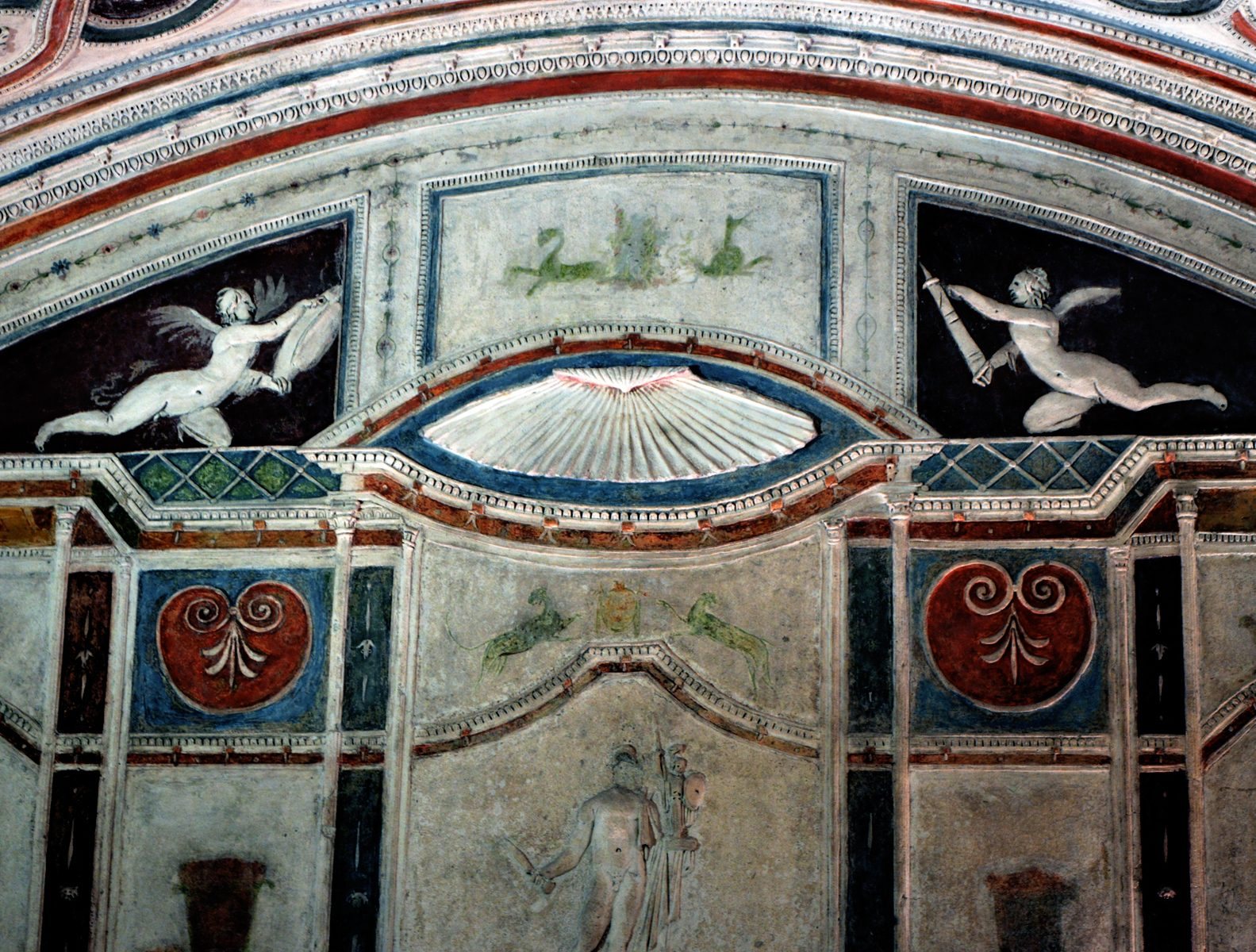
The second chamber has a cross vault, formed by intersecting vaulted ceilings, with shallow arches. Its multicolored wall paintings and stucco decoration cover the chamber. White stucco panels depict the Judgment of Paris, involving the Trojan prince Paris, and the story of Alcestis and Admetus, in which Alcestis sacrificed herself for her husband and was restored to life. Other figures include Priam, king of Troy, Achilles, a Greek hero of the Trojan War, and Hercules, known for his labors. A central circular panel shows a seated male figure with a scepter on an eagle. Painted landscapes, birds, and geometric patterns complete the decoration.
Several sarcophagi from the second chamber are now in the Vatican Museums. Their scenes include Adonis, associated with death and renewal; Hippolytus and his stepmother Phaedra; and Bacchus, the Roman name for Dionysus, a god associated with wine and ecstatic rites, with Ariadne. A large marble sarcophagus remains at the centre of the underground complex.
Tomb of the Valerii
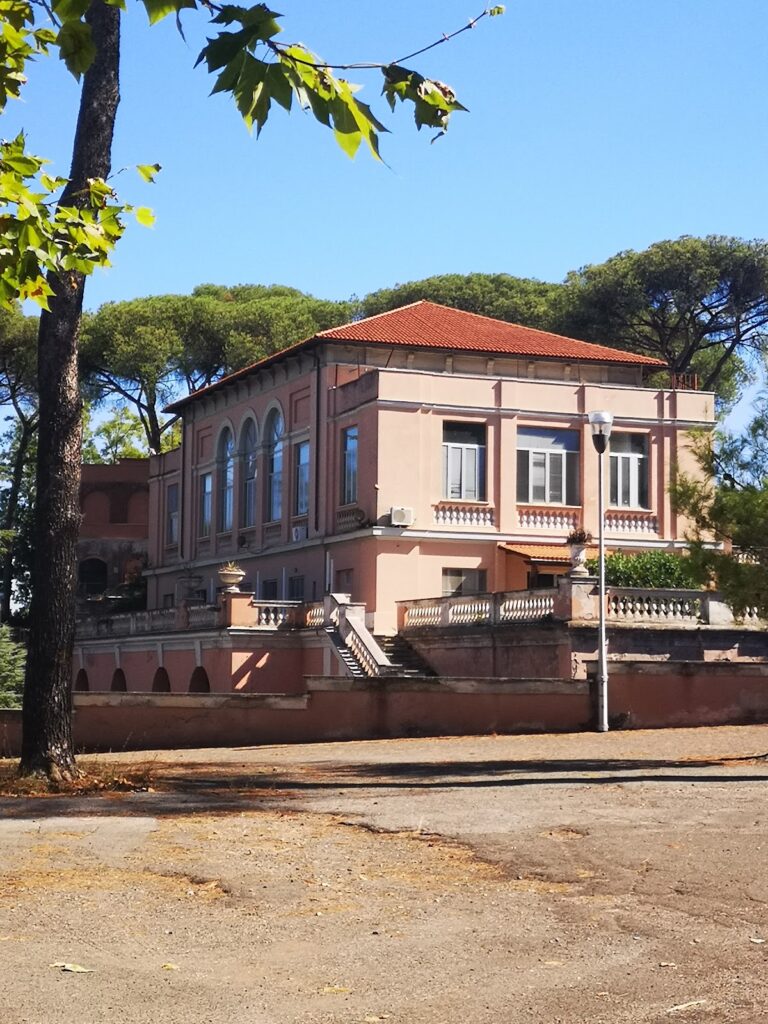
The Tomb of the Valerii is a two-storey brick structure, largely reconstructed above ground. Its front portico, a roofed entrance colonnade, has two columns. Beyond the entrance is an open-to-the-sky area, from which two symmetrical staircases descend to the underground burial chambers. The chambers were originally lined with marble slabs.
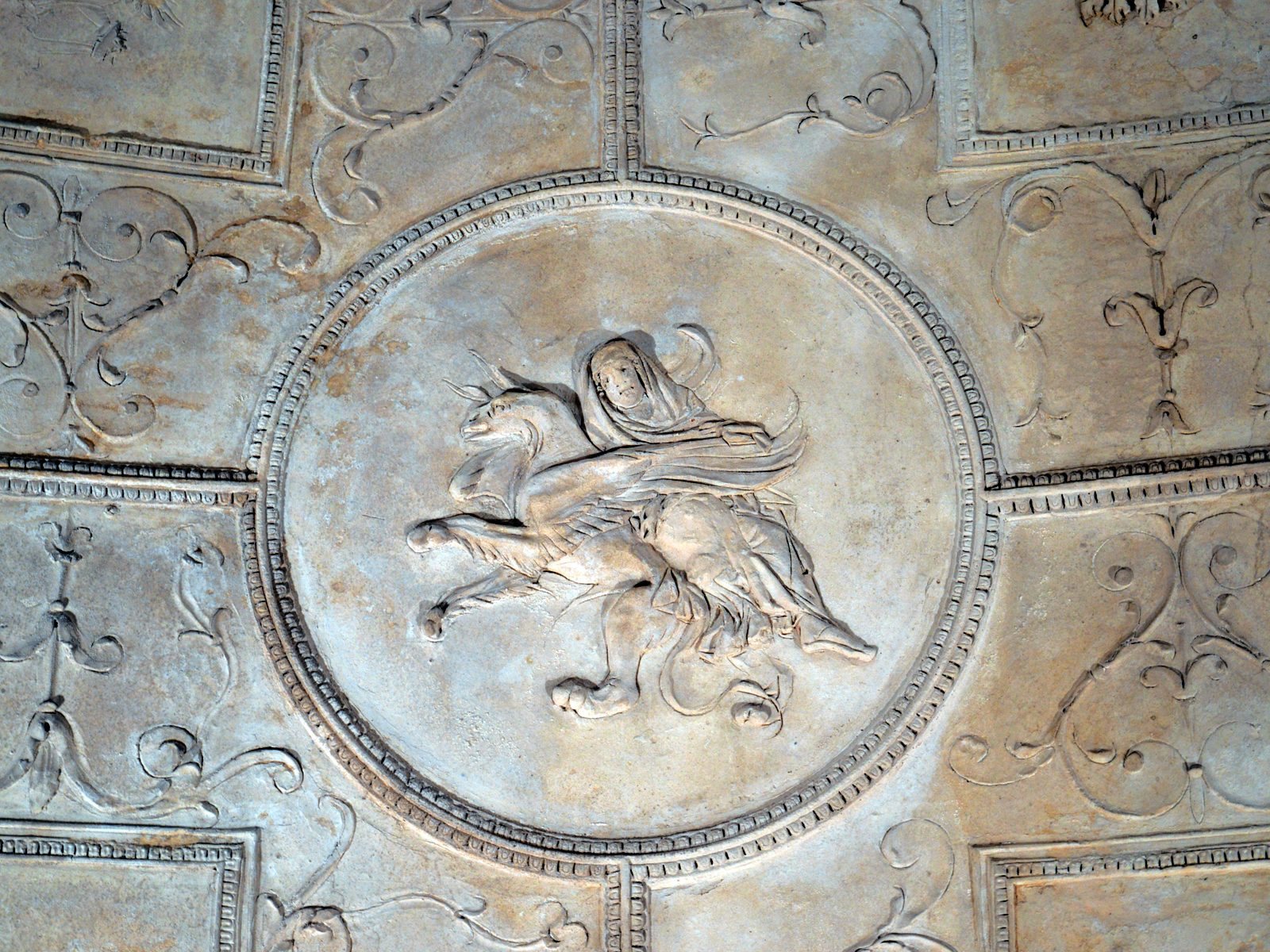
White stucco medallions and panels decorate the barrel vaults and lunettes, semicircular areas in a wall or vault. Their subjects include scenes of Dionysus, marine animals, and female figures. A central circular panel shows a veiled woman, probably being carried into the afterlife on a griffin, a mythical creature with a lion’s body and an eagle’s head and wings.
Villa and early Christian church
Villa of Demetriade
The extensive Villa of Demetriade lay behind the Tomb of the Pancratii. Its excavated remains included two entrances, numerous small rooms interpreted as storerooms, a portico, and a large central courtyard. Sculptures, mosaics, stucco decoration, and inscriptions from the villa provide evidence for its construction date. Much of the excavated fabric was later reburied beneath sports fields on land belonging to the Province of Rome.
Basilica of Saint Stephen the Protomartyr
The basilica originally had three aisles, with a central space flanked by side aisles, and a baptismal font on its north side. It is the visible part of the villa complex.
Other excavated finds
Tomb of Fortunati 25
Finds from the tomb include a small faun’s head; fragments of a marble statue base retaining parts of human feet and dog paws; a small slab measuring 23 by 16 centimetres; and part of a gaming board measuring 36 by 66 centimetres, marked with twelve roughly made circles.
Finds near the Tomb of Baccelli
Finds made near the tomb in 1879 include two inscribed marble grave markers, measuring 68 and 86 centimetres high, and fragments of inscribed marble slabs, including one piece measuring 38 by 35 centimetres. Other remains include a balance beam and weights, square-section heating pipes, round ceramic pipes, and stamped bricks.