Tumuli of Seron: Gallo-Roman Burial Mounds in Belgium
Site at a Glance
- Popularity
- Very Low
- Country
- Belgium
- Primary era
- Classical
- Eras represented
- Classical, Modern
- Civilizations
- Belgian, Roman
- Site type
- Burial
- Remains
- Burial Mound
On this page8 sections
History
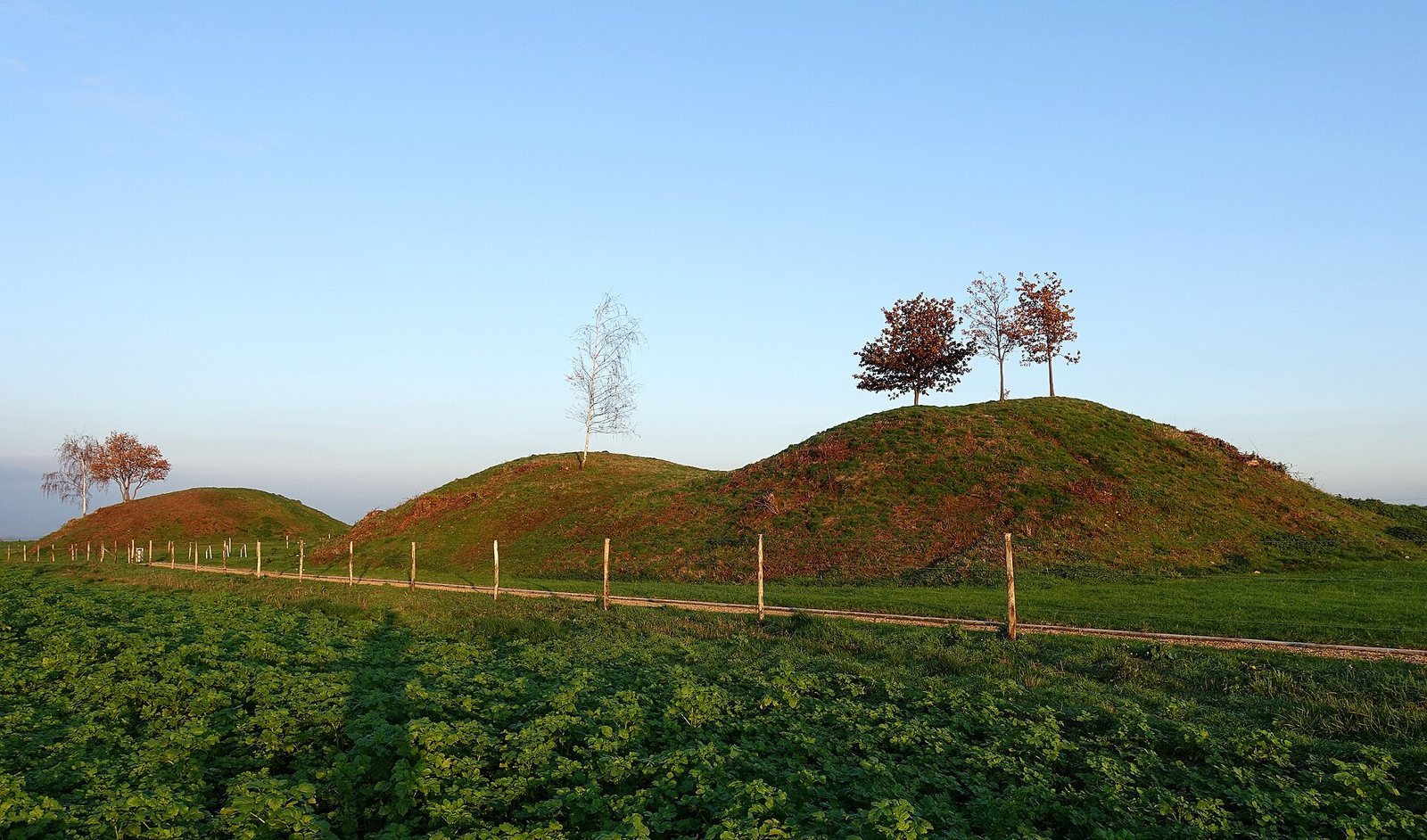
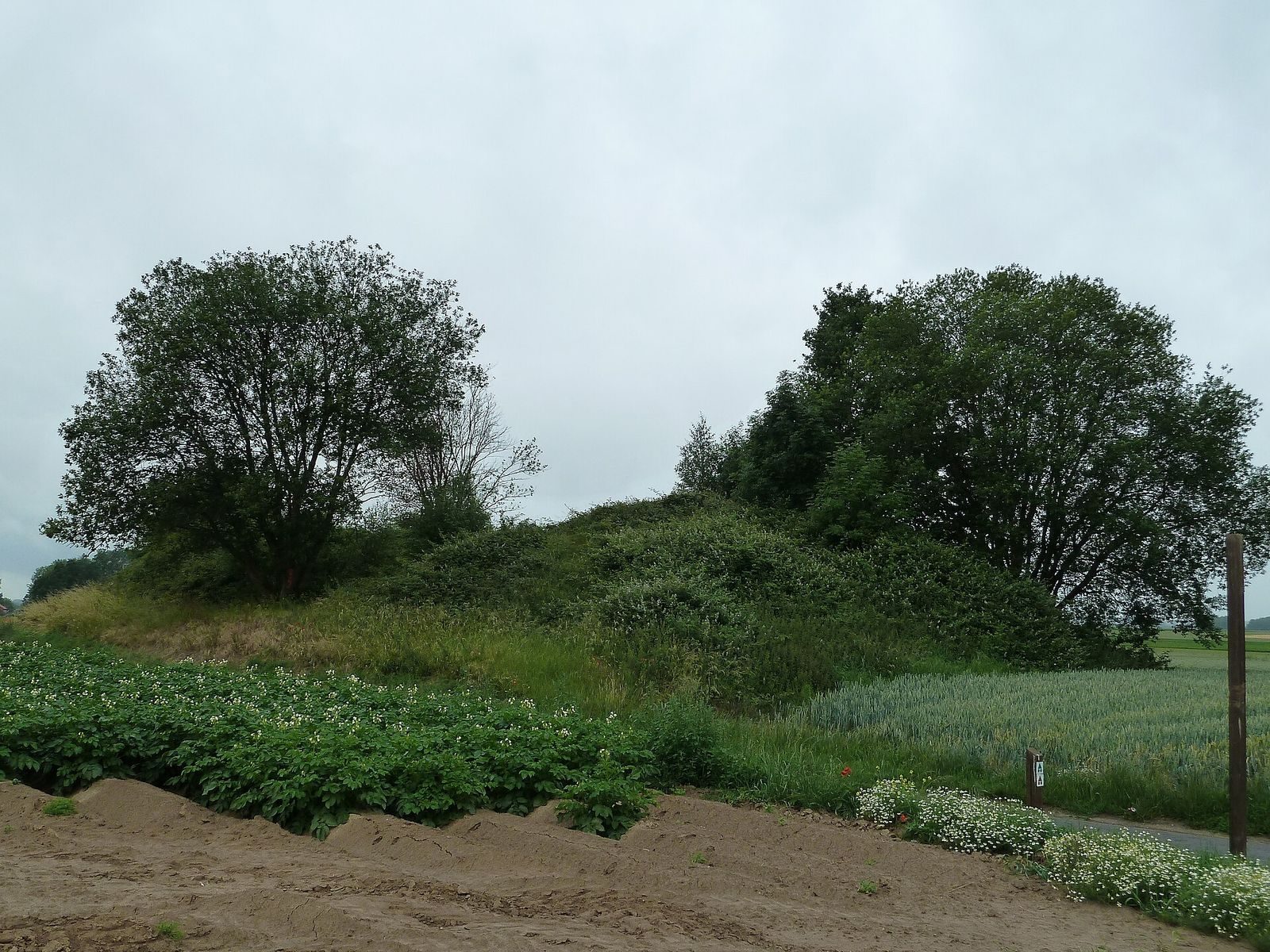
The Tumuli of Seron are three Gallo-Roman burial mounds dating to the second century AD, north of Seron in Forville, part of Fernelmont, Belgium. A tumulus is an artificial mound raised over a burial; Gallo-Roman describes the Roman-period culture of Gaul and its inhabitants.
The group is also known locally as Campagne des Tombes, meaning “Field of Tombs.” A 1777 Ferraris map calls them Tombes de Buhay, while current maps use Tombes à Seron.
Roman-period burials
Excavations in November 1854 and spring 1855 were led by Eugène del Marmol, a Belgian archaeologist and president of the Namur Archaeological Society, a local learned organization. Work on the central mound, T2, recovered a sestertius, a Roman coin, of Emperor Hadrian, who ruled from AD 117 to 138. The burials belong to the second century AD. T2 is dated to about AD 110 to 150, with the coin providing an earliest date of AD 119 to 121.
The purpose of grouping burial mounds remains uncertain, with possible explanations including ritual, symbolism, or observation. Archaeologists commonly interpret such mounds as places where the cremated ashes of owners of Roman-organized estates were buried, usually near a villa, a rural estate and its associated buildings. The Hanret tumuli are associated with a very large, unexcavated villa at Forville. Near Seron, the Meeffe villa lies about 1,300 metres northeast, and the villa at Aiwisses in Acosse about 1,500 metres east.
Protection and modern assessment
The three mounds have been protected as monuments since 1978, and the group with its surroundings was also protected as a site. Fernelmont began a heritage-certification process in 2007 to improve preservation, acquiring adjoining agricultural land, clearing scrub, and installing fences. In 2013 the site joined Wallonia’s list of exceptional immovable heritage. From 5 June to 18 July 2018, the Walloon Heritage Agency assessed how much the mounds’ original height had been reduced and their slopes softened.
Remains
Mound layout and setting
The three mounds stand on the Forville plateau, which reaches 165 metres in elevation, between the Mehaigne’s northern alluvial plains and lower plateaus overlooking the Meuse valley to the south. The open site affords distant views across the Hesbaye of Namur. The mounds average about 6 metres high and 25 metres across. Southern mound T1 measures 25.25 metres in diameter, central mound T2 measures 28.30 metres, and northern mound T3 measures 25.80 metres. T1 and T2 form a pair about 35 metres apart, while T3 stands farther north. The group lies at the junction of Rue des Tumuli and the Chemin de Hemptinne aux Tombes, along a dirt track and the minor road between Meeffe and Forville.
Enclosure at the northern mound
At the isolated northern mound, an enclosure survives in fragments on two sides. Made from sandstone pieces, it is about 60 centimetres wide and has a reconstructed square plan measuring roughly 29 metres on each side. The enclosure has been interpreted as adding to the complex’s monumentality and marking a boundary between the dead and the living. The mounds themselves were the visible part of a larger funerary complex.
Foundations and field evidence
An assessment at the mound bases opened 21 trenches, took dozens of soil samples with hand-operated augers, and scanned the area to create a three-dimensional model. Sections of foundations packed with stones were exposed. The work also identified three trenches probably dug during del Marmol’s excavations in 1854 and 1855.
Burial objects
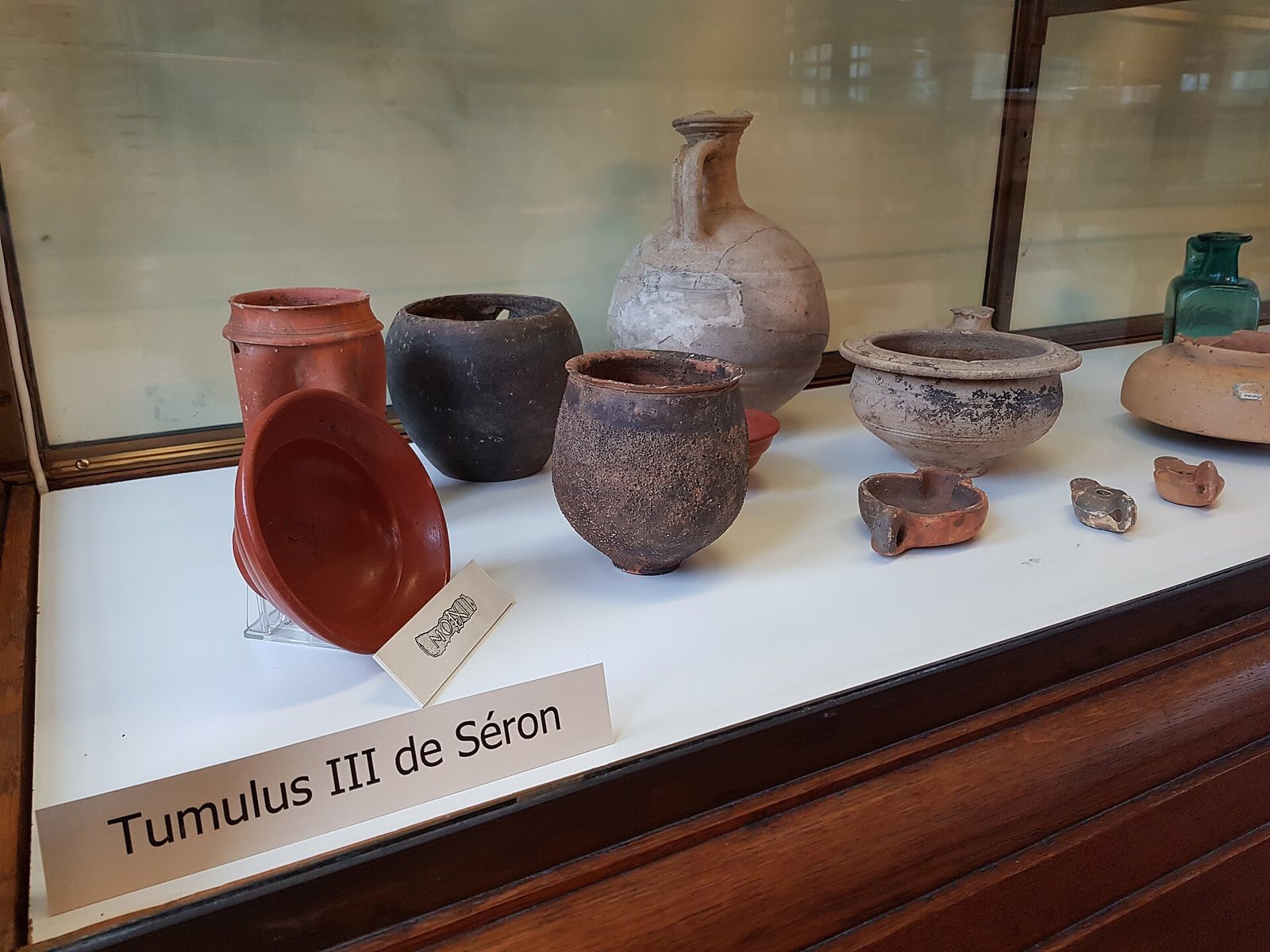
Excavated objects include pottery, oil lamps, bottles, funerary urns, and fragments of cremated human bone. Finds from T2 include a twelve-piece service, fine glassware, and a ribbed glass urn that probably held cremated remains. The quality and costly character of the glassware have been interpreted as signs of higher social standing for the deceased. A lamp reflects the belief that such lights could ward off evil spirits and illuminate the soul’s journey after death. The recovered objects are held at the Namur Archaeological Museum.