Hamre Church: A Historic Parish Church in Norway
Site at a Glance
- Popularity
- Medium
- Country
- Norway
- Primary era
- Early Modern
- Eras represented
- Early Modern, Modern
- Civilizations
- Denmark–Norway, Norwegian
- Site type
- Religious
- Remains
- Church
On this page9 sections
History
Early church and regional role
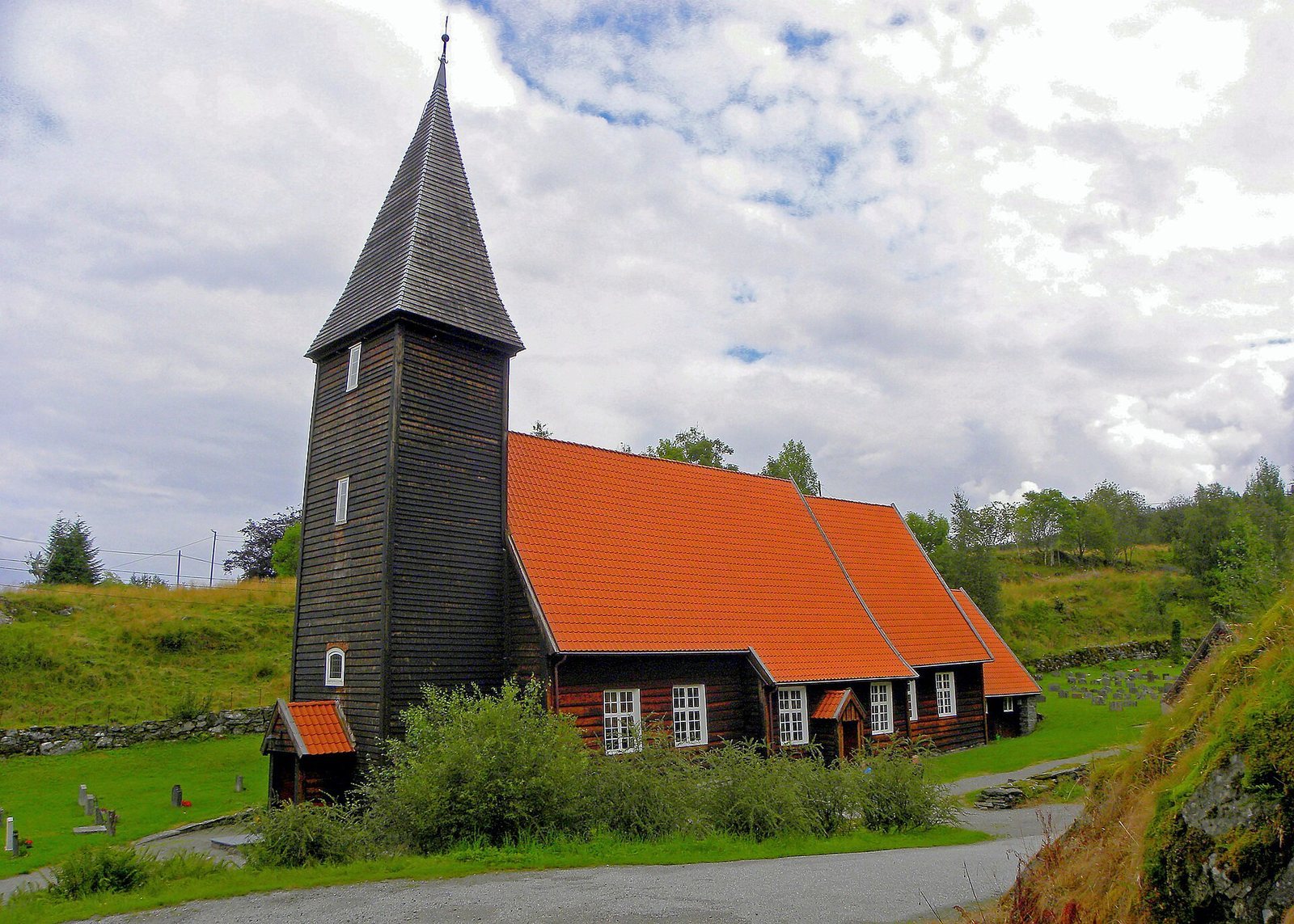
Hamre Church is a wooden parish church in Valestrandfossen, Norway, on a site designated in 1024 as Nordhordland’s principal church. The Moster assembly, a regional gathering held at Moster, assigned Hamre this role, though it is uncertain whether a church already stood there or was built afterward. Hamre is regarded as the oldest church site on Osterøy and may have been the first Christian church site in Nordhordland.
A wooden church is thought to have stood at Hamre around 1024. The earliest may have been a small post-supported building, followed by a larger church around 1170. The church served as Nordhordland’s principal church and, in the Middle Ages, as its district church. The earliest surviving historical record dates to 1329, but does not establish when the church was built. A predecessor stave church, a medieval timber building supported by upright posts, remained on the site until the present church was constructed.
The present church and later alterations
The present church’s construction date is uncertain, but it is generally placed around 1600. An inscription on the old main door points to 1585, and the church’s consecration is dated to about that year. Repairs and improvements took place in 1649, followed by restoration in 1653. In 1859, the church was partly rebuilt and fitted with larger windows.
The wall decorations were repainted in 1867, then had their colors restored by Ola Seter in 1946–48. Work in the 1940s also led to construction of the present sacristy extension in 1948–49. A burial chapel belonging to the Bull family of Valestrand was moved away from the site in 1879.
Parish and civic role
In 1814, Hamre Church served as a polling place in the election process for Norway’s Constituent Assembly, whose members drafted the country’s constitution. Hamre parish once covered Nordhordland and included the churches of Mo, Alversund, Seim, Meland, Åsene, and Hosanger. Hosanger, Seim, and Mo separated from it in 1749. Åsene became its own parish in 1871, and Alversund and Meland joined that parish in 1885.
Hosanger parish was dissolved in 1967, and Hosanger Church returned to Hamre parish. In 1975, Hamre and Hosanger became part of the new Osterøy parish. Hamre was formerly its own prestegjeld, a Norwegian church-administrative district, and later belonged to Osterøy prestegjeld until that system began to be phased out in 2004. The church is now part of Hamre parish, Åsane deanery, and the Diocese of Bjørgvin within the Lutheran Church of Norway; its earlier denomination was Catholic. It is automatically protected as a Norwegian cultural heritage site.
Remains
Building and layout
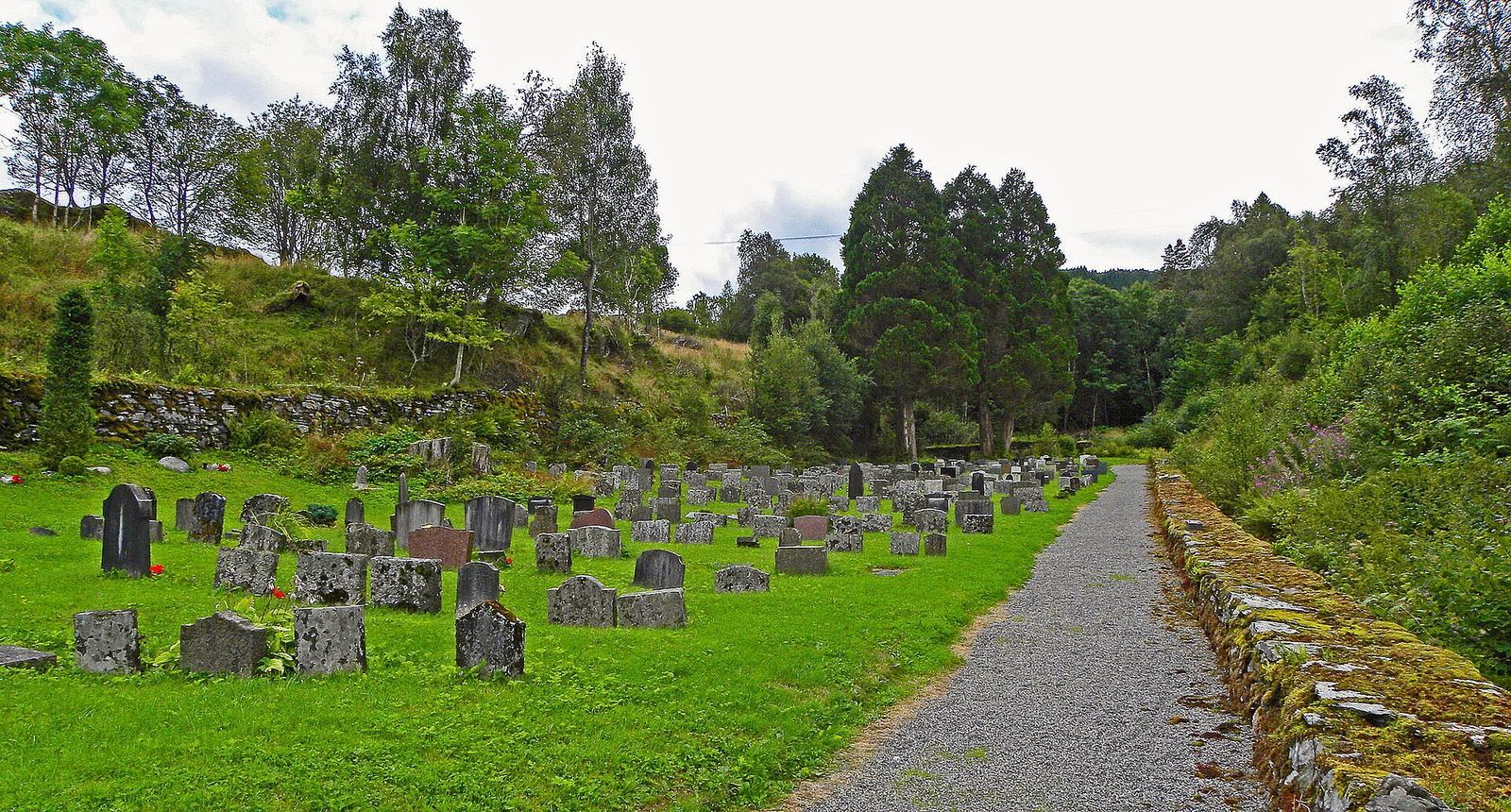
The log-built wooden church has a long-church plan, organized along a lengthwise axis, with short cross arms projecting from its sides. At the nave’s midpoint, a small extension makes that part of the building about two metres wider than the rest, giving the plan an almost cross-shaped appearance. The church seats about 350 people. Its present sacristy, a room for preparing services and storing liturgical objects, extends from the southeast side, and a churchyard lies beside the building.
Interior and furnishings
Altar and predecessor church
A stone altar about 1.4 metres high stands inside the church. Its position may indicate that the present building was constructed around the earlier stave church’s altar, and it may occupy the same place used from Hamre’s earliest Christian period. Architectural parts from the predecessor church are preserved inside and point to its stave construction. Planks believed to have come from that earlier church cover the present building.
Medieval furnishings
The oldest furnishing is a soapstone baptismal font dating to about 1250. The church also contains the main portion of a medieval altarpiece made in Lübeck around 1480.