Necropolis of Su Crucifissu Mannu: Prehistoric Rock-Cut Tombs in Sardinia
Site at a Glance
- Popularity
- Medium
- Country
- Italy
- Primary era
- Stone Age
- Eras represented
- Stone Age
- Civilizations
- Unclassified
- Site type
- Burial
- Remains
- Necropolis
On this page16 sections
History
The Necropolis of Su Crucifissu Mannu is a prehistoric rock-cut tomb complex in the Nurra region of northwestern Sardinia, Italy. Its tombs were made during the fourth and third millennia BC, spanning the Late Neolithic and early Copper Age, the period between the Neolithic and Bronze Age. The earliest use is associated with the Ozieri cultural phase, and the site was reused by later communities.
Later prehistoric and historical use
The tombs were used again during the Monte Claro and Bell Beaker phases, and later in the Bonnanaro culture of the Early Bronze Age. Activity also occurred sporadically in the Nuragic period, a prehistoric Sardinian era associated with stone tower monuments called nuraghi, and in Roman times. These later traces indicate intermittent use rather than an unbroken occupation.
Discovery and modern study
The necropolis came to light in 1956 during construction of the Porto Torres aqueduct. Four excavation campaigns took place by 1981, involving Guglielmo Maeztke, Ercole Contu, and Maria Luisa Ferrarese Ceruti. More recent archaeogenetic studies have examined people buried at the site, including individuals assigned to the Early Bronze Age.
In 2025, Su Crucifissu Mannu became part of the UNESCO World Heritage property Funerary Tradition in the Prehistory of Sardinia – The domus de janas, alongside other prehistoric Sardinian sites. The designation was made under cultural criterion (iii), which recognizes exceptional testimony to a cultural tradition or civilization.
Remains
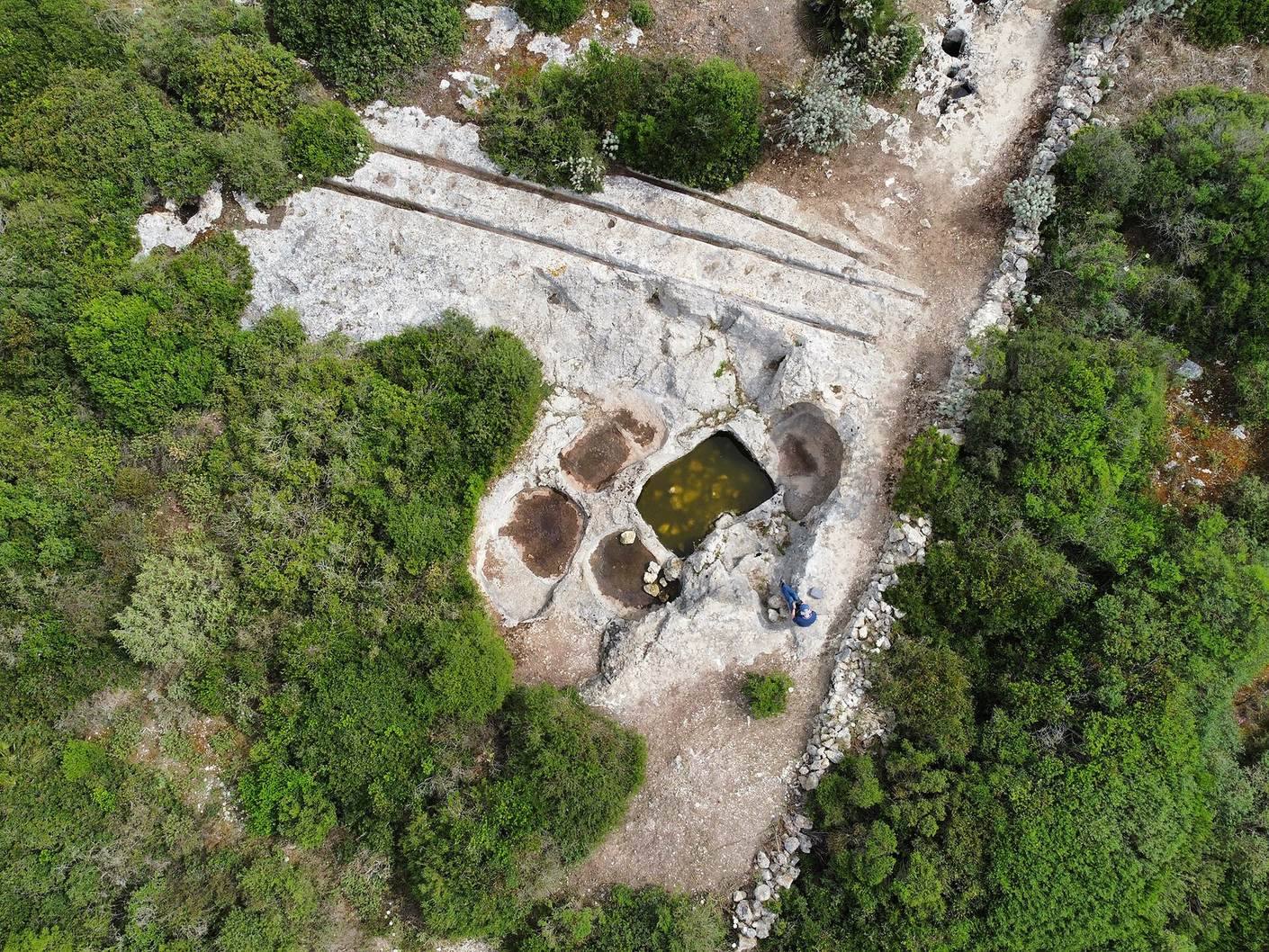
The necropolis extends across about 2.3 hectares of limestone plateau in the Nurra region, at an elevation of roughly 75 metres. At least 22 tombs are arranged in southern, central, and northern sectors. Cut into the limestone, they vary in plan, scale, and finish.
Entrances and chamber plans
Shafts and passages
Tombs are entered through vertical shafts or passages leading into the rock-cut chambers. Most shafts are aligned southward, including those of Tombs II, III, X, XII, XV, XVII, XIX, and XXI; those of Tombs I, VIII, XIII, and XIV face southeast. In Tombs VIII, XII, and XIII, shafts extend into longer passages called dromoi, whose function was chiefly symbolic. Some tombs in the northern sector, including III, IV, XVII, XIX, and XX, have narrow access corridors. Tomb XII’s passage faces south and is 5.5 metres long. It narrows from a maximum width of 1.20 metres near its centre to 0.55 metres at the entrance to the antechamber.
Chambers and interior form
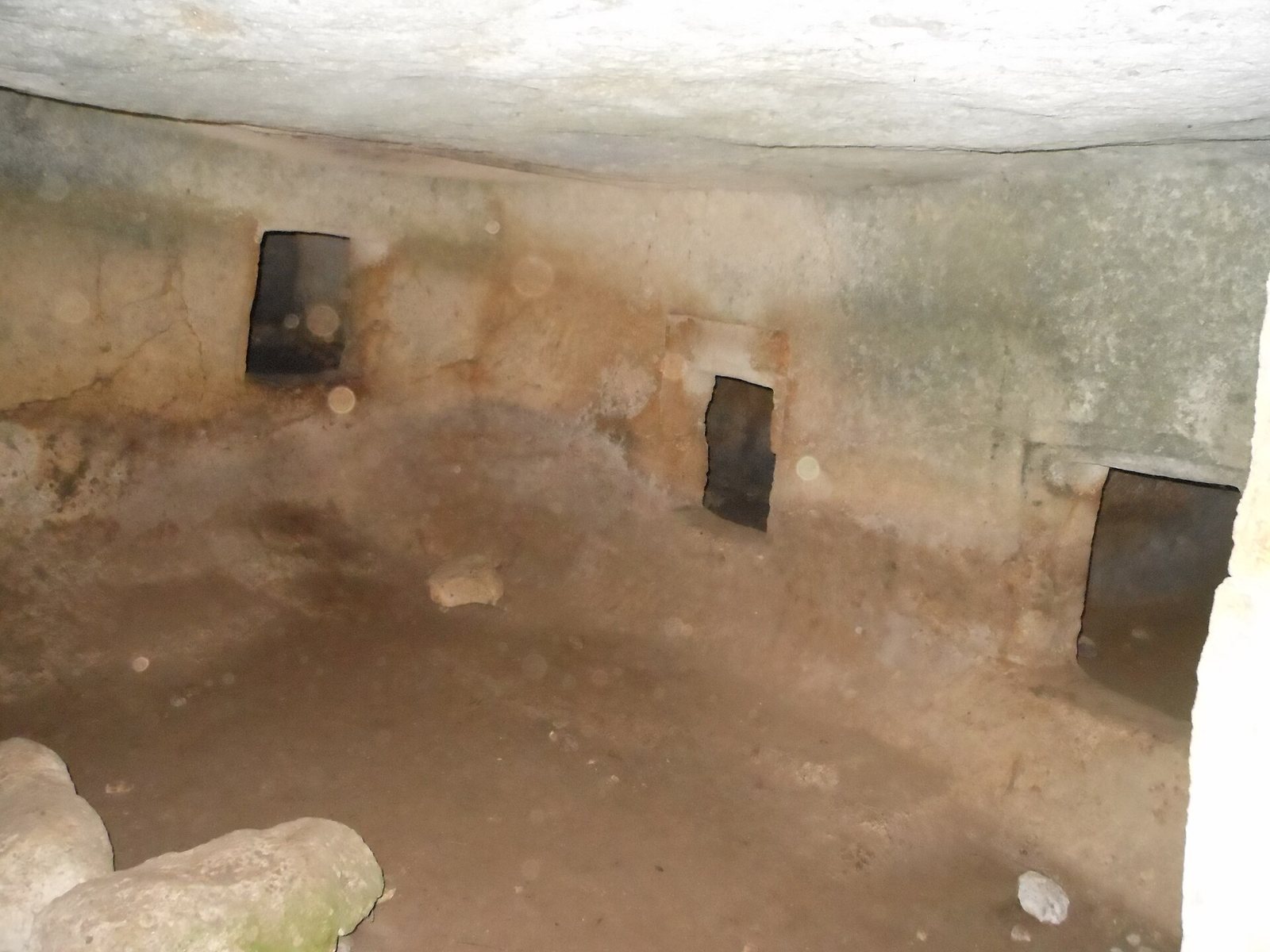
Most tombs have cruciform, T-shaped, or inwardly radiating plans, though later alterations changed the original arrangements in some, particularly Tombs III and XXII. Tomb XVIII has a single chamber, while Tomb XII contains 15 spaces and Tomb XIII is described as having 14 chambers. In several tombs, smaller rooms open from a principal chamber, with further chambers branching outward; some principal rooms contain a central pillar. Southern and central sector tombs tend to have more regular plans and carefully finished walls. Northern tombs are generally more irregular, with roughly worked, curving walls and, in some cases, large niches.
Floors and ceilings
In almost all the tombs, the main chamber floor is set below the surrounding level, with a step providing access. Ceilings are generally flat but slope toward the rear. Entrances to chambers commonly have a deep, broad recess, and Tomb VIII has more than one.
Carved features and decoration
Wall reliefs and supports
Several tombs combine shallow rectangular wall projections with carved imitations of lintels. These features occur in Tombs I, II, VIII, IX, XI, and XII. Quadrangular pillars are present in Tombs VII, IX, XVI, XX, and XXII, while Tomb VIII contains a column.
False doors, bull motifs, and paint
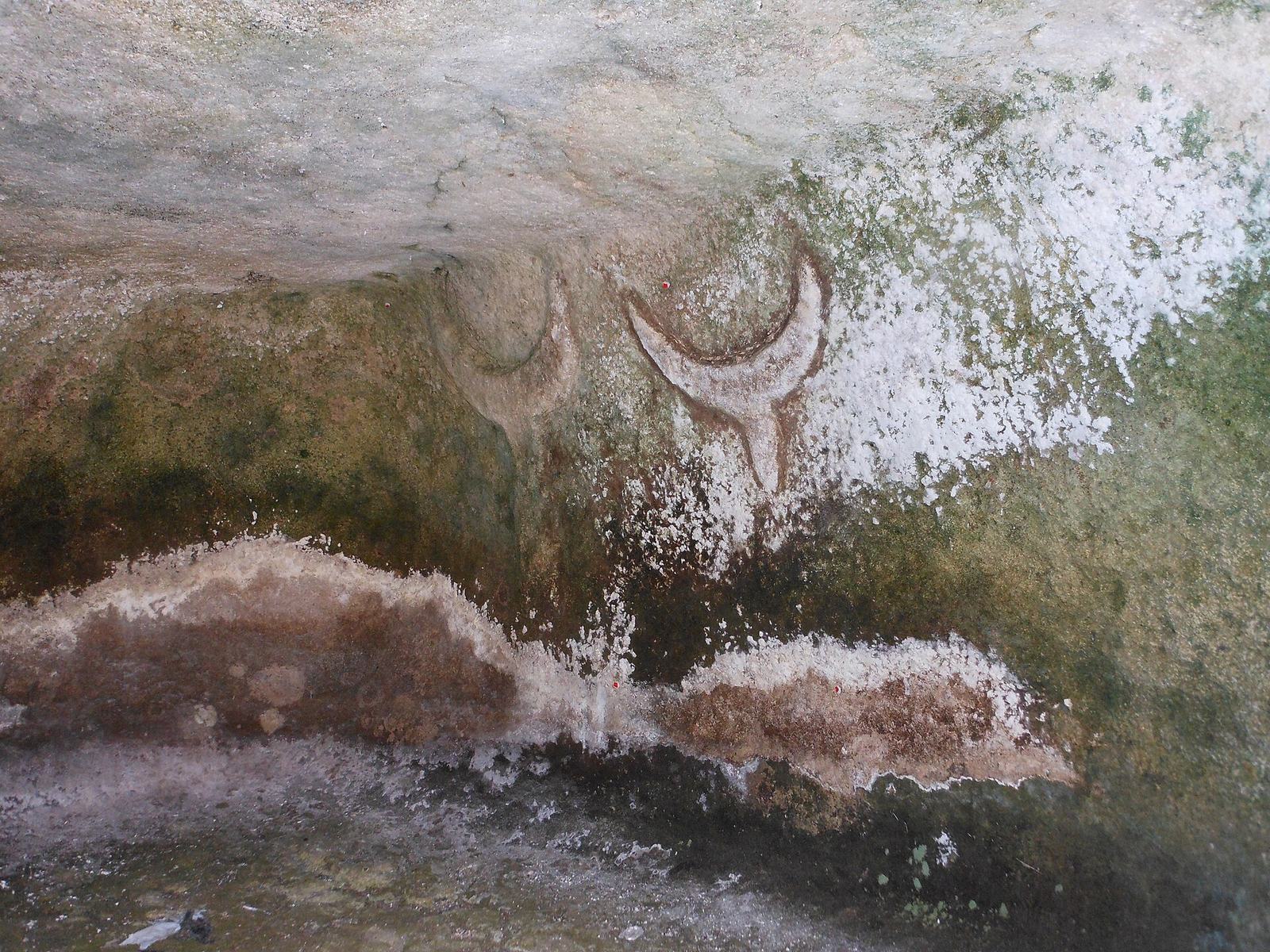
False doors appear in Tombs IV, XIII, and XIV, and one may also have been present in Tomb VI. The false door in Tomb IV may have represented the boundary preventing the living from entering the realm of the dead. Bull-head designs include two rectilinear motifs in Tomb VIII and a pair of curving motifs side by side in Tomb XXI. Traces of red pigment remain above an imitation lintel in the principal chamber of Tomb IX and in the antechamber of Tomb XII.
Finds and burial practices
Pottery and stone objects
Tomb XII yielded a large quantity of pottery. Some vessels have decoration associated with the Ozieri phase, including a basket-shaped vessel, while other fragments indicate use during the Monte Claro phase. Most of the pottery belongs to the Bonnanaro culture, including cups with truncated-cone shapes and sharply angled profiles. Stone finds include two triangular arrowheads, two blades and fragments of two more, made from flint or obsidian, as well as numerous flint flakes and waste from shaping obsidian. Polished-stone objects include a small axe and two small cylinders.
Small ornaments from Tomb XII include four tiny green steatite axes, a green chlorite disc pierced by a minute off-centre hole, and a small ring. Their diminutive size, together with the unsharpened edges of the axe-shaped pieces, points to ornamental rather than practical use.
Figurines and personal ornaments
Three female marble figurines were recovered from Tomb XII. The largest is a headless, cross-shaped plaque with low-relief breasts and buttocks. A second figure of the same general type survives as a bust and neck; its neck is 2 centimetres long, and the preserved figure is 4.6 centimetres high. The archaeologist Giovanni Lilliu considered it likely to have served as an amulet because of its small size. The third figurine is a headless openwork figure with low-relief breasts and a hole at its base, suggesting it was worn as a pendant. It may have been reused as an ornament after breaking, or retained symbolic meaning. Shell valves were also found in the tomb.
Burial evidence and other finds
In Tomb XV, selected bones, especially long bones, were arranged in a pile with a skull placed above them. The same practice occurs in nine tombs where Bonnanaro material is present. Other finds from the necropolis include abundant Bonnanaro pottery, perforated spherical-cap buttons, four archer’s wrist-guards associated with the Bell Beaker culture, and three Cycladic idols depicting the Mother Goddess. A human skull from the site has an opening made during the person’s lifetime, a procedure known as trepanation.
Grooves across the plateau
Deep, parallel grooves cross the limestone plateau. Their shape and distribution have prompted questions about whether wheeled traffic made them. They may be cart tracks connected with Roman and medieval quarrying for the nearby ancient city of Turris Libisonis, now Porto Torres, or marks associated with prehistoric religious practices.