Skelhøj: A Bronze Age Burial Mound in Denmark
Site at a Glance
- Popularity
- Low
- Country
- Denmark
- Primary era
- Bronze Age
- Eras represented
- Bronze Age
- Civilizations
- Unclassified
- Site type
- Burial
- Remains
- Burial Mound
On this page6 sections
History
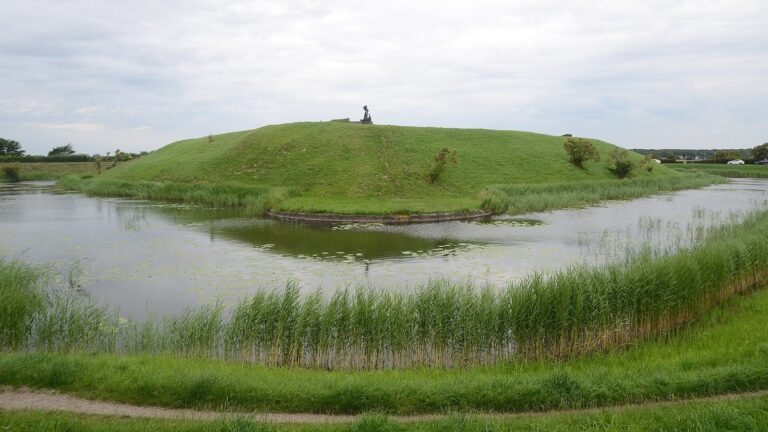
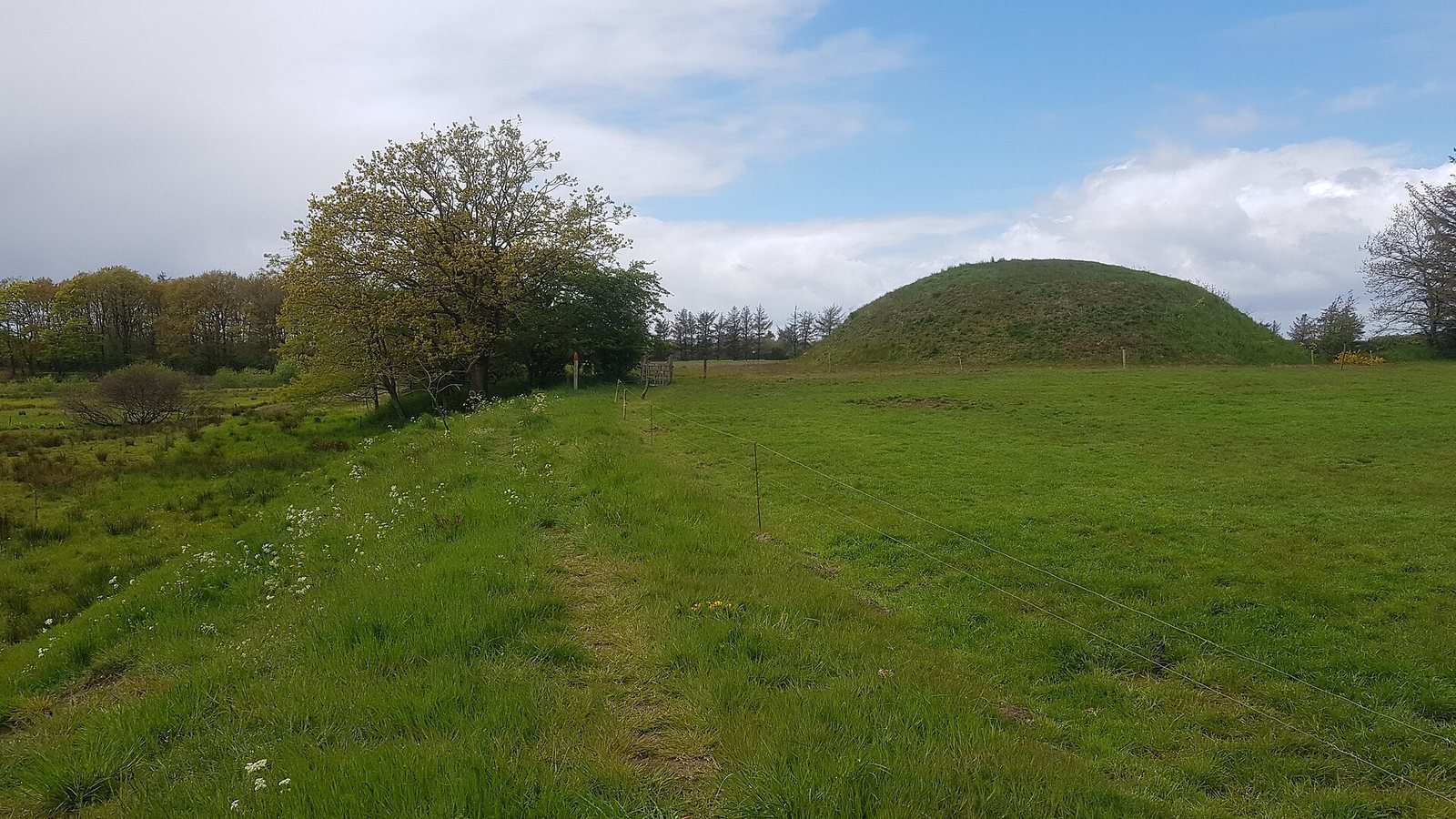
Skelhøj is a Bronze Age burial mound at Tobøl, near Ribe in southern Jutland, Denmark. It dates to about 1400 BCE, in the 15th century BCE, and belongs to Montelius Period II, a phase in the Nordic Bronze Age chronology developed by Swedish archaeologist Oscar Montelius.
Bronze Age setting
Skelhøj is part of a group of 26 barrows along the edge of the Kongeå River valley. Its construction probably took a few months in one continuous effort. Estimates of the workforce range from a single builder to several hundred.
Building a mound required extensive turf. Depending on its size, a single barrow could use turf taken from roughly 0.5 to 10 hectares. The Tobøl builders drew repeatedly on the same fields and meadows, leaving less land for pasture and cultivation. Across Denmark, an estimated 85,000 barrows were built over about 400 years.
Robbing and excavation
Skelhøj was probably robbed twice, first soon after its construction and again in the 19th century. The likely motive was to take the deceased’s possessions. Between 2002 and 2004, the mound was fully excavated to study its construction, the oak coffin’s preservation, and the surrounding landscape at the time of burial. Traces of undecayed turf helped identify building stages. After the investigation, the turf was returned to a mound-shaped form.
Remains
The mound had a broadly circular plan, about 30 metres across. It stood 5 metres high when excavation began; its original height is estimated at 7–7.5 metres, which would have made it the tallest barrow in the area. Turf slabs and stone markers formed its principal construction materials.
Turf and stone construction
Stone lines and rings marked out the work, which was divided into eight sections arranged like wheel spokes. Builders raised the mound through six successive stages. At each stage, they made a turf wall around the earlier mound and filled the enclosed space with more turf; a stone ring bounded the final stage. Work teams gathered turf for their assigned sections from particular meadow areas, and they may also have brought it from where they lived. Water was added to the mound’s core and may have been used more widely. A full-size cross-section showing the construction is displayed at Sønderskov Museum.
Burial
Before the burial, the ground vegetation was burned. An oak coffin, either shaped beforehand or carved at the burial place, held the deceased and some grave goods. A cairn, a pile of stones used to cover or mark a burial, was placed over the closed coffin, and the mound was built around it. The coffin’s east–west orientation is inferred from the mound remains. Excavators concluded that substantial water covered it soon after burial, creating what they described as an “iron capsule” through a chemical reduction reaction, a change in a substance’s chemical state.