Våler Church: A Romanesque Stone Church in Norway
Site at a Glance
- Popularity
- Low
- Country
- Norway
- Primary era
- Medieval
- Eras represented
- Medieval, Early Modern, Modern
- Civilizations
- Denmark–Norway, Norwegian
- Site type
- Religious
- Remains
- Church
On this page16 sections
History
Medieval foundation
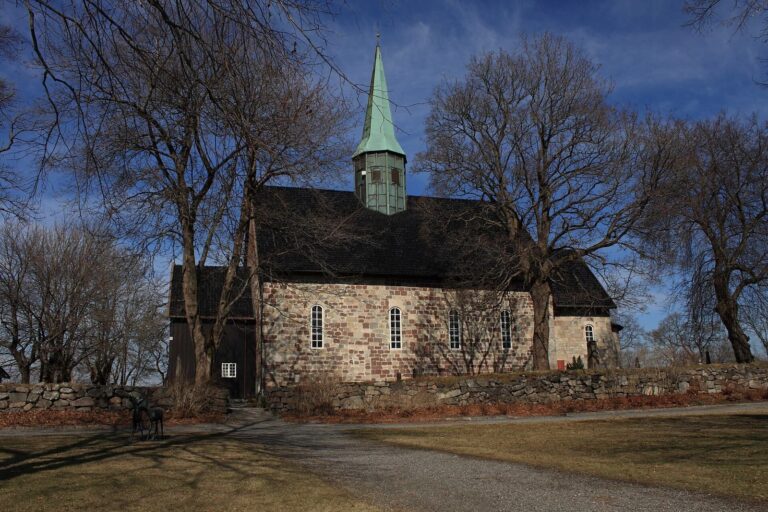
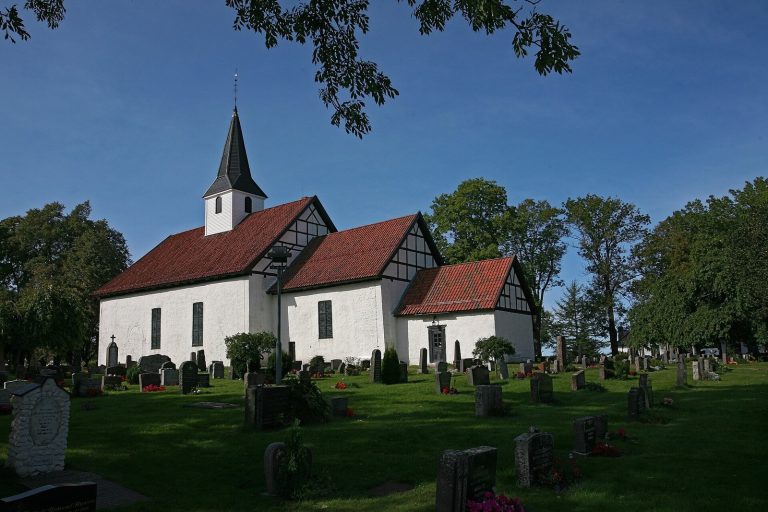
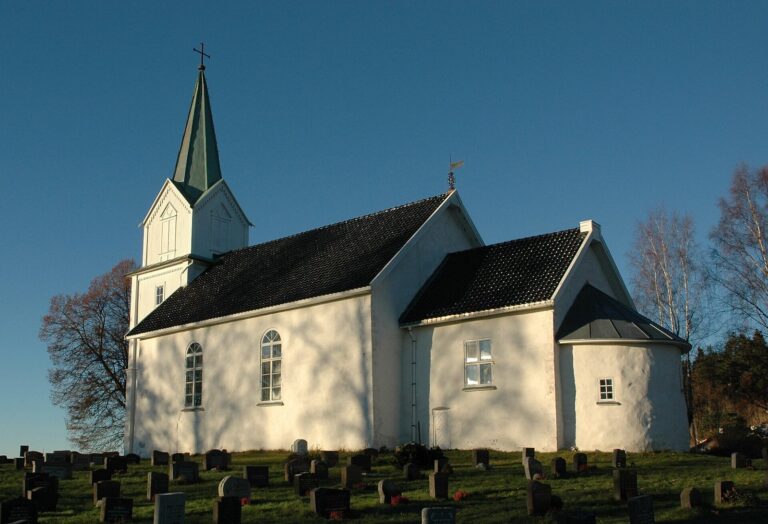
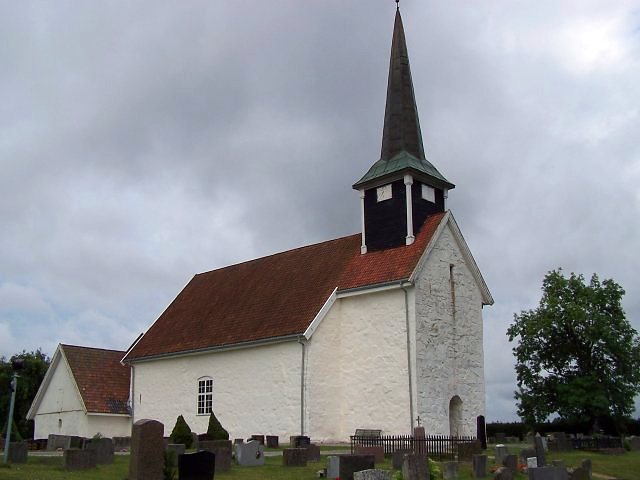
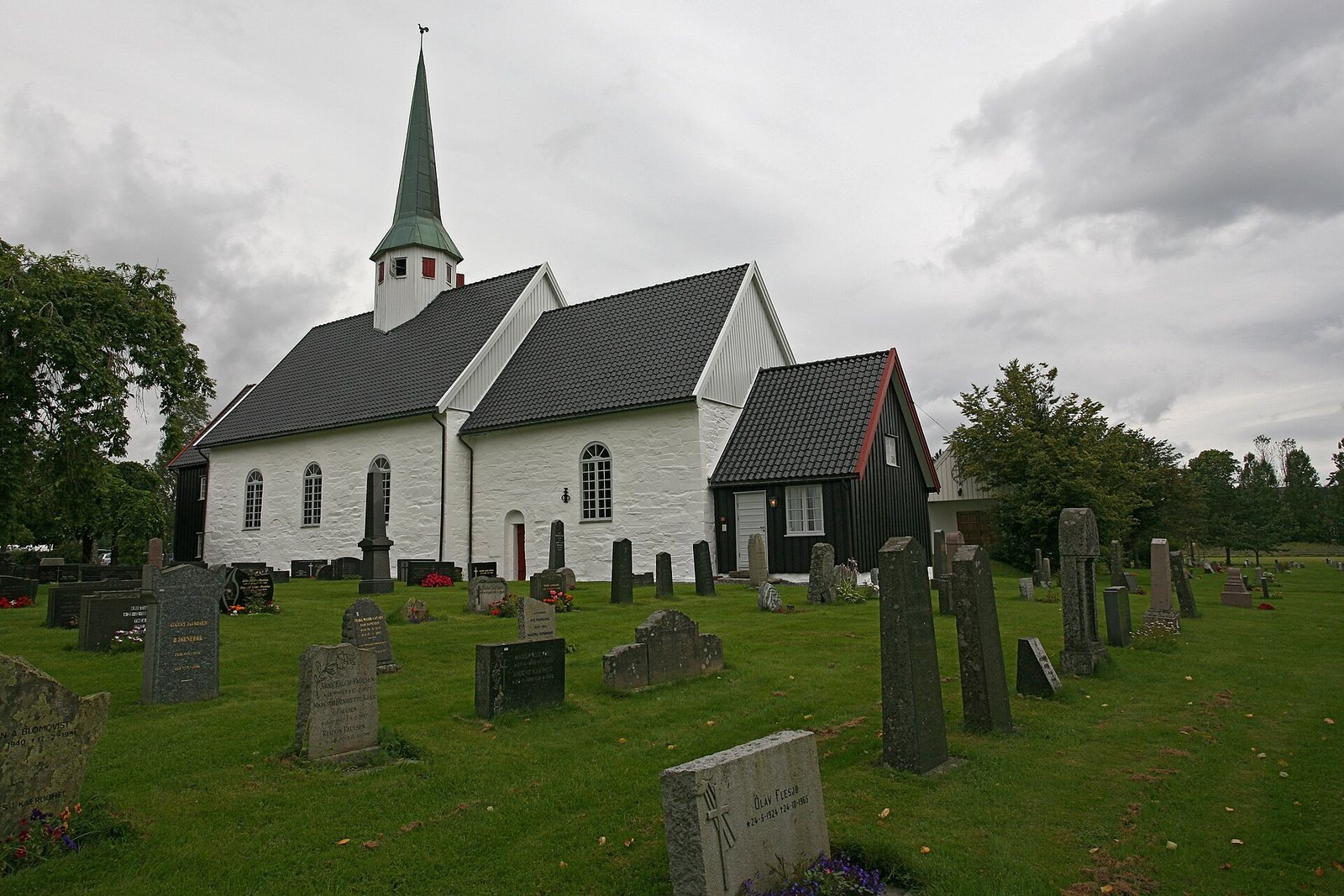
Våler Church is a stone church in Våler, Norway, built between 1150 and 1200 in the Romanesque style, a medieval tradition marked by rounded arches and substantial masonry. Dedicated to the Virgin Mary, it now serves the Våler parish within the Diocese of Borg and Vestre Borgesyssel deanery of the Church of Norway, Norway’s Lutheran church.
In the medieval period, the main altar stood in the chancel, while a side altar known as the altar of the Cross was positioned near the place occupied by the pulpit today. Fixed benches were introduced from the 16th century. In 1636, parish priest Peder Hansøn Prydz and his wife, Karen Olsdatter, gave the church an altarpiece; Prydz also provided the pulpit.
Alterations and changing use
Major work in 1714 changed the church’s interior and structure. Further substantial alterations followed in 1867, as the building was adapted and its furnishings rearranged. The church also played a part in Norway’s constitutional history: in 1814 it was used for an election to the National Assembly at Eidsvoll, the constituent assembly that adopted the country’s constitution.
Extensive repairs and restoration took place between 1961 and 1963, following repeated periods of deterioration and repair. Excavations during this work recovered coins, and many older furnishings were restored. The church’s present appearance largely reflects this campaign.
Remains
Plan and construction
Masonry and churchyard
The church is a simple Romanesque long church, with a single nave (main worship space) leading toward the chancel (altar end). Its stone foundations rest on clay. Most of the walls consist of rubble stone bonded with lime mortar, while the stones at corners and arches were more carefully shaped. A stone wall has enclosed the churchyard since 1854.
Entrances and additions
The south portal was blocked during the medieval period. A portal in the west wall remained until that wall was demolished in 1867; it had been as wide as the chancel arch. A roof turret and porch are recorded by 1620, and the sacristy is first mentioned in 1821. The porch was rebuilt in 1867 to provide space for an enlarged organ gallery.
Interior changes
Work in 1714 replaced the roof structure, and the ceilings in both nave and chancel date from that campaign. The chancel arch was widened from 1.5 to 3.8 metres. Three raised choir or gallery spaces were arranged: the Berg choir above the church clerk’s seat in the chancel, the Flesberg choir against the north wall, and the organist’s gallery above the altar. In 1867 the nave and chancel windows were enlarged and the 1714 altar rail was replaced. Repairs in 1961–63 added a new floor and paneling to the sacristy, porch, and gables; windows in the north walls were bricked up, and electric heating took the place of wood-burning stoves. The church has seating for about 230 people.
Furnishings and works of art
Altar and altarpiece
The altar probably dates from 1867. The altarpiece given in 1636 has painted panels showing the Lord’s Supper, the Christian sacrament recalling Jesus’s final meal with his disciples, and the Resurrection. Moses and Aaron flank the first scene. The Resurrection is surrounded by the four Evangelists, the Gospel writers Matthew, Mark, Luke, and John, with Mark and John on the right and Matthew and Luke on the left. The altarpiece was framed in the 1960s.
Pulpit
The hexagonal pulpit is probably the work of Norwegian woodcarver Knud Billedsnider. Carved figures of the four Evangelists and biblical passages in Latin decorate it, and its canopy has been partly reconstructed. The pulpit stands on a column shaped as Samson, the Israelite judge traditionally associated with great strength; the column is thought to date from the 17th century.
Baptismal font
The octagonal wooden font and its canopy date from 1697. Animal-claw forms shape the font’s feet, while the canopy carries carved acanthus vines and a figure of Christ at its peak. The brass basin, probably made in Nuremberg during the 16th century, depicts the Annunciation, the episode in which the angel Gabriel tells Mary she will bear Jesus.
Crucifixes
A medieval enamelled brass crucifix made in Limoges, France, was found inside the church during the 1961–63 excavation, close to the present pulpit position. It was badly damaged and has been restored with, among other repairs, a new wooden cross. Colored glass stones decorated its arms and lower section. A wooden crucifix from the same period, also from Våler Church, is held in a university collection of antiquities.
Paintings and other furnishings
Paintings from around 1790 hang on the west and north walls of the nave. Once part of the gallery parapet, they depict scenes including the Expulsion from Paradise, Jacob’s Dream, the Sacrifice of Isaac, the Nativity, the Scourging of Jesus, the Crowning with Thorns, Pilate at the Judgment Seat, the Resurrection, and the Ascension, as well as the four Evangelists. A hymn board thought to date from around 1780 is considered one of Norway’s oldest.
Two wooden figures hang from columns supporting the gallery: Peter with keys and John with a chalice. The nave and chancel contain two chandeliers, one with 24 arms and the other with six. They were given to the church in 1931 and 1934.
Organs
The church’s first organ was purchased in 1791 and installed the following year, with funds from priest Johannes Henrik Berg and the congregation. Berg, who had served as a resident chaplain at Vang, was accustomed to churches having organs. The cabinet organ was bought second-hand from Abildsø farm in Aker. It is probably the work of Niels Samuelsen Dæli of Nes in Hedmark, built in the 1780s. An inscription bearing the name Niels Samuelsen supports, but does not prove, that attribution. The instrument was about two metres high and had eight stops, controls that select different sets of pipes. Its arrangement follows an English-influenced design.
The cabinet organ first stood in the organist’s gallery above the altar. When that gallery was removed in 1867, the organ moved to the west gallery, and its case was painted yellow-brown ochre. A new organ by Amund Eriksen of Kristiania was given to the church by bequest in 1868 and eventually became the principal instrument. It began to fail in 1946 and was replaced by a Hammond organ. The two older organs were dismantled and stored; the cabinet organ spent time in the basement of the Våler old people’s home, where its case was sometimes used to store paint.
After the 1961–63 restoration, the Hammond organ was sold and both earlier instruments returned to the church. The cabinet organ was placed in the chancel, while the Eriksen organ was put in the gallery. The cabinet organ is among Norway’s oldest playable organs. Its restoration in 1977 expanded it from four to eight stops. The work revealed an original reddish-brown oil finish grained to resemble mahogany, silver leaf on the decorative wooden pipes on its doors, black pipe openings, and gold leaf on the doors. Ernst Junker restored the mechanism; Henry Mathiesen worked on the case with conservator Odd Helland. Jürgen Ahrend restored the organ again in 1999.
Bells
The church has two bells. The Romanesque bell was probably cast before 1160 and measures 58 centimetres high and 63 centimetres across. The other was cast in 1799 by Borger Riise of Tønsberg; it is 55 centimetres high and 73 centimetres in diameter.