Dolmen du Mané-Rutual: A Neolithic Passage Tomb in Locmariaquer
Site at a Glance
- Popularity
- Low
- Country
- France
- Primary era
- Stone Age
- Eras represented
- Stone Age, Modern
- Civilizations
- French
- Site type
- Burial
- Remains
- Tomb
On this page17 sections
History
Origins and names
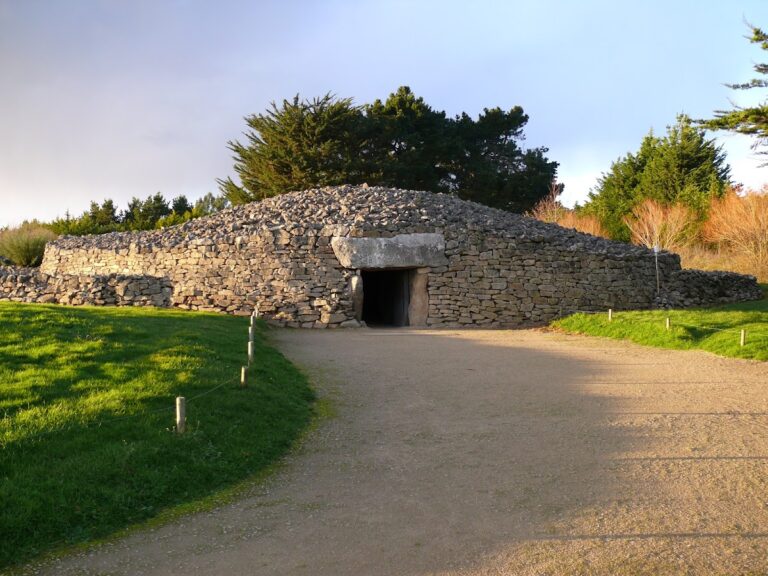
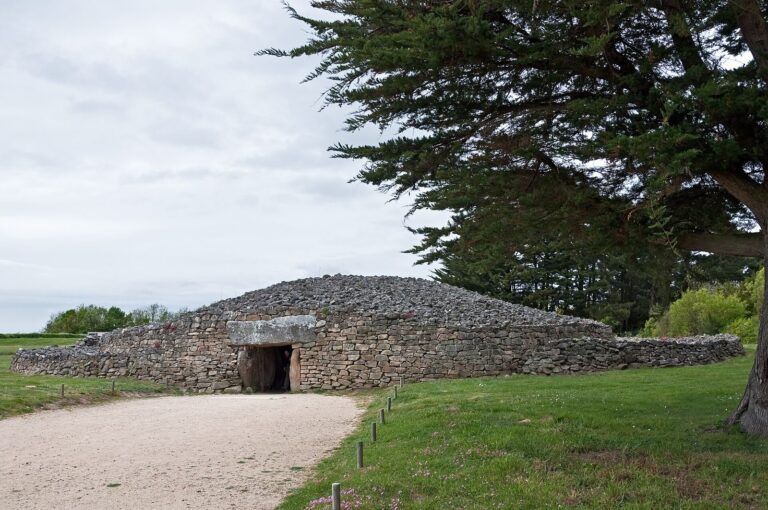
The dolmen du Mané-Rutual is a Neolithic passage dolmen, a megalithic tomb with a corridor leading to a chamber, in Locmariaquer, France. Its precise construction date is unknown. A fragment of an older standing stone may have been reused in the monument, suggesting a possible connection with the megalithic sites of Locmariaquer and Gavrinis, dated to 4200–4000 BCE. The breaking of large standing stones and reuse of their pieces may reflect a major cultural or religious change.
The monument has appeared under several names, including Mané-Retual, Mané-Rethuel, Men er Groah, Bergouh, Bé er Groah, and dolmen du Bronso. In 1752 it was described as a “Gallic tomb.” Men-er-Groah, meaning “witch’s stone,” appeared in later descriptions; an 1843 edition of Ogée’s dictionary used Men-en-Ritual, while L. Galles later called it Bergouh.
Exploration and restoration
M. de Bonstetten and L. Galles explored the dolmen in 1860 for the Société polymathique du Morbihan, a regional learned society. Another excavation may have taken place in 1865, although its investigators were unidentified. Davy de Cussé inventoried the engraved stones in 1865–1866. Before the state acquired the monument in 1885, nearby households had used it as a rubbish dump, and it had suffered damage. The Société polymathique then excavated and restored it. France classified the dolmen as a historic monument in 1889, a form of legal heritage protection.
Zacharie Le Rouzic directed further restoration work in 1923 and 1936, including repositioning and supporting the broken chamber roof slab. In 2003–2004, a team led by archaeologist Serge Cassen carried out a comprehensive survey and identified further engravings.
Remains
Layout and construction
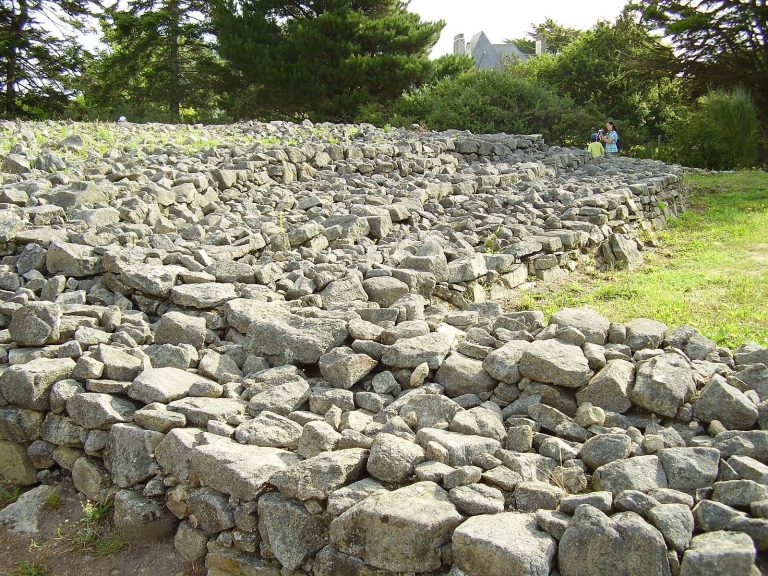
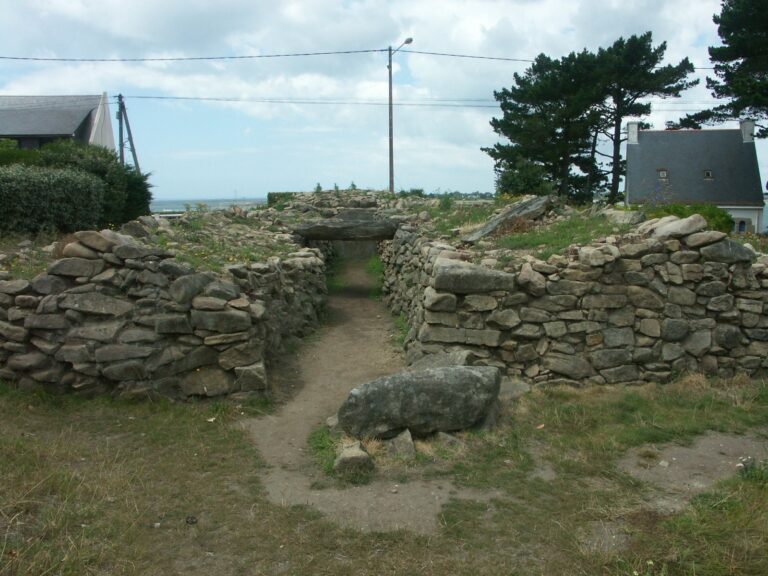
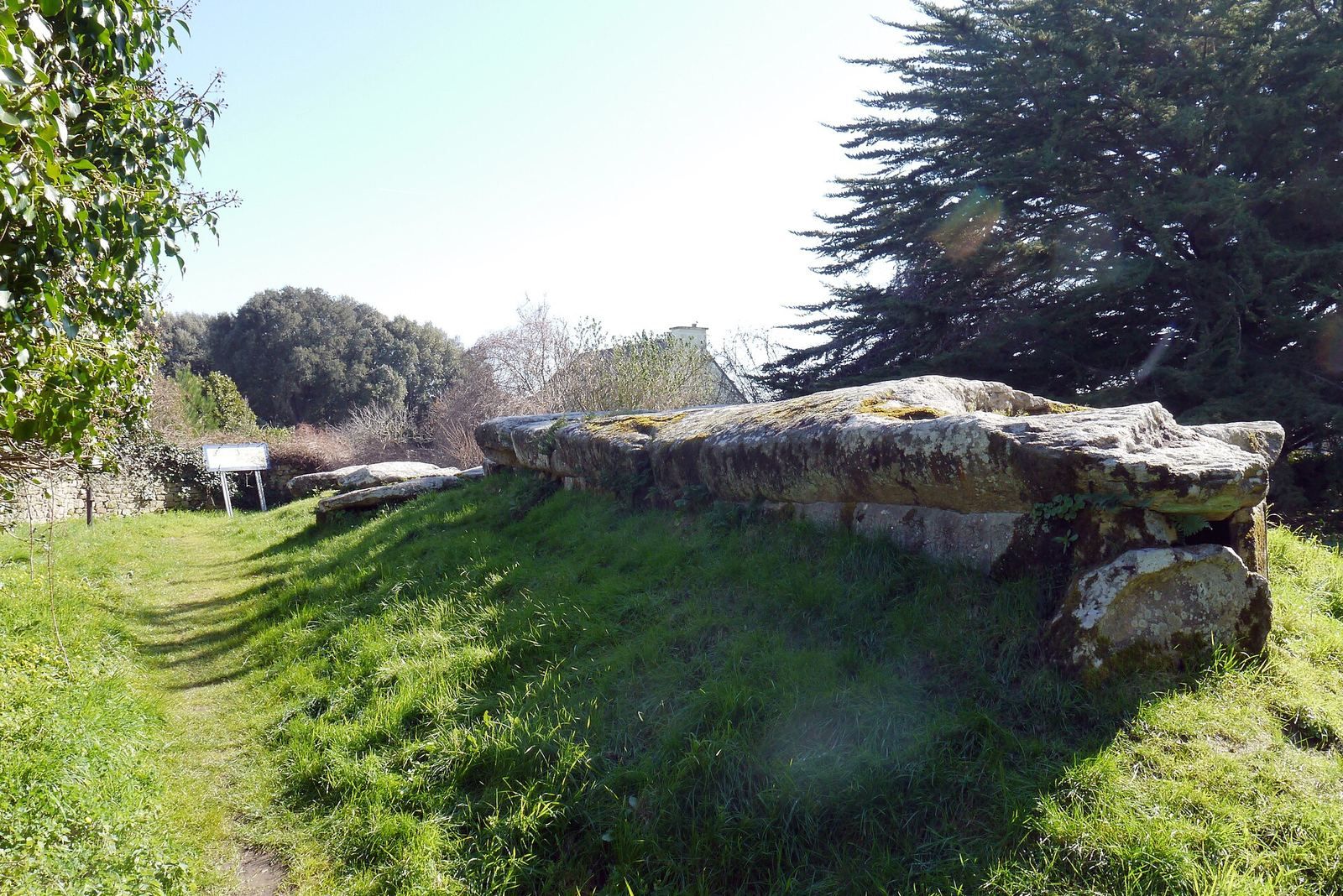
The monument measures 16.45 m from end to end, with its entrance facing southeast and its main chamber at the northwest end. Most of its stones are local granite. Three are orthogneiss, a metamorphic rock derived from igneous rock, brought from quarries near Auray, about 10 km to the north. This stone was easier to smooth and engrave. A mound of small stones probably once covered the dolmen; sand, earth, and grass later buried it. It is now largely exposed. Restoration work filled spaces between upright slabs with rubble and banked sand and earth along the sides.
Passage
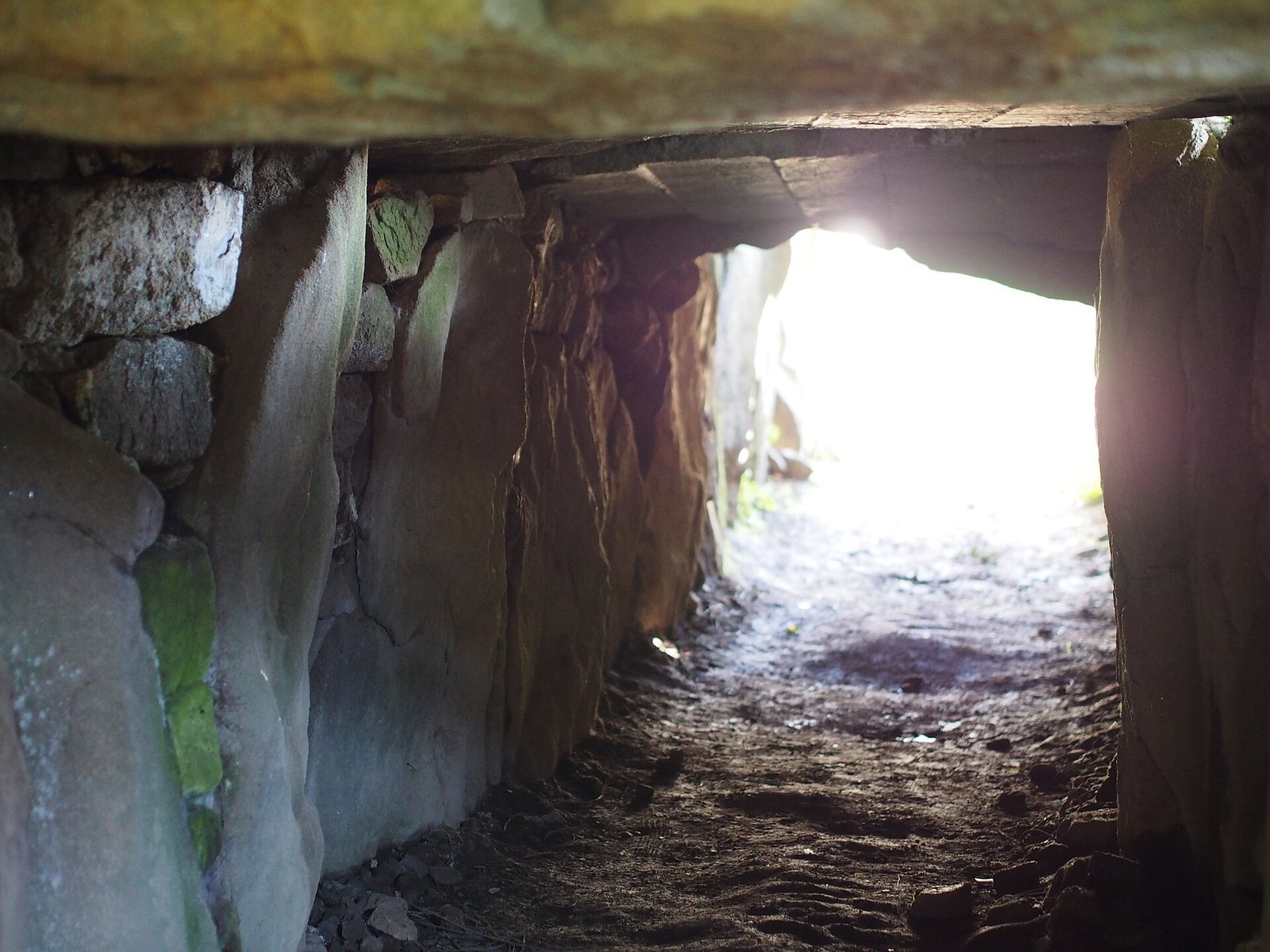
The passage is 9.40 m long, averaging 1.20 m in width and 1.25 m in height. Twenty-three upright slabs form its sides, thirteen on the left and ten on the right. Four horizontal roof slabs, known as capstones, covered the passage.
Antechamber
The passage opens into a trapezoidal antechamber, 3.10 m long and 2.40 m wide, with an average height of 1.50 m. Six upright slabs form its sides, three on either side, and two stones near the entrance divide the space laterally. Two capstones remain above it.
Main chamber
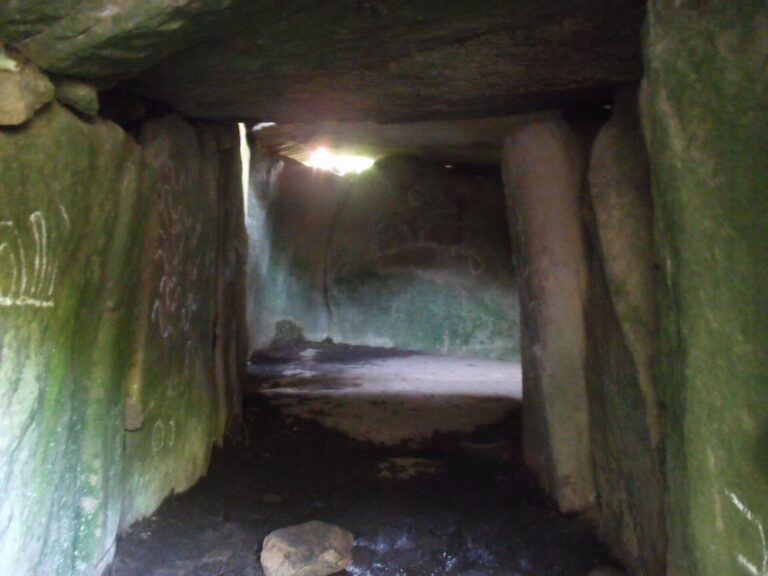
The ovoid chamber is bounded by ten upright stones and measures 3.50–3.90 m across, with a height of 1.80 m beneath its roof slab. The large chamber capstone is about 12 m long and 4.2 m wide, extending more than 6 m beyond the chamber on its north side. It broke into sections and is now carried by concrete pillars. Some chamber stones have sunk into the sandy ground or partly toppled. The monument has seven capstones in total. The chamber slab has been described as part of an older standing stone that was probably deliberately broken. Its scale and engravings, difficult to see while it lies horizontally, have supported the suggestion that it once stood upright.
Engraved stones
Upright stones
Four engraved upright stones, numbered 1, 5, 6, and 12, are located in the antechamber and main chamber, with two in each. Their designs include crozier forms, showing a curved staff, and an “axe-plough” motif. Stone 6 served as a polishing stone for smoothing or finishing tools. Engravings have also been described on two upright stones in the passage area.
Roof slabs
The undersides of two capstones, numbered I and II, carry motifs interpreted as a “mother goddess” or “shield idol,” and as an “axe-plough” or “sperm whale.” Capstone I is the only engraved stone made of orthogneiss. Cassen has interpreted it as a stele, an upright stone monument, once raised near the dolmen and later reused as a roof slab. Engravings have also been described on a small menhir, or large upright stone, reused as a capstone.
The surrounding archaeological landscape
Western stone structure
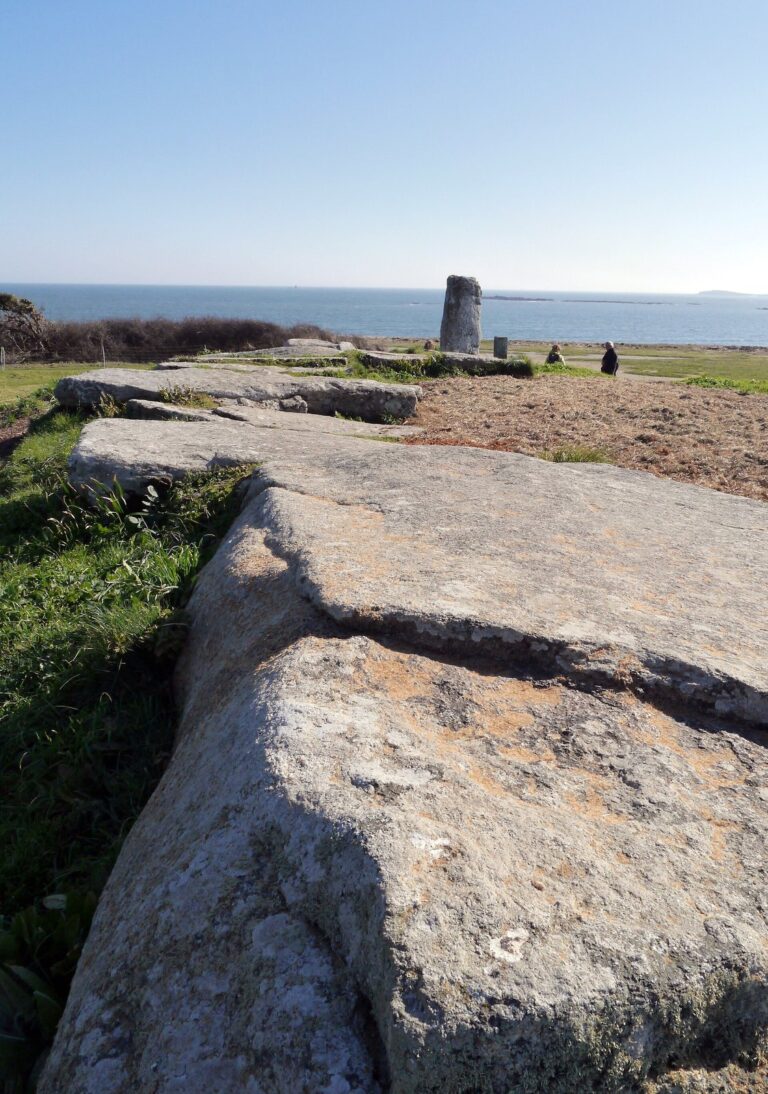
About 20 m west of the dolmen, three large slabs lie close to ground level on a simple stone packing rather than upright supports. They do not form a clearly defined dolmen or passage tomb and may be the remains of a burial structure largely destroyed long ago. M. de Lagrange explored this area in 1890 and found a large flint blade. In 1892, F. Gaillard considered the stones a possible remnant of a mostly destroyed burial.
Bronzo menhir and nearby monuments
Four pieces of the Bronzo menhir lie about 50 m from the dolmen. The menhir is considered approximately 500–1,000 years older than the dolmen. The monument is about 300 m southeast of the archaeological site containing the Table des Marchand, a Neolithic passage tomb, and the Grand Menhir-Brisé, a broken prehistoric standing stone.
Excavated finds
Finds from the 1860 exploration
The 1860 exploration recovered a fragment of a flint arrowhead and pieces of coarse pottery, along with Roman-period material. The latter included pottery, a bronze coin of Constantine II, a fourth-century Roman emperor, and fragments of pale statuettes.
Finds from the 1885 excavation
The 1885 excavation yielded objects from the Neolithic and Gallo-Roman periods, the era of Roman rule in Gaul. Neolithic finds included a large terracotta bead, three quartz hammerstones, a diorite axe, about twenty flint flakes, a flint blade, and stone balls of granite and quartz whose purpose is uncertain. These objects are held in the Société polymathique’s collections at Château-Gaillard in Vannes. The Gallo-Roman material included large quantities of pottery and bricks, coins, and fragments of metal, ceramic, and stone objects.