Odensala Church: A Medieval Hall Church in Sweden
Site at a Glance
- Popularity
- Low
- Country
- Sweden
- Primary era
- Medieval
- Eras represented
- Medieval, Early Modern, Modern
- Civilizations
- Swedish
- Site type
- Religious
- Remains
- Church
On this page13 sections
History
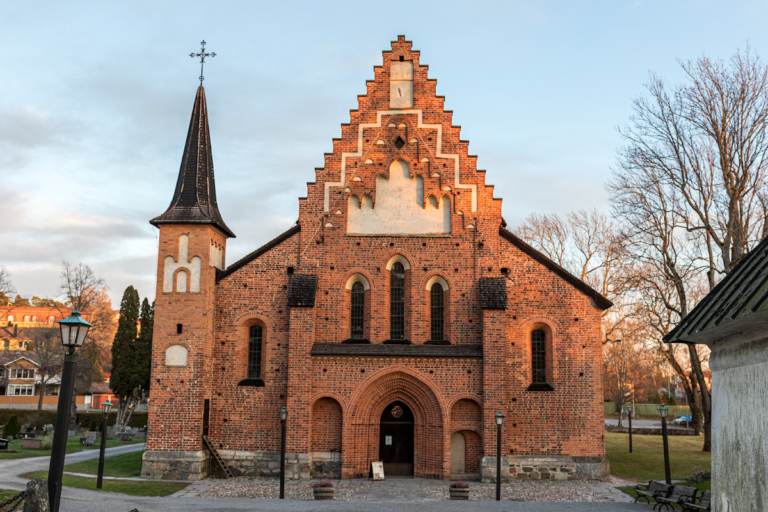
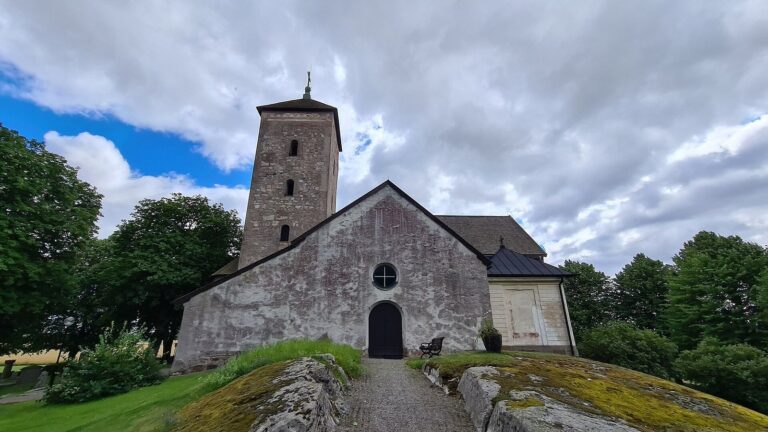
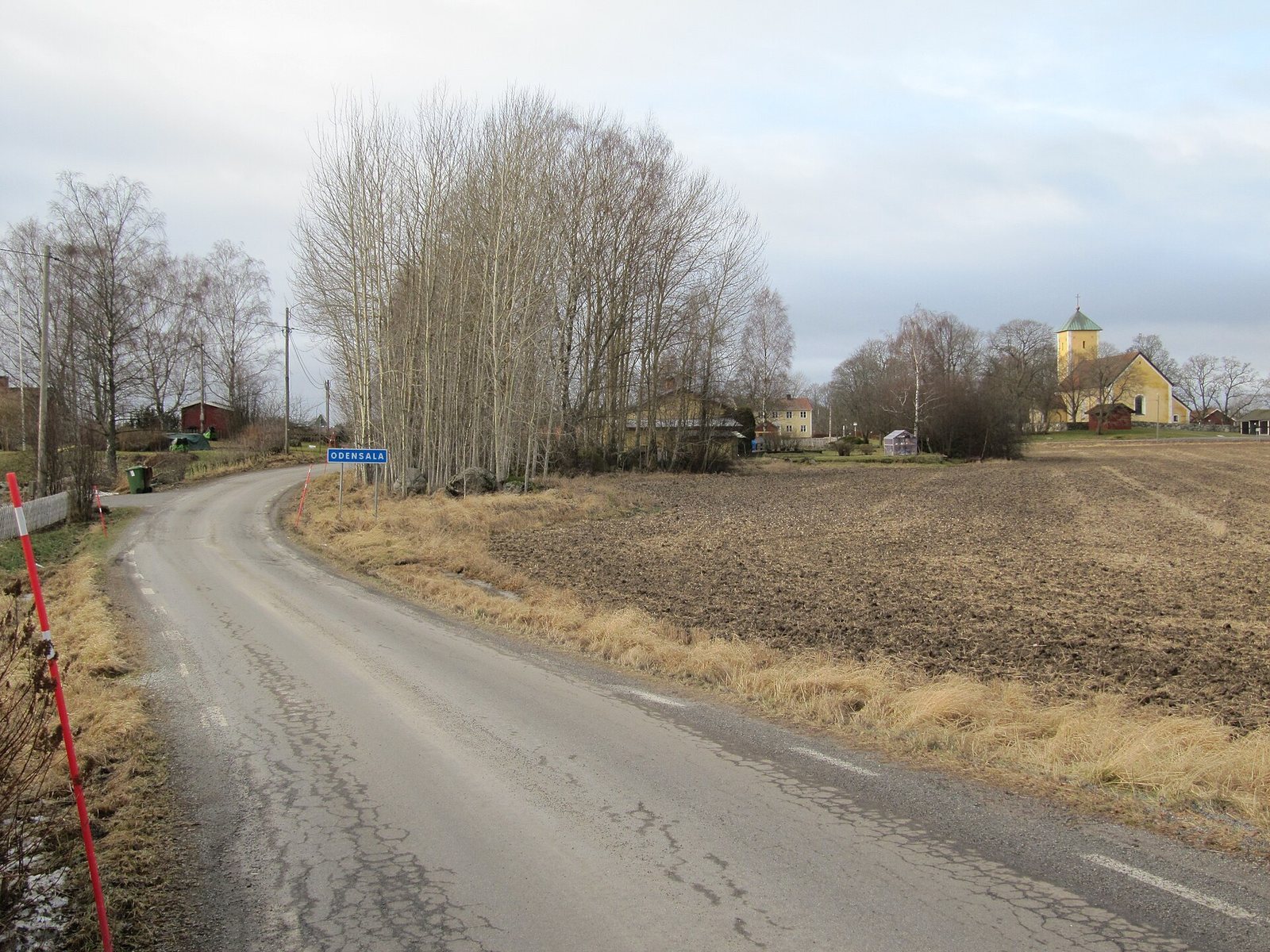
Odensala Church is a medieval stone hall church about four kilometres north of Märsta in Sigtuna Municipality, Sweden. A wooden church probably stood here in the eleventh century; the present church was built and consecrated in the late twelfth century. It once belonged to Odensala Parish and now belongs to Husby-Ärlinghundra Parish in the Church of Sweden’s Uppsala Diocese.
Medieval church and enlargement
The building was expanded and altered during the Middle Ages. Around 1500, the nave was extended eastward, and a new chancel, sacristy, and porch were constructed. Two star vaults were added alongside the existing cross vaults. Between 1480 and 1500, Archbishop Jakob Ulfsson initiated the painting of the walls and vaults. The work is attributed to a painter from Albertus Pictor’s workshop and uses the Biblia Pauperum, a medieval illustrated format linking biblical scenes and themes, with subjects drawn from the Old Testament.
Eighteenth-century changes and fires
During the first half of the eighteenth century, seating was installed in the tower. A window was cut into the north wall in 1717, and three windows on the nave’s south wall were enlarged the following year. The east chancel window was enlarged in 1726 and again in 1759. These changes led to the whitewashing of the wall paintings, while the paintings on the vaults remained uncovered.
A fire on 28 December 1769 destroyed the roof and its supporting timbers. In 1770–71, a shallower roof was built and the exterior walls were raised by 80 centimetres using brick. The tower spire survived the fire. Johan Hadorph depicted it in 1682, but it was replaced by a hood in 1794 after requiring repairs. A separate belfry was built in 1725, following an earlier one in the churchyard; a major rebuilding is believed to have taken place in 1815.
Restoration and conservation
Architect Agi Lindegren’s 1896 restoration largely shaped the church’s present interior. The whitewashed wall paintings were uncovered and repainted, and the paintings were retouched. On 5 May 1940, fire burned the nave’s shingle roof and the tower hood. The rest of the church was unharmed, though the paintings were affected and later restored. They were cleaned and conserved in 1973.
Remains
Church building
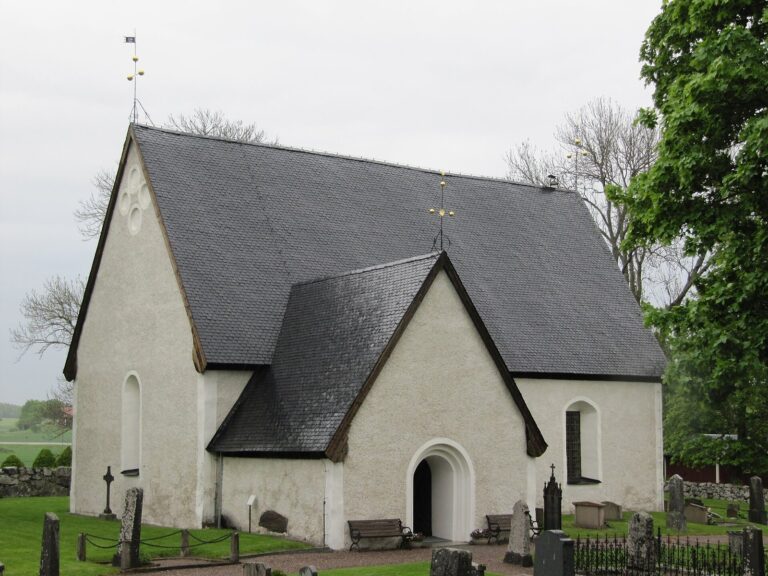
The church is built of gray stone and has a rectangular nave, a straight-ended chancel to the east, and a narrower tower to the west. Its interior is divided into four bays, with the easternmost forming the chancel, the area around the altar. The nave has cross vaults, formed by intersecting barrel-shaped ceilings, and star vaults, whose ribs create star-like patterns. A sacristy, a room for preparing services and storing religious objects, stands on the northeast side; its earliest part is now used for storage. The porch is on the southwest side, with a brick portal between it and the nave.
Painted decoration
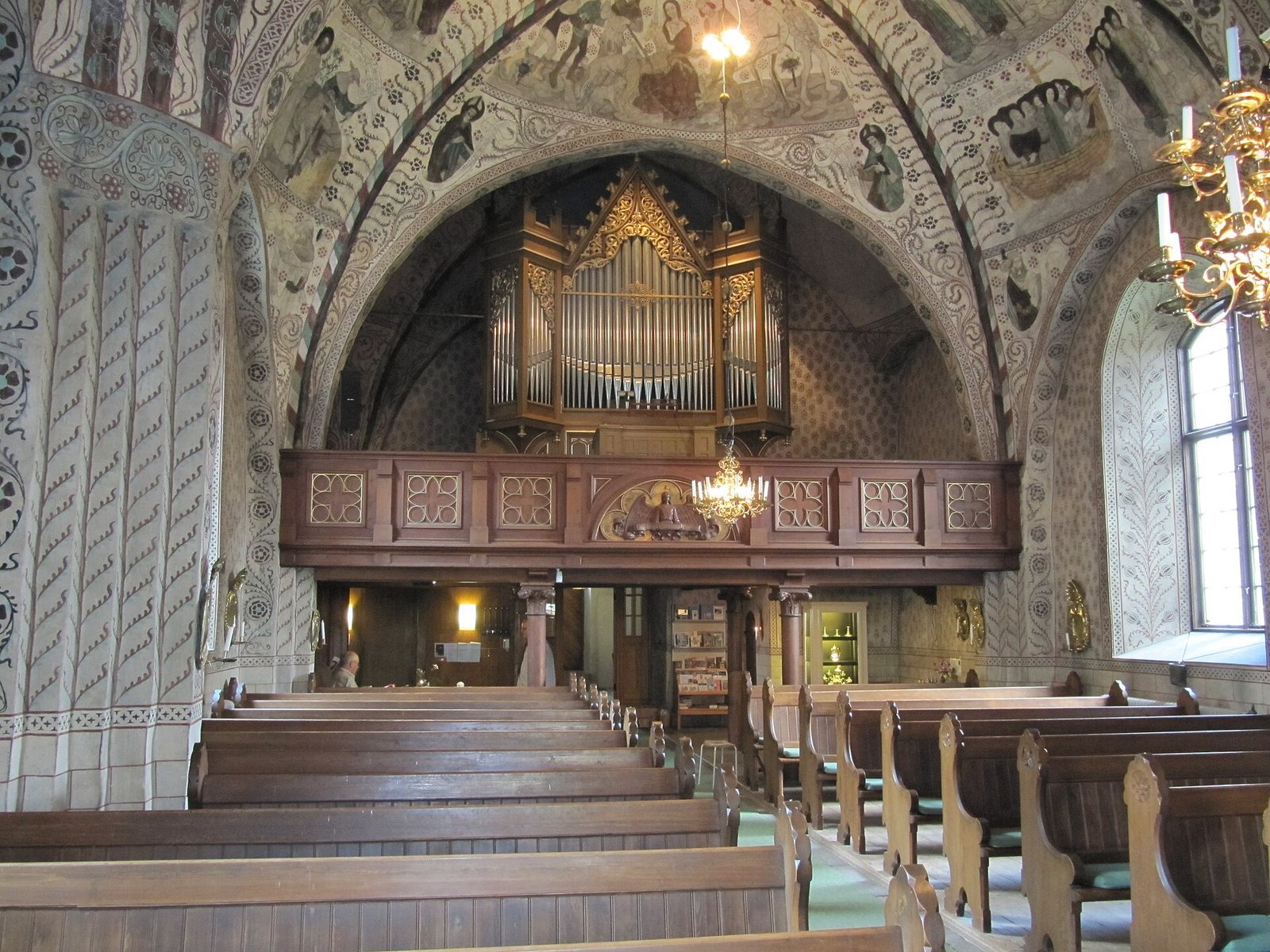
Paintings cover the church’s walls and vaults and depict Old Testament subjects. The paintings on all four vaults have never been whitewashed. Their relatively coarse forms and restrained use of shading and highlights have been interpreted as features of Albertus Pictor’s later style, with workshop assistants contributing more of the work than they did at earlier churches.
Furnishings and archaeological objects
Altarpiece and crucifixes
The Swedish-made altarpiece dates to 1514. It is a triptych, a three-part artwork with two folding side panels, and is now held at the Swedish History Museum. A fourteenth-century triumphal crucifix, a large crucifix associated with the division between nave and chancel, hangs in its original position, where a screen once stood. In 1931, it was rehung there. A small, badly worn crucifix in the sacristy dates to the early sixteenth century and was probably used in processions.
Pulpit and liturgical objects
The pulpit, donated by Count Karl Gyllenstierna, dates to 1714. Its sounding board is decorated with torches and topped by a star-studded globe bearing the Lamb of God on a book. A gilded wooden hourglass in the Rococo style, an ornate eighteenth-century artistic style, was acquired in 1775. A fragment of a baptismal font has also been found; the font has a granite bowl and a silver baptismal dish. The church’s gilded-silver communion vessel, made in the first half of the seventeenth century, is a North German work assembled from four screwed-together parts. A six-branched silver chandelier was donated in 1725.
Organ
An organ made in 1655 by an unknown maker was repaired in 1678 and 1740. It stood in the northwest corner in 1713 and was moved in 1718 to a newly built, larger gallery. A replacement made in Stockholm in the 1780s by either Jonas Ekengren or Olof Schwan had ten stops, which control sets of organ pipes, and was advertised for sale in April 1896. The present organ, built in 1898, stands on the western gallery. Its façade was designed by Agi Lindegren, and Frede Aagaard changed its arrangement of stops in 1956. The instrument has ten stops across two manuals, or keyboards, mechanical action linking the keys to the pipes, and Roosevelt windchests that distribute air. It also has three fixed combinations and a playable range listed as 54/25.
Runestone fragment
A substantial fragment of a runestone was found in the churchyard wall in June 2012. Its carver is believed to have been Åsmund.
Belfry and bells
The separate, red-painted belfry stands on Skörsta field about 400 metres south of the church. It is clad in boards and has a shingled hood topped by an iron cross. Red tar coats its internal structure, suggesting that it was originally unclad. During a 2004 renovation, red tar was applied to the façades and black tar to the shutters. The large and middle bells hang in the belfry, while the small bell is now in the church tower. J. A. Beckman recast the large bell in 1871 and the middle bell in 1894; the middle bell had been donated in 1737. The small bell was cast in 1695 by J. Bierman and recast by Beckman in 1871.