Palazzo Ducale, Gubbio: A Renaissance Court Residence
Site at a Glance
- Popularity
- Medium
- Country
- Italy
- Primary era
- Medieval
- Eras represented
- Medieval, Early Modern
- Civilizations
- Duchy of Urbino, Papal States
- Site type
- Domestic
- Remains
- Palace
On this page15 sections
History
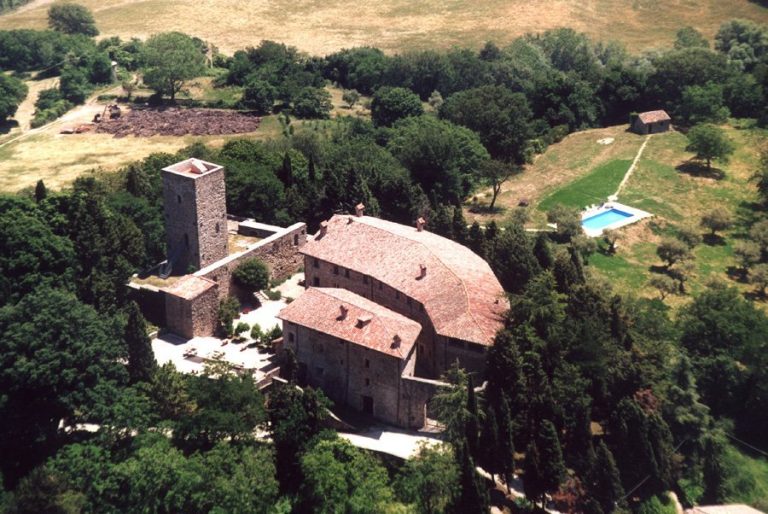
Palazzo Ducale, Gubbio, also known as Corte Nuova, is a Renaissance palace in Italy, begun in 1470 as a summer residence commissioned by Federico da Montefeltro, Duke of Urbino. The Renaissance was a European cultural period marked by renewed interest in classical forms and carefully balanced design. The palace was created by enlarging and transforming earlier medieval buildings.
Gubbio belonged to the Duchy of Urbino, a central Italian ruling territory, from 1443 to 1631 and served as a seat of its mint. Federico, the duchy’s second duke, was born in Gubbio, as was his son and successor, Guidobaldo I.
Construction and the Montefeltro court
The design is probably attributable to Luciano Laurana, and Francesco di Giorgio Martini completed the palace during Guidobaldo I’s rule. Guidobaldo and his wife, Elisabetta Gonzaga, stayed there often and added a guesthouse. Federico’s wife, Battista Sforza, died at the palace.
Later ducal use and dispersal
Francesco Maria II della Rovere, the last ruler of Urbino, added a hanging garden to the residence. After the Montefeltro and Della Rovere families died out, much of the palace’s furnishing and fittings were removed and dispersed among museum collections.
Today, the palace serves as a museum and venue for cultural events and art exhibitions.
Remains
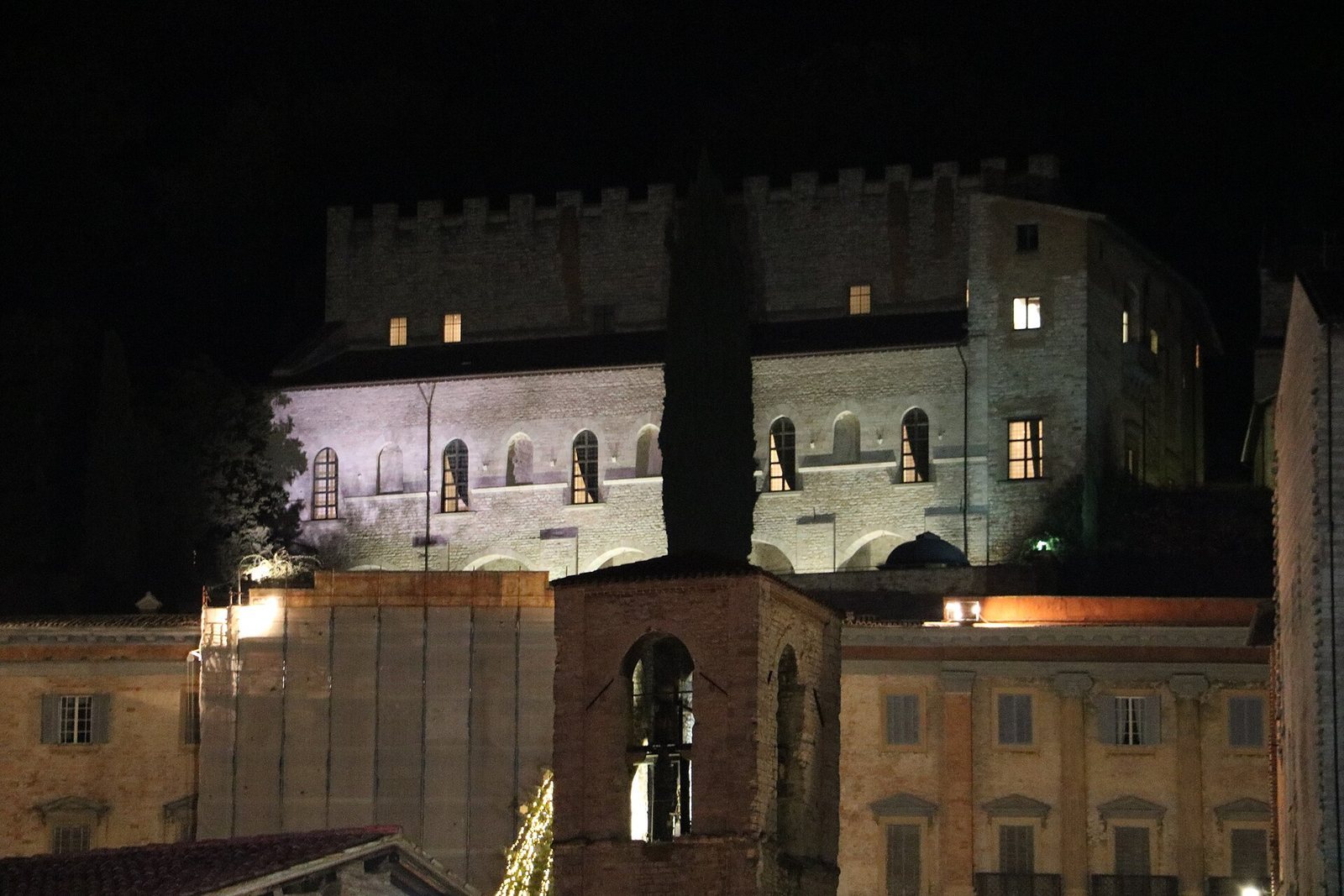
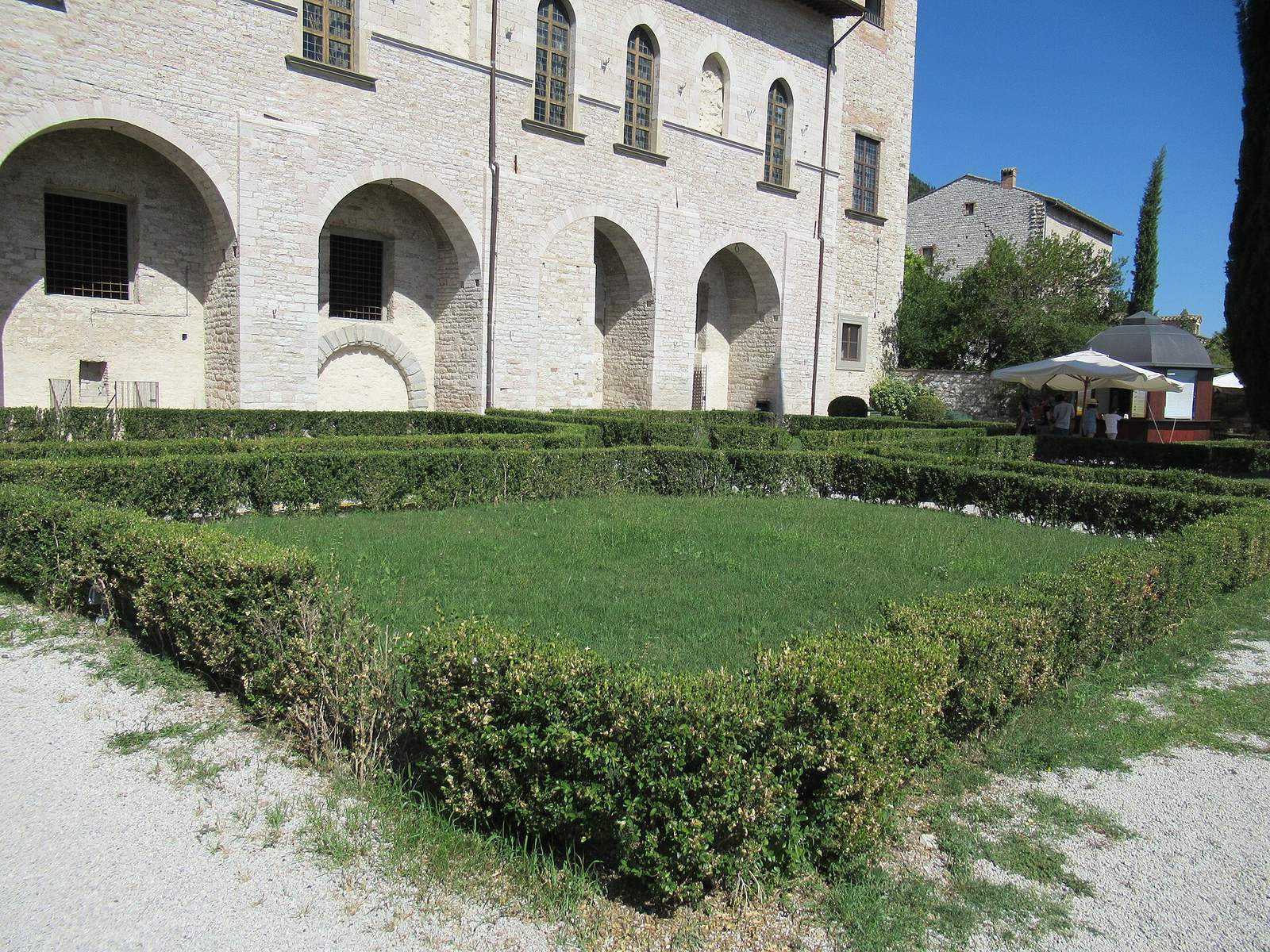
The palace faces Gubbio Cathedral and has two sections, one oriented toward the valley and the other toward the mountain, joined by a spacious central courtyard. Its Renaissance architecture stands apart in a city characterized mainly by medieval buildings.
Layout and courtyard
Two-section plan
The two parts of the palace meet at the central court, linking the valley-facing and mountain-facing sections within a single complex.
Central courtyard
The courtyard combines brick with pietra serena, a gray sandstone, and has principal-floor windows divided by pilasters, shallow vertical features attached to a wall. Its capitals, the decorated tops of supports, portals, or doorways, and chimneys feature elaborate ornament. Bernardino di Nanni dell’Eugenia made the chimney friezes. The courtyard is on a smaller scale than those of the palaces in Urbino.
Rooms and surviving decoration
Ducal rooms and bath
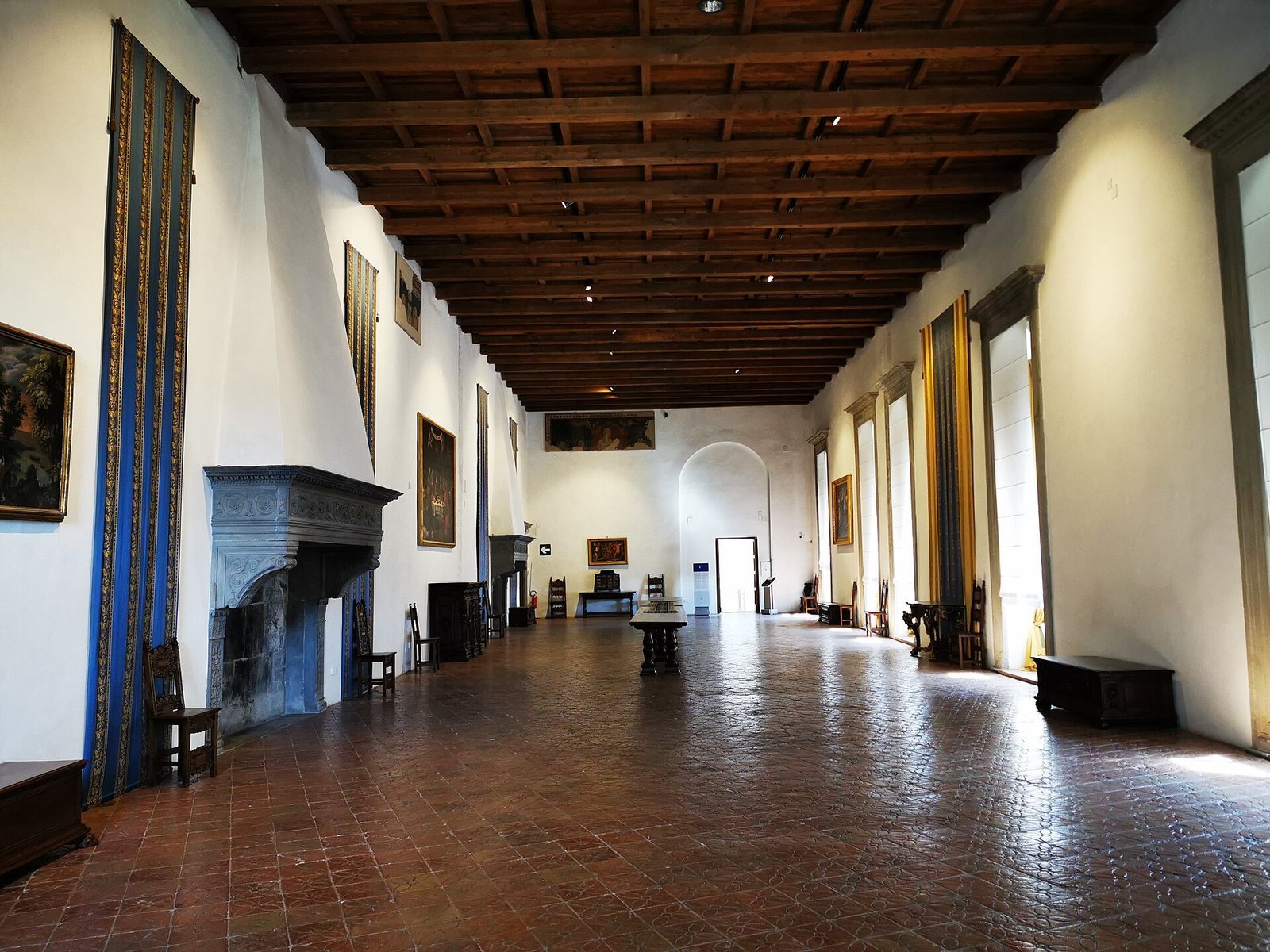
The interior includes the dukes’ rooms and Battista Sforza’s bath. Monumental fireplaces survive, including ground-floor examples made of pietra serena.
Fireplaces and ceilings
The ceilings include coffered examples, formed with recessed panels, and the ceiling beams have been renewed.
Woodwork and ornament
Surviving decorative details include two wooden cabinets from the seventeenth century, inlaid door leaves bearing the Montefeltro arms, similarly decorated window shutters, and a series of angels making music.
The studiolo and its painted cycle
The private cabinet
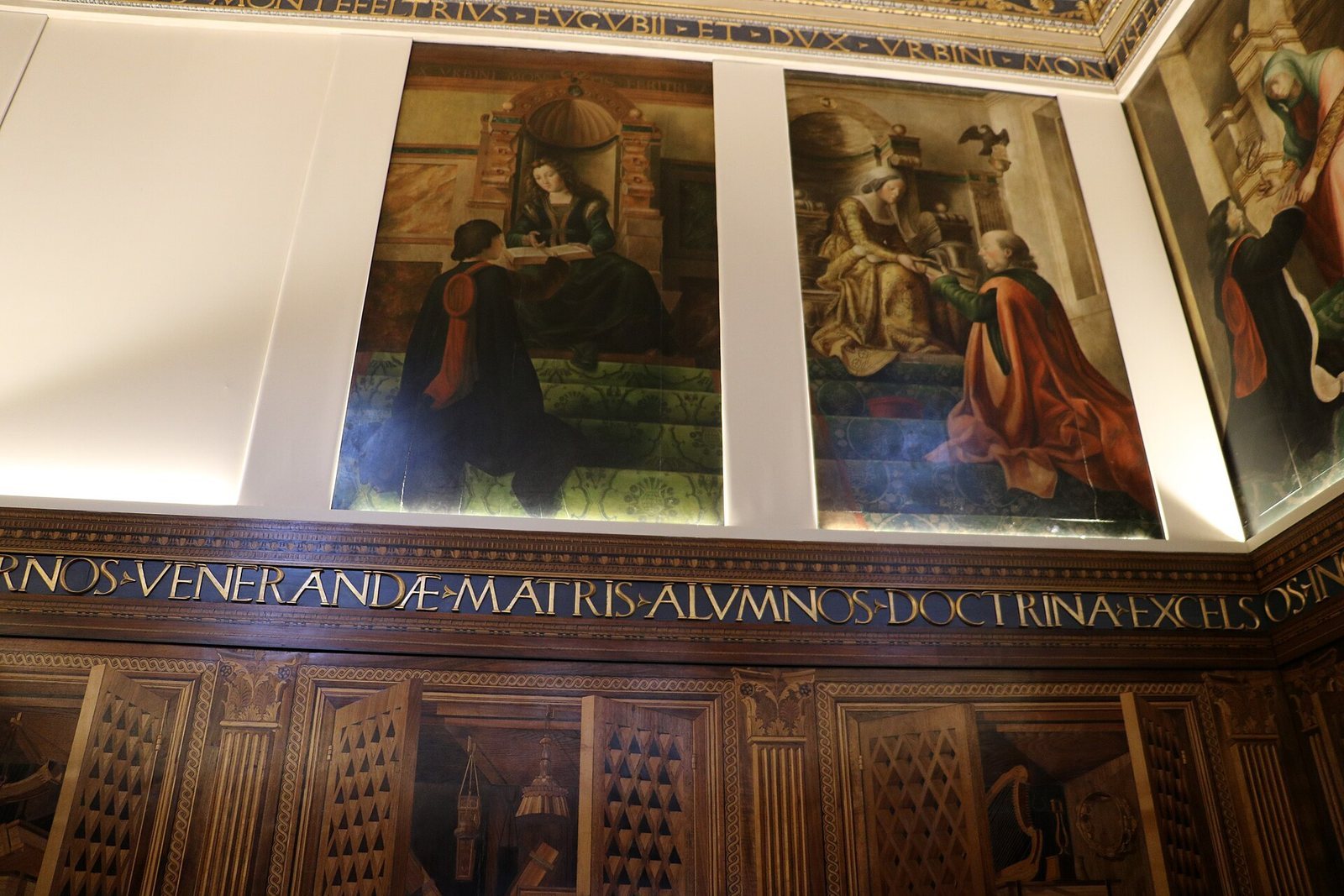
Federico commissioned the studiolo, a small private study or cabinet, and Francesco di Giorgio supplied designs for its inlaid decoration, which Giuliano da Maiano carried out. The work was completed under Guidobaldo I, after whom the cabinet became known. The original was sold to the Metropolitan Museum of Art in New York in 1939, after passing through several hands. A replica made by Gubbio’s Minelli workshop in 2009 is installed in the palace.
Painted decoration
A painted cycle above the inlaid panels is thought to have represented the seven liberal arts. A record from 1631 describes the cabinet’s inlaid cupboards and paintings. The decoration was dispersed in 1673, when workers broke up some painted panels. Two of the four paintings associated with the cycle were destroyed in Berlin in 1945; surviving works include depictions of Rhetoric and Music. Their attribution is uncertain: they have been attributed to Justus of Ghent, while Melozzo da Forlì has also been proposed.
Underground remains
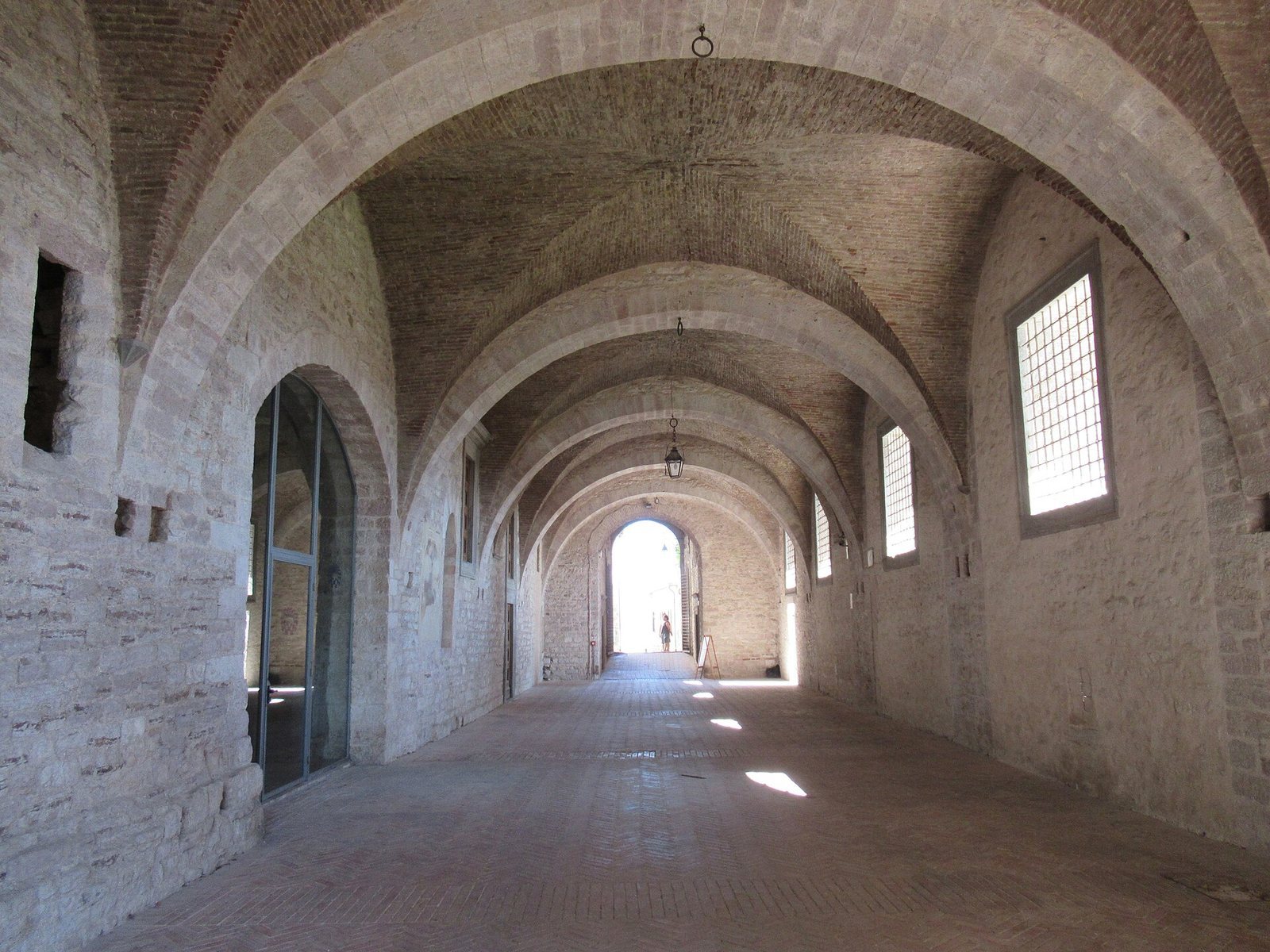
Excavations have revealed archaeological remains in the palace’s underground areas.