Whitley Hall: A Sixteenth-Century House in Sheffield
Site at a Glance
- Popularity
- Medium
- Country
- United Kingdom
- Primary era
- Early Modern
- Eras represented
- Early Modern, Modern
- Civilizations
- English
- Site type
- Domestic
- Remains
- Manor House
On this page8 sections
History
Whitley Hall is a historic house in the hamlet of Whitley, in Sheffield, South Yorkshire, United Kingdom. It took its present form through major rebuilding in the mid-sixteenth century, when an earlier dwelling called Launder House was transformed.
From Launder House to Whitley Hall
Launder House was first recorded in a deed in 1406, when John Cartwright transferred it to William Robinson. In 1487, it passed to Thomas Parker, who held it as a copyhold, a form of tenure under a manor governed by customary duties. His obligations included ploughing and harvesting for the Lord of the Manor of Sheffield. The Parker family remained connected with the property for 135 years across six generations.
In the mid-sixteenth century, a grandson of Thomas Parker began an extensive rebuilding that turned Launder House into Whitley Hall. Thomas’s son William is believed to have completed the work. In 1622, Thomas Shiercliffe acquired the estate, which remained in the Shiercliffe family until the early nineteenth century. A local tradition claims that Mary, Queen of Scots, Scotland’s sixteenth-century monarch, spent a night at the Hall in the 1580s while captive at Sheffield Castle. The story has no documentary support; local historian Jonathan Eastwood included it in his 1862 history of Ecclesfield.
School and Bingley ownership
Around 1790, the Shiercliffes leased the Hall to John Rider, who made it a boys’ boarding school that is thought to have housed about 45 pupils. The railway engineer Sir John Fowler attended from nearby Wadsley between 1826 and 1833. He later recalled that he excelled at mental arithmetic and that the skill helped him in his career.
The Bingley family acquired the property in 1816. By 1841, William Charlesworth lived at the Hall as their tenant; the Bingleys later moved in and stayed until 1939.
Wartime and later uses
At the start of the Second World War in 1939, the Army took over Whitley Hall. Hugh Bingley retained ownership until his death in 1962, although he did not return to live there after the war and the property was rented to tenants.
In 1962, John I. Fearn, head of a local agricultural-engineering firm, bought the Hall and carried out extensive renovation and refurbishment over seven years. It opened as a restaurant in July 1969 and became a hotel in the late 1970s. Whitley Hall is a Grade II* listed building, a category in England for buildings of particular importance and more than special interest. In 1995, it became the first place in South Yorkshire licensed to hold civil wedding ceremonies.
Remains
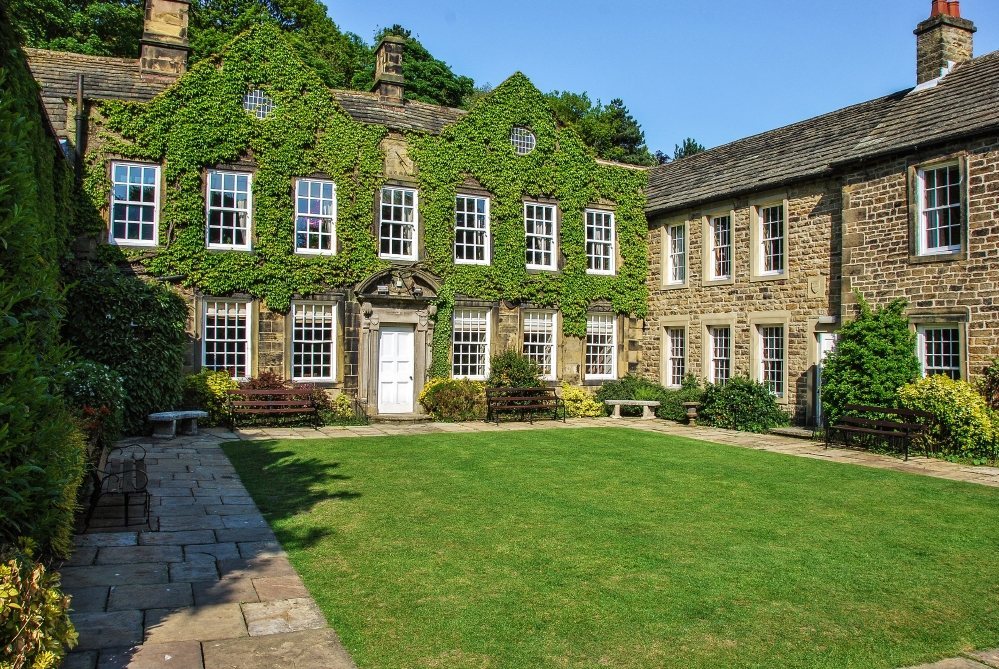
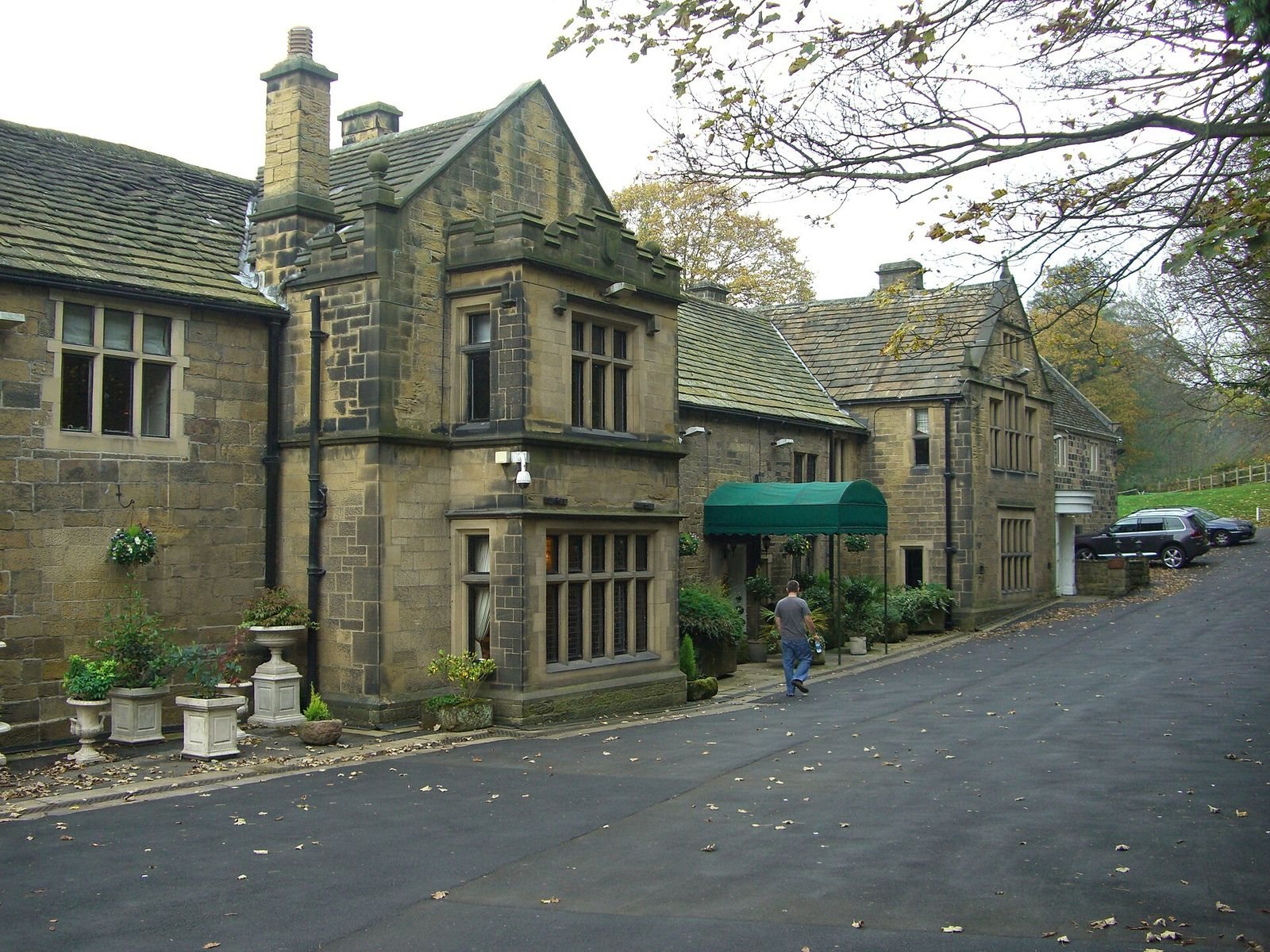
The site brings together the rebuilt house, grounds with garden lakes, and later additions associated with its use as a hotel.
Hall and grounds
The hall
A carved inscription above one of the new doorways credits William Parker with the work and gives the year 1584. It provides a physical marker for the rebuilding that shaped the house.
Estate and grounds
The estate in 1622 comprised the Hall, a corn mill, a dovecote for keeping pigeons or doves, a smelting house for extracting metal from ore, eight fields, two acres of woodland, and four cottages. During the Army occupation, officers and their servants stayed in the Hall, while other ranks used the stable block and curved-roof Nissen huts in the grounds. The gardens include two small lakes. Later hotel extensions increased the accommodation from three rooms to 32 en-suite bedrooms.