Lautrach Castle: A Provost’s Residence and Hunting Lodge
Site at a Glance
- Popularity
- Medium
- Country
- Germany
- Primary era
- Early Modern
- Eras represented
- Early Modern, Modern
- Civilizations
- Holy Roman Empire, Kingdom of Bavaria
- Site type
- Domestic
- Remains
- Castle
On this page8 sections
History
Medieval residence and wartime destruction
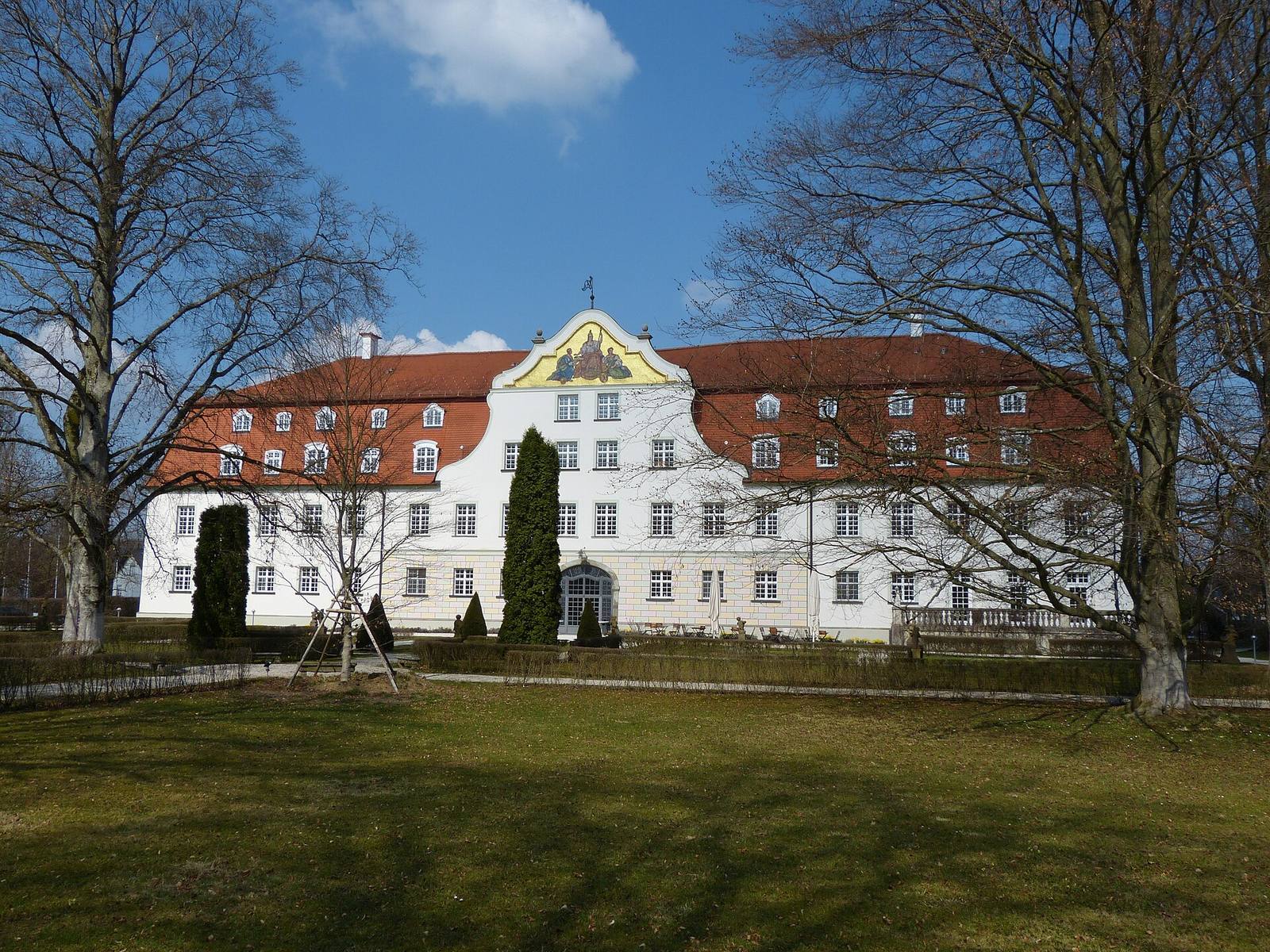
Lautrach Castle is an eighteenth-century residence in Lautrach, Germany, built between 1781 and 1783 by the Prince-Abbey of Kempten for use as a provost’s residence and hunting lodge. The Prince-Abbey was a monastic territory whose abbot also exercised secular authority; its head, Honorius Roth von Schreckenstein, commissioned the building.
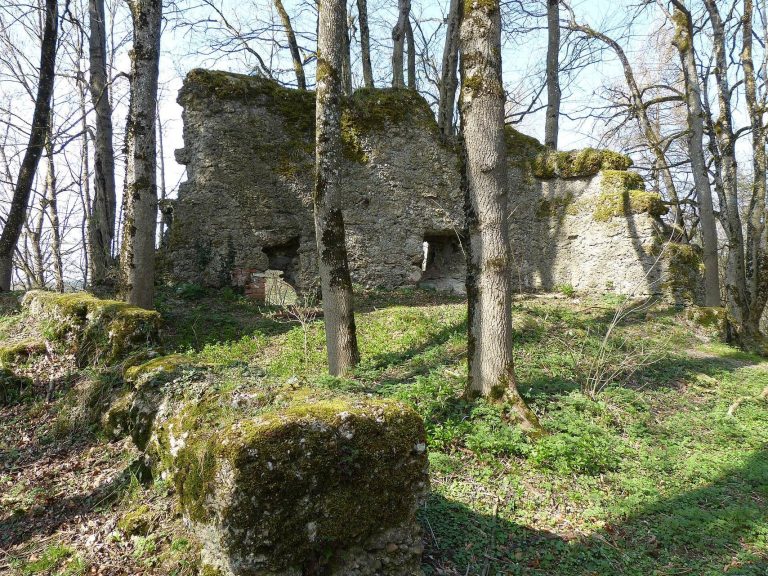
Lautrach was home to one of Swabia’s oldest noble residences. The medieval castle site of Altenlauternach had been Heinrich von Lauternach’s seat since 1164. The lords of Landau succeeded the Lauternach family in 1417. During the Thirty Years’ War, the European conflict of 1618–1648, the town and castle were burned. The lords of Muggenthal later rebuilt the castle, which passed to the Prince-Abbey in 1645.
Construction and changing ownership
A fire destroyed most of the Old Castle in 1780, prompting the construction of the New Castle in 1781–1783. After secularization in 1803, when church property and authority passed to secular rulers, the Electorate of Bavaria took ownership of both castles. In 1805 it sold the New Castle at auction to the French count Jean-Luis Firmas-Perier, who bought the Old Castle in 1814.
Schools and estate transfers
After Firmas-Perier’s death, Baron von Speth acquired the buildings in 1831. Catholic priest Josef Deybach purchased them in 1838 with support from Baron Vequel of Kronburg. Deybach and his sister opened a school for girls from upper-class families, followed by a boys’ institute in 1840. The institutions became known beyond the region.
The New Castle passed to the lordship of Zeil in 1869. In 1889, the Wagner institutions of Dillingen, now the Regens-Wagner Foundation, acquired the remainder of Deybach’s estate.
A scholarly retreat and conference center
Polar explorer Hermann Anschütz-Kaempfe, inventor of the gyroscopic compass, owned the New Castle from 1921. A gyroscopic compass uses a gyroscope to indicate direction. He renovated the building as a recreation home for professors and students and hosted selected scientists for sessions he called faculty meetings. Participants included zoologist Karl von Frisch, physicists Wilhelm Wien and Arnold Sommerfeld, chemist Richard Willstätter, physiologist Albrecht Kossel, and theoretical physicist Albert Einstein.
Anschütz-Kaempfe left the New Castle to Ludwig Maximilian University of Munich in 1931. The university sold it to the Wagner institutions in 1966. Converted into a management center and conference hotel in 1989, it officially opened in that role in 1993. It now operates as a conference center, jointly owned by the Swabian Chamber of Commerce and Industry and the Kolping Educational Work in the Diocese of Augsburg.
Remains
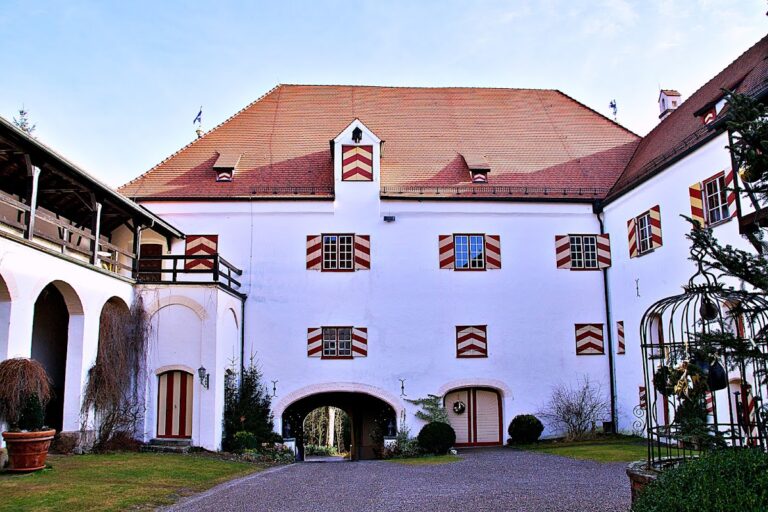
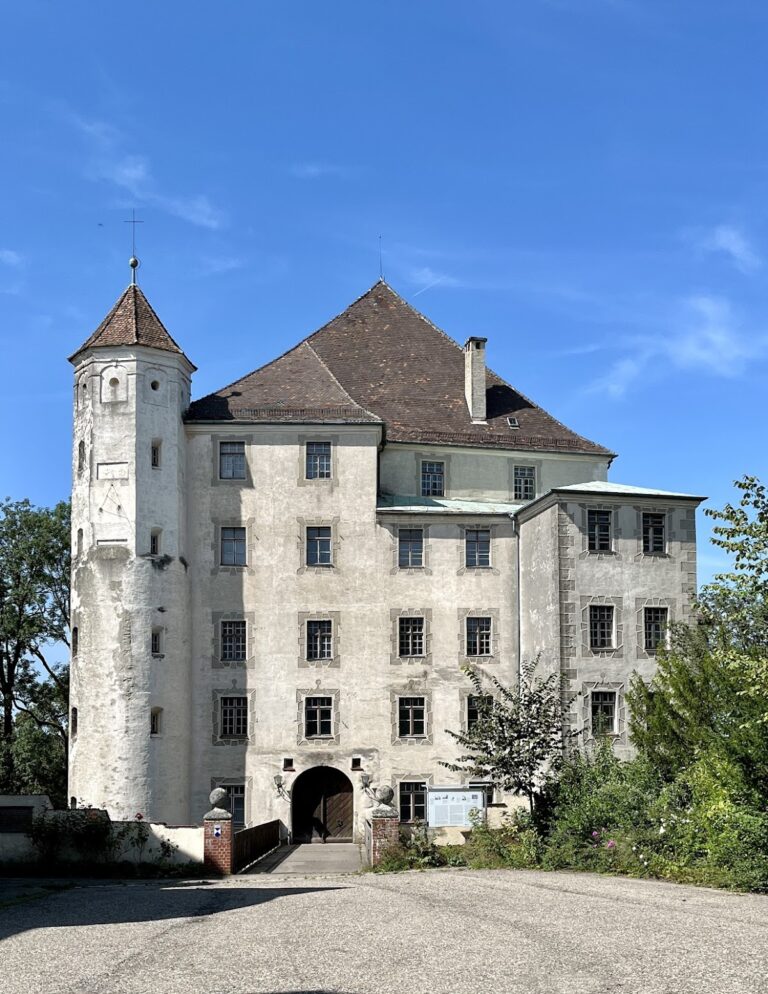
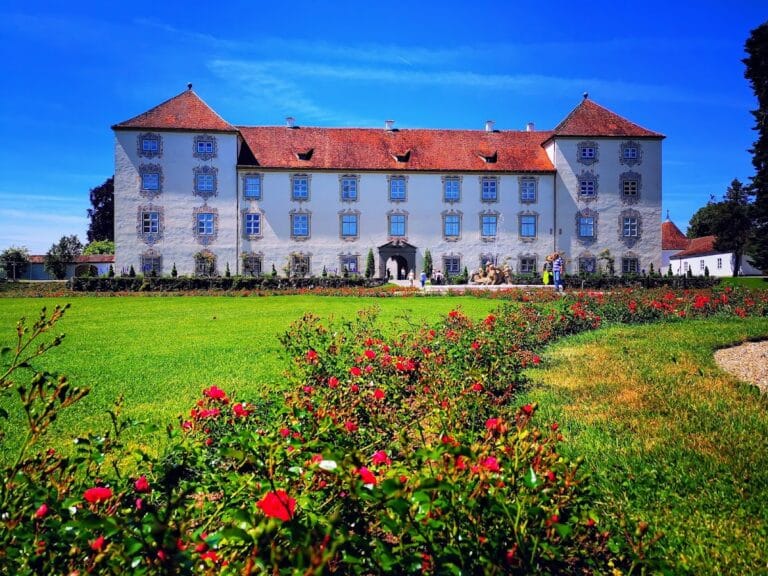
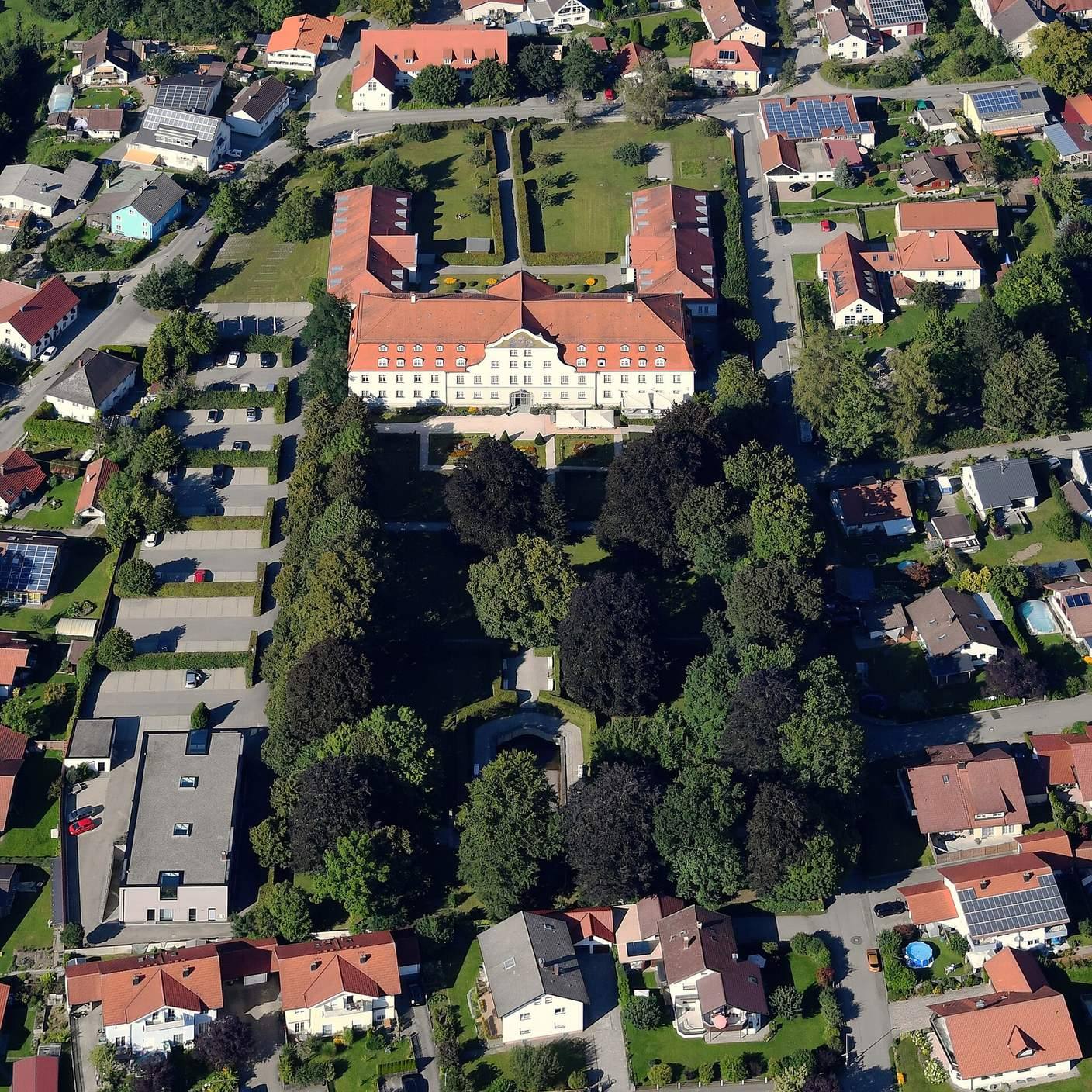
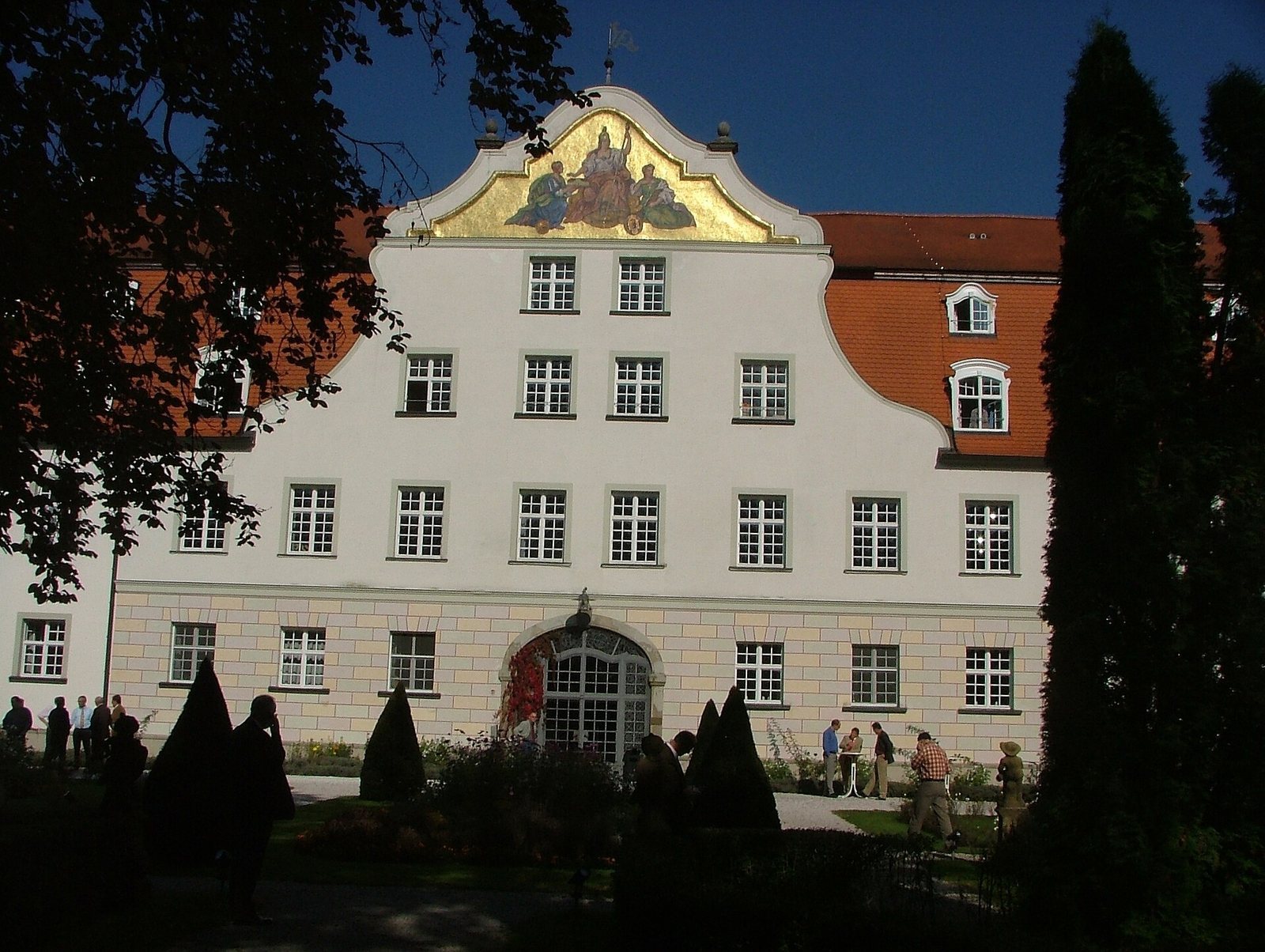
The New Castle is a long, three-storey building with a mansard hipped roof, whose lower slopes are steeper than the upper ones. Central sections project from the main building and end in curved gables. A courtyard garden surrounds the structure.
Interior features
The castle contains a small theater hall associated with Firmas-Perier’s ownership. Its valuable, hand-printed pictorial wallpapers were produced by the Dufour wallpaper manufactory in Paris.
Old Castle grounds
An institute building stands on the Old Castle grounds, where Deybach had it erected for the boys’ institute. The Wagner institutions, now the Regens-Wagner Foundation, remain its owners.