Taunton Castle: A Norman Stronghold and Episcopal Fortress
Site at a Glance
- Popularity
- High
- Country
- United Kingdom
- Primary era
- Medieval
- Eras represented
- Medieval, Early Modern
- Civilizations
- British, English, Norman
- Site type
- Military
- Remains
- Castle
On this page18 sections
History
Early fortifications and church
Taunton Castle is a Norman stronghold in the United Kingdom, reflecting the culture associated with Normandy and the conquest of England. William Giffard converted a bishop’s hall into a castle between 1107 and 1129. The site’s history also connects it with early English church institutions and later struggles for royal and parliamentary control.
An early fortification at Taunton, associated with Ine, king of Wessex, and Queen Æthelburg, dates to around 710. The Anglo-Saxon Chronicle records its destruction twelve years later, but it probably stood elsewhere than the present castle. Tradition holds that Queen Frithugyth, wife of King Æthelheard of Wessex, founded a minster a few years afterward. A minster was an important early English church, and the Bishops of Wessex seem to have built a manor house beside it.
By 1086, Taunton belonged to the Bishop of Winchester, who held a minster or an Augustinian priory, a religious community following the Rule of St Augustine. William Giffard, chancellor to Henry I, then transformed the bishop’s hall into a castle. In 1138, Giffard’s successor, Henry of Blois, strengthened it during the civil war of King Stephen’s reign.
Medieval conflicts and rebuilding
Bishop Peter des Roches, a supporter of King John, defended the castle during the barons’ revolt of 1216. In the Second Barons’ War, a conflict between Henry III and his baronial opponents, the castle held a son of Simon de Montfort prisoner until 1282.
In 1451, the Earl of Devon besieged the castle, then held by Lord Bonville. Bishop Walter Langton altered the inner-ward gatehouse in 1496. In the 1520s, Bishop Richard Fox paid for a schoolhouse within the castle walls.
The Civil War and the Bloody Assizes
The castle had fallen into ruin by 1600, but was repaired during the English Civil War, fought between supporters of the king and Parliament. Parliamentary forces captured Taunton under the Earl of Essex in June 1644, making it the only Parliamentary enclave in southwest England. Royalists under Lord Goring began a siege in July 1644, confronting forces commanded by Colonel Robert Blake. Sir William Waller briefly relieved the town in late November. A column led by Colonel Ralph Weldon arrived on 11 May 1645, but the siege continued until assistance reached Taunton on 14 June, after troops could be spared from the Battle of Naseby.
The keep, the castle’s principal defensive tower, was demolished in 1662, and the castle continued to serve as a prison into the late seventeenth century. In 1685, after the Monmouth Rebellion, an unsuccessful rising against James II led by James Scott, Duke of Monmouth, Judge George Jeffreys held the Bloody Assizes in the Great Hall. More than 500 of Monmouth’s supporters were tried on 18 and 19 September. Of these, 144 were hanged, and their remains were displayed around the county to deter further rebellion.
Repairs and later use
By 1780, much of the castle was in poor condition. Sir Benjamin Hammet repaired it in the Georgian style, an architectural style associated with Britain in the eighteenth and early nineteenth centuries. His work included a new roof, numerous windows and other alterations. In 1786, he obtained the grant of bailiff and keeper in the names of his sons and nephew. The Great Hall hosted public meetings during the eighteenth and nineteenth centuries.
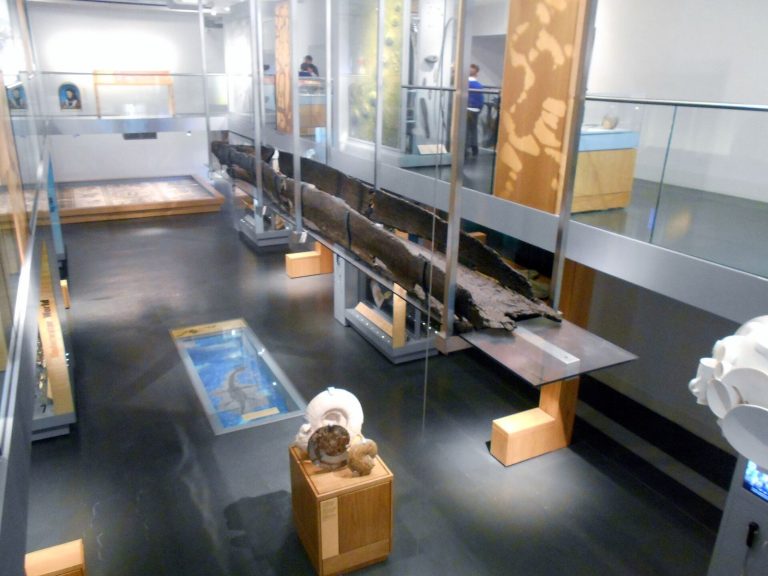
The Somerset Archaeological and Natural History Society bought the castle in 1873. The Great Hall was repaired and refitted as the society’s principal museum space from 1899 to 1900. After further refurbishment, the hall and inner ward became the Museum of Somerset, which opened in 2011. The castle buildings also house the Somerset Military Museum. Castle House was designated an Ancient Monument and placed on the Heritage at Risk Register. The site is a scheduled monument, and the castle building was Grade I listed in 1952.
Remains
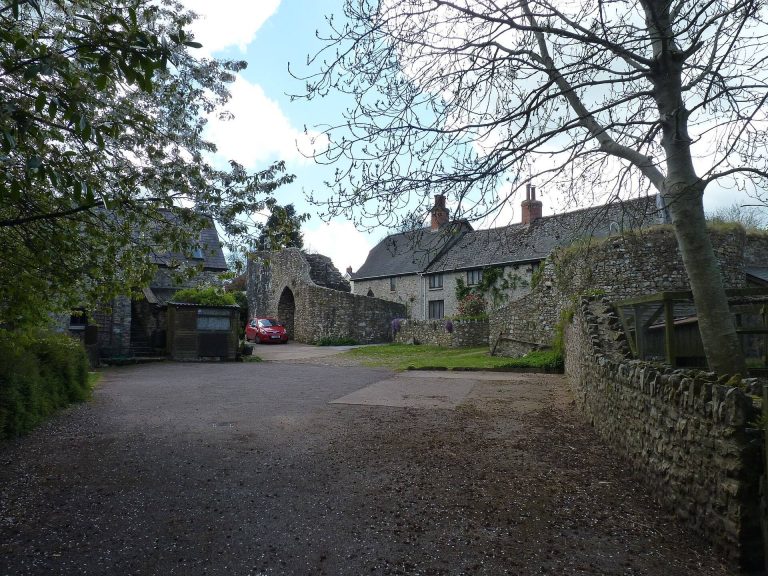
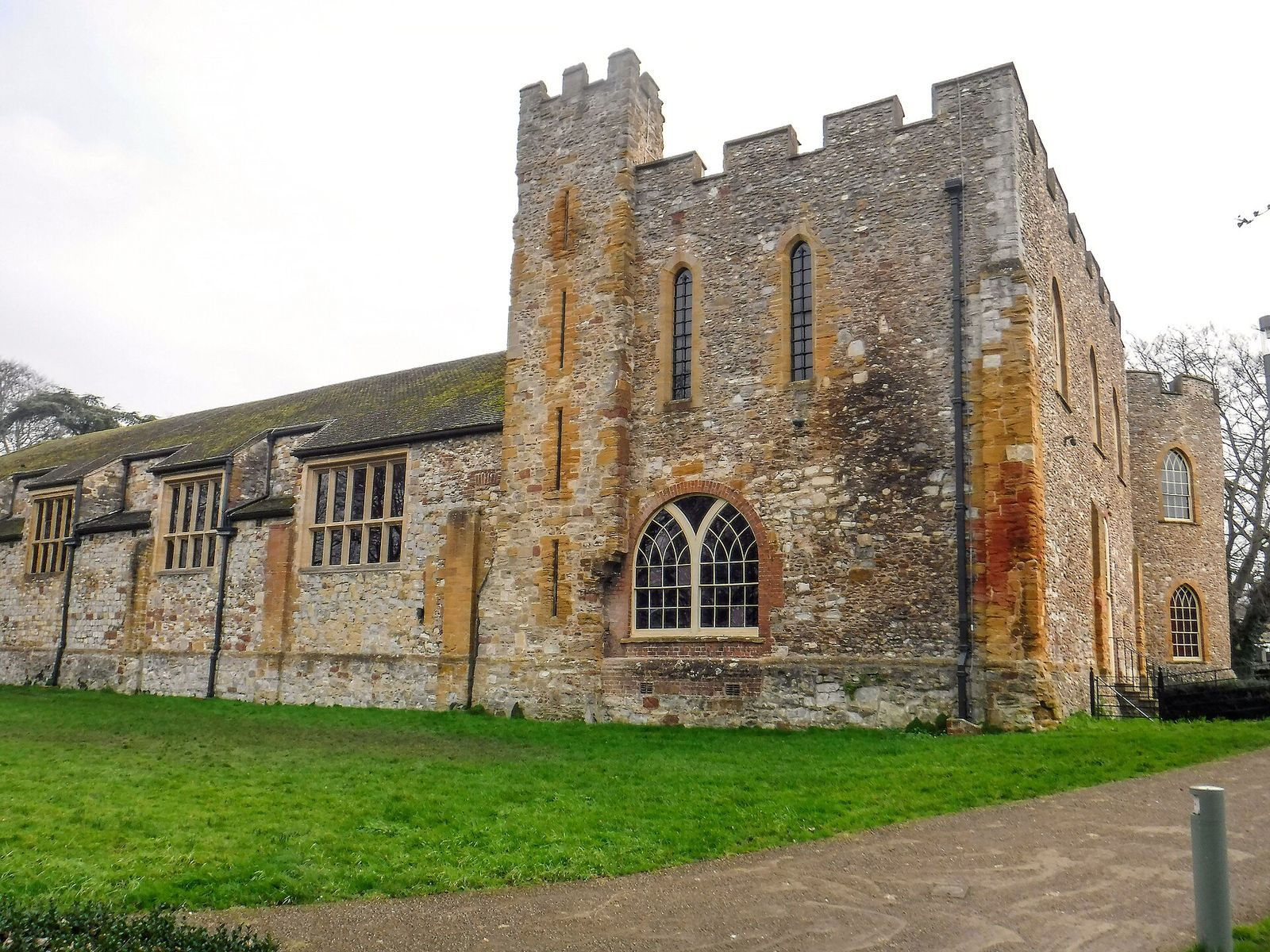
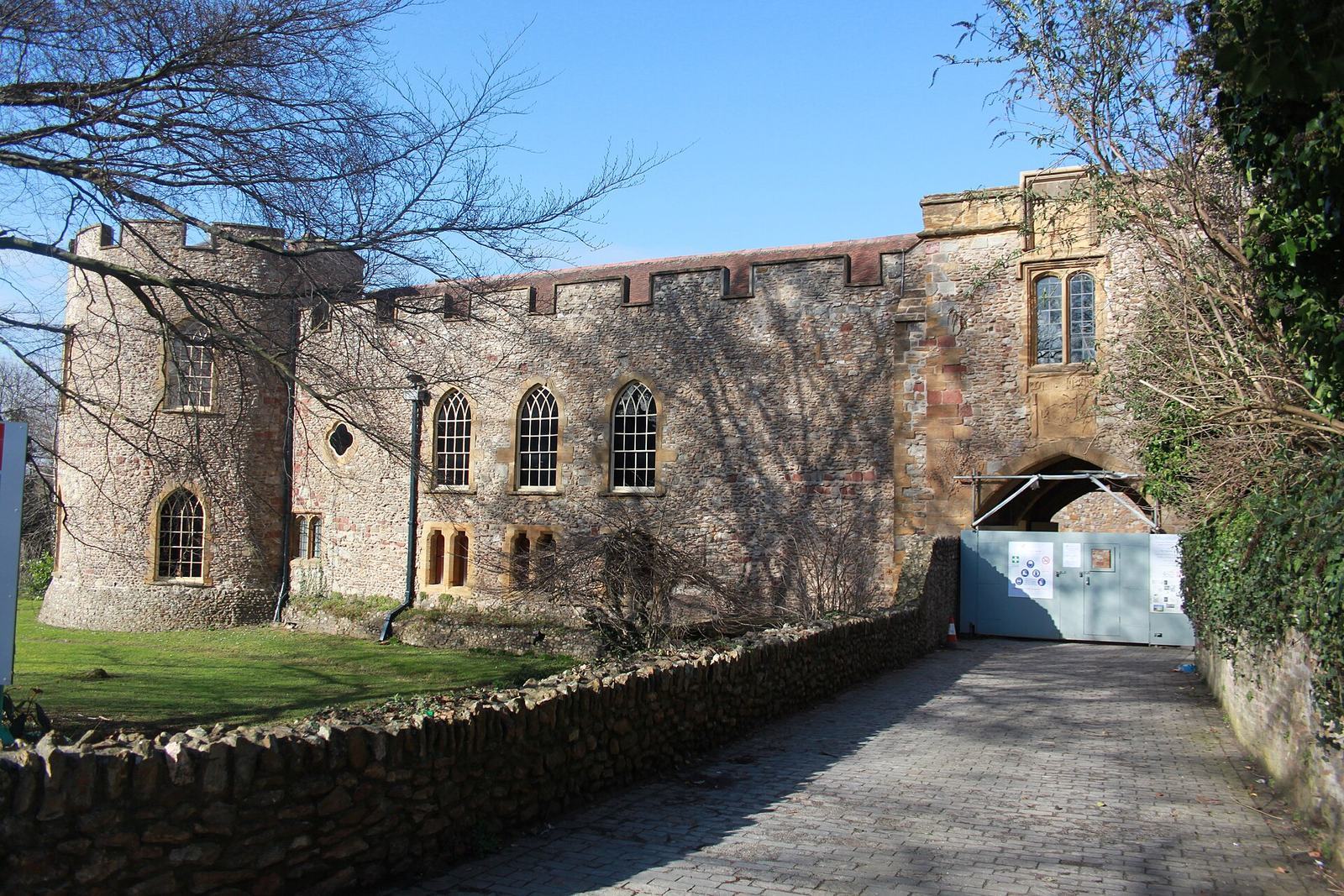
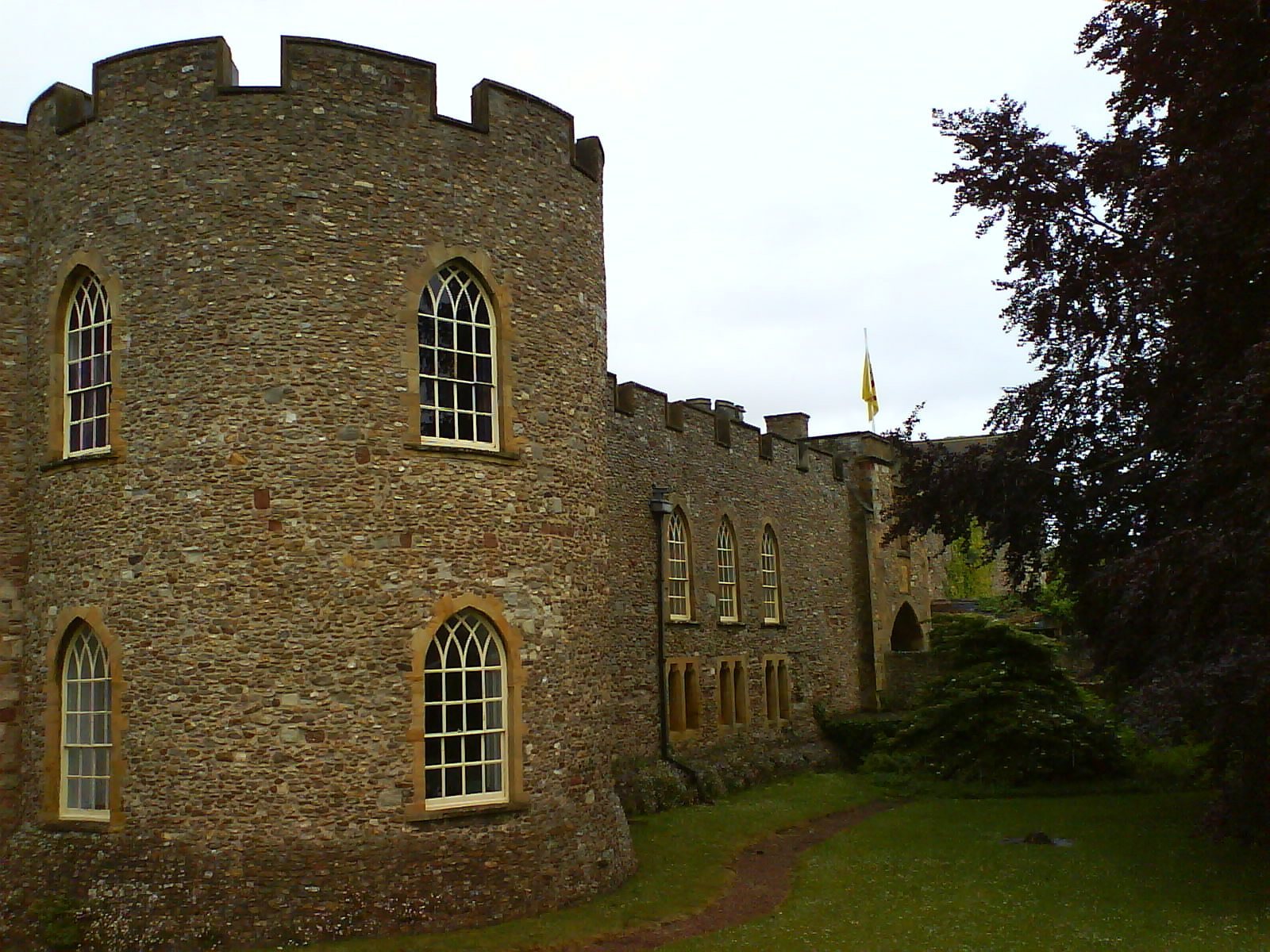
The castle is a stone-built Norman complex arranged around an inner ward, the principal enclosed area, and an outer bailey, an outer enclosed court represented by modern Castle Green. A stone wall encloses the inner ward, whose buildings have been heavily reconstructed.
Wards and gateways
Inner-ward gatehouse
The gatehouse has a large Tudor-period window, from the English dynasty that ruled between 1485 and 1603, divided into two main openings. Above it, a tablet bearing Langton’s arms is supported by angels; the royal arms of Henry VII appear below.
Great gate
The entrance into the enclosure is partly medieval. Its arches belong to an Early Decorated gatehouse, a phase of English Gothic architecture, attributed to around the time of Edward I. The upper structure was restored in 1816.
Outer ward
Two hotels occupy the outer ward. Their crenellations, battlements with alternating raised sections and openings, were added to resemble the genuine battlements of the inner ward.
Buildings within the inner ward
Keep
The keep measured about 50 by 40 feet (15 by 12 metres), with walls around 13 feet (4 metres) thick, and rose three storeys. Its first-floor Great Hall stood above a stone-vaulted lower chamber. Foundations remain.
Great Hall
Opposite the inner-ward gateway, the Great Hall measures about 120 by 31 feet (37 by 9 metres). Portions of its walls are Norman, although later generations substantially altered the building. Langton added Tudor windows to the north front; two survive, while later windows replaced the others in the seventeenth or eighteenth century.
Schoolhouse
The schoolhouse was the last structure erected within the castle walls.
Adam Library
Created in 1908 and 1909, the Adam Library provided space for the archaeological society’s growing book collection.
Other structures and archaeological features
Castle House
Castle House dates from the seventeenth century. Repairs addressed its poor condition.
Cemetery and artillery platform
The site also includes an Anglo-Saxon cemetery and an artillery platform dating to the Civil War.