Saint George Church: A Romanesque-Gothic Parish Church in Stará Halič, Slovakia
Site at a Glance
- Popularity
- Low
- Country
- Slovakia
- Primary era
- Medieval
- Eras represented
- Medieval, Early Modern, Modern
- Civilizations
- Habsburg, Hungarian
- Site type
- Religious
- Remains
- Church
On this page16 sections
History
Foundation and medieval rebuilding
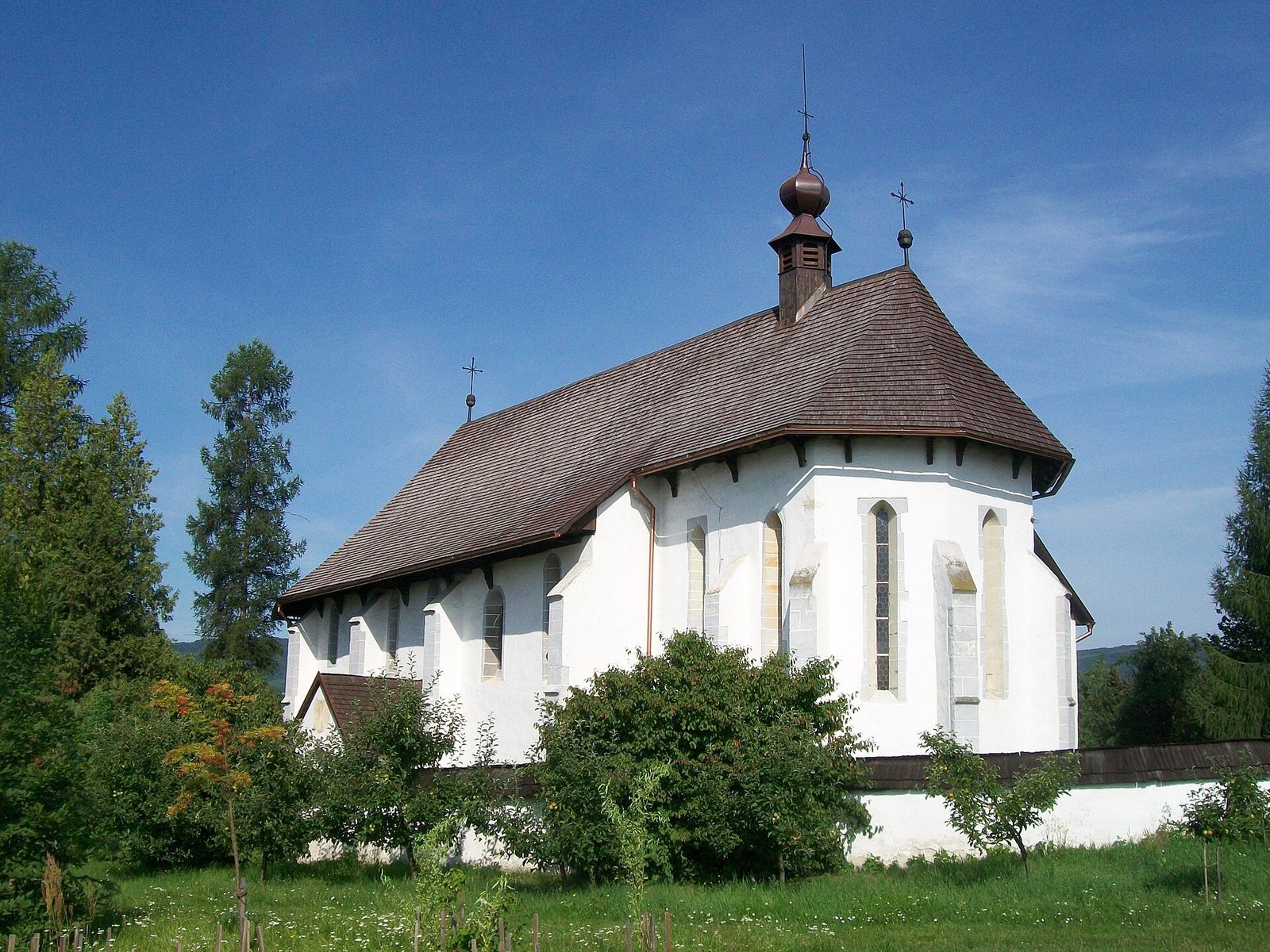
Saint George Church is a Roman Catholic parish church in Stará Halič, Slovakia, probably built around 1300 by Dionýz Tomaj of the Hungarian Lossonczy family. Its Romanesque-Gothic design combines rounded Romanesque forms with Gothic pointed arches and rib vaults. Dedicated to Saint George, it serves the local parish within the Novohrad deanery and Diocese of Rožňava, part of the Eastern ecclesiastical province.
In 1350, Thomas, a descendant of Dionýz, oversaw a Gothic renovation. The village of Stará Halič was first mentioned in writing that same year. The church’s medieval decoration developed over several campaigns, with paintings dating to the fourteenth and fifteenth centuries.
Changes from the sixteenth to eighteenth centuries
In 1524, builders remodeled the Romanesque nave in a Gothic-Renaissance style, adding a late Gothic vault and constructing the present arch between the nave and presbytery. The church was later burned during the Hungarian-Turkish wars of the sixteenth and seventeenth centuries. A new roof was built in the 1670s.
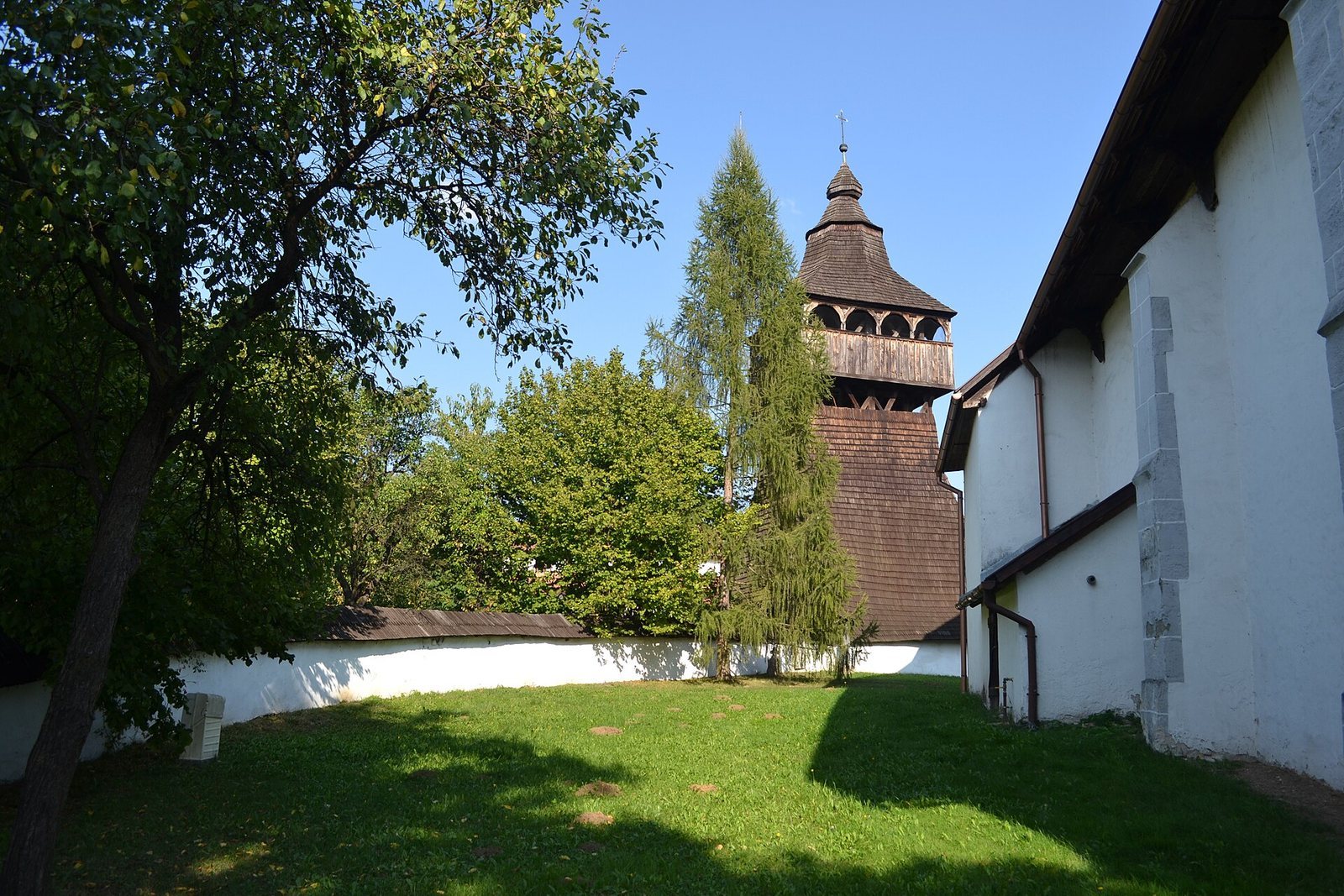
Miller Ján Polóni built the wooden Renaissance bell tower in 1673. It served both the church and the wider community, sounding warnings of fires, wartime dangers, and other emergencies. Minor alterations to the presbytery followed in the eighteenth century.
Repairs and preservation
Repairs in the 1950s changed the church’s exterior to an ochre façade beneath a red pantile roof. Work in the 1960s restored a white façade and a shingle roof. A floor investigation in 2001, made before repairs to the nave floor, uncovered two tombs.
Renovation between 2009 and 2013 included a new shingle roof, underfloor heating, and a new floor in the presbytery at a changed level. A Neo-Gothic altar was installed in 2009. The church, bell tower, and surrounding wall entered Slovakia’s Central List of Monuments in 1963; the church was declared a National Cultural Monument in 1991. The church and tower are noted for combining Gothic architecture with folk building traditions, local craftsmanship, and Italian painting influences.
Remains
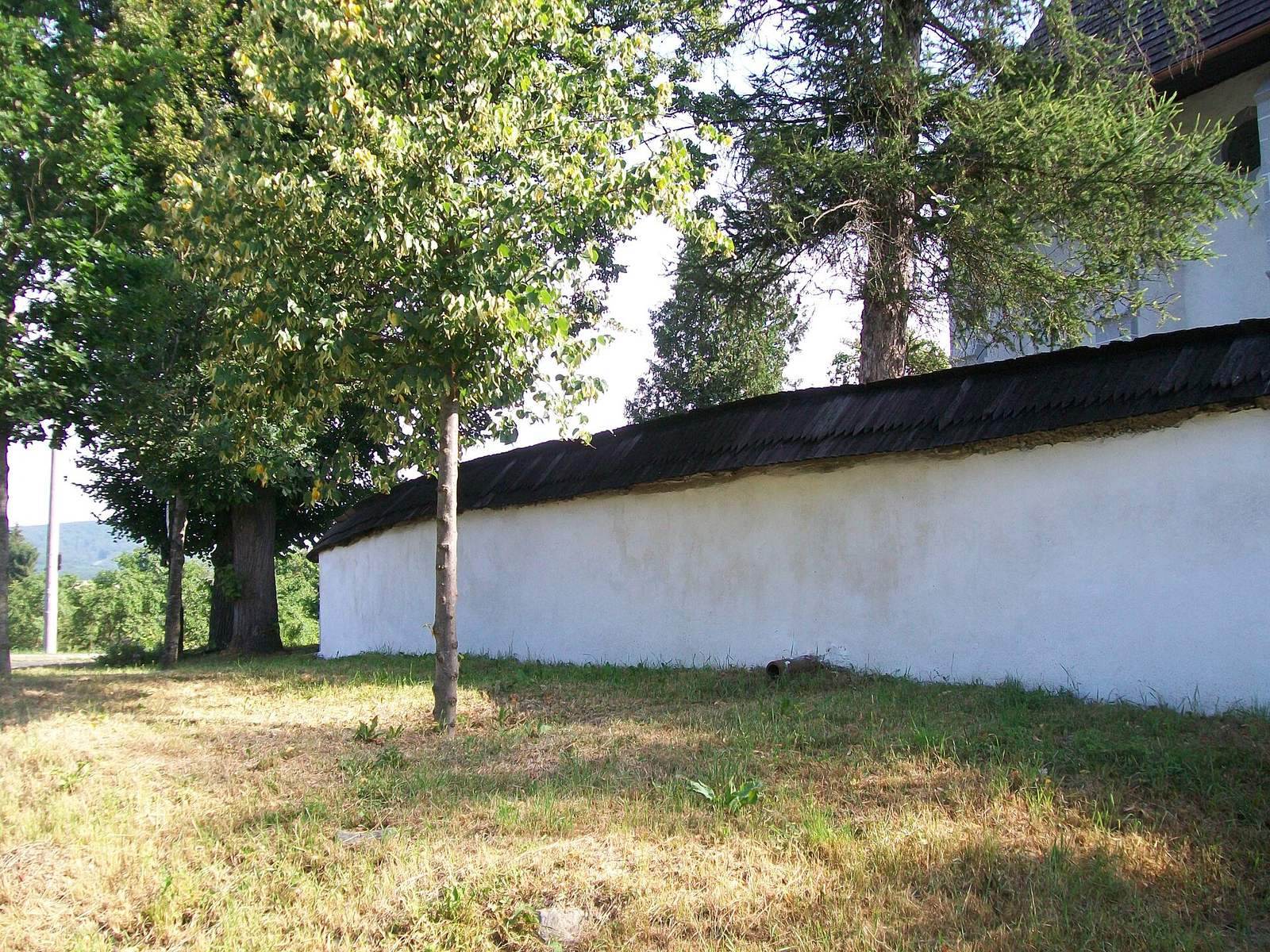
The complex comprises a freestanding stone church, a separate wooden bell tower, and a masonry enclosure about 1.7 metres high. The single-nave church has a polygonal-ended presbytery and an added sacristy. Its Romanesque and Gothic elements reflect successive phases of building and alteration.
Church and enclosure
Exterior and nave
Stepped buttresses with small roof-like caps support the nave walls. Its western entrance has a large pointed portal with pear-shaped moulding. The doors retain their original iron fittings and an interior bolt. Narrow, Romanesque-form windows and other windows are framed in dressed stone. The seventeenth-century hipped roof rests on brackets.
Inside, the nave is covered by a late Gothic net-patterned vault. Its ribs meet at three raised stone bosses and rest on polygonal half-pillars. One shield-shaped boss bears mirrored Gothic numerals read as ‘4251’, probably an incorrectly carved version of 1524. The vault does not line up with every older window: one opening falls within the attic space, while other windows intersect the vault. A masonry gallery was added during the 1350 renovation, and a wooden organ gallery later stood above the western entrance. Stone corbels beneath the choir retain the positions of beams from an earlier gallery. The wooden gallery was removed after damage.
Presbytery
The presbytery has a single bay of cross-rib vaulting and a radial vault over its polygonal end, supported by cylindrical stone supports. Two bosses at the rib junctions carry the coat of arms of Lučenec. Its windows are early Gothic. A wall niche on the north side held the Eucharist, while a wide pointed recess on the south has a built-in bench and massive inner jambs with pear-shaped moulding. The shortened buttresses have stepped profiles and capped tops.
A large-lettered inscription dated 1350 appears to the left of the main altar and relates to the church’s construction, although it remains undeciphered. Beneath a crucifixion scene on the sanctuary’s north wall, a stone construction stele bears a carved inscription associated with the building work.
Sacristy
A pointed Gothic doorway connects the presbytery to the sacristy, a room for vestments and church furnishings. Its single bay has a cross-rib vault resting on springing blocks and small corbels, and the room has one rectangular window.
Wall paintings
Fourteenth-century paintings
The murals represent several successive campaigns. Their painter is uncertain: the work may be by an Italian artist or by a regional painter trained in northern Italy, and it has an artistic connection with paintings in Friuli. The earliest and strongest figurative group is dated to 1350. Its composition, treatment of figures, and the expressions of Saint John and the Virgin Mary have been linked with northern Italian workshops in the second half of the fourteenth century.
Scenes in the lower register of the north nave wall include Saints Thomas and Nicholas and survive in relatively good condition. The story of Saint Nicholas appears in six episodes, three of which remain legible. A painted Saint Thomas before Christ may refer to Thomas Lossonzy, a possible patron associated with the inscription on the construction stele. His descendants may have commissioned the image in memory of the rebuilding and of a possible patron of the church’s oldest surviving figurative decoration.
Fifteenth-century and other scenes
Paintings on the north side of the nave include a cycle of vices and an image of Saint George slaying the dragon, both dating to the first half of the fifteenth century. Other scenes show three sisters receiving lumps of gold alongside three officials unjustly condemned, as well as a fragment in which a saint saves three more condemned people.
The north side of the triumphal arch bears the instruments of Christ’s Passion and a standing image of the suffering Christ. On the south side, a Madonna Protector appears with Saint Dorothy. Another mural uses small architectural forms to suggest depth without arranging the scene through perspective. Some of the paintings have a folk-influenced character associated with localities in Gemer. Fragments of the murals came to light during twentieth-century whitewashing; they were fully uncovered in 1965 and 1966, and again in 1978. J. Adam of Rožňava carried out the last recorded mural decoration in 1913.
Bell tower
The wooden Renaissance tower stands north to northeast of the church within the enclosure. Its frame narrows upward like a truncated pyramid and is covered with shingles. An open gallery of arches crowns the frame, above which rises a shingled pyramidal roof ending in a small onion-shaped feature. The tower was originally assembled without nails. It contains a Gothic bell probably dating to the fifteenth century and other bells from 1924.
Altars and furnishings
Altars
The former Baroque main altar had a superstructure dating to 1735 and was replaced by a Neo-Gothic altar in 2009. The earlier columned arrangement had a central painting of Saint George and Baroque statues of Saints Sebastian, Peter, Paul the Apostle, and John the Evangelist.
The Baroque side altar of Our Lady of Passau dates to 1718. Its twisted columns have vine motifs, and a Madonna painting occupies the centre, with an image of Saint Ignatius of Loyola above. A second side altar, a nineteenth-century pseudo-Baroque work, depicts the Pietà and Our Lady of Seven Sorrows, flanked by statues of Saints Veronica and Mary Magdalene.
Other furnishings
The furnishings also include a pseudo-Baroque pulpit from the early twentieth century, a seventeenth-century stone baptismal font, and a late Baroque holy-water stoup dated 1793. A free-standing, folk-style Rococo statue of Mary and the infant Jesus dates to the late eighteenth century; the polychrome wooden figures wear period clothing. A Baroque monstrance dates to 1712.