Schloss Fuschl: A Salzburg Prince-Archbishops’ Hunting Lodge and Hotel
Site at a Glance
- Popularity
- Very High
- Country
- Austria
- Primary era
- Medieval
- Eras represented
- Medieval, Early Modern, Modern
- Civilizations
- Austrian Empire, German, Habsburg, Holy Roman Empire
- Site type
- Domestic
- Remains
- Castle
On this page9 sections
History
Schloss Fuschl is a mid-15th-century hunting lodge on the western end of Lake Fuschl, at Hof bei Salzburg, Austria. The prince-archbishops of Salzburg, who held both religious office and territorial authority, built it for short stays. Its architecture is associated with late Gothic and Renaissance styles, and it served as a court retreat rather than a military stronghold. Its precise construction date is unknown, but it is linked to the successive prince-archbishops Sigmund I of Gleink-Volkerstorf (1452–1461) and Burkhard von Weißpriach (1461–1466).
Archiepiscopal hunting lodge
By about 1500, the lodge was considered poorly suited to the stays intended for it. Extensive renovation followed between 1553 and 1557, with further improvements in the 17th century. The archbishop and his court continued to use it chiefly for hunting and fishing. A hunt there is first mentioned in 1545. In 1593, Archbishop Wolf Dietrich oversaw extensive repairs and upkeep, including work on water pipes, kennels for hunting dogs and a sheep stable, as well as cleaning the property.
A hunt under Prince-Archbishop Paris von Lodron in 1624 involved driving deer into the lake and pursuing them by boat. In 1669, the castle was considered well preserved and was occupied only by the archbishop and his court. Lightning damaged its roof in 1694. The court hunter, who had previously lived in the kitchen, was permitted to move to the second floor in 1704; by 1762, all the windows were glazed.
Private ownership and decline
The dissolution of Salzburg’s ecclesiastical principality in 1803 ended archiepiscopal rule. After several ownership changes, the castle came into Austrian possession by 1816 and was administered by the Hallein Saltworks Office. Used as a forester’s residence and left without maintenance, it fell into disrepair. An auction in 1833 attracted no buyer, and the property remained leased until 1851.
Linz shipmaster Michael Fink bought the property in 1864. It passed by inheritance in 1873 to his daughter Amalie and her husband, Michael Erl, who furnished it with paintings and furniture. Colonel Alfred von Erl acquired it in 1894 and lived there in summer. After further changes of ownership, Fritz and Babette Steinbacher owned the castle from 1910; the brothers Eduard and Martin Mayer later sold it to Gustav and Hedwig von Remiz in 1929. The couple commissioned architect Julius Kubick to renovate it.
Nazi-era use and postwar restitution
Gustav Remiz, a monarchist and official of the Fatherland Front, an Austrian political organization that held power before Nazi Germany annexed the country, was arrested by the Gestapo on 15 June 1938 and deported to Dachau, a Nazi concentration camp. He died there on 29 August 1939. Regional Nazi Party leader Friedrich Rainer pursued the expropriation of Hedwig Remiz. In 1939, after senior Nazi official Martin Bormann sought a representative summer residence for Foreign Minister Joachim von Ribbentrop, the castle was selected. A special fund from the Reich Foreign Office compensated the Land Salzburg, and the newly established Haus Fuschl Foundation made the castle and its surroundings available to Ribbentrop and his associates for official representation and recreation. State guests included Italian Foreign Minister Galeazzo Ciano, the son-in-law of Benito Mussolini.
United States soldiers used the castle as a recreation centre in 1945. On 25 May, Gustav Remiz’s nephew Georg applied to have it returned to Hedwig. Restitution began in 1947 and concluded in 1955, delayed in part by the foundation’s claim for reimbursement of its investment costs. Paintings and furnishings gathered by Michael Erl, together with the castle’s broader picture collection, were lost or became untraceable in the immediate postwar period.
Hotel and modern restoration
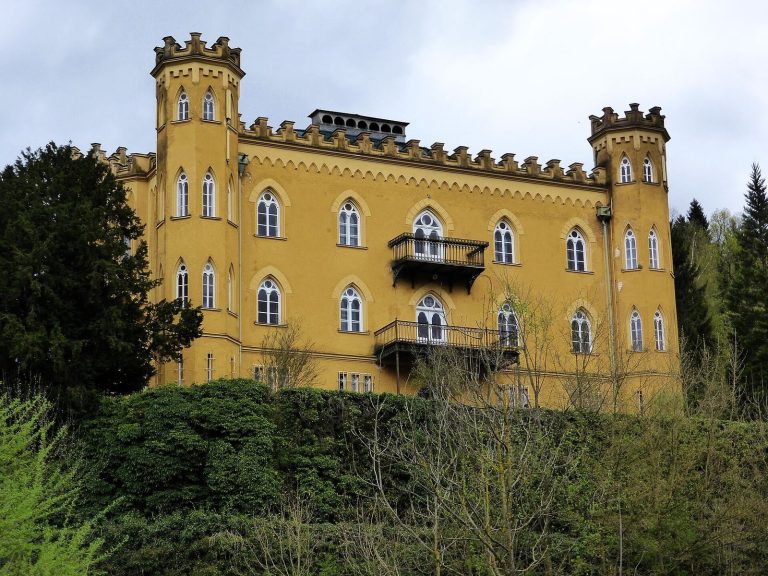
Hotel operations began in the 1950s. Harriet, Countess von Walderdorff, leased and managed the hotel from 1954. In 1955, 1956 and 1957, the castle served as a filming location for the Sissi films, which dramatize the life of Elisabeth of Bavaria, later Empress of Austria. It represented Possenhofen Castle, her childhood home.
From 1958 to 1974, owner Carl Adolf Vogel and his wife, actor Winnie Markus, developed Schloss Fuschl as a first-class hotel. It passed to Max Grundig and the Max Grundig Foundation in the mid-1970s. The Schörghuber Group became its owner in 2004 and carried out a complete renovation in 2005–2006. The castle has been protected as an Austrian monument since 1993. Rosewood took over hotel management in 2023, when the property also underwent further restoration.
Remains
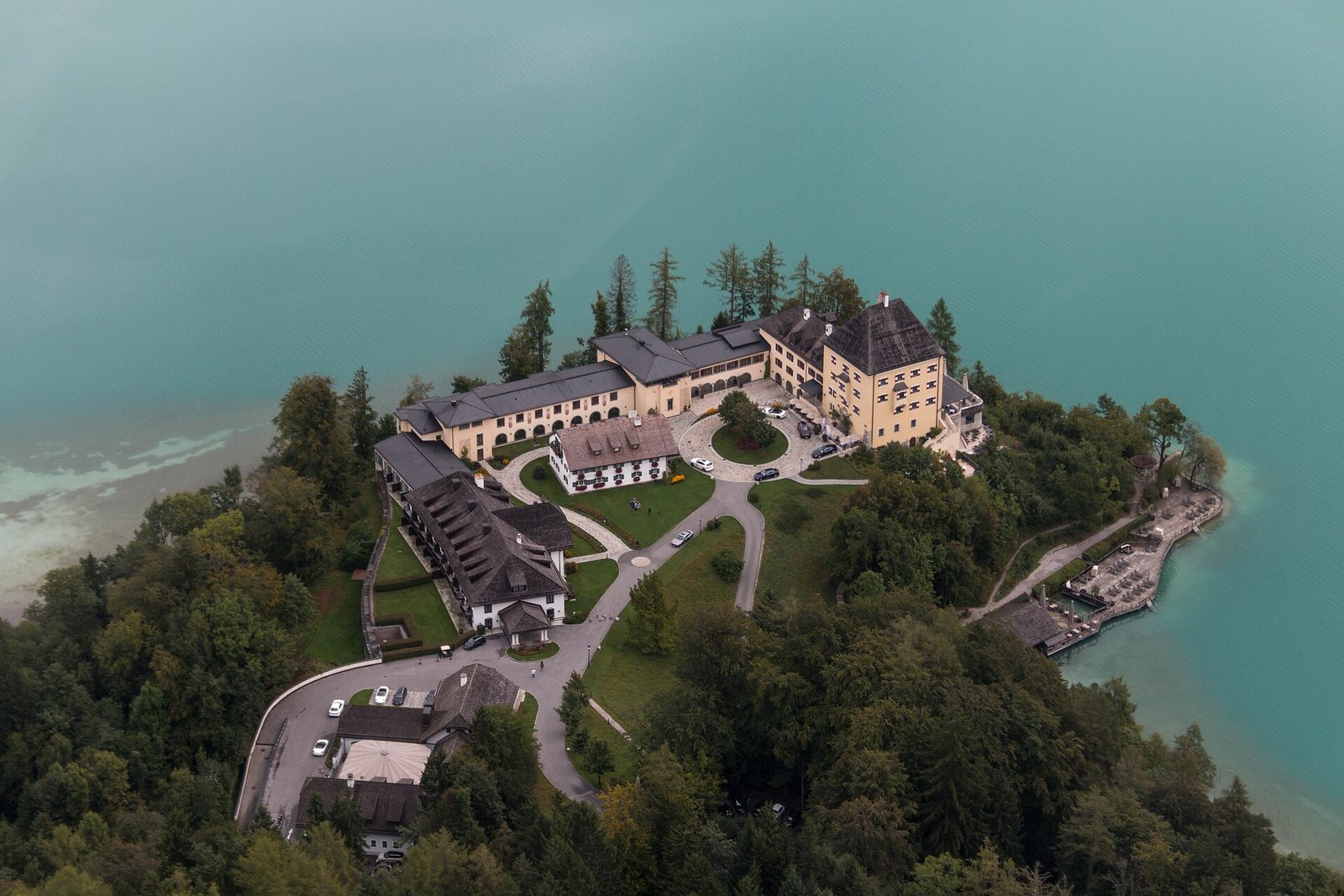
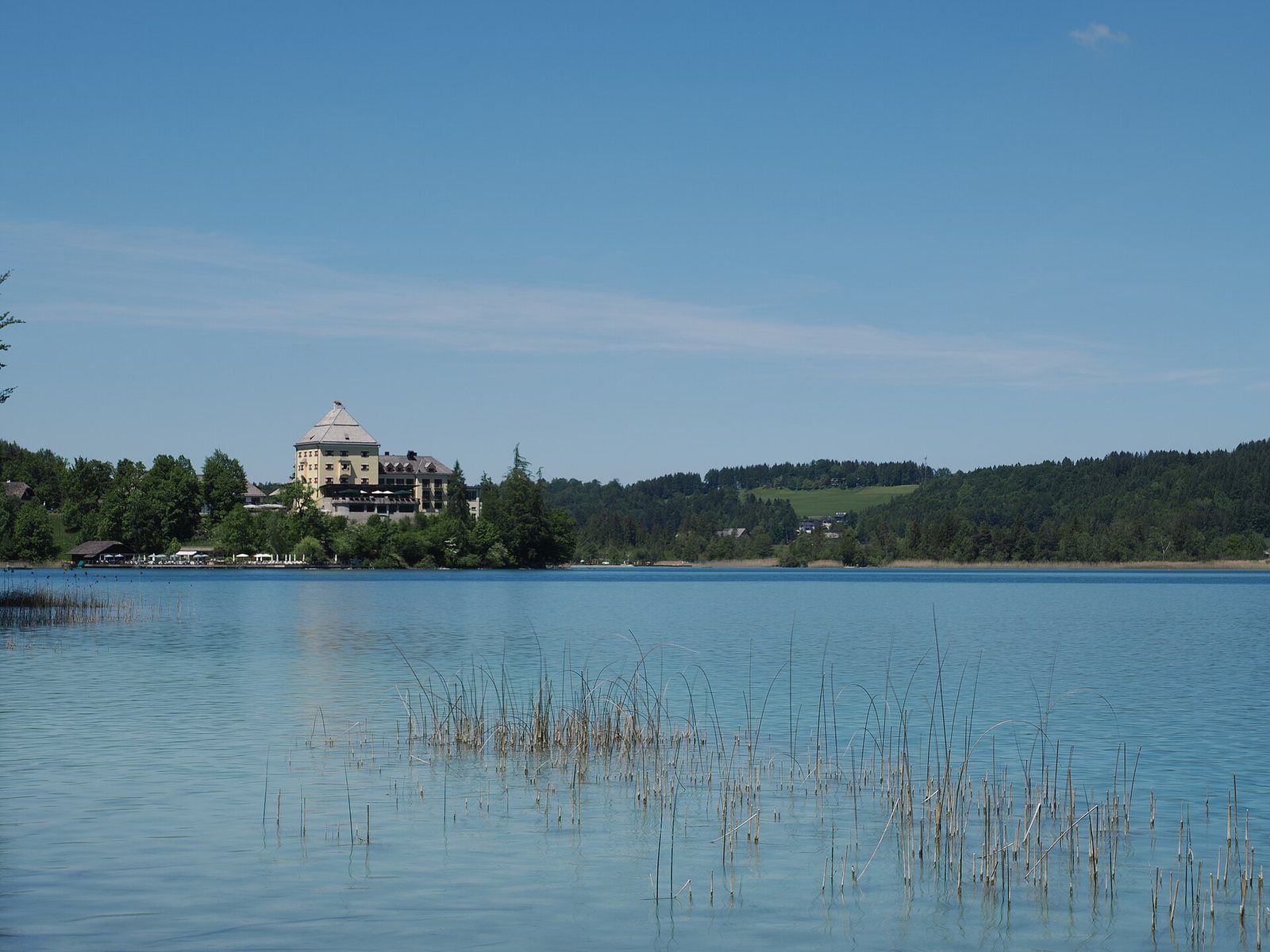
The estate occupies a peninsula on Lake Fuschl’s southwestern shore, at the lake’s western end, with woods and mountain scenery around it. Its historic core is a four-storey tower with an almost square plan; later hotel and ancillary buildings form a wider complex. Timber guest bungalows are among its newer structures.
Tower and historic interiors
The tower’s exterior is largely undecorated and can be seen from Fuschl am See across the lake. Its entrance portal was renewed in 1864 and bears a combined family coat of arms unrelated to Fuschl. The Fink-Erl family may have brought the crest from Rif Castle in the second half of the 19th century. Heavy vaults survive in the basement and date to the 16th century. A ground-floor hall with Gothic forms belongs to a renovation in the second half of the 19th century. On the first floor, a timber-beam ceiling and two stucco ceilings date to the early 17th century; door surrounds and stucco mirrors also retain traces of earlier interiors.
Estate buildings and later additions
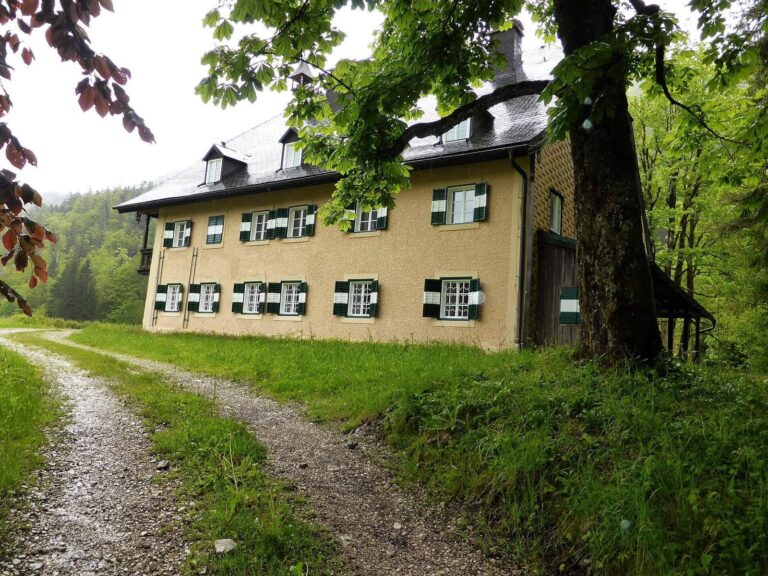
Ancillary structures include the Hunter’s House and carriage house. Nazi-era building work added a boathouse, an SS guardhouse and a two-kilometre promenade along the lake, as well as additions and alterations to the castle. The 20th-century hotel extension forms part of the wider complex, which also includes a lodging block discreetly integrated into the slope toward the lake, a bathing jetty and timber guest bungalows inspired by the boathouse style of the Salzkammergut, Austria’s lake-and-mountain region. A structure called Schloss Ladl is also part of the complex.
Collections and museum
The castle holds more than 150 Old Master works, a term for works by established European artists, especially painters active before the 19th century; the collection spans the 17th to 19th centuries. The Bernheimer Gallery Schloss Fuschl operates in collaboration with Munich’s Bernheimer Fine Old Masters. A museum at the castle contains objects related to the Sissi films.