Santa María de La Vid: A Premonstratensian Foundation and Augustinian Monastery
Site at a Glance
- Popularity
- Medium
- Country
- Spain
- Primary era
- Early Modern
- Eras represented
- Early Modern
- Civilizations
- Crown of Castile, Spanish
- Site type
- Religious
- Remains
- Monastery
On this page7 sections
History
Foundation and early community
Santa María de La Vid is a monastery in La Vid, Burgos, Spain, whose Premonstratensian community began at Montesacro around the 1140s before moving to its present estate in 1152. The Premonstratensians, a Catholic order of canons regular founded by Norbert of Magdeburg at Prémontré in 1120, established their first Spanish house there. A local tradition places the monastery’s foundation at the spot where an image of the Virgin of La Vid was found.
Domingo founded the community after travelling to Paris with Sancho to study. They met Norbert and chose to join his order. When Alfonso VII, king of León and Castile, granted the community his estate on the Duero’s left bank in 1152, the canons moved there from Montesacro on the opposite bank. Domingo became the monastery’s first abbot and remained in office until his death in 1187, aged 90.
A later Premonstratensian tradition claimed that Domingo was the illegitimate son of Queen Urraca, who ruled León and Castile. Bernardo de León, a Premonstratensian historian and canon, gave conflicting accounts of his father, naming Raymond of Toulouse, Urraca’s first husband, in one passage and Count Gómez González in another. Domingo’s royal descent is unproven. The story may have circulated to bolster the order’s prestige as its influence declined in Spain.
Expansion and changing communities
Substantial expansion began in 1522 under Abbot Íñigo López de Mendoza y Zúñiga, with the involvement of his brother Francisco de Zúñiga Avellaneda y Velasco, the third Count of Miranda. Construction continued in different parts of the monastery over the following centuries.
In 1835, the Mendizábal ecclesiastical confiscations, Spanish measures that seized church property, brought the monastery under confiscation and expelled its Premonstratensian community. Abandonment and looting followed for about 30 years. In 1865, Father Celestino Mayordomo took possession on behalf of the Philippine Augustinians based in Valladolid. They established a study and training center for future members of the order.
Formation activities moved to Los Negrales in 1995, while novitiate training resumed at La Vid in 2017–18. The monastery remains Augustinian and has belonged since 2000 to the Province of San Juan de Sahagún, which encompasses the order’s communities on the Iberian Peninsula. It is one of the Augustinian Order’s important centers in Spain and was declared a Spanish Asset of Cultural Interest in 1991.
Remains
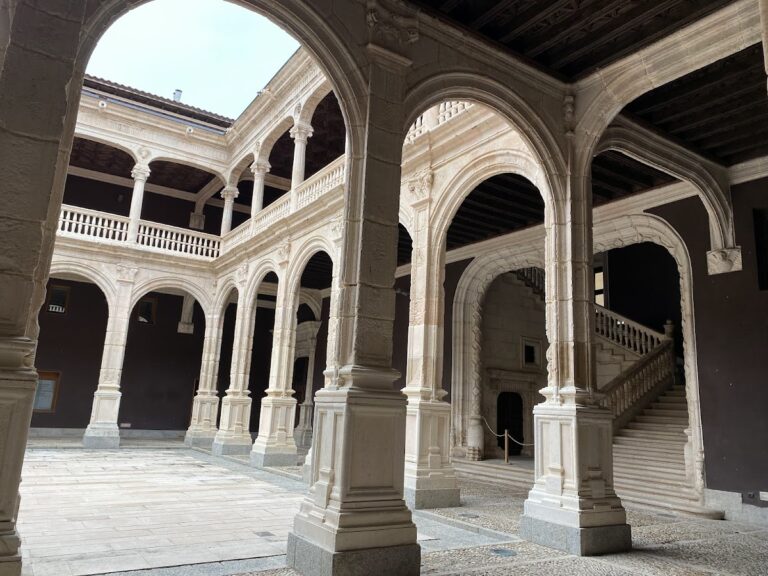
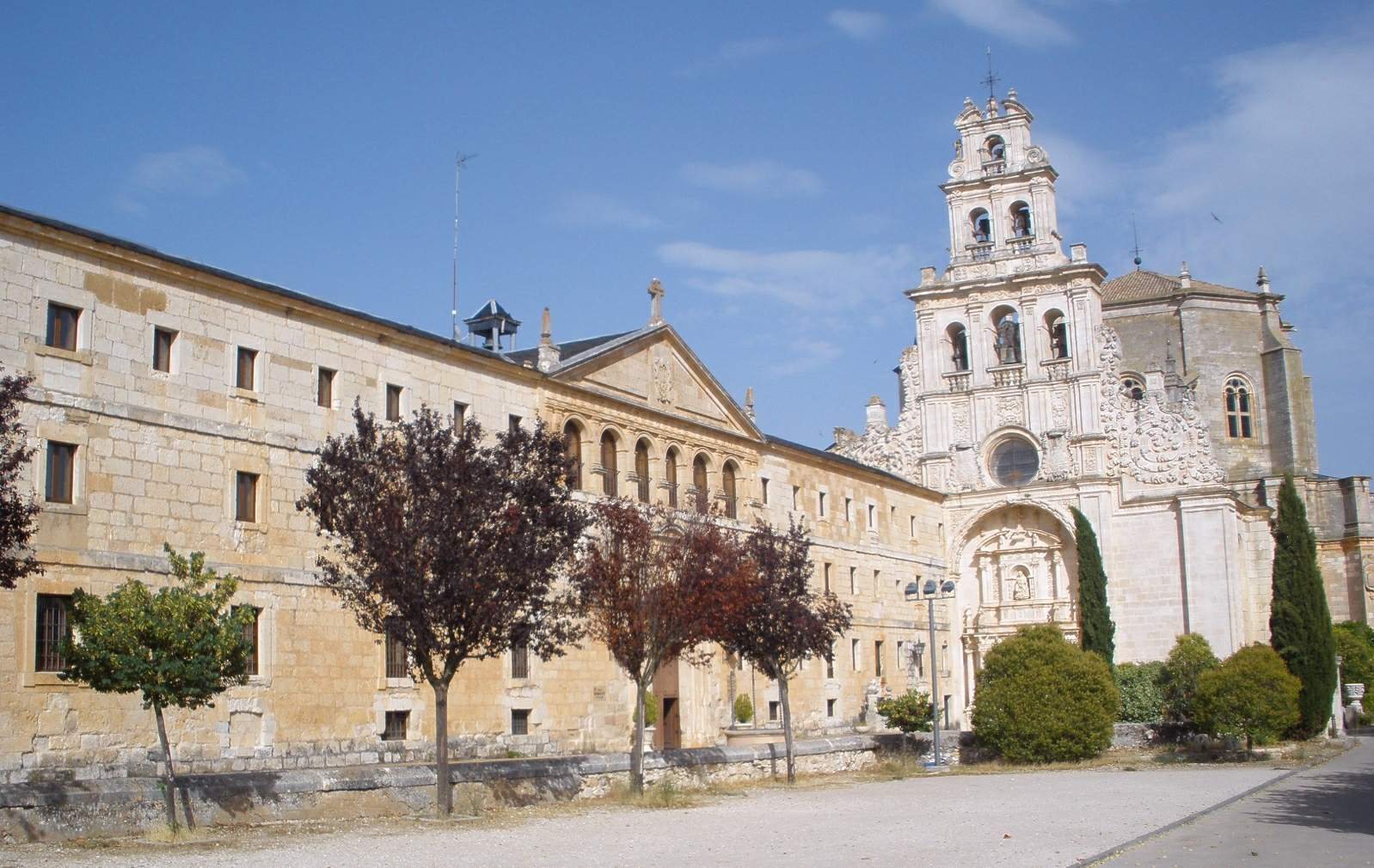
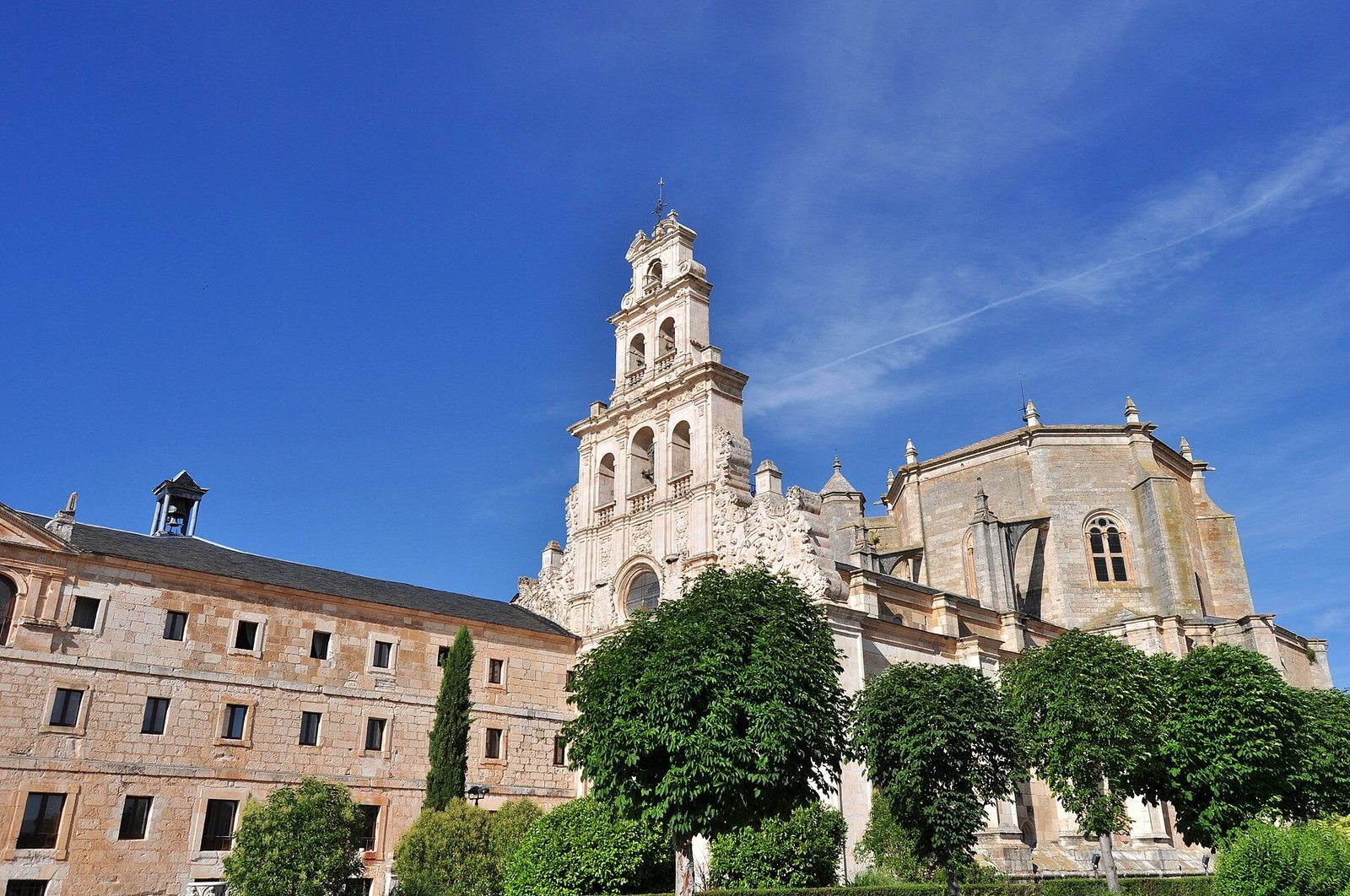
The monastery’s remains include an enlarged church, a cloister with a library on its upper floor, and a pantheon preserving Domingo’s funerary slab. The church reflects successive building campaigns, including a later Baroque bell gable.
Church additions
The church’s original body was enlarged with a main chapel and an octagonal section combining the crossing, where the nave and transepts meet, and the chancel around the altar. A dome rests on squinches, supports built across the corners of a square space to carry a dome above it. Work on these additions concluded in 1572. The church was later extended by three sections and closed at its foot end by a monumental Baroque bell gable, a wall-like structure with openings for bells, completed in 1738.
Cloister library
The library occupies the upper floor of the cloister and was completed in 1798. Its collection includes The Bestiary of Don John of Austria, a 1570 manuscript by Martín Villaverde and the world’s only bestiary written in Spanish. It is thought to have been made to entertain Don John, Philip II’s half-brother and a military commander, while he awaited the 1571 Battle of Lepanto. There he served as captain general of the Holy League, a coalition of Catholic powers whose forces defeated the Ottoman Empire.
Memorial and devotional images
The monastery’s pantheon preserves a funerary slab for Domingo. The church also holds a later Gothic image of the Virgin of La Vid and a statue of Saint Dominic shown wearing the habit of a Premonstratensian canon.