Holy Meletios Monastery: An Orthodox Monastic Complex in Greece
Site at a Glance
- Popularity
- High
- Country
- Greece
- Primary era
- Medieval
- Eras represented
- Medieval, Early Modern
- Civilizations
- Byzantine, Ottoman
- Site type
- Religious
- Remains
- Monastery
On this page9 sections
History
Holy Meletios Monastery is an Orthodox monastery in Moni Osiou Meletiou, Greece, probably founded in the late 11th century by the Byzantine monk St Meletios the Younger. The Byzantine Empire, centered on Constantinople, was the eastern continuation of the Roman Empire. Meletios came from Cappadocia, renounced possessions, and worked to reform monastic life.
Foundation and Byzantine growth
Meletios established 24 dependent monastic houses across Attica, some of which survive while others are in ruins. Emperor Alexios I Komnenos also provided the monastery with revenue. The Byzantine scholar and church leader Michael Choniates corresponded regularly with its abbot and described the monastery as a “philosophical community.” Meletios died on 1 September 1105, the date of the monastery’s annual feast.
The monastery gained a broad reputation and became stavropegic, meaning it came under a patriarch’s direct authority rather than that of the local bishop. It flourished until the 16th century, when Nikanor, the senior bishop of Athens, renovated it. Raids and looting caused repeated damage over the centuries, and the monastery declined after liberation.
Later history
In 1883 the monastery became a dependency of Faneromeni Monastery on Salamis. The Archbishop of Athens re-established it in 1928, and in 1950 its community changed from male to female. It is now an Orthodox women’s monastery belonging to the ecclesiastical district of Megara and Salamis.
Remains
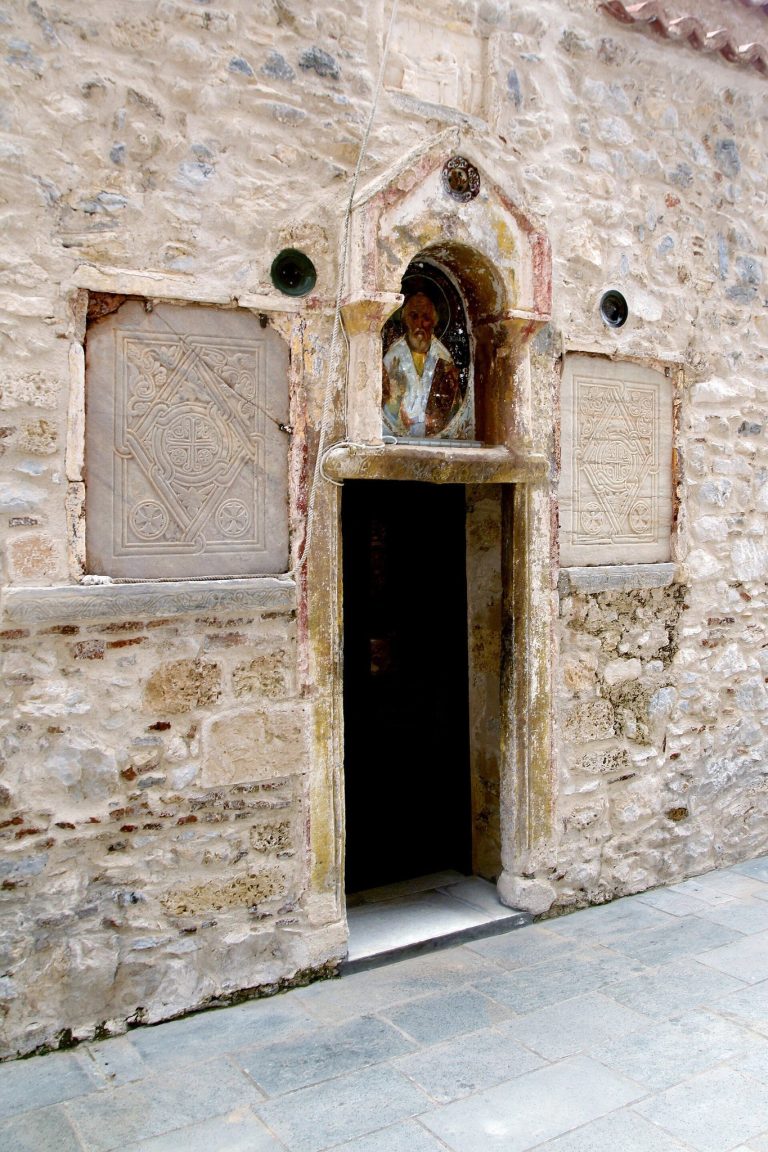
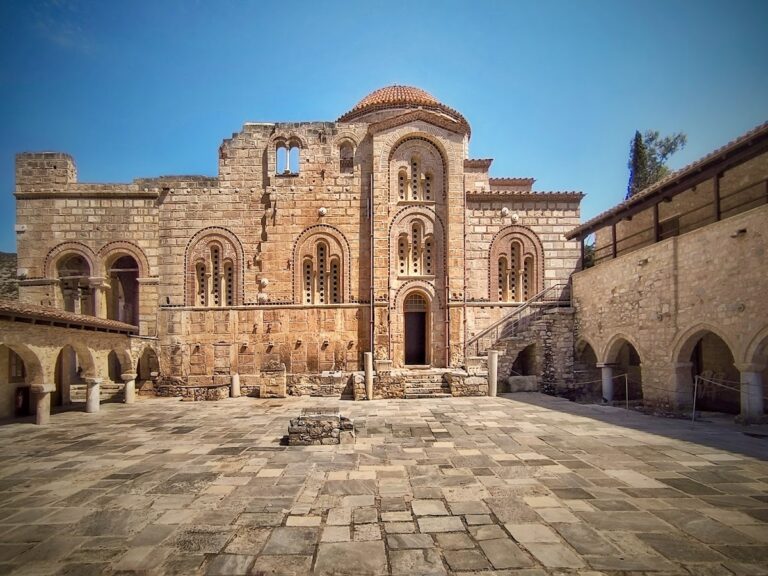
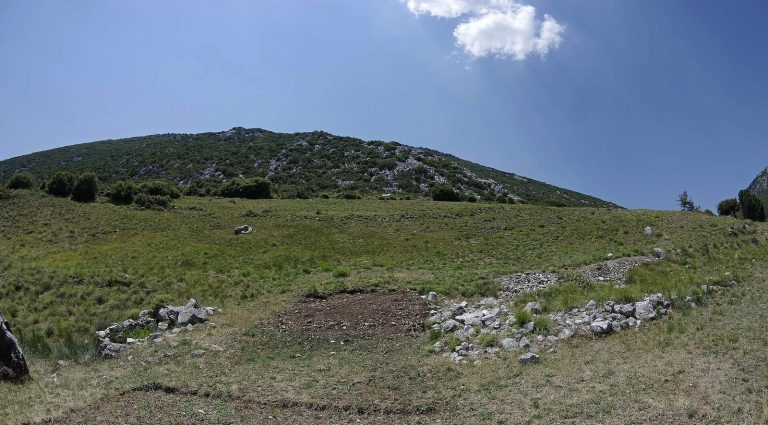
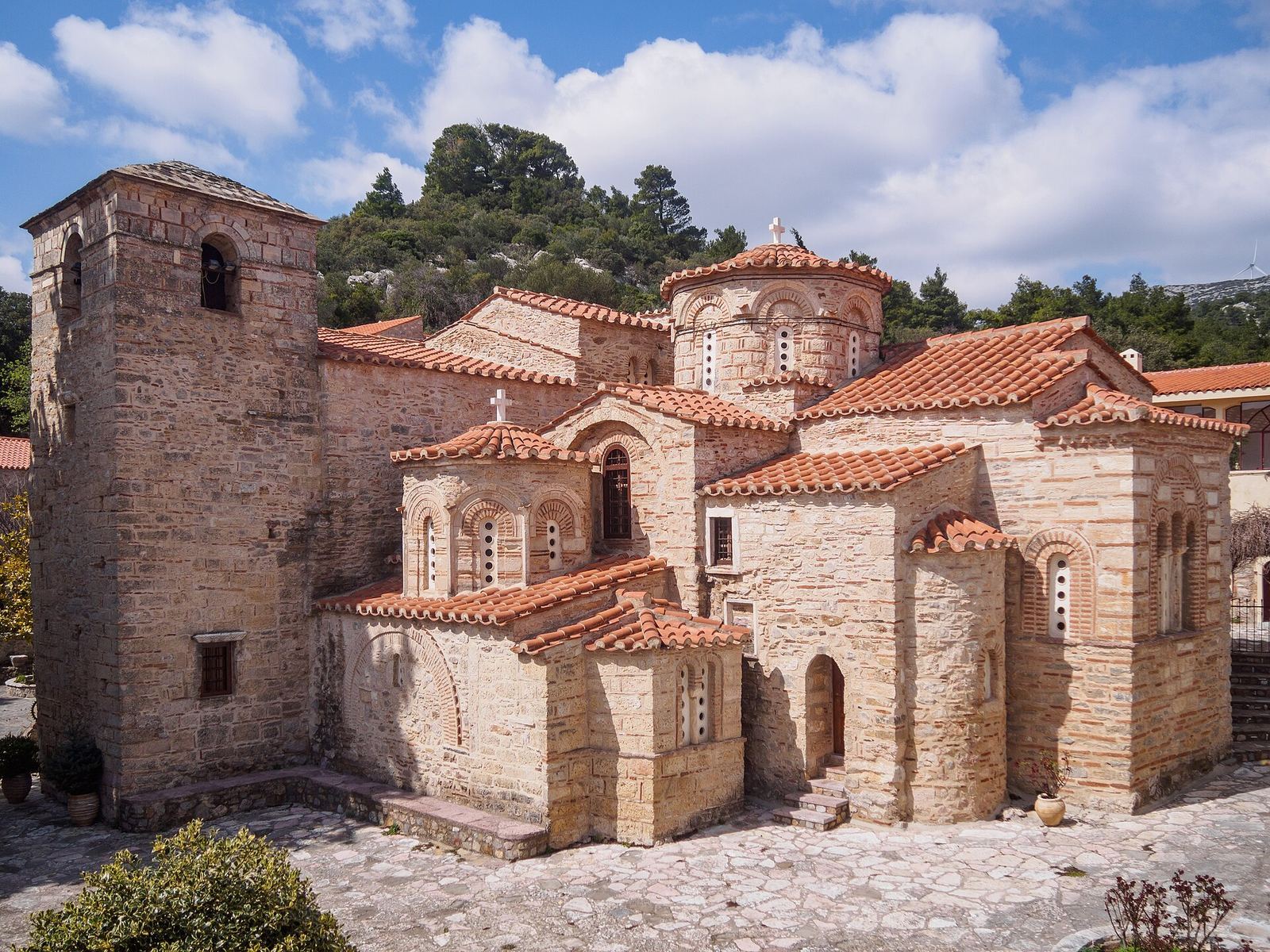
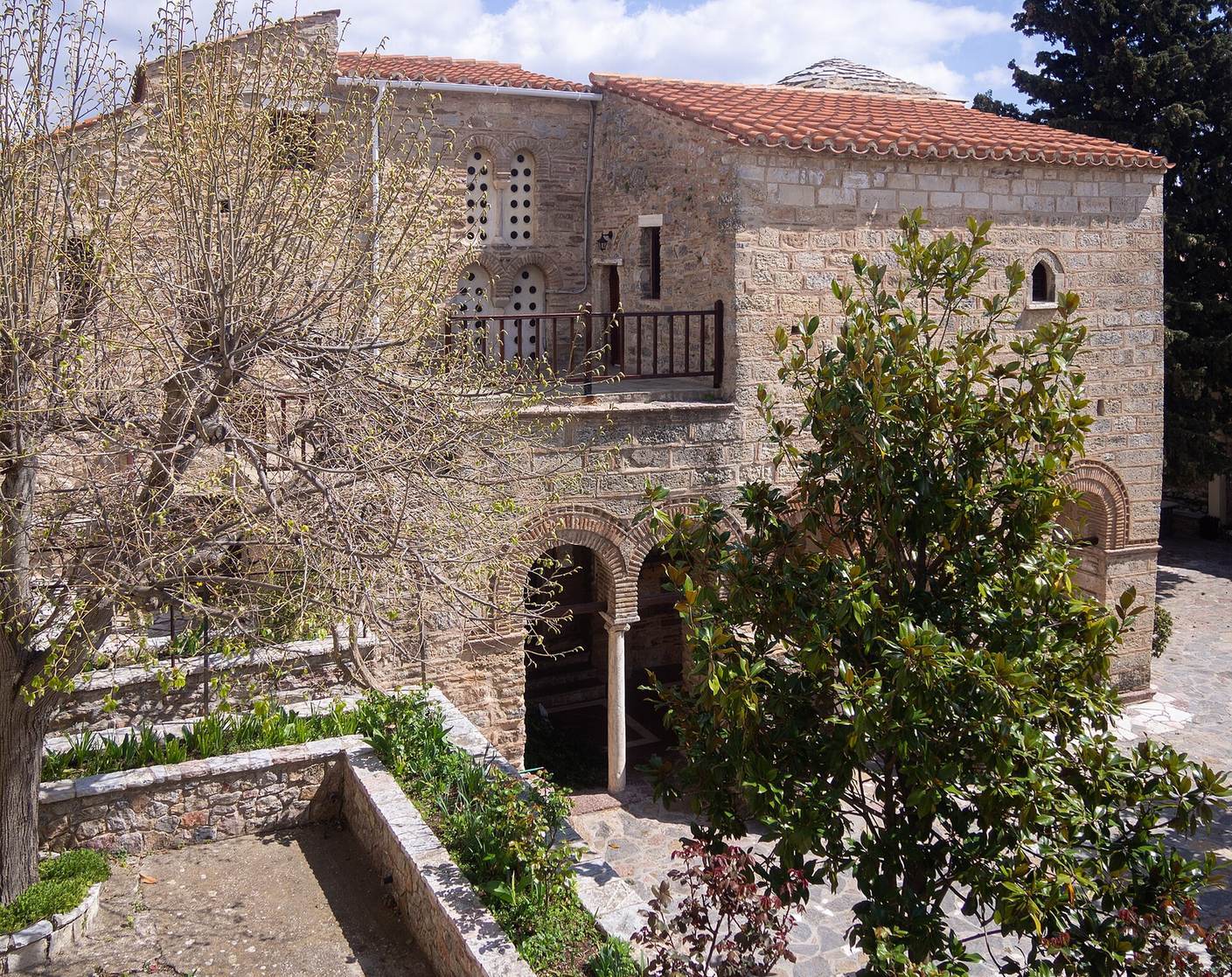
The complex brings together Byzantine-period and later buildings, including the main church, a refectory, or communal dining hall, and monks’ cells. Sculpture and paintings decorate the buildings. The monastery stands at an elevation of 520 metres on the southeastern side of Mount Pastras, along the southern slope of the Kithairon range, about six kilometres northeast of Oinoi.
Church complex
Main church
The 12th-century main church has a compact, roughly square plan with a cross-shaped interior arrangement. An octagonal dome rises above the central space, supported by four columns.
Chapel of the Archangels
A chapel dedicated to the Archangels is attached to the church’s south side. It may have served as the monastery’s earlier main church.
Crypt and tomb
An underground crypt within the church contains the tomb of Meletios, the monastery’s founder.
Painted decoration
Traces of the church’s original painted decoration survive. The wall paintings in the main church and its entrance vestibule date to the 17th century.