Fort du Replaton: A French Fort Guarding the Fréjus Rail Tunnel
Site at a Glance
- Rating
- 4.1
- Popularity
- Very Low
- Country
- France
- Primary era
- Modern
- External website
- Open
- Eras represented
- Modern
- Civilizations
- French
- Site type
- Military
- Remains
- Fort
On this page6 sections
History
Fort du Replaton is a French fort above Modane in southeastern France, built from the mid-1880s and completed in the early 1890s as part of the Séré de Rivières system, a network of French fortifications. It was intended to watch over the French entrance to the Fréjus Rail Tunnel and provide artillery cover against an invasion or an approaching artillery convoy from Italy.
The tunnel and strategic setting
Work on the Fréjus Rail Tunnel began in 1857 under the orders of Victor Emmanuel II, then ruler of the Kingdom of Sardinia and later Italy’s first king. The 1860 Treaty of Turin formalized Savoy’s annexation to France. The tunnel opened on 17 September 1871. In 1881, after it was extended by more than 1,000 metres, engineers altered its French entrance to reduce the risk of landslides.
The fort was built across the valley from the tunnel entrance, about 800 metres away in a straight line. Its construction reflected French concern about a possible invasion by the Triple Alliance of Germany, Austria-Hungary, and Italy, amid rivalry with the Triple Entente, an opposing alignment of France, the United Kingdom, and Russia.
Military service and later use
In 1891, the fort’s garrison numbered 112 men, and its armament comprised 14 pieces. The number rose to 20 by 1913. By 1914, its defenses included two casemates holding about ten cannons, as well as three mortars and two machine guns. Renovation in 1930 replaced the 95 mm guns with 75 mm guns.
The fort came under fire in both 1940 and 1944. During the fighting in the Seuil valley in June 1940, it played an important role in stopping troops of Benito Mussolini’s Fascist Italy, which was then campaigning against France.
Remains
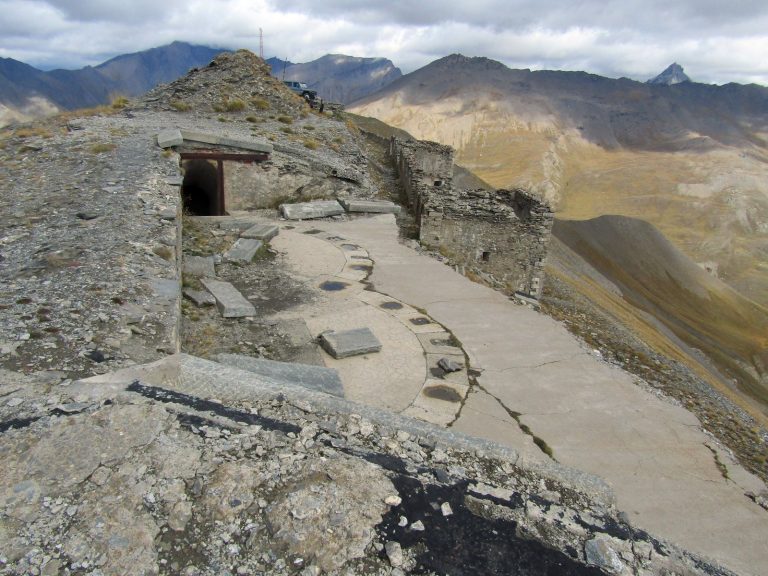
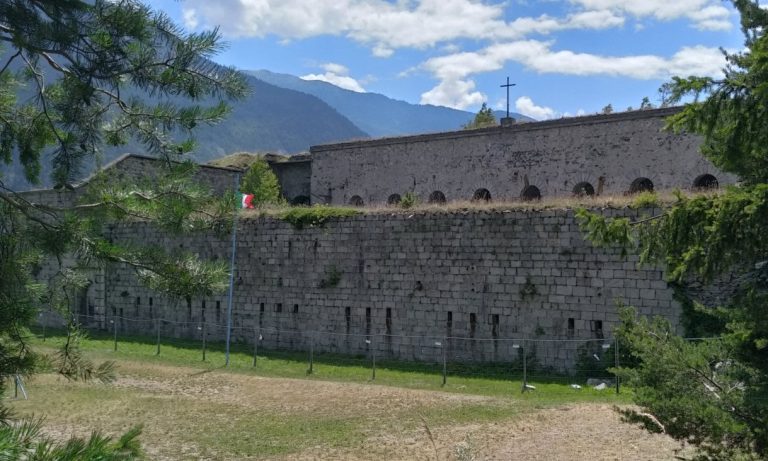
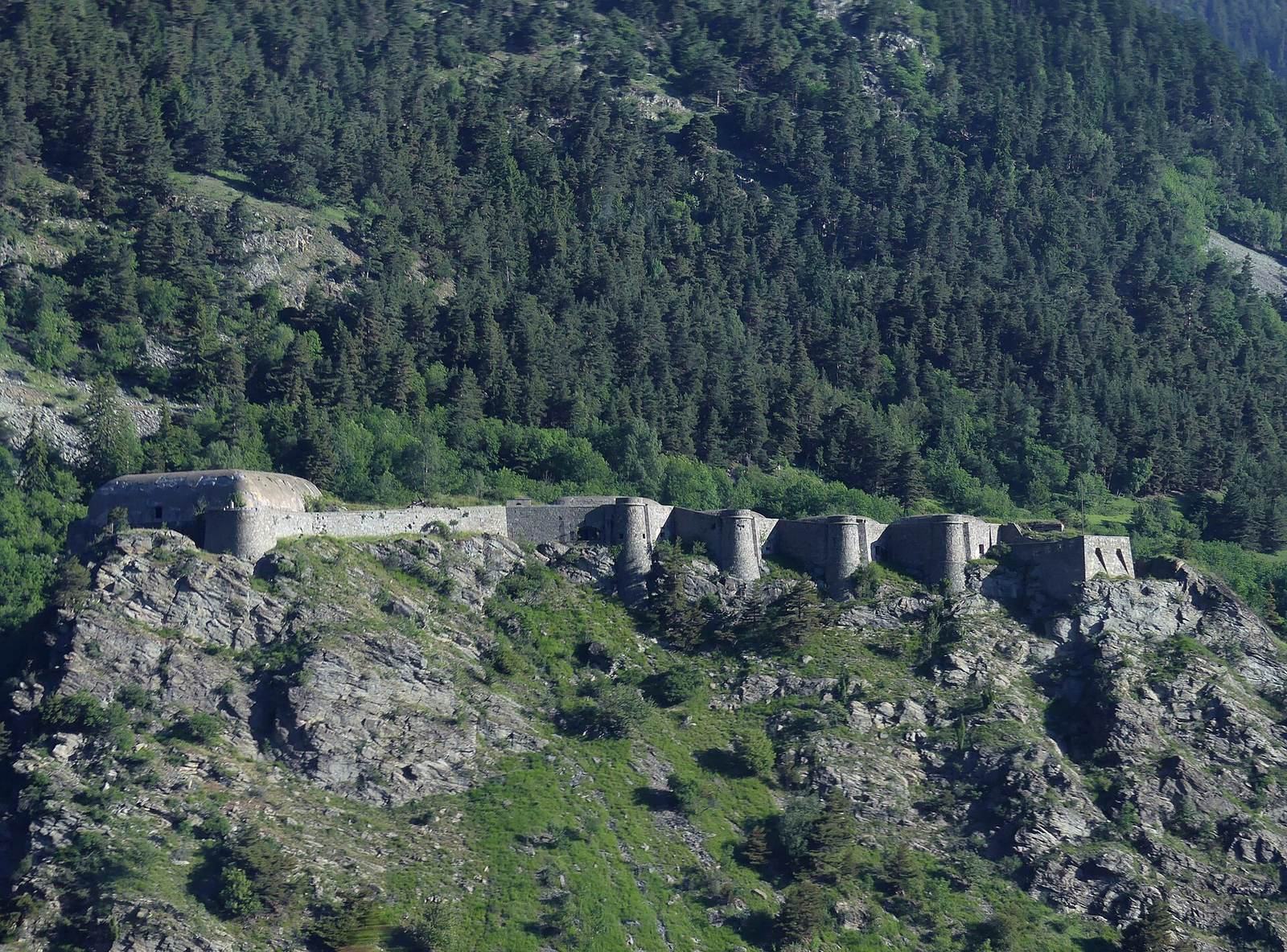
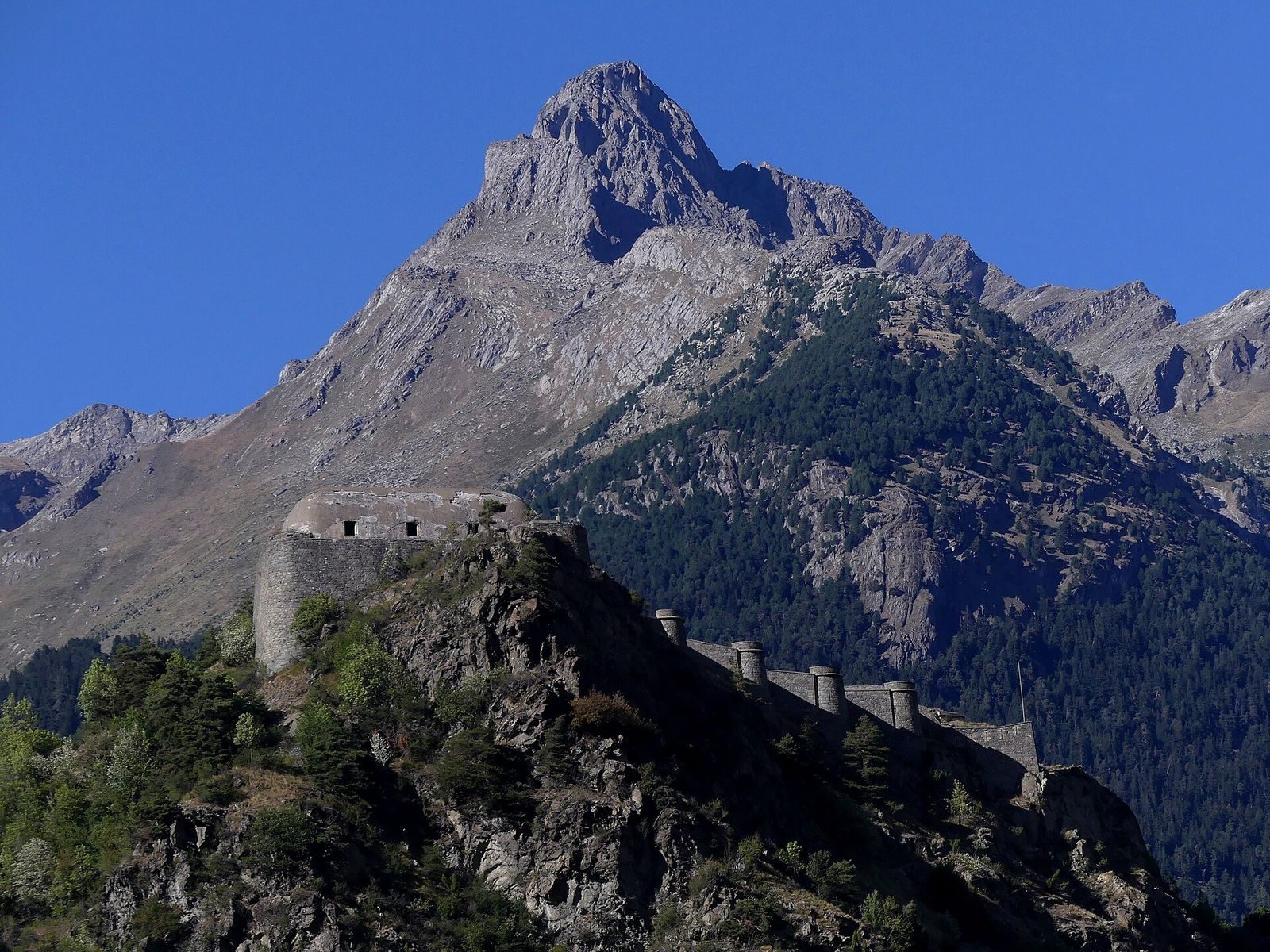
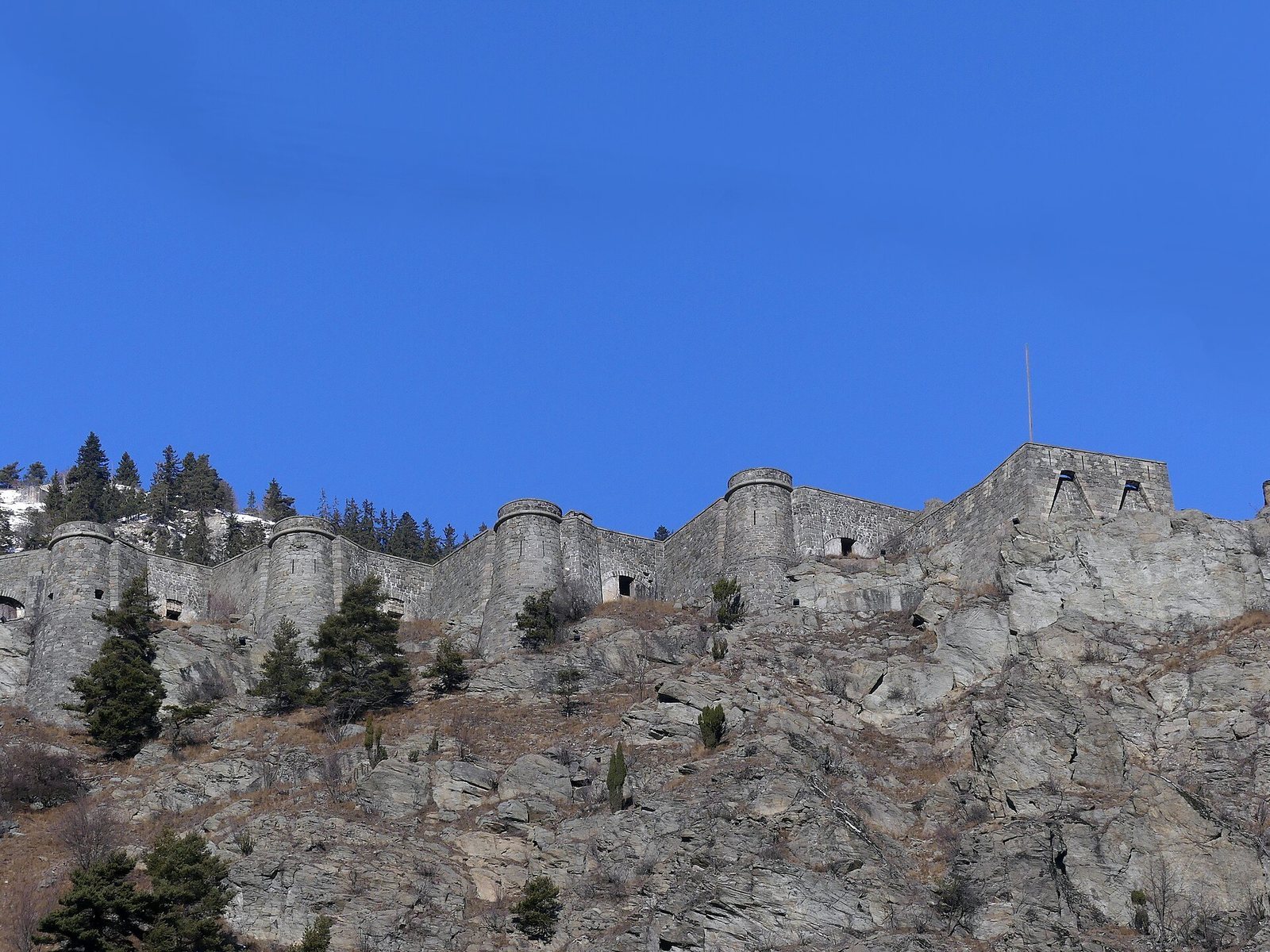
Fort du Replaton stands at an altitude of 1,210 metres southwest of Modane, above the town’s railway-station district. It overlooks Modane and the Arc River, with an unobstructed view of the French tunnel entrance. The fort was built using concrete and steel and partly excavated into the rock; a perimeter wall enclosed its surface barracks and defensive positions.
The main fort
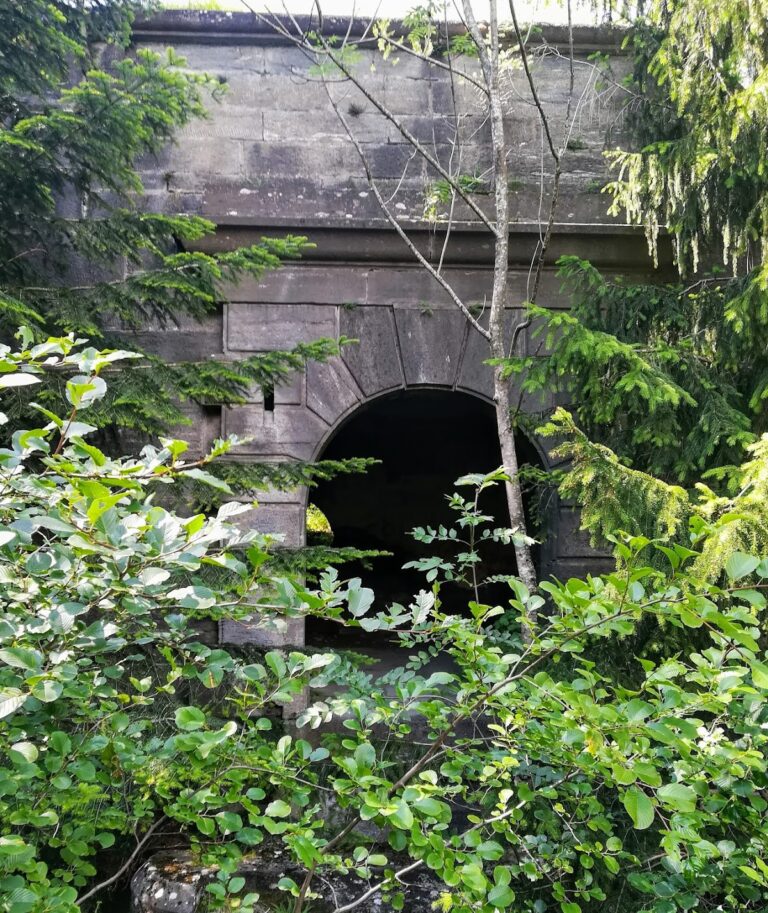
The layout includes six bastions, or projecting defensive positions, two casemates, meaning protected artillery chambers, and a connecting gallery along the rock behind the fort. Its original armament included two 95 mm guns and two 155 mm guns positioned along the gallery. A concrete covering added between 1892 and 1894 was intended to protect the fort against possible torpedoes. An aerial tram linked it with Modane and continued to Fort du Sapey, which stands higher up. The arrangement has been compared with Fort Saint Michel near Toul and anticipated aspects of the later Maginot fortifications, a subsequent French defensive system. The fort is abandoned but remains in good condition.
Redoute du Replaton
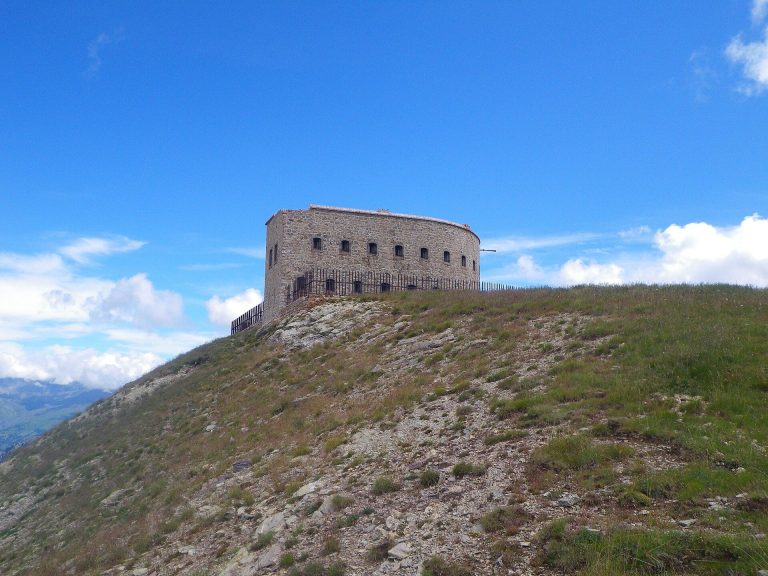
A separate, smaller fortification, the Redoute du Replaton, occupies the eastern end of a small plateau about 150 metres above Modane. It was armed with a single 95 mm gun.