Schloss Syrgenstein: A Fortified Castle in Heimenkirch
Site at a Glance
- Popularity
- High
- Country
- Germany
- Primary era
- Medieval
- Eras represented
- Medieval, Early Modern, Modern
- Civilizations
- Holy Roman Empire, Kingdom of Bavaria
- Site type
- Military
- Remains
- Castle
On this page12 sections
History
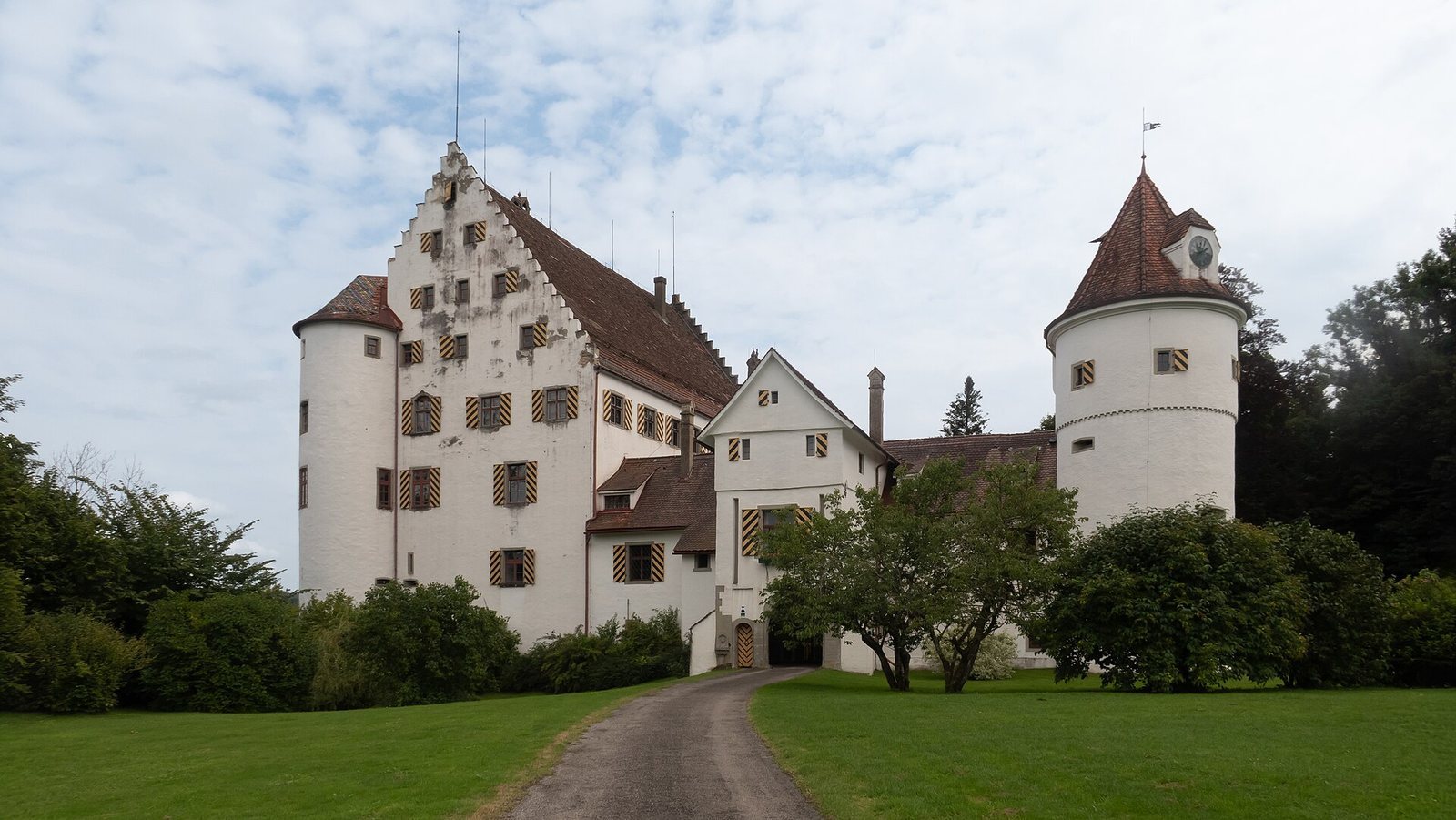
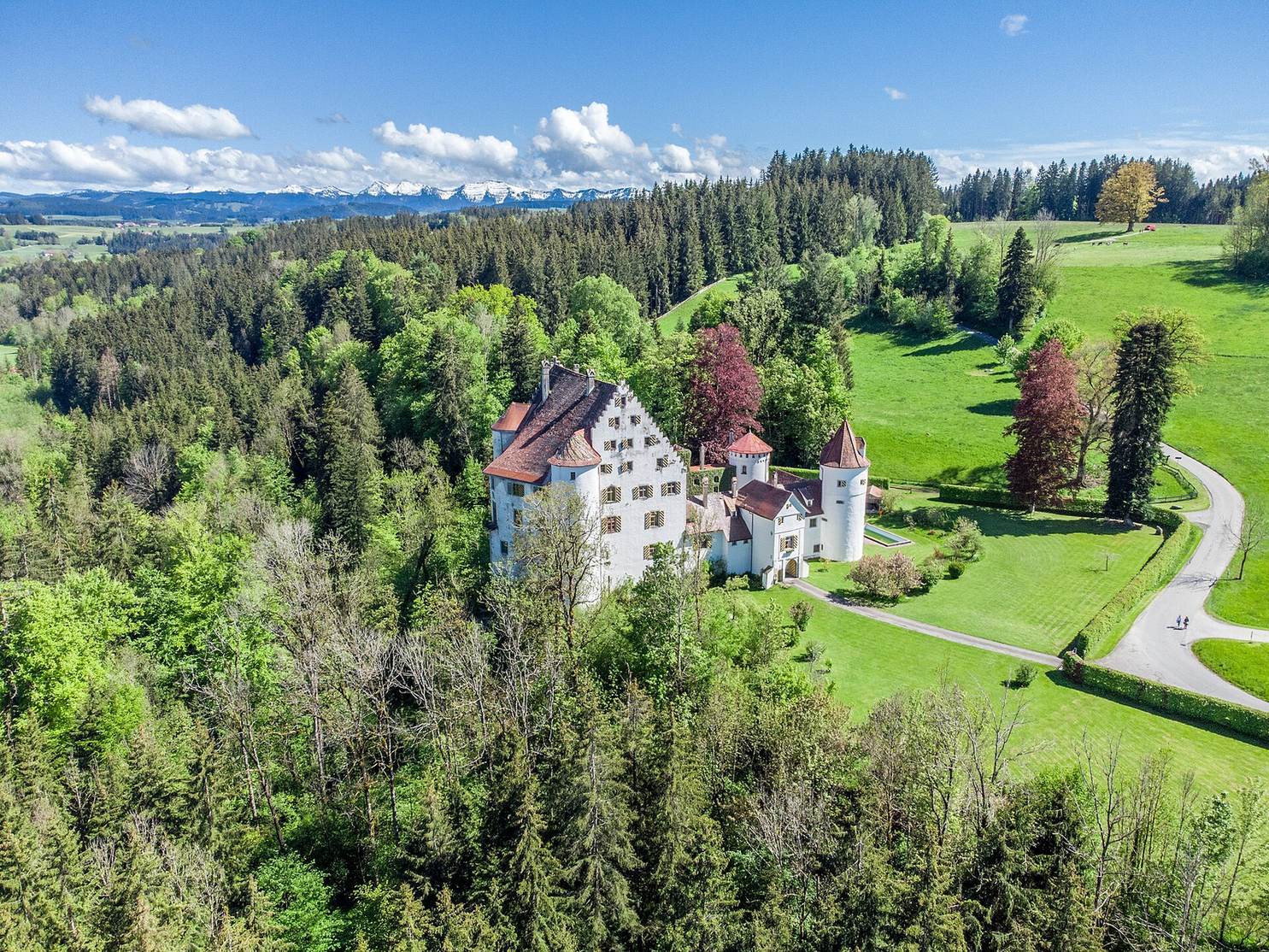
Schloss Syrgenstein is a fortified castle in Heimenkirch, Germany, on a rocky hillside above the Obere Argen. A predecessor castle is first mentioned in 1265. Veit Sürg laid a foundation stone on 14 June 1491, and in 1496 rebuilt a castle that had probably burned. Schloss Syrgenstein is the only surviving fortified castle in the district of Lindau.
The Sürgen and the earlier castle
The Sürgen belonged to the lower knightly nobility, families below the high nobility. Members served as military commanders, hereditary marshals (court officers whose positions passed through their families), imperial kitchen masters (officials who supervised the imperial kitchen), and auxiliary bishops (assistants to diocesan bishops). They joined the Shield of St George, a regional knightly association, and for a time held the castles of Ratzenried, Amtzell, and Achberg.
Rebuilding and family succession
In 1482 Veit Sürg bought back the castle site and surrounding land from Hans Müller zu Eglofs, recovering property his ancestors had lost. A castle stood there by 1483. Veit laid the foundation stone for the rebuilding on 14 June 1491, the eve of St Vitus’s feast day, and dedicated the castle chapel to the saint. The earlier castle probably burned, and Veit rebuilt it in 1496. Emperor Ferdinand III, who ruled the Holy Roman Empire from 1637 to 1657, later raised the Sürgen to Imperial Barons, a rank of nobility within the Empire.
Veit’s son Hans Ulrich enlarged the castle, adding upper floors and a library room. Hans Ulrich’s son Veit died in the Netherlands, so the elder brother Hans, who already held the lordship of Achberg, became owner. The property later passed to Hans’s grandsons Hans Georg and Johann Joachim, descendants of his son Hans Ulrich. Johann Joseph, Johann Joachim’s son, died without children. His brother-in-law Johann Christoph Rupert (1697–1766) then took over; he, too, died without a male heir. Important parts of the castle’s present interior date from his period.
The castle passed into the Syrgenstein zu Altenberg line under Johann Gotthard. In 1766 he transferred it to his son Johann Germann, and in 1795 it passed to Johann Germann’s son Johann Marquard (1768–1812), a poet known in the region. After Marquard’s death, his only daughter Caroline had to give up the property in 1824 when relatives enforced a mortgage-backed claim.
Sale and changing owners
After a forced sale, Josef Schmied and Rudolf Lingg von Hergensweiler acquired the castle. Schmied bought Lingg’s share in 1830 and became sole owner. Following Schmied’s death in 1840, his widow Josefa sought to sell it. In 1841 Heimenkirch considered buying the castle for stone for a new church, but the costs of demolition and transporting the stone prevented the plan.
Andreas Sporer of Ravensburg acquired the property in 1844 or 1845 and sold it to August von Clermont in 1849. A forced sale transferred it to principal creditor Margarete Sinz in 1853; she sold it to Philip August Freiherr von Künsberg the next year. James Whittle owned the castle from 1858 for 24 years. Sophie, Countess of Waldburg-Zeil-Wurzach, purchased it from him in 1882.
Waldburg-Syrgenstein ownership
Sophie married her cousin Karl, Count of Waldburg-Zeil, in 1882. In 1885 the Bavarian king permitted their family to use the combined name Waldburg-Syrgenstein. After Karl’s death, Sophie married the diplomat and consul-general in Egypt von Heidler-Egeregg in 1891. He was raised to baronial rank that December and, in 1897, received permission to combine his name with Syrgenstein, becoming known as Heidler von Egeregg and Syrgenstein. Both of Sophie’s marriages were childless.
In 1913 Georg, Count of Waldburg-Zeil, from the Austrian Waldburg-Zeil-Hohenems line, bought the property from his aunt Sophie. After Georg died in 1955, his son Josef inherited the castle. It remained in the family and is now owned by the Waldburg-Zeil-Hohenems family.
Remains
Setting and structure
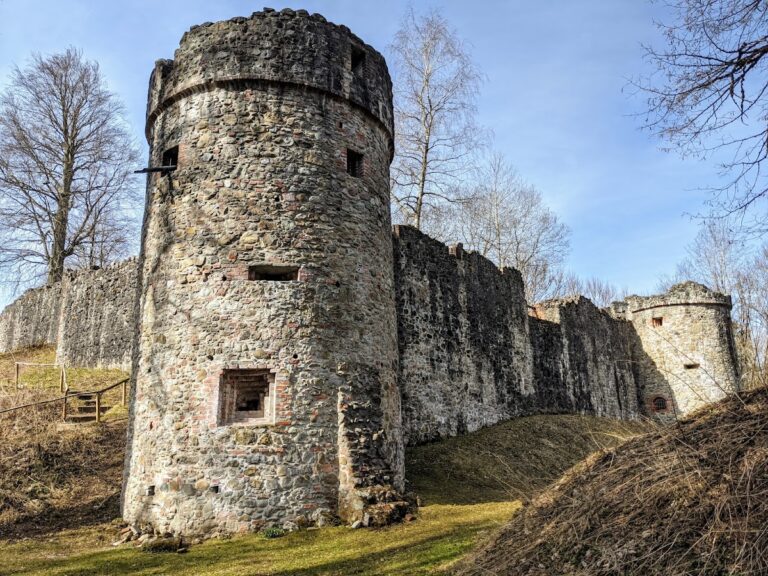
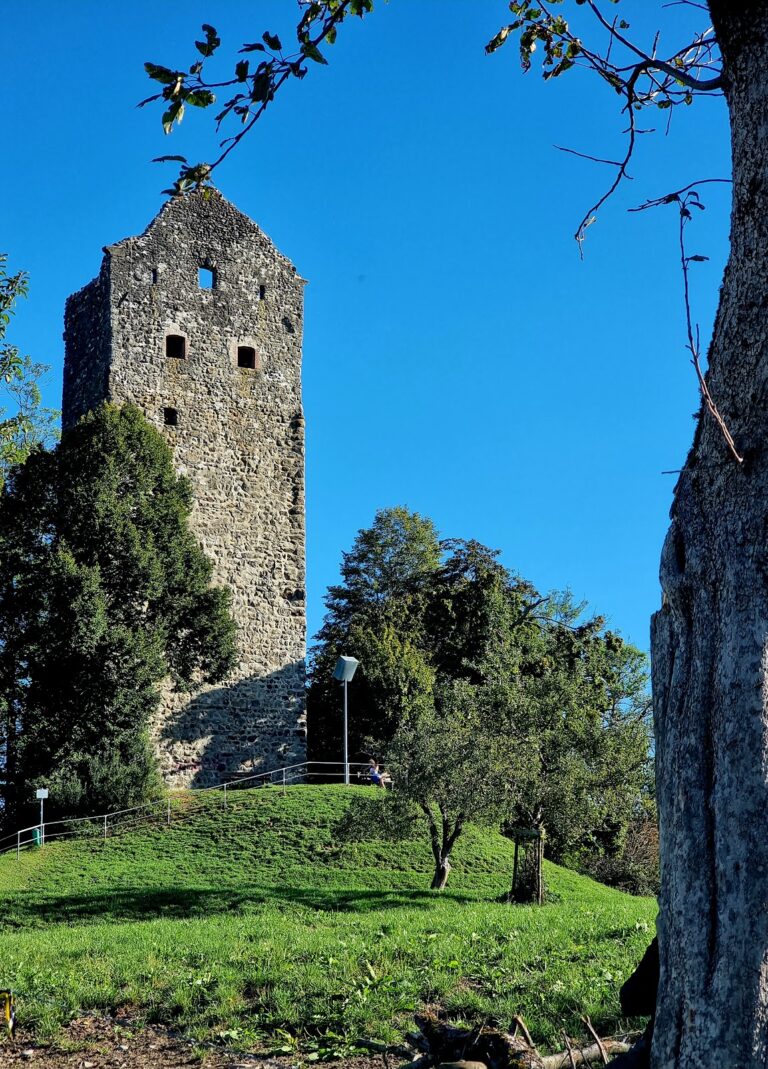
The fortified hillside castle stands on a Nagelfluh outcrop, a conglomerate rock made of rounded stones cemented together, at the northern edge of Heimenkirch. It is above the left bank of the Obere Argen, opposite Eglofs, and remains preserved and inhabited by its owner. Woodland once grew densely around the site; the immediate surroundings have since been cleared. During James Whittle’s ownership, workers built a new foundation to prevent the eastern tower from subsiding. The English Cemetery lies near the castle.
Interiors
Library room
The library room’s wood panelling and inlay work date to 1539. It is the district’s sole example of high-quality German Early Renaissance room design, a style that revived classical forms.
Rococo salon
The Rococo salon, in a lighter and more decorative European style, dates to 1739. Its stucco is regarded as the finest in the district. Franz Joseph Spiegler painted the ceiling scene, The Queen of Sheba before Solomon, in the same year.
Stairwell
The stairwell combines a late-Baroque staircase, from a style known for dramatic movement and ornament, with a substantial wooden railing and numerous oil portraits on its walls. Anton Anselmus Hege painted its ceiling scene, The Judgment of Solomon, in 1741.
Castle chapel
The late-Gothic chapel, in a medieval style, occupies the first floor and has groin vaults formed by intersecting barrel-shaped ceilings. Its small choir, the area around the altar, is built into the northeast tower. The keystone, the central stone at the crown of the choir’s star-patterned vault, bears the Syrgenstein coat of arms.
The chapel furnishings include a small early-Baroque figure of its patron, St Vitus, shown in a cauldron, and a High Gothic figure of the Virgin Mary. A two-winged altarpiece has a horizontal panel painting on either side of the tabernacle, the container for the consecrated Eucharist; each panel depicts three saints.