Fort San Antonio Abad: A Spanish Colonial Defense Fort in Manila
Site at a Glance
- Popularity
- High
- Country
- Philippines
- Primary era
- Early Modern
- Eras represented
- Early Modern
- Civilizations
- Spanish
- Site type
- Military
- Remains
- Fort
On this page4 sections
History
Fort San Antonio Abad is a Spanish-built stronghold in Malate, Manila, Philippines, completed in 1584 when Malate was a separate hamlet. It was intended to defend Manila from the rear and guard the Manila-Cavite route. Dedicated to Saint Anthony the Abbot, an early Christian ascetic and monastic leader, it was also known as Fort Malate and Fort San Antonio; earlier names included La Polvorista and Fuerte de Polverina. Spanish authorities used it to store gunpowder.
Spanish rule and British occupation
In 1762, British forces captured the fort during their invasion of Manila in the Seven Years’ War, a major conflict fought in Europe and colonial territories. They made it a garrison and launched a land offensive from there against Spanish forces defending Intramuros, Manila’s historic walled city. Spain regained control in 1764, and the fort returned to use as a gunpowder store.
U.S. control and twentieth-century military use
U.S. forces captured the fort during the 1898 Battle of Manila. During the Philippine-American War, fought between U.S. and Filipino forces around the turn of the twentieth century, U.S. military authorities used its prison for multiple hangings. Harry Cline, an American civilian employed by the U.S. Army, was the first American executed by U.S. authorities. On April 8, 1901, after cycling about 3 miles (4.8 km) from Parañaque, he shot four Filipino boys gathering grass, killing Agaton Rivera and wounding the other three. A U.S. military court convicted Cline of murder and three counts of assault with intent to kill. He was hanged on September 20, 1901.
A historical marker was installed at the fort in 1937 by the Historical Research and Markers Committee. Japanese forces seized it during World War II and used it as a bunker. The fort suffered considerable damage after the war and was restored in the 1970s. It is owned by the Philippine government and designated a National Cultural Treasure, a Philippine category for culturally important property, as well as a historical structure marked by the National Historical Commission of the Philippines.
Remains
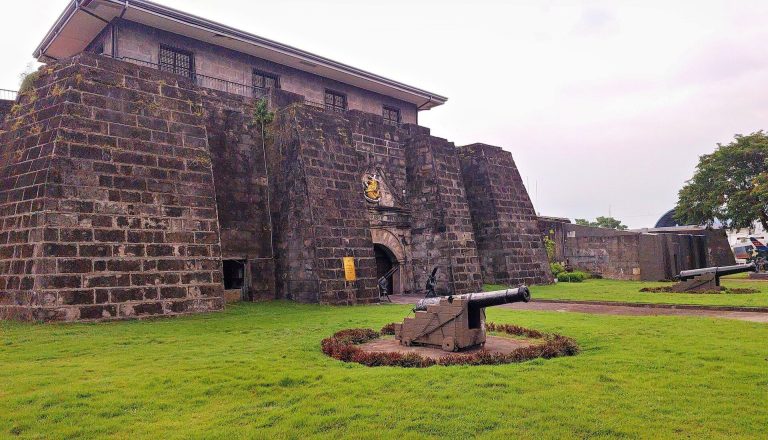
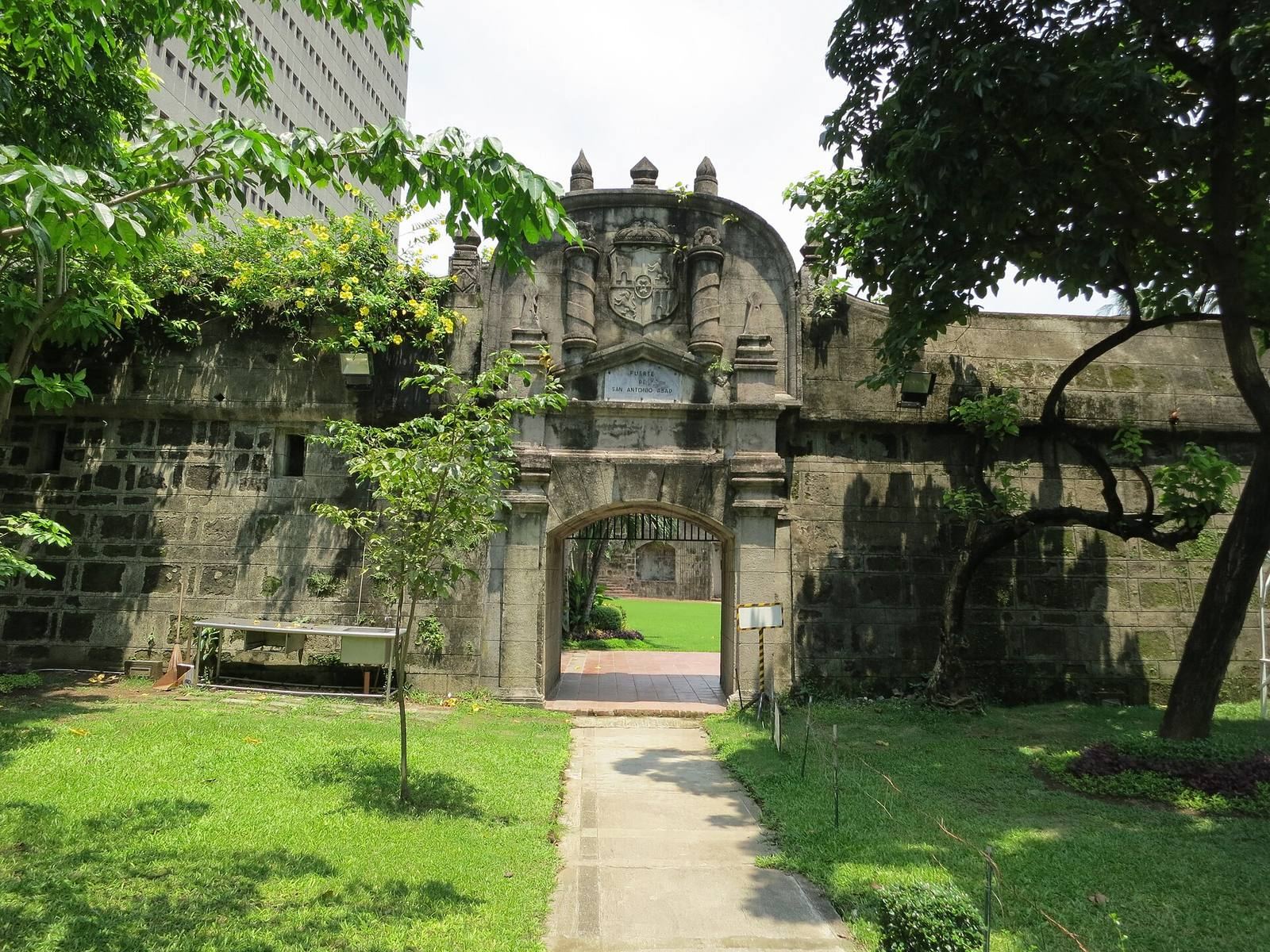
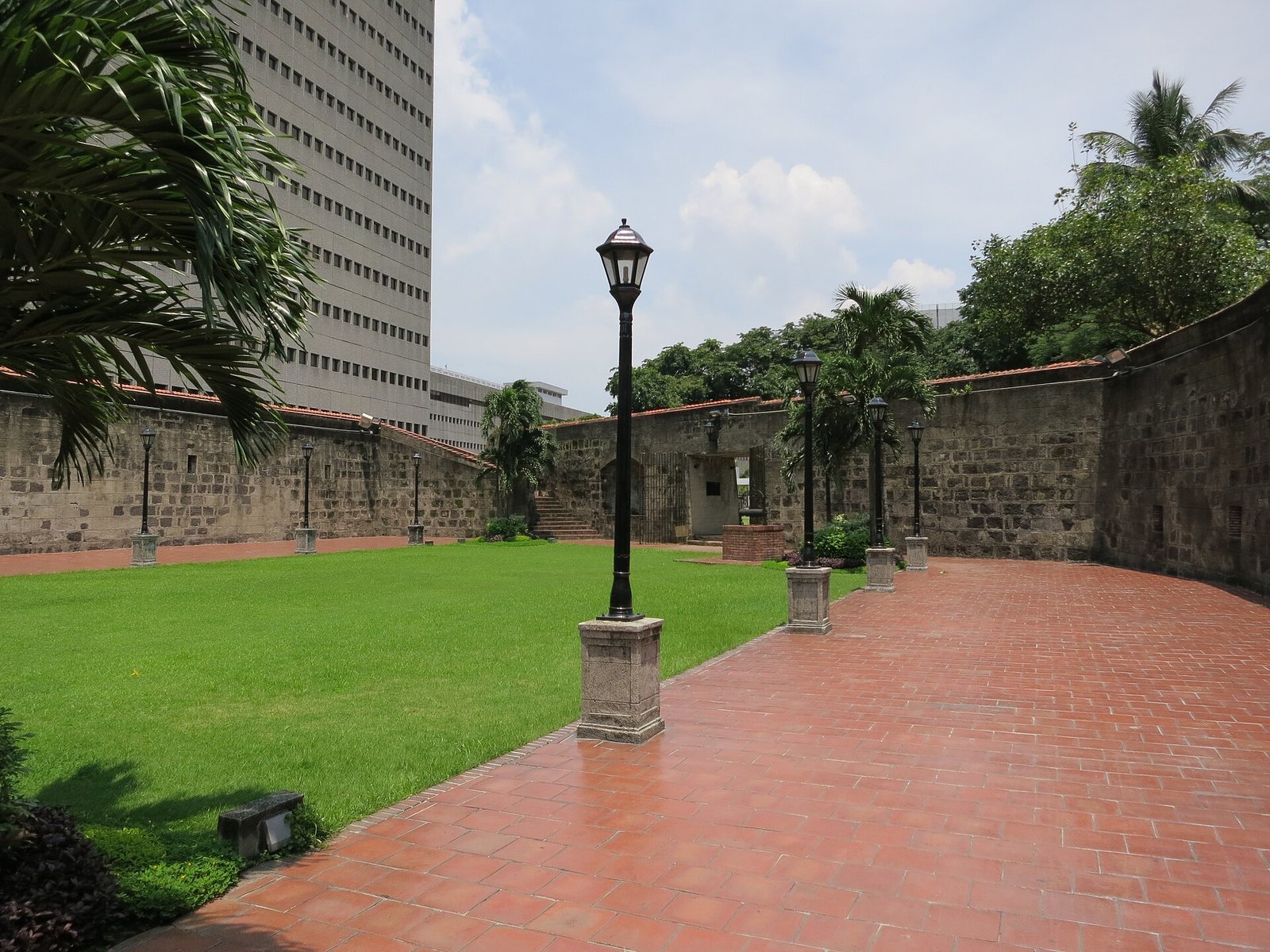
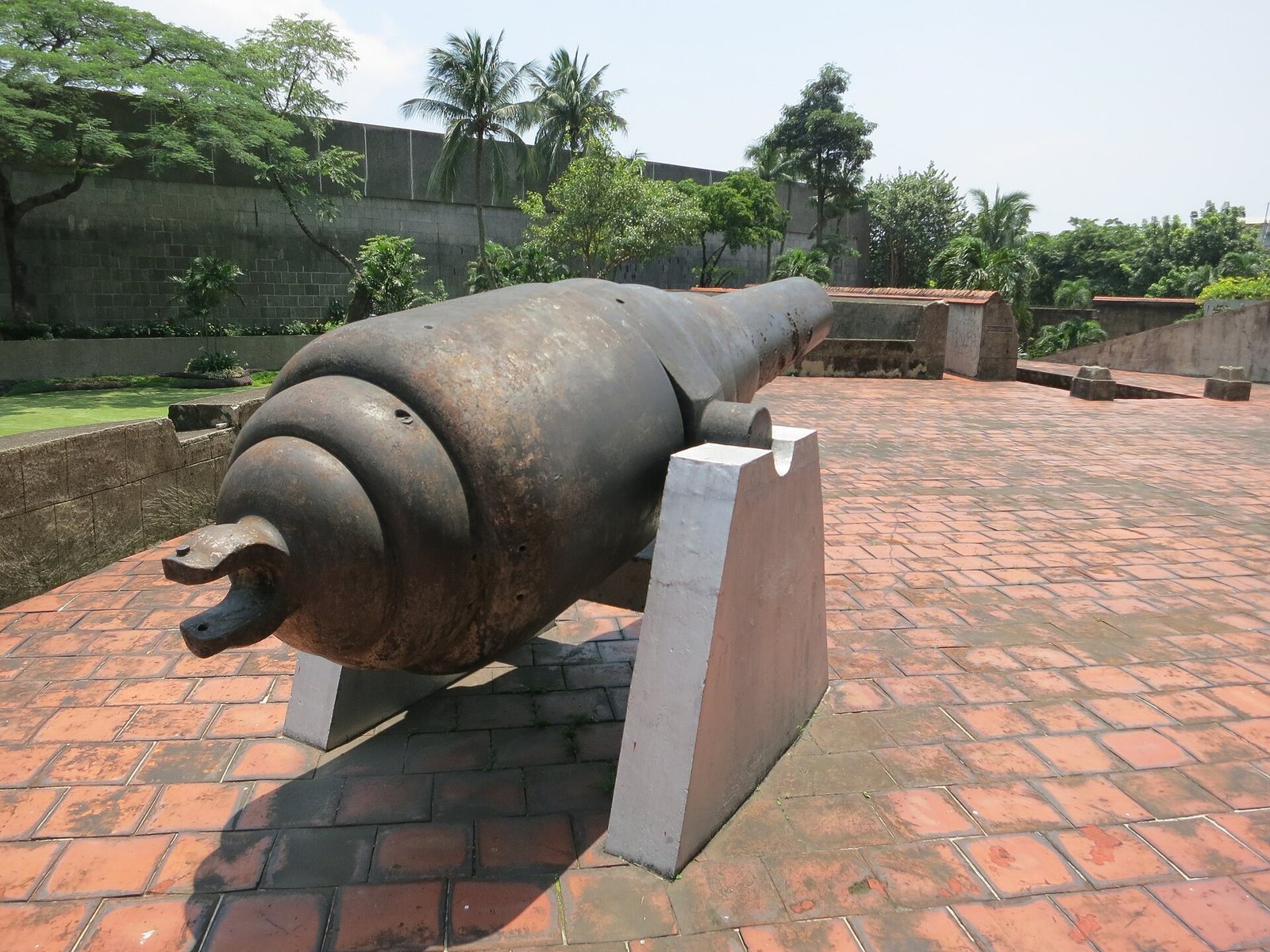
The fort is a triangular masonry fortification with bastions, projecting sections designed to help defend its walls with fire from multiple angles. It lies within the Bangko Sentral ng Pilipinas complex on Roxas Boulevard in Malate.