Angono Petroglyphs: A Late-Neolithic Rock-Art Site in the Philippines
Site at a Glance
- Rating
- 4.5
- Popularity
- Low
- Country
- Philippines
- Primary era
- Stone Age
- Eras represented
- Stone Age
- Civilizations
- Unclassified
- Site type
- Civic
- Remains
- Rock Art
On this page9 sections
History
The Angono Petroglyphs are a late-Neolithic rock-art site in Angono, Rizal, Philippines, probably created by or before 2000 BC. Built by prehistoric communities using stone tools, they are regarded as the oldest known work of prehistoric art in the Philippines. A petroglyph is an image cut or engraved into natural rock rather than painted onto it.
Neolithic use and discovery
The shelter was used during the Philippine Neolithic, the later part of the Stone Age associated with polished-stone tools and early food-producing communities. Excavations carried out by Alfredo Evangelista from October to November 1965 recovered earthenware fragments, two obsidian flakes, two pieces of chert, flaked-stone tools, a stone core tool, and a polished stone adze with a blunted working edge.
The rock shelter was reported to the National Museum in March 1965 by Filipino National Artist Carlos V. Francisco, also known as Botong Francisco. He encountered it during a field trip near the boundaries of Angono, Binangonan, and Antipolo. The discovery led to archaeological investigation and brought the prehistoric carvings into wider historical and cultural consideration.
Interpretations of the carvings
A 2018 interpretation proposes two phases made by different cultures. The older Phase 1 may have been produced by Australo-Melanesian hunter-gatherers, while the more recent Phase 2 may have been made by Austronesian hunter-gatherers. This division and the proposed cultural attributions remain interpretive. Phase 2 may also include carvings made by Philippine guerrillas who sheltered in the caves during the Second World War.
The figures are generally understood as having a healing function. The shelter may have served as a dambana, a sacred place associated with spirits, ritual activity, and healing. In this interpretation, illness, particularly a child’s illness, was symbolically transferred to the rock wall through a form of sympathetic magic, the ritual idea that an action affecting an image can affect the person or condition represented.
Protection and continuing interpretation
Modern graffiti and vandalism have damaged parts of the site. After its designation as a National Cultural Treasure in 1973 under Presidential Decree No. 260, conservation and site-development work involved the National Museum of the Philippines, the Department of Tourism, and the World Monuments Fund. A National Cultural Treasure is a Philippine designation for a place or object of exceptional historical, cultural, artistic, or scientific importance.
The Angono Petroglyphs entered the World Inventory of Rock Art in 1985 and appeared in World Monuments Watch and World Monuments Fund historic-site listings from 1996. They are also included on the Philippines’ tentative list of UNESCO World Heritage Sites. John Miksic has questioned the authenticity of the site, while UNESCO regards it as well established. The site now functions as an Angono branch of the National Museum of the Philippines, presenting the cultural and artistic heritage of Rizal Province. A local museum established in 1998 holds regional collections that include giant-turtle remains, fossils, Elephas sp. molars and tusks, ceramics, and paintings.
Remains
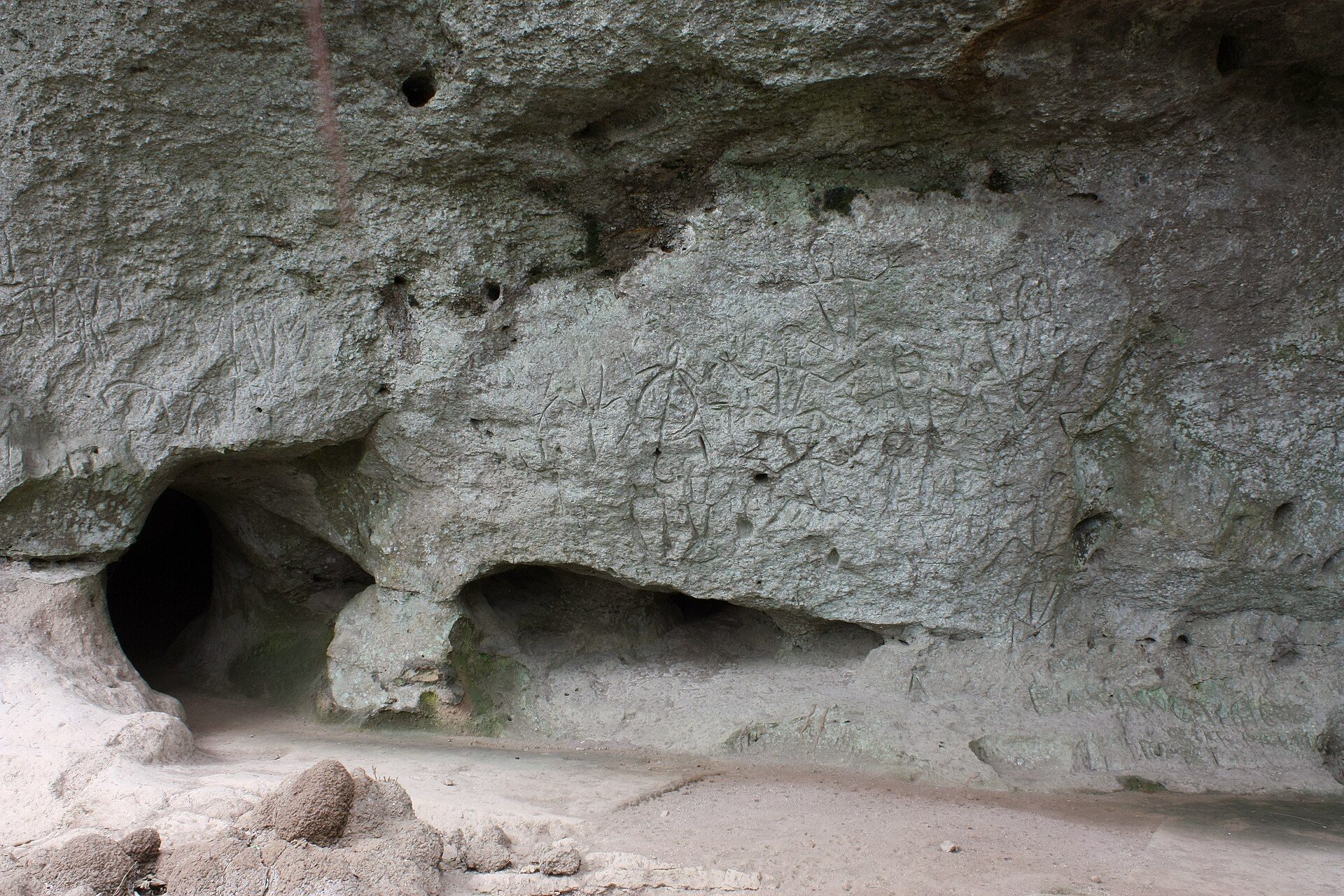
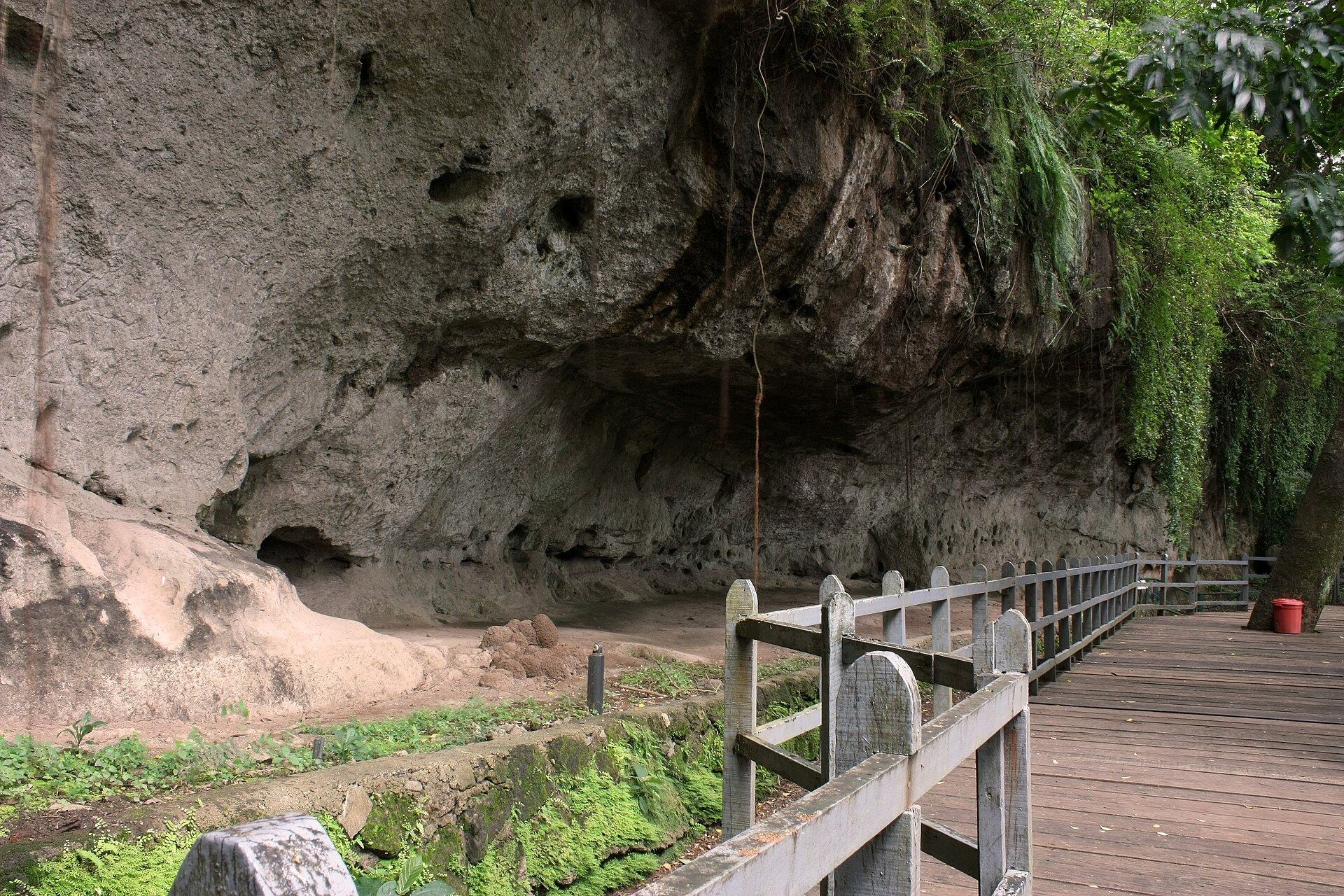
The petroglyphs occupy a shallow rock shelter on a hill in the Angono-Binangonan area of Rizal Province on Luzon, southeast of Manila. The shelter lies about 3 kilometres from Angono and approximately 235 metres above sea level. It measures about 63 metres in width, 8 metres in depth, and up to 5 metres in height. Formed in volcanic soil and Guadalup Tuff, the shelter developed through geological processes associated with faulting during the late Pleistocene or early Holocene, within the broader Quaternary period.
Carved rock wall
Earlier geometric figures
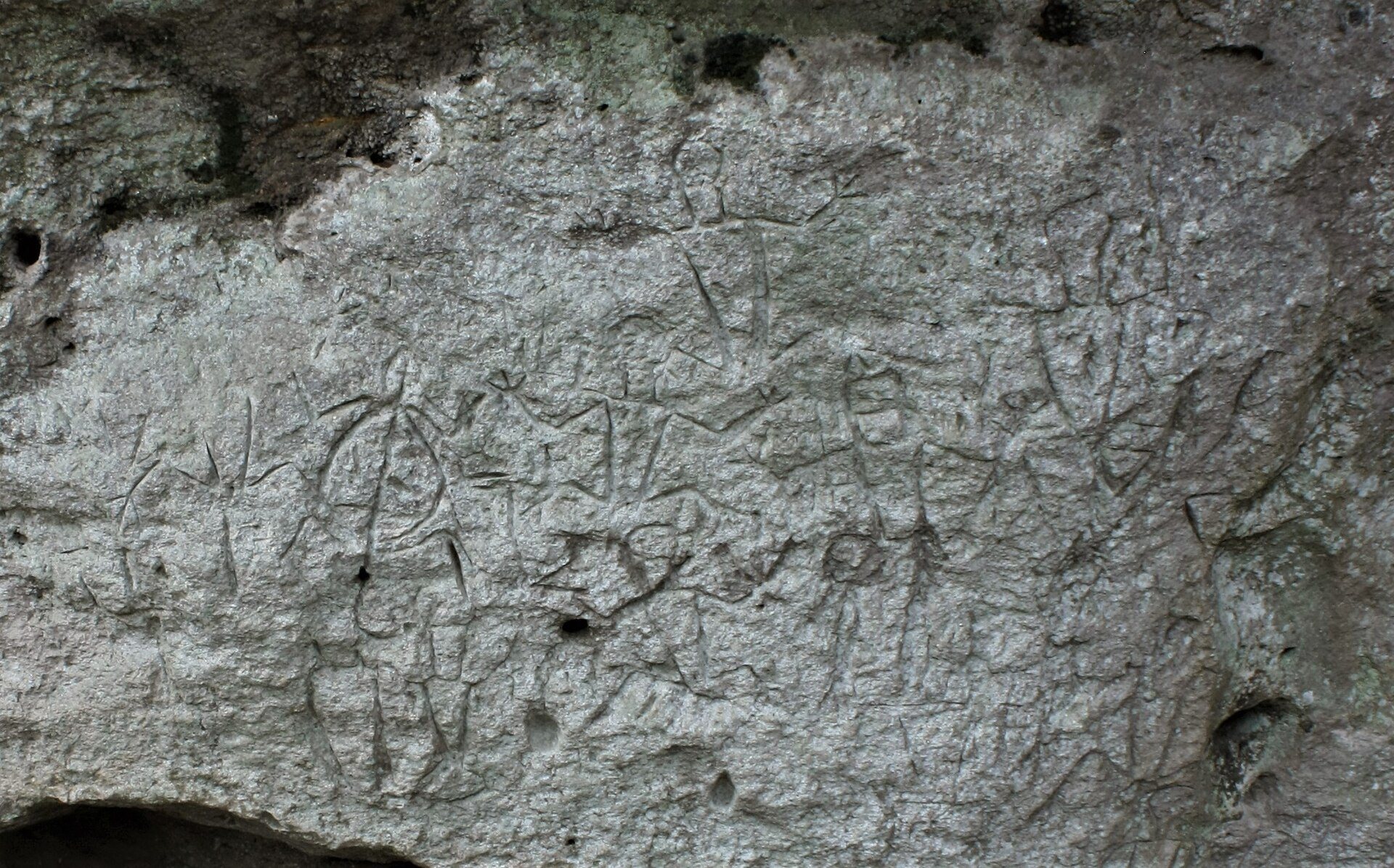
The carvings cover a roughly horizontal section of rock wall about 25 metres long and 3 metres high. The proposed Phase 1 includes approximately 51 geometric forms, among them about 11 disembodied vulva-like shapes represented by bisected triangles or ovals, small cupules, and at least one human figure with bent elbows and knees. The volcanic tuff is friable enough to have been worked with a piece of harder stone.
Later figures and additions
The proposed Phase 2 includes limbs, heads, and torsos attached to earlier stick-like human figures. Other forms include horn-shaped or rectangular headdresses, three figures holding curved objects, four bowling-pin-shaped bodies, three oval bodies, and one figure with fishtail-shaped legs. Across the wall, the 127 carvings include stylized human and animal figures, particularly frogs and lizards, together with designs that erosion has made difficult to identify. Humidity-related erosion has left 51 carvings distinct.
Developed shelter area
A green-painted iron fence and a low concrete wall separate the carved rock face from visitors. The developed site includes a stone path, a viewing deck, and a drainage system. A tunnel through the ridge and cleared vegetation form part of the approach to the shelter. The National Museum installed a viewing deck in 1997, and a newer deck was added during a later renovation.