Château de Moulbaix: A Neo-Tudor Estate in Belgium
Site at a Glance
- Popularity
- Medium
- Country
- Belgium
- Primary era
- Modern
- Eras represented
- Medieval, Modern
- Civilizations
- Belgian, Holy Roman Empire
- Site type
- Domestic
- Remains
- Castle
On this page7 sections
History
The nineteenth-century château
Château de Moulbaix is a château in Moulbaix, Belgium, commissioned in 1860 by Marquis Oswald du Chasteler in a neo-Tudor style, a nineteenth-century revival drawing on Tudor England. The du Chasteler family had been established in Moulbaix since the late Middle Ages and owned most of the village by Oswald’s time. The new château replaced an earlier medieval castle and a house dated to 1502.
Restoration and the 1889 murder
A fire damaged the château in 1889, and architect Désiré Limbourg directed its restoration. That same year, Marquise Louise de Chasteleer was murdered in the presbytery, a parish priest’s residence, at Château de Moulbaix. No one was brought to trial for the killing. Local people suspected her son, the young Marquis Charles de Chasteleer.
Protection, abandonment, and sale
Wallonia listed the château as protected heritage in 2000. After the deaths of its last owners, Count Aymard d’Ursel in 2005 and Countess Nadine de Spoelberch in 2007, it was left unoccupied and considered at risk. A public sale was decided on in 2015, and the château and estate were auctioned in January 2016. Herman Govaert acquired them.
Remains
The château
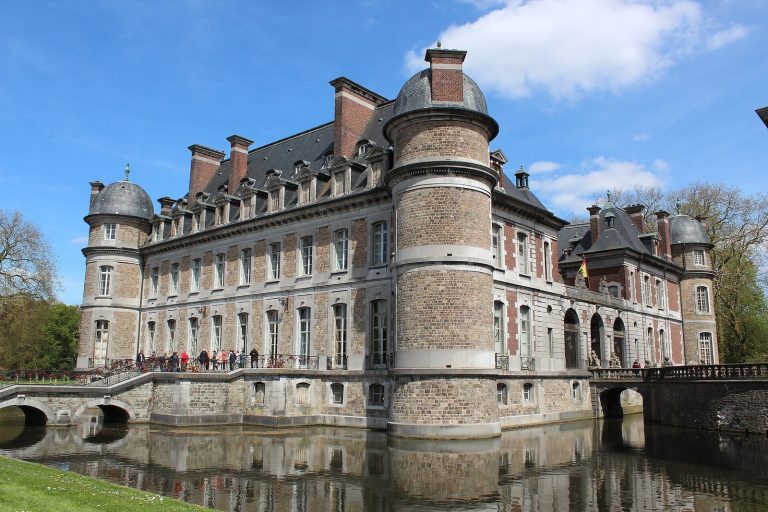
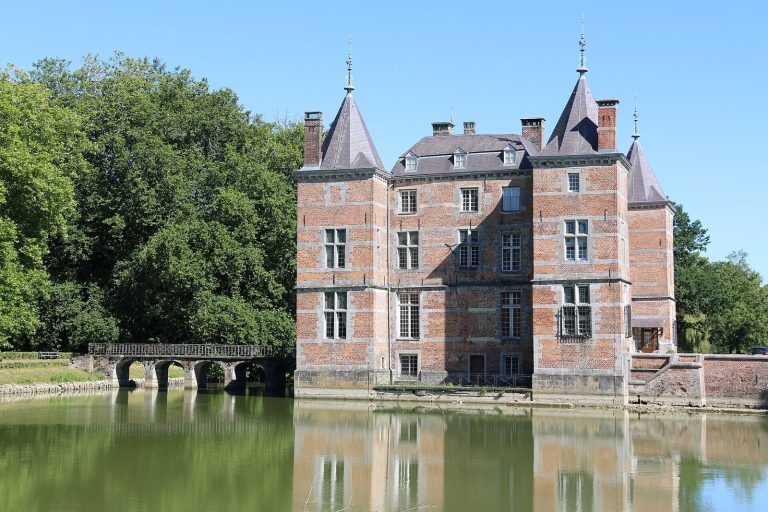
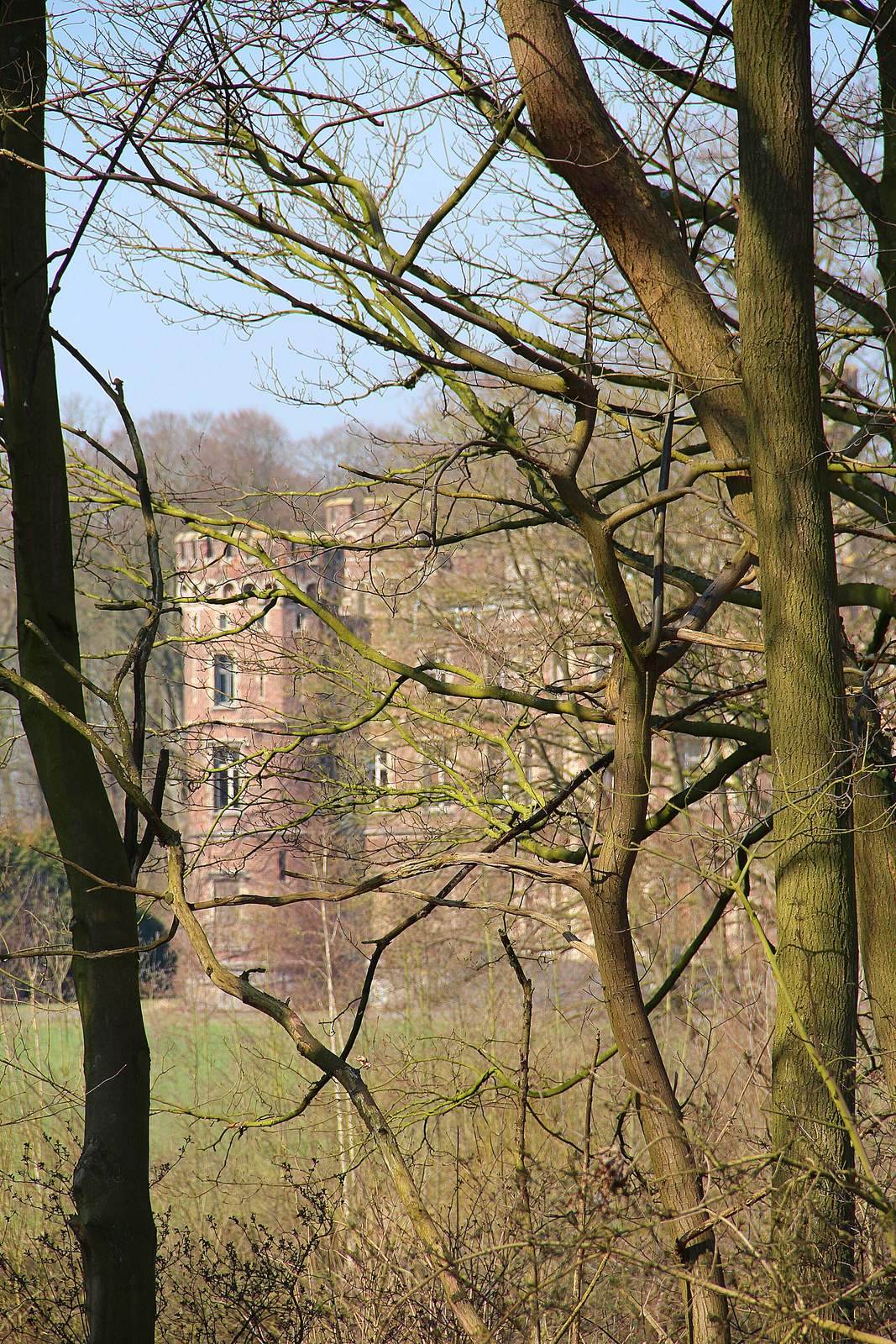
The château has a rectangular plan, with brick and cut limestone above a rubble-stone base. Its four corner towers are reinforced with octagonal turrets on all four sides. The building also has eleven towers with notched battlements and openings for firearms or cannon. Decorative projections imitate machicolations, defensive structures with openings, while smaller watch turrets adorn the façade. The château has 344 windows.
Grounds and earlier stronghold
The estate covers 62 hectares, including a two-hectare landscaped park designed by Louis Fuchs (1814–1873). A few remains of the earlier motte-and-bailey survive within the property. This type of fortified site was built around a raised mound and an adjoining enclosed courtyard.