University of Altdorf: A Renaissance Academy and University in Germany
Site at a Glance
- Popularity
- High
- Country
- Germany
- Primary era
- Early Modern
- Eras represented
- Early Modern
- Civilizations
- Holy Roman Empire
- Site type
- Civic
- Remains
- University
On this page12 sections
History
The University of Altdorf was a Renaissance institution established by the Free Imperial City of Nuremberg in Altdorf, Germany. It opened as an academy in 1575 and became a university in 1622.
Founding and academic development
An earlier Nuremberg school, the St Egidien grammar school, began in May 1526 with the involvement of humanists and Protestant reformers Philipp Melanchthon and Martin Luther. It closed after nine years. In 1565, its former founding rector, the humanist and educator Joachim Camerarius, urged Nuremberg’s council to renew the educational project. After considering several locations near the city, the council chose Altdorf.
Wealthy Nuremberg patricians, members of the city’s influential elite, contributed to the college’s costs. In return, they received the right to accommodation for their sons while they studied there. The academy was organized into faculties rather than classes and awarded its first master’s degrees in 1581. Edo Hildericus became its first rector in 1582 and joined the teaching staff as a professor of Hebrew in 1584.
Students and religious disputes
On 29 August 1599, the 16-year-old Albrecht von Waldstein, later known as Wallenstein, enrolled at Altdorf. He became entangled in proceedings after student Johann Hartmann von Steinau stabbed Wolff Fuchs, an ensign in the town militia, following a quarrel shortly before Christmas. Wallenstein was accused of having been present and of causing other disturbances. He received a short period of house arrest. On 14 January 1600, he severely beat his servant for looking idly through a window toward the market. The proceedings required him to pay the servant’s medical expenses and a fine of 30 gulden.
Wallenstein’s name last appears in the university records in mid-March 1600. He left Altdorf to travel in France and Italy, then continued his studies at the universities of Padua and Bologna. He later became a Bohemian nobleman and an imperial commander in the Thirty Years’ War.
From 1614 to 1618, Altdorf briefly became a focus of Socinianism, a Christian movement that rejected the doctrine of the Trinity. German and Polish Socinians, encouraged by connections with the Socinian-associated Racovian Academy in Poland, hoped to establish a similar school in Altdorf. The Polish theologian Samuel Przypkowski enrolled on 22 March 1614, three weeks after the Scottish scholar Thomas Seget. Przypkowski was expelled in 1616 amid suspicion that students were secretly adhering to Socinian beliefs.
In January 1617, the university’s administrative and legal officer, Jacob Weigel, brought Joachim Peuschel and Johann Vogel back to Altdorf. They were required to make a public recantation, to which the Socinian theologian Valentin Schmalz responded.
University status and the Thirty Years’ War
At Nuremberg’s request, Emperor Ferdinand II raised the thriving academy to university status on 3 October 1622. In exchange, Nuremberg had to leave the Protestant Union, an alliance of Protestant states and rulers in the Holy Roman Empire, and pay the emperor 25,000 gulden. The university later assigned its official foundation date to 29 June 1623, an anniversary of the earlier school’s inauguration.
The Thirty Years’ War, a major European conflict fought from 1618 to 1648, brought military danger to Altdorf. In November 1631, troops led by Johann Tserclaes, Count of Tilly, occupied the town and university and threatened to plunder them. They withdrew after receiving 1,000 Reichstaler, a silver coin used in German lands. In June 1632, Croatian cavalry attacked university members travelling from Nuremberg to Altdorf. The rector, Georg Nößler, had to serve as a physician with Wallenstein’s army and returned only after the Battle of Lützen on 6 November 1632. Enrolments reached their lowest point during this period, as students and professors sought refuge in nearby Nuremberg.
Expansion and decline
After the war, the university prospered and expanded into the first quarter of the eighteenth century. New facilities included an anatomy building in 1650, an observatory in 1657 and a chemical laboratory in 1682. In 1666, the philosopher and mathematician Gottfried Wilhelm Leibniz received a doctorate in law at Altdorf after Leipzig declined to award him the degree, apparently because of his youth.
After an unsuccessful attempt in 1690, Altdorf received an imperial privilege on 10 December 1696 to award doctorates in theology. Its elevation to full-university rank was proclaimed in 1697. The university marked its centenary on 29 June 1723, but enrolments were already falling. A commission formed in 1729 called for greater discipline among students and professors and, for the first time, considered transferring the university to Nuremberg. New student numbers fell sharply after 1740 and continued to decline after 1770, sometimes reaching only a little more than 20 a year.
When Nuremberg came under the Kingdom of Bavaria in 1806, Altdorf also passed to Bavarian rule. The establishment of new Bavarian state universities created pressure to reduce spending elsewhere. Citing a lack of funds, King Maximilian I Joseph dissolved Altdorfina on 24 September 1809. At the urging of the theologian and education reformer Friedrich Immanuel Niethammer, the university’s library collections and bookcases were transferred to the University Library of Erlangen. By 1809, more than 1,100 young Protestant clergy had been ordained through the university.
After the university
A teacher-training seminary occupied the former university buildings from 1824 to 1924. In 1925, the Protestant Inner Mission, a movement for organized social and charitable work, established facilities there for people with physical disabilities. The former university complex and the Church of St Laurentius are protected as architectural monuments, in recognition of their architectural character and place in German university history. Altdorf’s recurring Wallenstein plays also recall his student years by reenacting scenes of early seventeenth-century student life in historical costume.
Remains
University complex
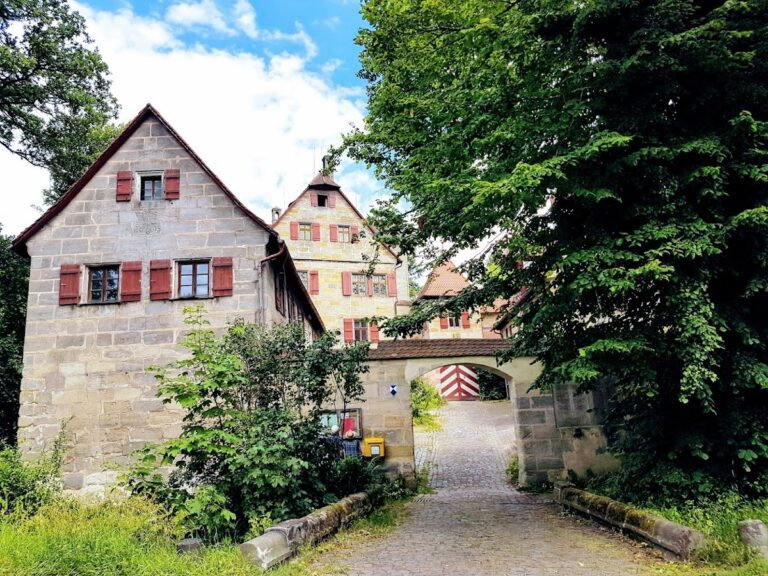
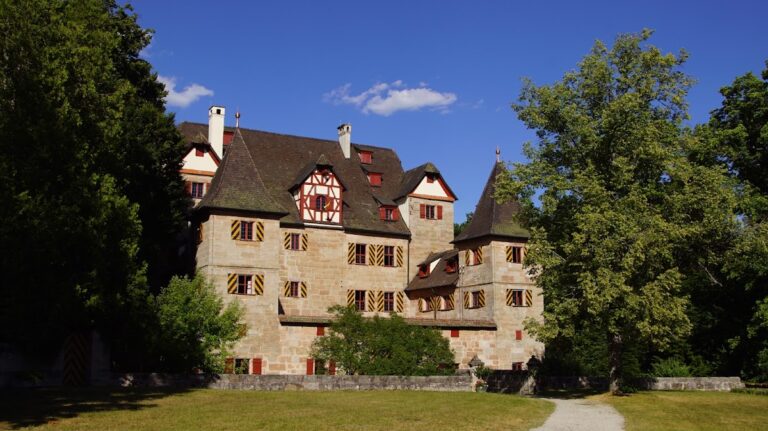
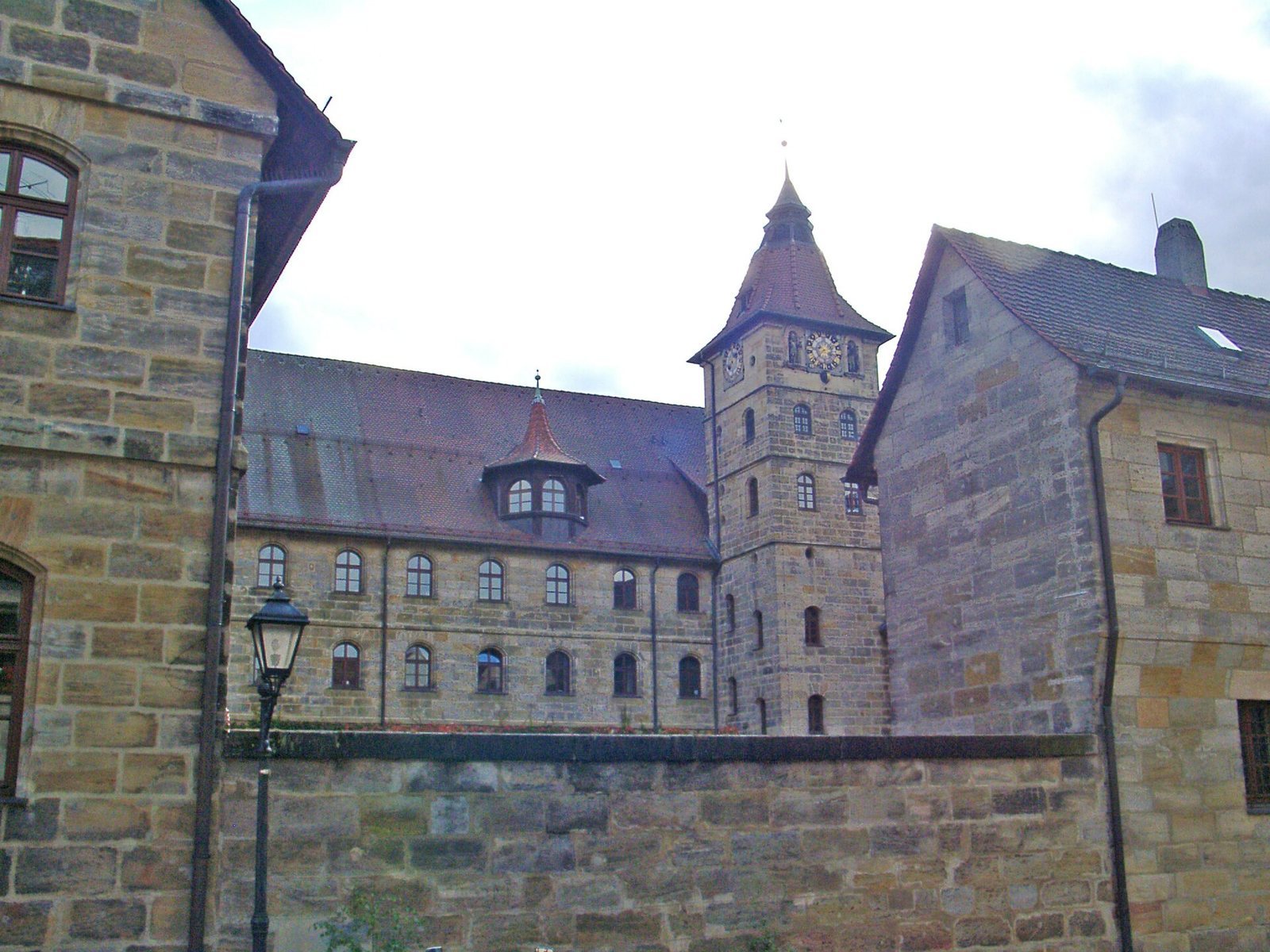
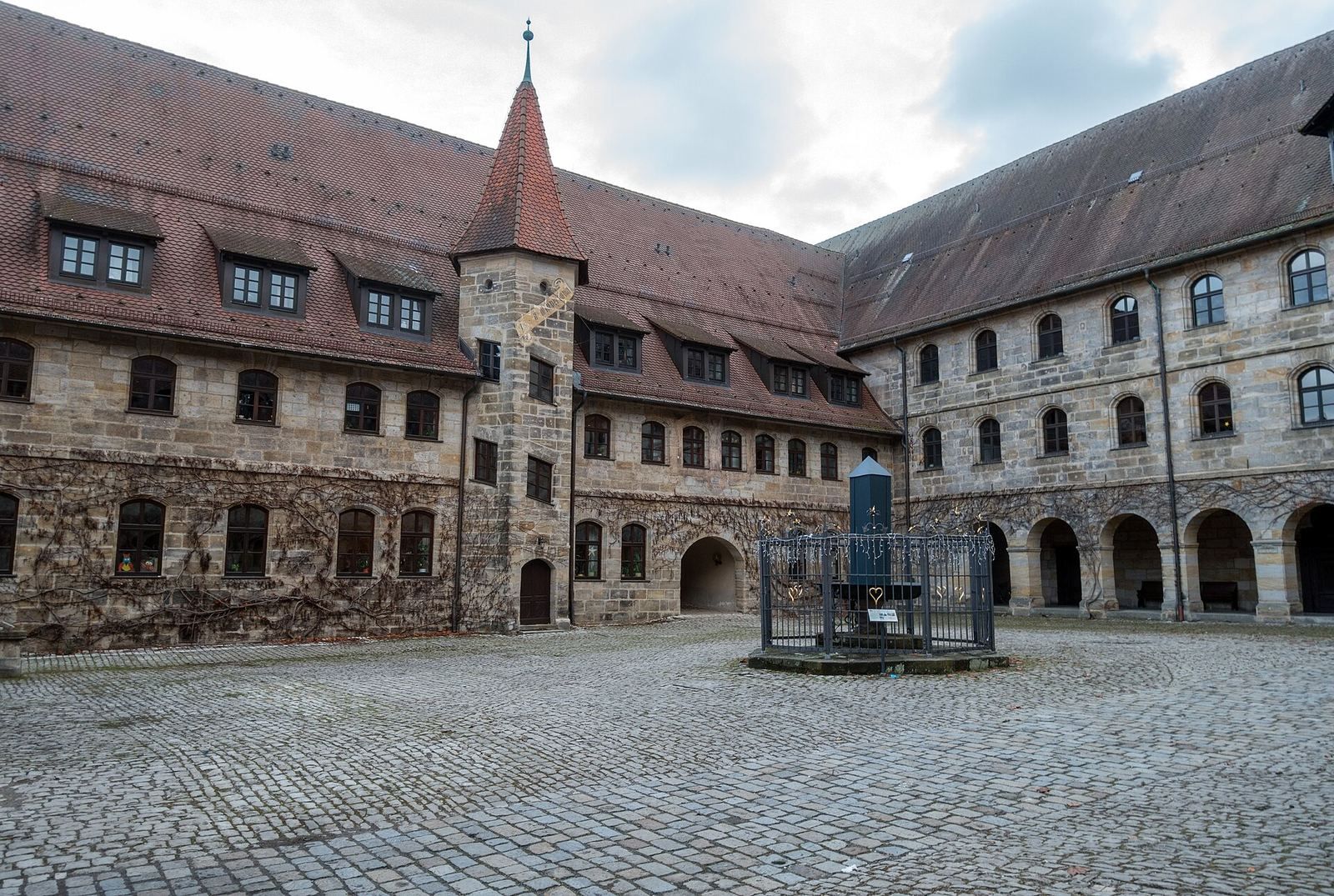
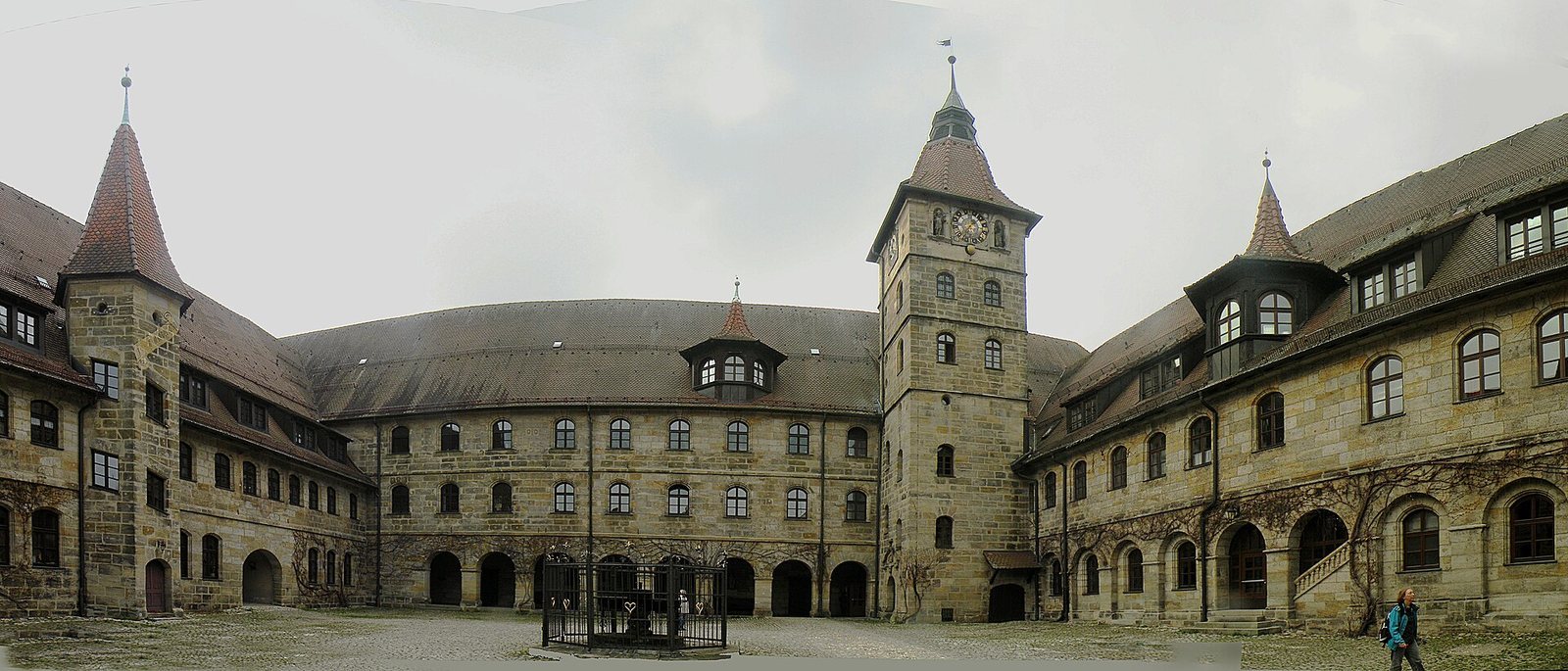
The surviving university complex was built in the Renaissance style. Its principal college building, east wing and gatehouse have remained largely in the form they had in the eighteenth century.
College building
Work on the college building began with the laying of its foundation stone on 30 September 1571. It was completed in just under four years and inaugurated on 29 June 1575. Its scale indicates that Nuremberg envisaged an institution extending beyond a simple grammar school.
East wing
Funded by Nuremberg patrician Sebald Welser, the east wing was completed in 1582. It contained the complex’s largest lecture hall.
Gatehouse
Completed in 1583, the gatehouse housed a bookshop and quarters for the university beadle, an attendant with institutional and supervisory duties.
Associated buildings and later use
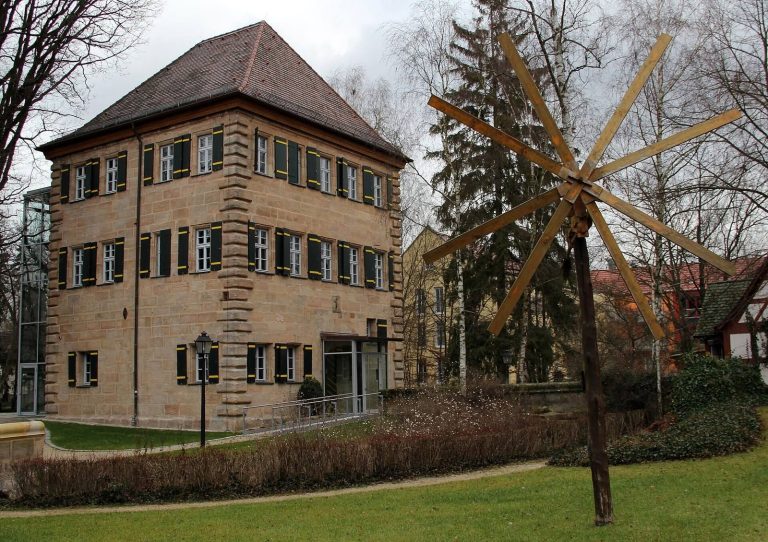
The Evangelical Lutheran parish church of St Laurentius served as the university church. A university museum occupies rooms in the former university printing house, less than 100 metres from the main university building. The former university buildings now form part of Wichernhaus, which includes a boarding school for people with physical disabilities and a home for older people.