Scheventorf Castle: A Renaissance Moated Manor in Bad Iburg
Site at a Glance
- Rating
- 3.7
- Popularity
- Very Low
- Country
- Germany
- Primary era
- Early Modern
- Eras represented
- Early Modern
- Civilizations
- Holy Roman Empire
- Site type
- Domestic
- Remains
- Castle
On this page10 sections
History
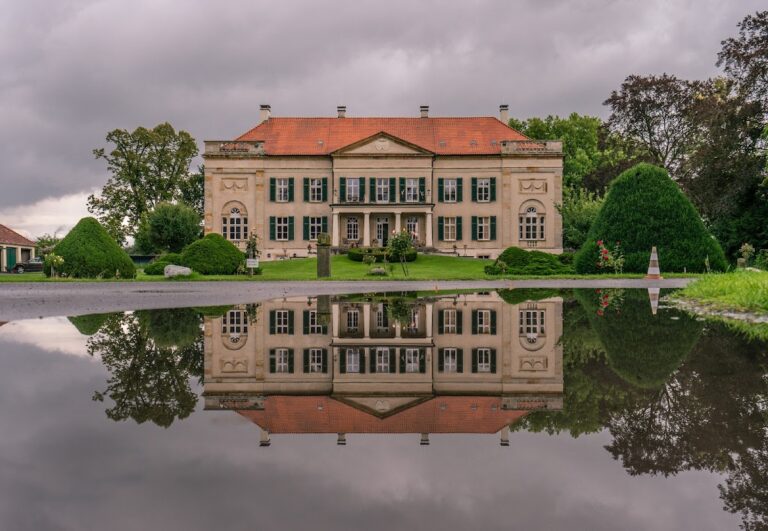
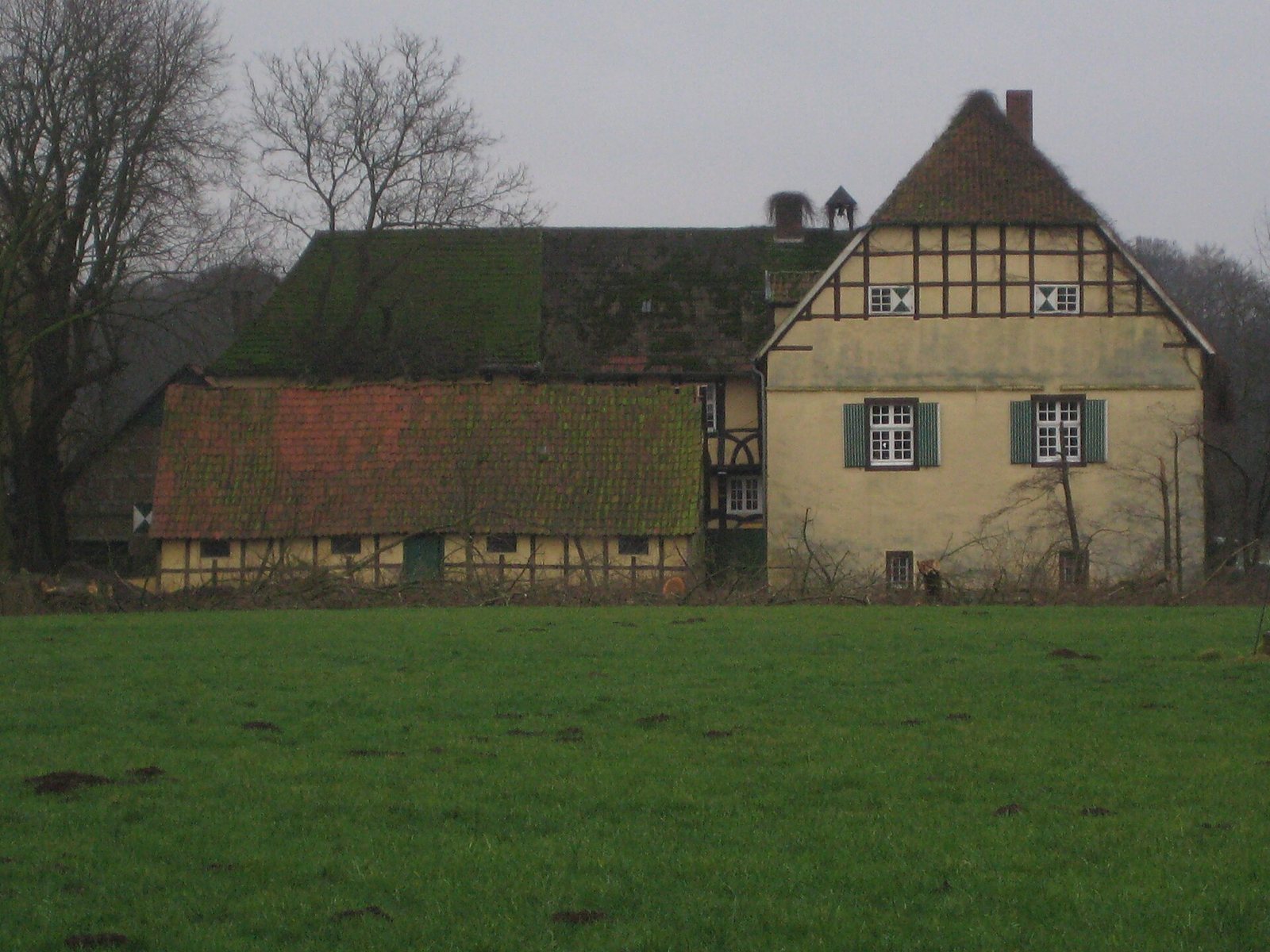
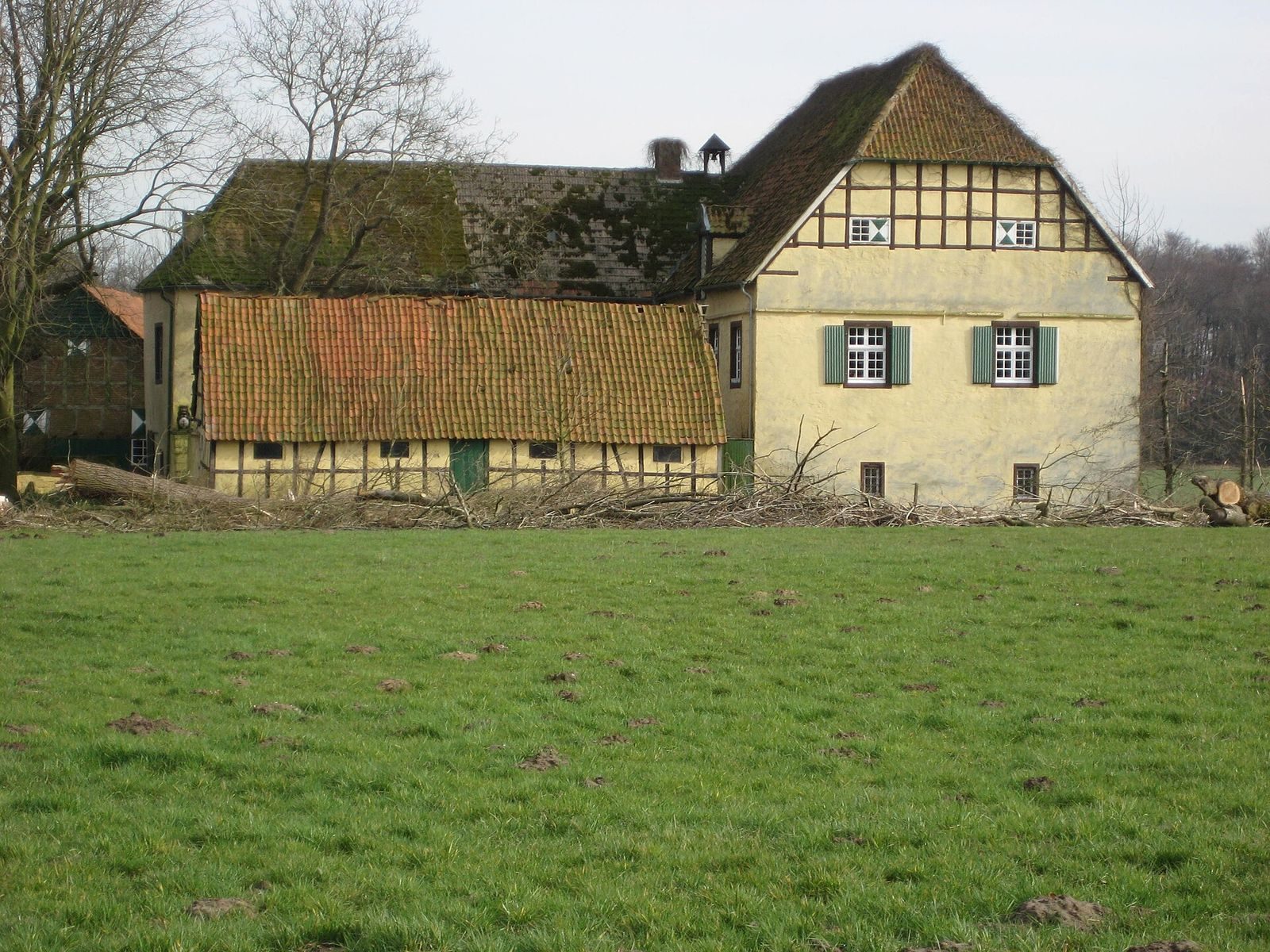
Scheventorf Castle is a former moated manor in Bad Iburg, Germany, whose present Renaissance building was constructed in 1552. The Renaissance was a European cultural period that revived classical forms. The date of the castle’s first construction is unknown.
Early owners and inheritance
The Scheventorf family, whose name the castle retained, appears in Osnabrück records by the mid-13th century. Knight Wigger von Scevintorpe was named in 1252, and Wessel von Scheventorf had business dealings with the abbot of Iburg in 1305. The family’s ancestral seat lay south of the castle-and-monastery complex at Iburg.
Johann von Scheventorf held the castle in 1338 and sold it to Lubbert van Budde. On 31 May 1365, van Budde resold it to Ludwig von Hake. The Hake family, recorded from 1225, originated at the Haking farm in Glane-Visbeck and served the bishops of Osnabrück. Its members also held positions as retainers at Iburg Castle, where the family’s estate remained in its possession until 1478.
Ludwig’s son Lüdeke inherited Scheventorf and married Grete von Bar. Their son Ludwig, who married Leneke von Hoberg, received the castle and associated lands in 1416. Five years later, he and his brother Ludolf divided their inheritance, leaving Scheventorf with Ludwig. The estate passed to Ludwig’s son Reineke, who married Monike von Enniger around 1500. Their son Johann married Sidonie von Dincklage in 1528.
Renaissance building and religious change
Johann von Hake and his wife built the present Renaissance residence in 1552. Their son Reineke succeeded them and married Johanna von Ketteler zu Middelburg in 1556. Reineke’s son Johann married Sybille von Raesfeld and became Protestant. In 1601, he and the lord of nearby Schleppenburg tried to secure the appointment of a Protestant clergyman to the vacant parish post at Glane. Prince-Bishop Philipp Sigismund of Brunswick-Wolfenbüttel, both a bishop and a temporal ruler, could not overcome opposition from the Osnabrück cathedral chapter.
Johann died in 1628, and his widow Sybille returned to Catholicism. Their daughter Agnes Josina married Bernhard Jakob von Henderson, a Scottish lieutenant colonel serving with Swedish forces, and Scheventorf passed to him through the marriage. He died during the siege of Breda in 1637, in the Thirty Years’ War, a major European conflict fought from 1618 to 1648.
A local legend holds that Anna von Hake, the lord’s daughter, was walled up alive at the castle in the first half of the 17th century because of a relationship deemed socially unequal. The supposed lover is described as either a forester or a servant. The tale became part of the shared memory of people in Glane and Iburg. In 1924, priest and writer Bernhard Köster retold it in The Beautiful Anna von Hake at Scheventorf.
Episcopal estate and later ownership
In 1662, Bernhard Johann Jakob von Henderson, a cavalry captain and son of Bernhard Jakob, sold Scheventorf to Georg Christoph von Hammerstein. On 26 January 1664, von Hammerstein exchanged Scheventorf and Schleppenburg, which he had already acquired, with Prince-Bishop Ernst August I for the episcopal castle of Gesmold. Ernst August sought to enlarge his territory near Iburg Castle and obtain more farmland to provision the household there. The fertile, level land around Scheventorf and Schleppenburg suited agriculture better than the hilly country near Iburg.
The two estates became episcopal property and were administered as chamber estates, meaning property managed to support a ruler’s or institution’s finances. Scheventorf remained within the Bishopric of Osnabrück until secularization in 1803, when ecclesiastical property passed to secular control. It then became state domain property. In 1885, the estate was incorporated into the rural municipality of Ostenfelde. The castle is now privately owned, and its land is used for agriculture.
Remains
The rectangular complex combined a main building in the southwest with a forecourt and service buildings. The Glaner Bach flows southeast of the castle; formed by the meeting of the Kohlbach and Freedenbach at Kleiner Freeden, it supplied water to the moat and millpond. A 1716 plan shows the moat around the castle and a pond to the west that drained into the stream.
Castle complex and surviving fabric
Moat, pond, and gardens
The western pond powered a watermill and had a mill garden. A smaller garden extended into the pond and could be reached by a dam, while the Great House Garden and New Garden lay beyond the moat. The moat was later filled in.
Main building
The main building’s entrance bears the Hake family coat of arms. Stairs led to an entrance hall on the ground floor, with a further stairway to the upper floor. From the hall, a route led to the great hall in the northwest, behind which were a sitting room and a chamber. The chamber connected to a privy in an external projection. To the east, the large kitchen adjoined a chamber and pantry, with a south-facing spinning room between them. Other rooms bordered a courtyard in the northeast, where another privy projected outside the building.
Connecting structure and service buildings
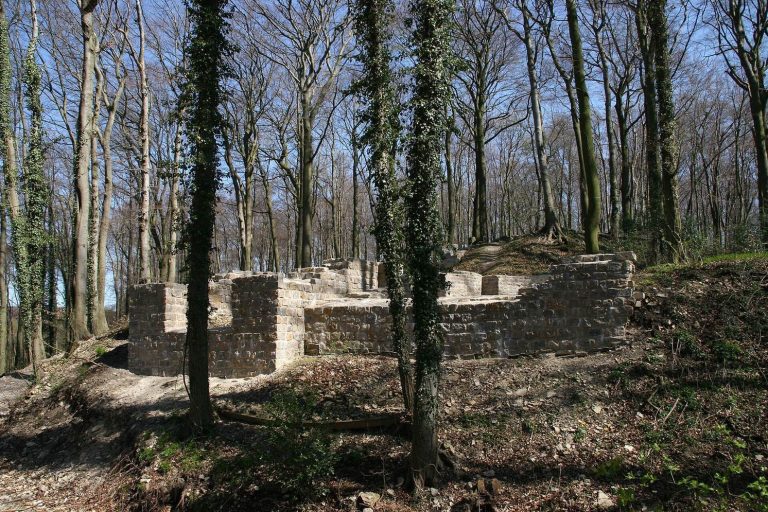
A half-timbered structure dating to around 1552 joins the main building to the former prison tower. It is regarded as the oldest surviving half-timbered structure in the Osnabrück region. The prison house stood in the northeast of the complex, and a stable was on its northwest side. The 1716 plan also depicts a gatehouse and a separate outbuilding used as a brewery. The masonry bears traces of fire, and substantial parts of the complex survive.
Annekenloch
During alterations in 1858, workers uncovered a small compartment in the area of the former kitchen. Known as the Annekenloch, it became associated with the Anna von Hake legend. Finds from the compartment included a chair leg, pottery fragments, and pieces of human bone.