Aalholm: A Royal Castle and Administrative Seat on Lolland, Denmark
Site at a Glance
- Popularity
- Medium
- Country
- Denmark
- Primary era
- Medieval
- Eras represented
- Medieval, Early Modern, Modern
- Civilizations
- Danish
- Site type
- Military
- Remains
- Castle
On this page11 sections
History
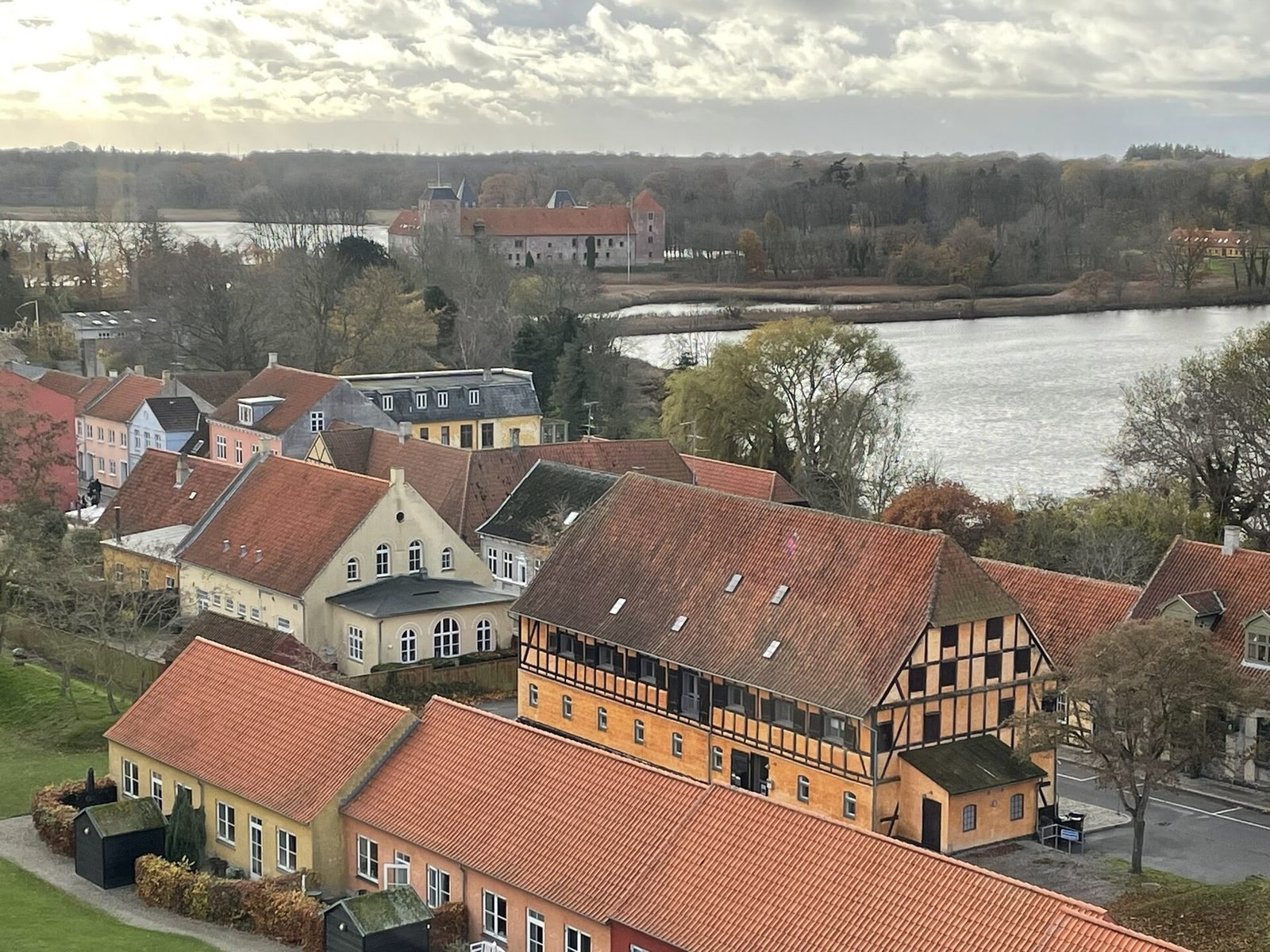
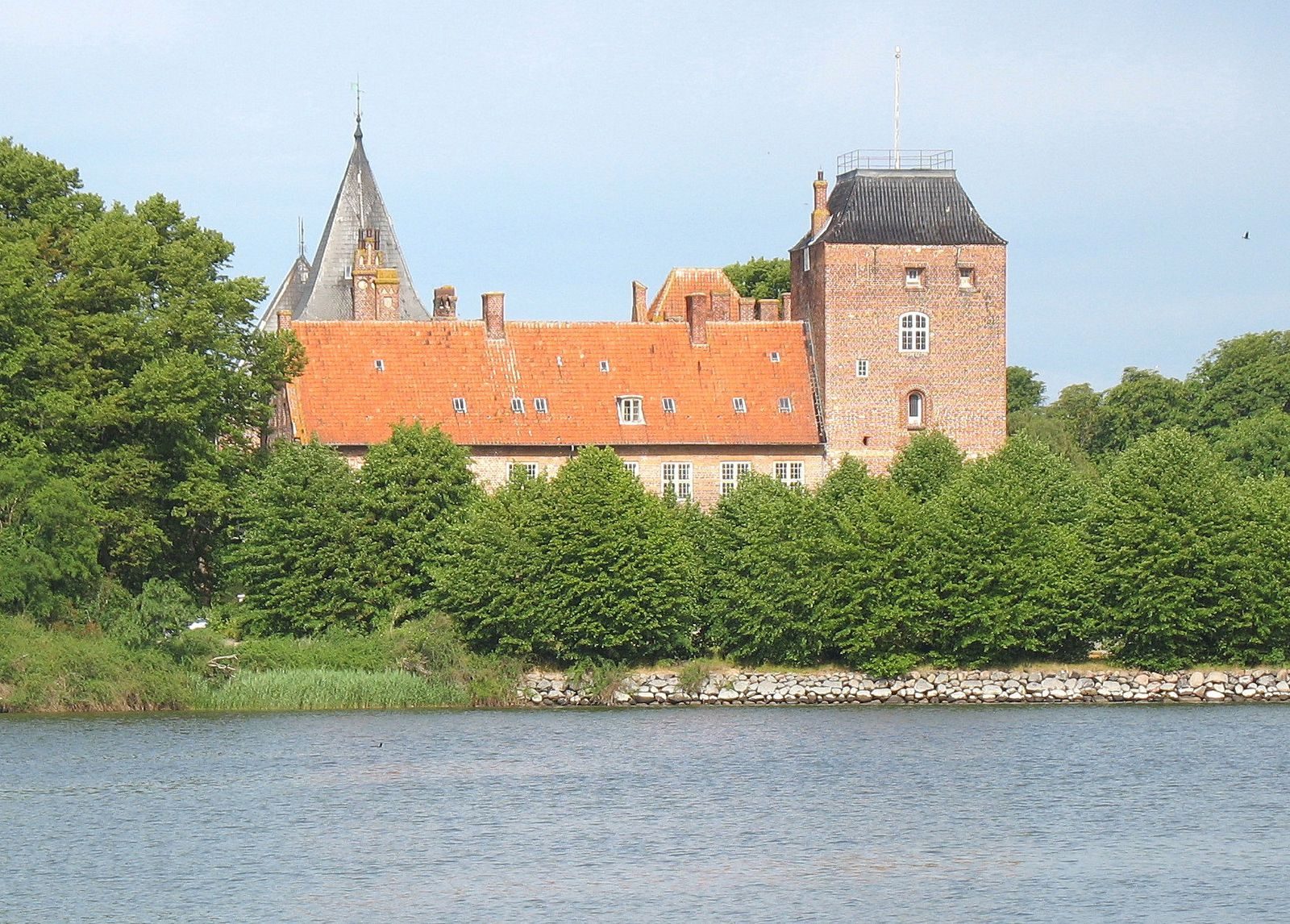
Aalholm is a castle on a small island in Nysted Nor near Nysted, Denmark, and is the oldest castle on Lolland. Its foundation date is unknown, though it was probably established around 1200; the main building was constructed between 1300 and 1585. First mentioned in 1329, Aalholm formed part of a royal network designed to reinforce the king’s authority in the regions and guard against attack.
Royal castle and local administration
Aalholm initially served as the residence of the king’s vassal and a centre of local government. A vassal held responsibilities and privileges under the monarch, including defending a district and providing the king with produce or loans in return for local revenues. Many of Aalholm’s vassals came from the Danish nobility; later holders from Mecklenburg or Holstein served as officials. At times, kings assigned the castle’s revenues to their widowed mothers as a pension.
The Crown held Aalholm from 1329 until 1725. After the coup under Frederik III helped establish Denmark’s absolute monarchy and brought the feudal system to an end, Aalholm became a county administered by civil officials. They did not necessarily live at the castle: some had homes of their own, while others lived in nearby Nykøbing. Ph. Barsdorff was county governor in 1660 and 1661. The queen administered Aalholm from 1661 to 1685, followed by county governor Jørgen Ernst von Reichou from 1685 to 1735. The diocesan governor of Lolland-Falster, a civil administrator for the district, also administered Aalholm from 1672 to 1722 and again from 1735.
The Raben estate
In 1725, Emerentia von Raben, born Levetzow and the widow of Johan Otto Raben, bought Aalholm. She was among Lolland’s largest landowners and also held Bramsløkke and Kjærstrup. By her 1734 testament, she established the countship of Christiansholm, a noble title associated with an estate, for her grandson Christian Raben. When Christian died without children in 1750, his younger brother Otto Ludvig Raben succeeded him.
Otto Ludvig enlarged the estate and established factories producing starch and face powder. His son Frederik Christian Raben succeeded him and set up an astronomical observatory in the castle. After Frederik Christian died in 1838, his sons Gregers Christian and Julius held the estate in turn, from 1838 to 1875 and from 1875 to 1879 respectively. Both died without children.
In 1879, Aalholm and Christiansholm passed to Josias Levetzau, a descendant of Emerentia’s brother, who adopted the name Raben-Levetzau. His son Frederik Christopher Otto Raben-Levetzau succeeded him in 1889. After Frederik Christopher Otto’s death in 1933, the estate passed to his son Johan Otto Valdemar Raben-Levetzau. Ownership records list Johan Otto Valdemar through 1977 and John Otto Raben-Levetzau thereafter until 1995.
Museum and later ownership
During the 1970s, Baroness Elizabeth Raben-Levetzau (Gray) opened parts of the castle to the public as a museum. The estate was sold to Stig Husted-Andersen in 1995, and the castle’s furnishings were auctioned. After his death, his estate held the property. Bo Ladegaard Bendtsen became owner in 2019.
Remains
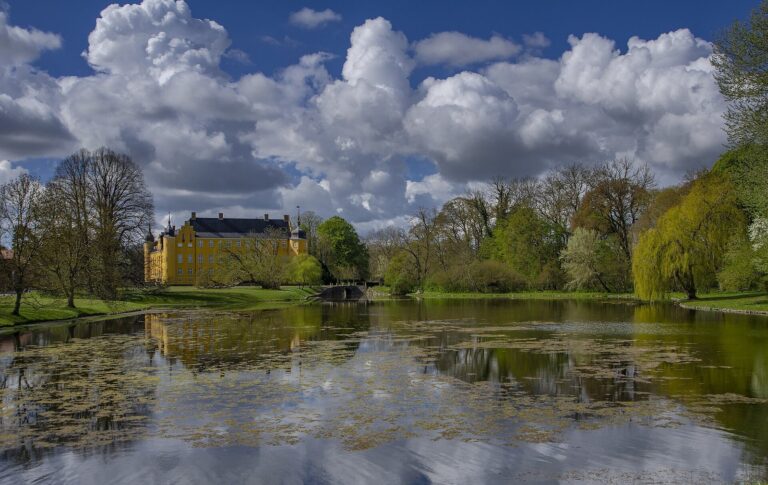
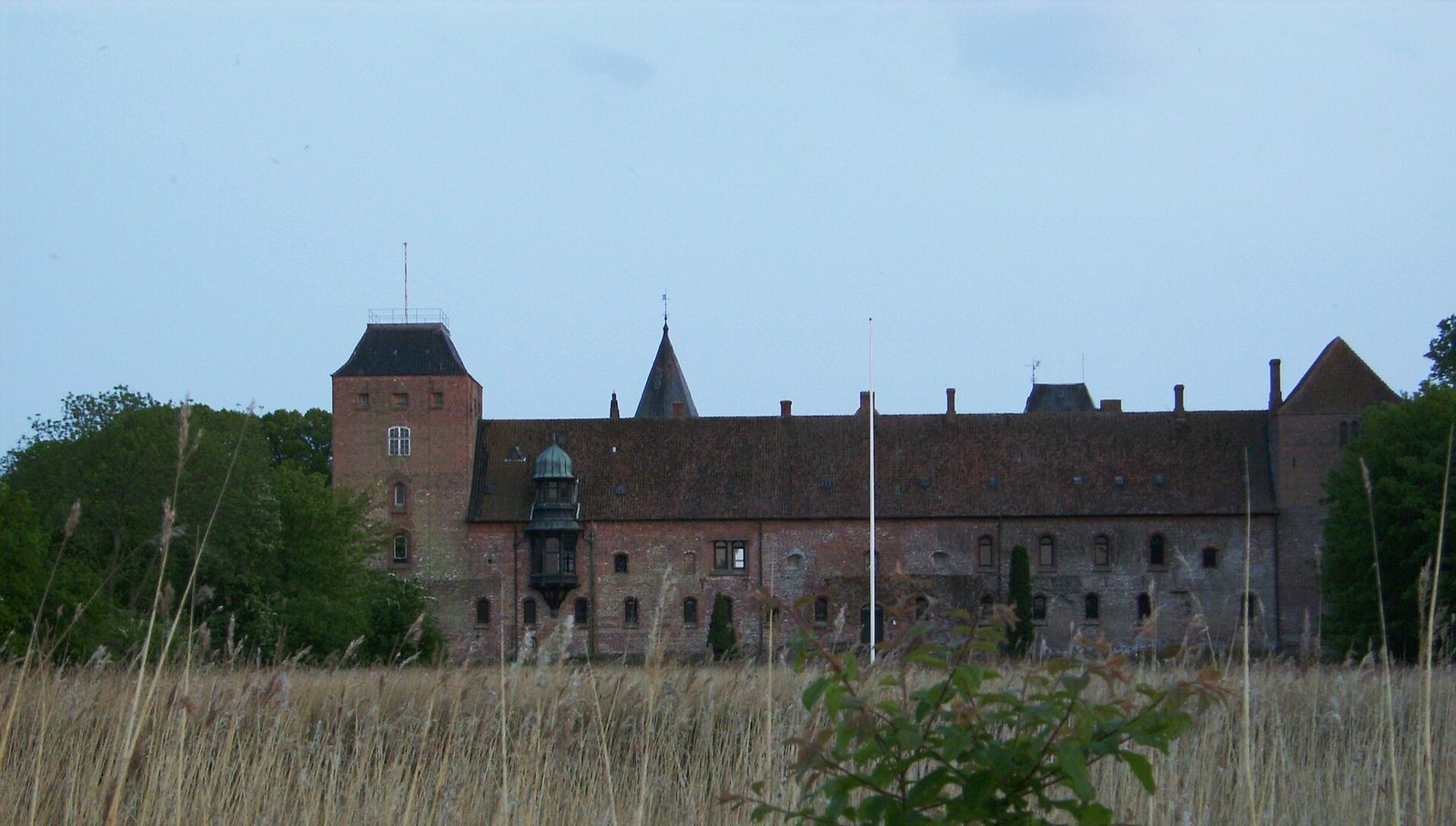
Aalholm stands surrounded by water, and its building has been altered over several centuries. Changes to the castle and surrounding land shaped both its present layout and its relationship to the lake, gardens and parkland.
Castle and approach
Castle building
The north wing is the oldest surviving part of the castle and is thought to date from the 14th and 15th centuries. Inscriptions in the building indicate that the main structure was originally completed in 1585. Repairs in the 1550s used bricks taken from Nysted’s Franciscan monastery, built in 1286 and the only Franciscan monastery on the islands.
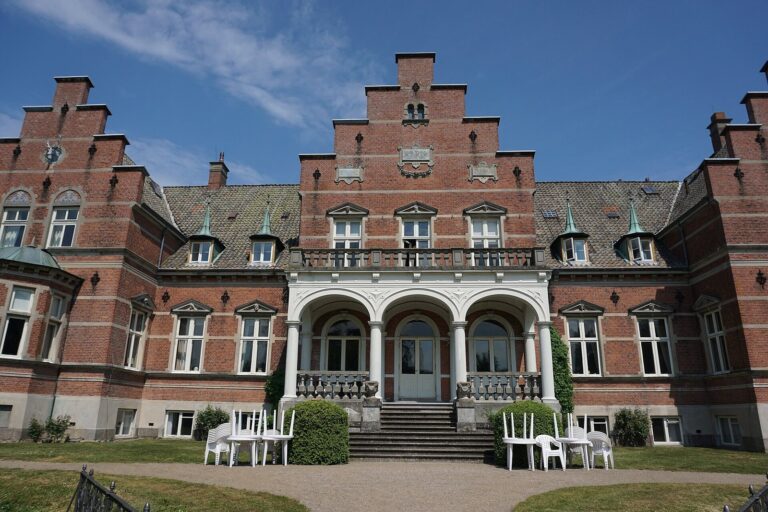
During the 18th century, parts of the south wing were demolished and the east wing was fully renovated. In 1889, another section of the south wing was removed, and two lateral wings were added to the south side of the north wing. The building’s former rectangular plan consequently became shaped like a pair of spectacles. No significant changes have been made to the castle’s exterior since.
Causeway and bridge
An access causeway from Søstræde and Slotsgade in Nysted may date from the castle’s earliest period. It followed an S-shaped route south of the castle and may once have continued to the opposite bank, where farm buildings stood. A bridge beside the south wing led to the dam.
Water, gardens and surrounding land
Dams and lake
A lake formed after a dam was built. In connection with the change of ownership in 1889, a smaller dam was constructed north of the castle to create additional land. Part of the lake north of this dam was drained for cattle. After the pumps were switched off in 2008, that area again became a shallow lake.
Gardens, parkland and road
Ground around the castle was reclaimed over time. A small garden was added to its west side in 1796. A park-like area in Hestehave Woods, southwest of the farm, was developed in 1814 and again during the 1830s. A walled garden with greenhouses and a water tower was added west of the castle, possibly in the 1890s.
Road 283, which connects Nysted with Sakskøbing and Rødby, crosses swampy ground north of the lake. It appears on an 1807 map but was probably built earlier.