Nekkersgat Mill: A Historic Watermill in Uccle, Belgium
Site at a Glance
- Popularity
- Very Low
- Country
- Belgium
- Primary era
- Medieval
- Eras represented
- Medieval, Modern
- Civilizations
- Belgian, Holy Roman Empire
- Site type
- Economic
- Remains
- Watermill
On this page4 sections
History
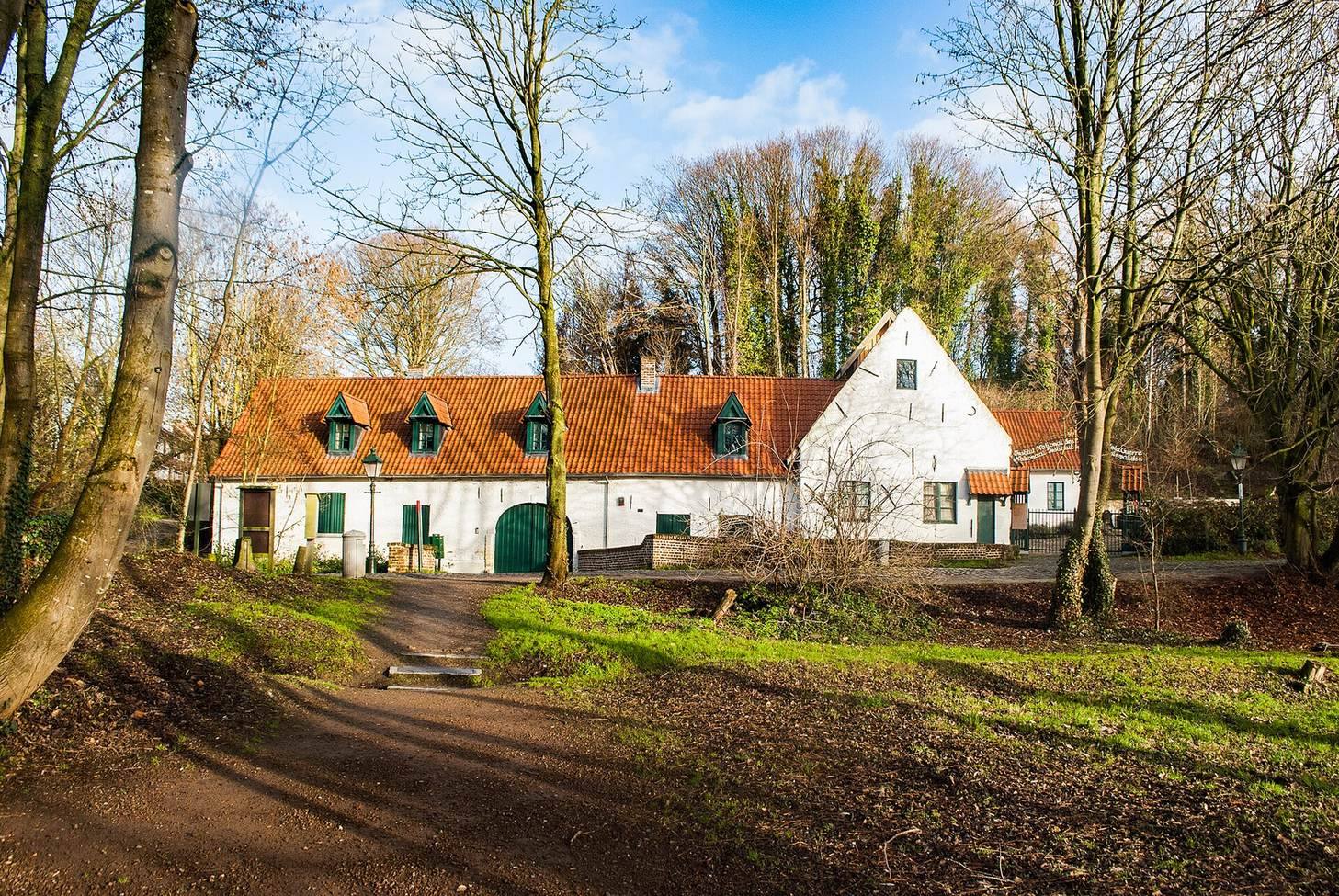
Nekkersgat Mill is a watermill on the Geleytsbeek in Uccle, Belgium, with foundations believed to date to the twelfth century. Its buildings follow Brabant style, an architectural tradition associated with Brabant, a historic region of the Low Countries.
Early records and changing uses
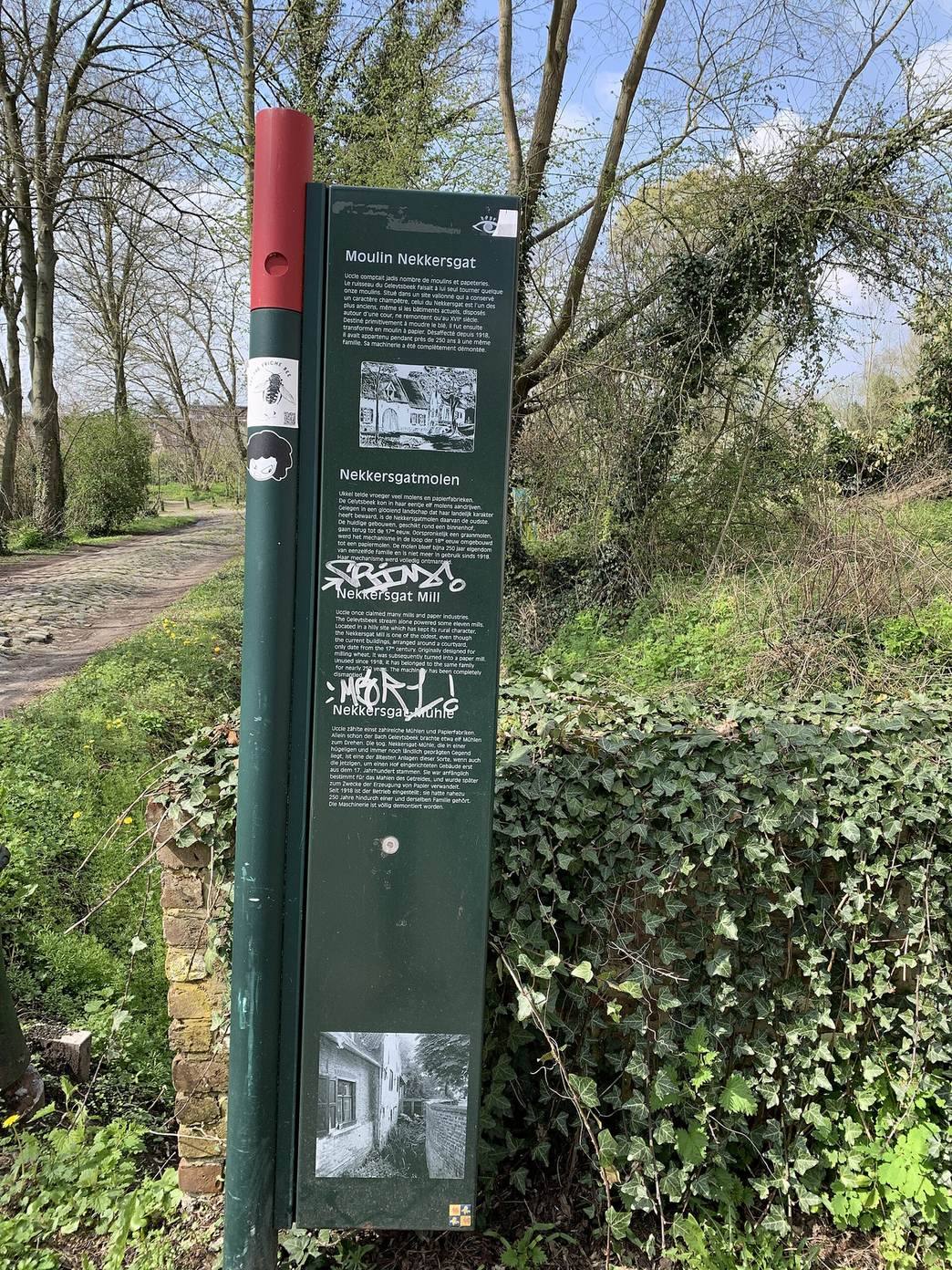
The mill’s presence at the site is recorded from 1362. A document dated 29 July 1636 names it as a grain mill serving Affligem Abbey, a Benedictine monastery. That year, the Huens-Mertens family acquired the mill and converted it to produce paper.
About thirty years later, Jean-Baptiste Gaucheret bought the mill and adapted it to produce oil for his soap works in Brussels. His descendants continued operating it into the twentieth century. From 1745, it again functioned as a grain mill. The name Nekkersgat may mean “passage of the neckers,” small water spirits.
State ownership and cultural use
After the First World War, the mill was decommissioned and transferred to the Belgian state. In 1926, the state adapted it as accommodation for staff of the National Institute for War Invalids, a Belgian institution concerned with care for people disabled by war.
The state sold the mill to the municipality of Uccle in 1970 for a symbolic franc, and the building became a protected monument the following year. In 1977, after a major public petition, the surrounding site received protection as a village landscape. This permanently blocked a proposed southern ring road through the area. By 1992, the mill’s deterioration had prompted concern.
The main wing was later converted into housing. For twenty years, Jean Seydel ran a forge in the workshop, making imitation historical weapons and costumes for film, theatre, opera, and television. Uccle decided in 2006 to restore the buildings for cultural use. A restoration campaign ran from 2008 to 2013, with work beginning in 2011. The restored complex now serves as a cultural and educational venue for exhibitions and events, managed by the Le Moulin du Nekkersgat association.
Remains
The watermill and its associated buildings form a courtyard complex comprising the miller’s house, machinery room, and outbuildings. The mill is an overshot type, powered by water delivered onto the wheel from above. It stands within a 650-square-metre green space between Avenue Achille Reisdorff and Keyenbempt Street. The municipality of Uccle and the National Institute for War Invalids jointly own the surrounding grounds.
Restoration work stabilized the buildings, repaired or reconstructed damaged heritage elements, and reworked the surroundings. In 2013, the waterwheel and its associated mechanism were reconstructed.
A 1968 engraving by Henri Quittelier was titled as a depiction of the mill in 1362. It measures 22 by 27 centimetres without its frame; 200 copies were produced, signed in pencil.