Castello Caldora: A Historic Fortress in Pacentro, Italy

Site at a Glance
- Rating
- 4.5
- Popularity
- Medium
- Country
- Italy
- Primary era
- Medieval
- Eras represented
- Medieval
- Civilizations
- Kingdom of Naples
- Site type
- Military
- Remains
- Castle
On this page11 sections
History
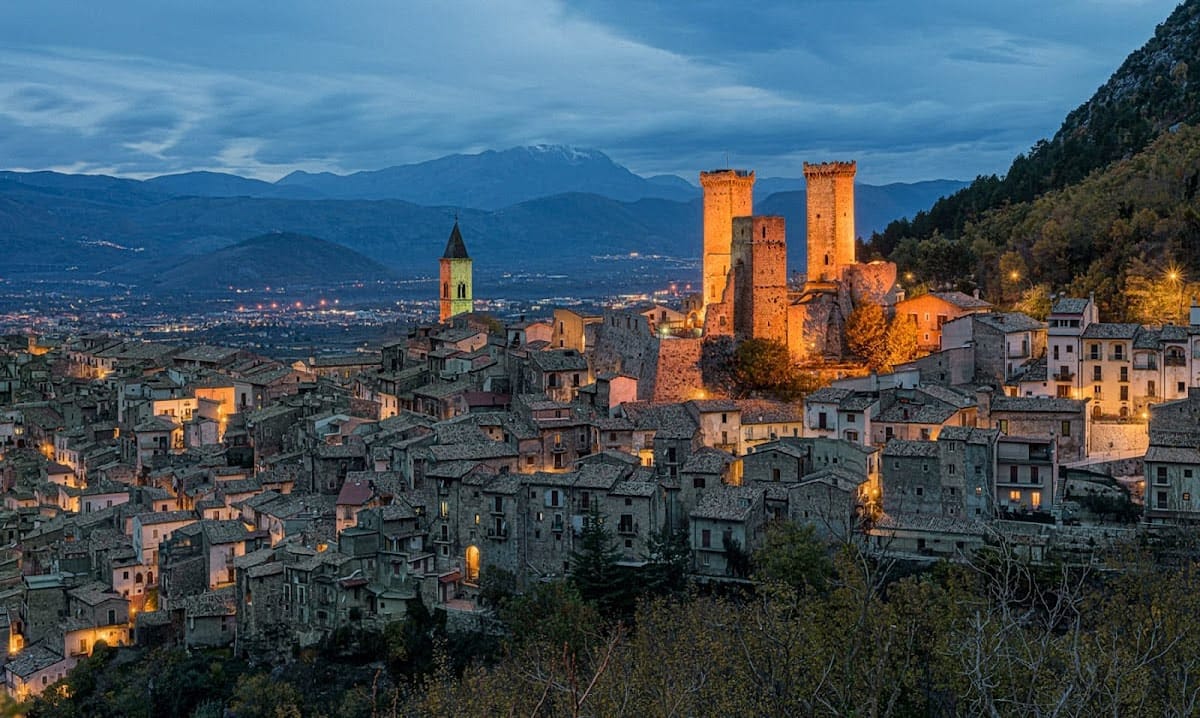
Castello Caldora is a historic hilltop fortress in Pacentro, Italy, in the Abruzzo region’s L’Aquila Province. Its origins are uncertain but are generally placed between the eleventh and thirteenth centuries, when an early phase may have included a triangular tower on the northern side. The fortress guarded the entrance to the Valle Peligna, a valley in central Abruzzo, and remains a prominent example of the fortified landscape associated with the region.
Medieval development
A major rebuilding took place between the end of the fourteenth century and the beginning of the fifteenth. By the fifteenth century, three towers served as watch posts overlooking the approach to the valley. Two additional square towers were later incorporated into the defensive enclosure.
The upper part of the southeastern tower was damaged in 1230 during an attack by the forces of Frederick II of Swabia, the medieval Holy Roman Emperor whose armies campaigned in southern Italy. This assault affected the form in which one of the castle’s medieval towers survived.
Noble ownership and military change
The Caldora family acquired the fortress during the fifteenth century. From 1483, it belonged to the Orsini family, a powerful Italian noble house involved in the ownership and military development of fortifications. The Orsini strengthened the castle with circular towers, which provided more effective defenses against firearms than earlier medieval arrangements.
Castello Caldora is also known as Castello Cantelmo, reflecting an earlier connection with the Cantelmo family. Its successive owners altered the fortress as defensive needs changed, while its position and role remained tied to control of the valley entrance.
Municipal ownership and restoration
The Gravina-Avolio family, the castle’s last private owners, transferred it to the municipality of Pacentro in the 1960s because maintenance had become too expensive. Restoration during that decade used reinforced concrete extensively and drew criticism. Later work progressively recovered the fortress’s original appearance. Today, the castle is known for its grandeur and for its characteristic place in the landscape of the Valle Peligna.
Remains
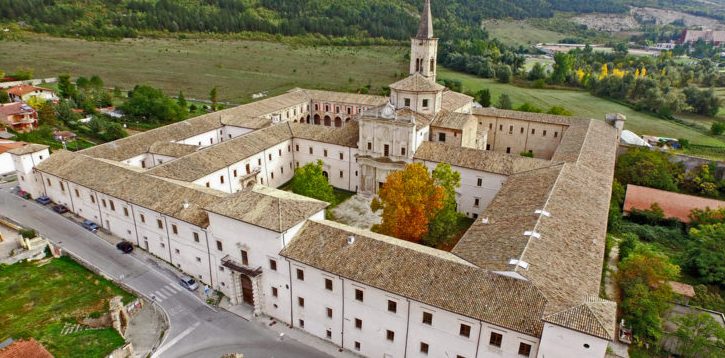
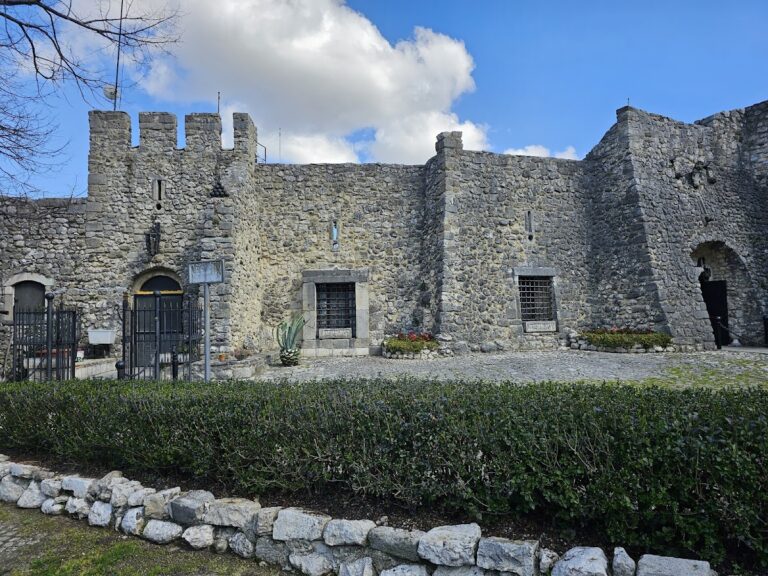
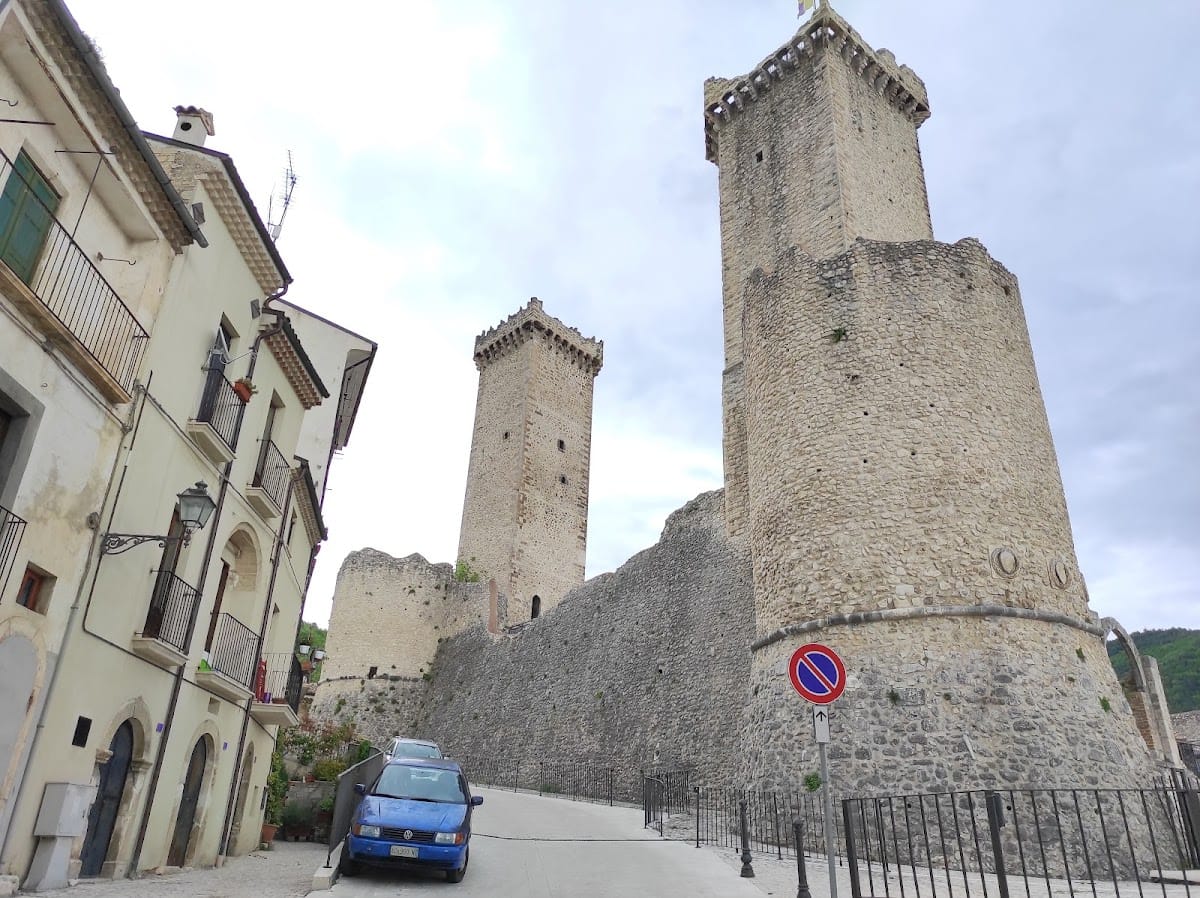
The fortress is a hilltop complex arranged on a trapezoidal plan and built of rubble stone. Two concentric defensive walls enclose the site. The inner circuit is older, while the outer circuit belongs to the period associated with the Cantelmo family. Square towers originally occupied the corners of the enclosure, and three remain visible. Three circular bastions, projecting defensive structures designed to improve protection against firearms and artillery, also form part of the surviving defenses.
Approach and exterior features
Entrance and public square
The castle faces a public square and stands opposite the church of Santa Maria Maggiore. Its seventeenth-century facade overlooks the square, while the entrance and towers carry numerous coats of arms. The most legible emblem is associated with the Orsini family. Renaissance influences appear in the decorative scheme, which can be compared with the cornice of Santa Maria Maggiore’s bell tower, although the castle’s portals retain pointed-arch forms.
Medieval towers
Torre del Re
The Torre del Re stands in the northwest, behind the drawbridge, a movable bridge used to control access across an entrance gap. The five-sided tower rises approximately 25 meters. Its name refers to the tradition that the feudal lord ceremonially appeared from the tower after taking possession of the castle.
Torre Fantasma
The northeastern Torre Fantasma dates from the fourteenth century and is approximately 27 meters high. Its name is linked to a legend concerning Baron Roberto di Licinardo and his wife, Margherita di Brai. According to the story, her face was carved after she threw herself from the tower on hearing false news of his death. Another interpretation identifies the carved image as Rita Cantelmo, the mother of the military leader Jacopo Caldora.
Torre d’Assedio
The southeastern Torre d’Assedio is the oldest of the medieval towers and stands approximately 12 meters high. Its upper section is truncated, preserving the physical effect of the damage inflicted during the 1230 attack by Frederick II of Swabia.