Rosendal Palace: A Royal Retreat and Museum in Stockholm
Site at a Glance
- Country
- Sweden
- Primary era
- Modern
- Eras represented
- Early Modern, Modern
- Civilizations
- Swedish
- Site type
- Domestic
- Remains
- Palace
On this page8 sections
History
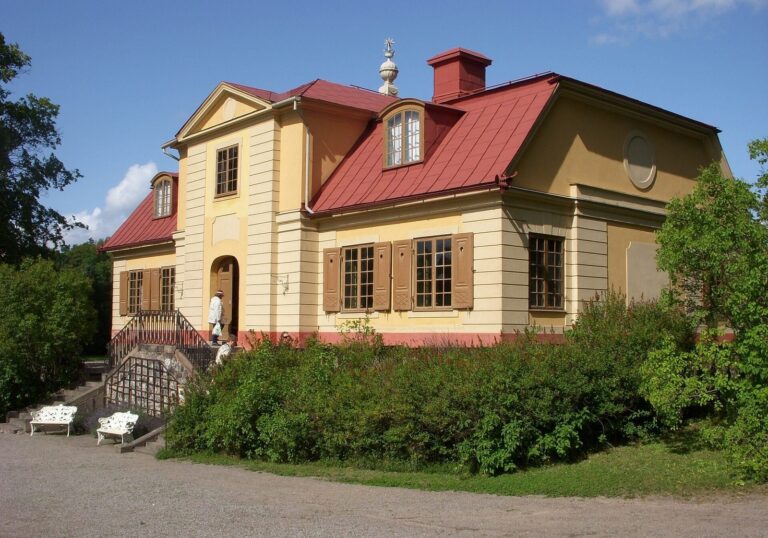
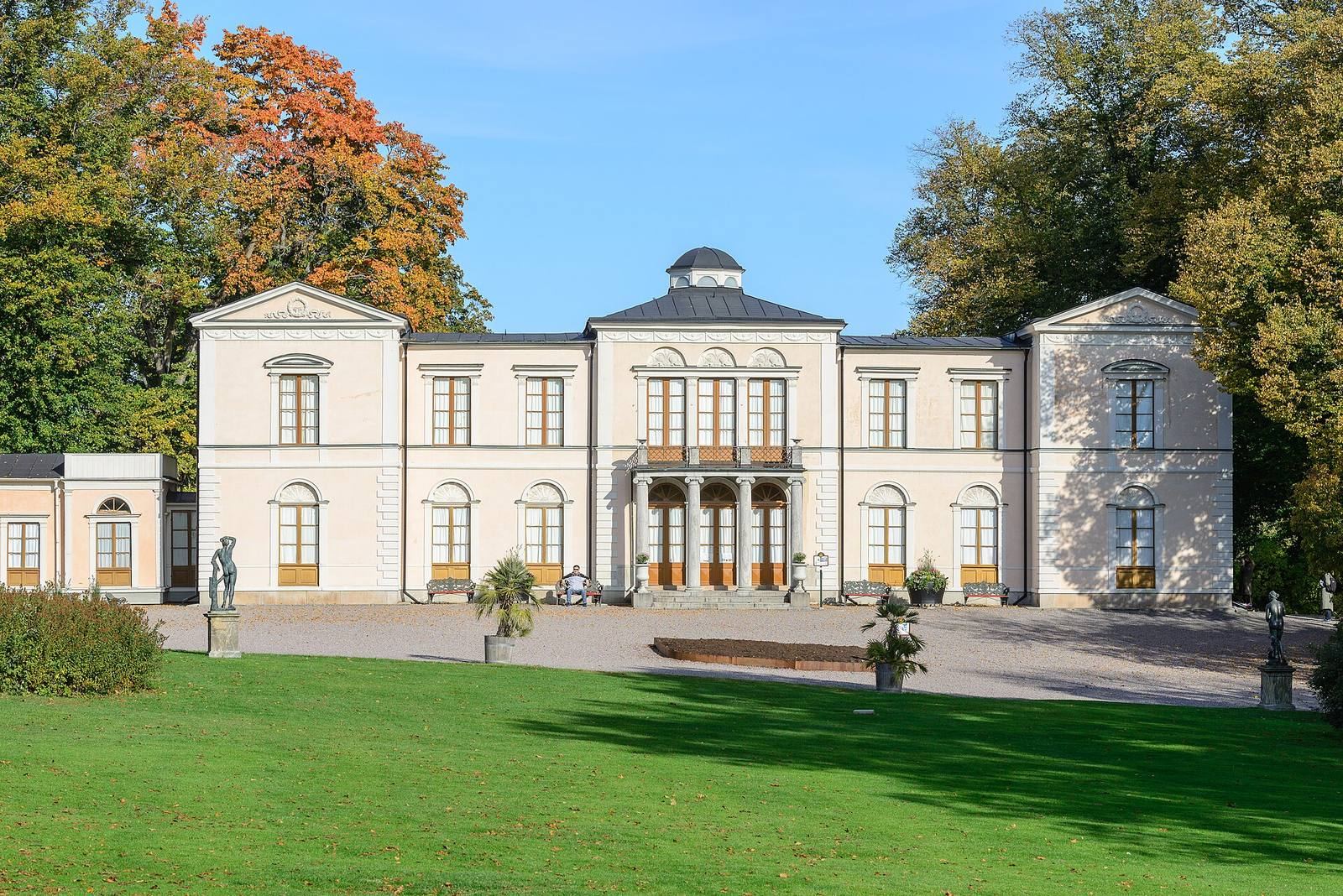
Rosendal Palace is a royal residence on Djurgården, an island in central Stockholm, Sweden, built for Crown Prince Charles John between 1823 and 1827 in the Empire style, called the Karl Johan style in Sweden.
Before the royal palace
The site first served as a dwelling for animal keepers. King Gustav III gave the property to his secretary, Georg De Besche, who had a wooden building erected there around 1790. De Besche sold it in 1798 to Countess Aurora de Geer. It later belonged to director Hans Niclas Schwan, who transferred it to Major General L. M. De Camps. De Camps then sold the property to Crown Prince Charles John.
Charles John’s retreat
An earlier palace planned for Charles John burned down in 1819. He commissioned the present building as a retreat from the formal demands of court life at the Royal Palace. Construction took place from 1823 to 1827. The Empire style was an early nineteenth-century European architectural and decorative style; its Swedish counterpart, the Karl Johan style, remained popular in Scandinavia after it declined elsewhere in Europe. Rosendal is regarded as a distinctive example of the style. Its construction also helped Djurgården develop as an elite residential area.
Charles John later became Charles XIV John, the first Swedish king of the House of Bernadotte. After King Oscar II died in 1907, his heirs decided to make Rosendal a museum devoted to Charles XIV John’s life and reign, and to the Bernadotte dynasty. The museum opened in 1913. Rosendal is among Sweden’s official royal palaces and has been protected as a listed building since 1935.
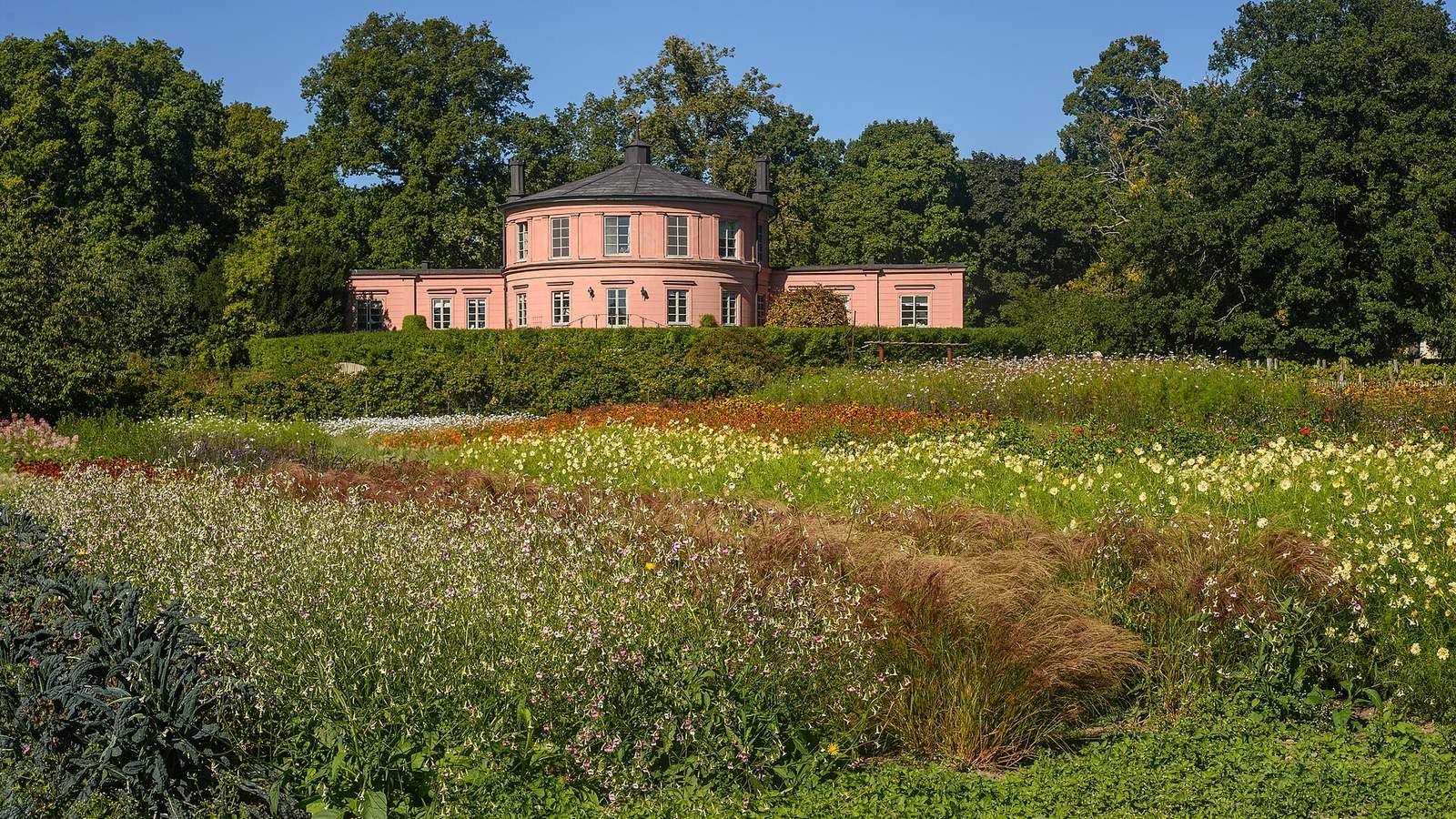
Rosendal Garden was developed between 1861 and 1911 under the direction of the Swedish Horticultural Society.
Remains
The palace precinct is arranged around a prefabricated timber main building with a plastered masonry exterior. The two-storey Queen’s Pavilion stands to its east, while Rosendal Garden lies immediately to the west. The garden’s features include a greenhouse and a nursery.
Palace complex
Main building
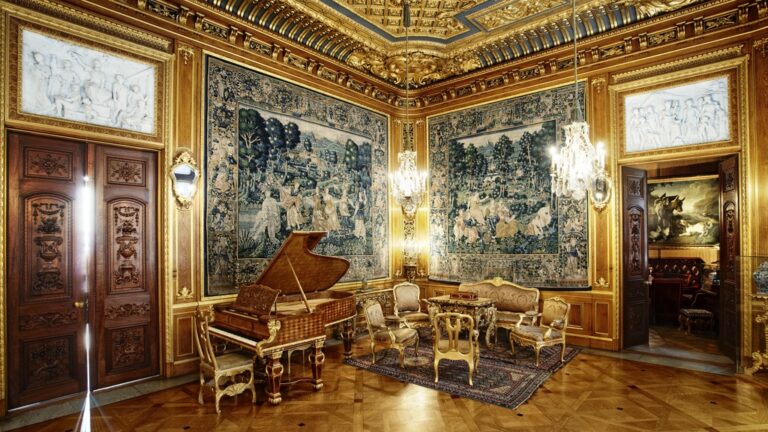
The main building contains 17 rooms across two floors and has largely retained the appearance it had during Charles XIV John’s lifetime. Emanuel Limnell designed its interior, whose furnishings are characteristic of the Empire style. The library displays Charles John’s book collection in its original arrangement. Furnishings from his bedroom were moved from Stockholm Palace to Rosendal in 1913, and the palace also displays objects from the 1820s and 1830s.
Queen’s Pavilion and Guard Cottage
The two-storey Queen’s Pavilion was built before the main palace and stands on its eastern side. The Guard Cottage is another structure associated with the palace complex.
Later additions and grounds features
A two-storey veranda was added to the north side in the 1860s. In the 1870s, a tent-like dining room was added at the building’s western short end; it originally housed pistols and other weapons belonging to Oscar II. A porphyry vase, made from a rock with larger crystals set in a finer-grained base, was placed before the north façade in 1825. The stone came from near Älvdalen, and the vase measures three metres high and four metres across. A later-built orangery, a shelter for citrus and other tender plants, is near the palace.