Dwejra Tower: A Coastal Watchtower on Gozo
Site at a Glance
- Country
- Malta
- Primary era
- Early Modern
- Eras represented
- Early Modern
- Civilizations
- Knights Hospitaller
- Site type
- Military
- Remains
- Tower
On this page7 sections
History
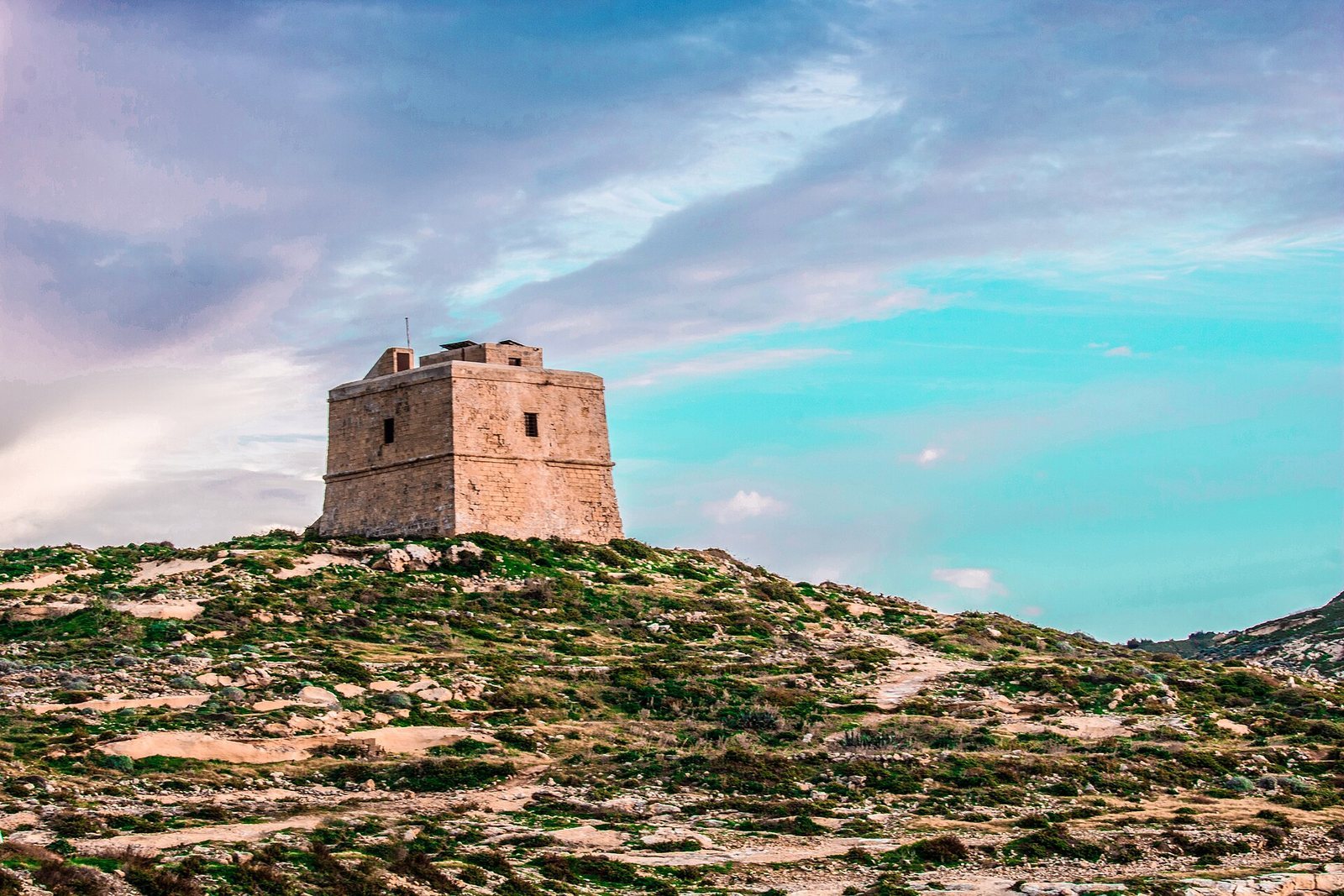
Dwejra Tower is a coastal watchtower built by the Order of Saint John, the Catholic military-religious order that governed Malta, in 1652 at Dwejra Bay, San Lawrenz, on Gozo, Malta. It follows the military Baroque style, a Baroque architectural form adapted for defense, and was completed under Giovanni Paolo Lascaris, the order’s Grand Master, or senior leader. It was among Gozo’s earliest coastal-defense installations.
Construction and coastal defense
The tower formed part of Lascaris’s coastal-watch system, intended to warn against enemy landings, especially pirate raids. The network relayed signals to nearby defenses using fires at night and smoke by day. Income from nearby salt pans covered the tower’s operating costs. The University of Gozo, the island’s local self-governing civic body, funded its construction.
Eighteenth-century service
During the eighteenth century, the tower carried three guns firing six-pound shot. In 1744, Grand Master Manuel Pinto da Fonseca prohibited unauthorized access to Fungus Rock after a plant growing there, popularly known as the Maltese fungus, was believed to have medicinal powers. The tower watched for people trying to climb onto the islet.
Nineteenth century and the First World War
The Royal Malta Fencible Artillery, an artillery force, manned the tower from 1839 to 1873. It was then abandoned until 1914, when the King’s Own Malta Regiment and the Royal Malta Artillery returned during the First World War. No. 3 Company initially had two guns firing 12-pound shot; the number later increased to four as the troops watched Gozo’s coast.
Second World War
The tower served again as an observation post during the Second World War. On 27 March 1943, Captain Frank Debono and Carmelo Zahra, stationed there, rescued a British pilot after his Spitfire Mark Vb fighter crash-landed on the cliffs overlooking Dwejra Bay.
Restoration and stewardship
In 1956, the tower was leased to Gerald de Trafford for 50 years. Din l-Art Ħelwa, a Maltese heritage-preservation organization, later received it on loan while it was severely dilapidated and restored it between 1997 and 1999. The Government of Malta owns the tower, and Din l-Art Ħelwa operates it. It is one of four surviving coastal watchtowers on Gozo, alongside Xlendi Tower, Mġarr ix-Xini Tower, and Isopu Tower, and has Grade 1 heritage status in Malta.
Remains
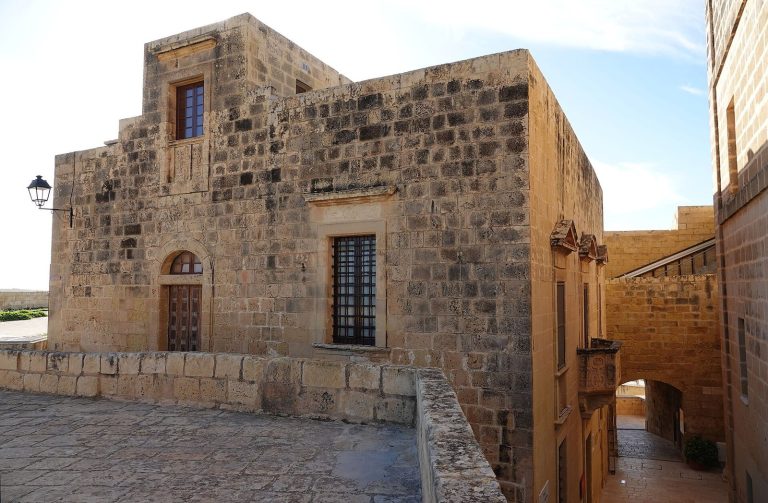
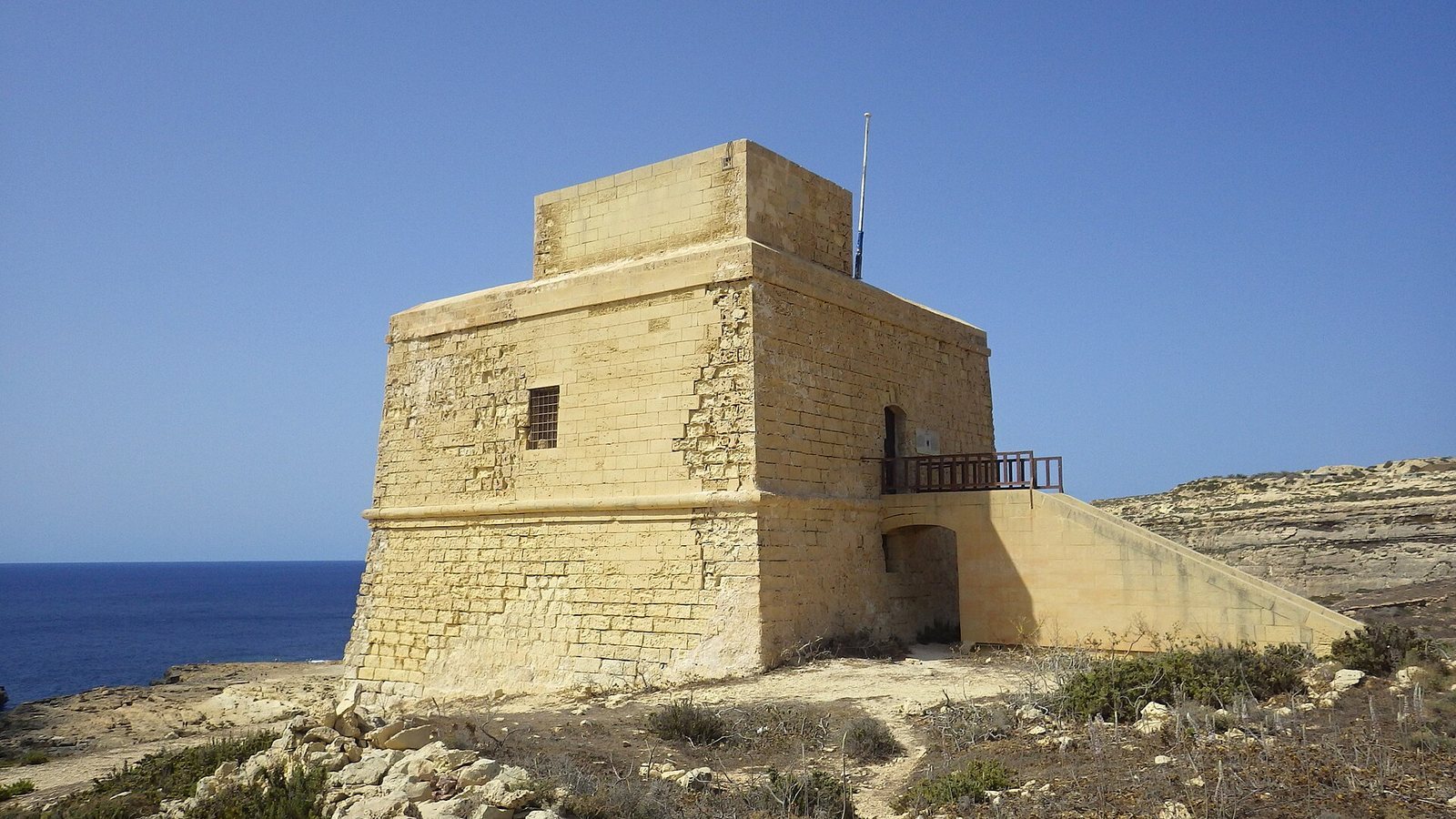
The square-plan tower has two storeys and is built of local limestone, with walls 3.5 metres thick. It stands on elevated ground on a coastal slope near the Inland Sea and the former Azure Window. Nearby Fungus Rock is an islet with a flat summit. The tower’s position provided sightlines toward Xlendi Tower, Isopu Tower, and the open sea.
The exterior entrance opens at upper-storey level. The lower level is cut into the rock and served as a drinking-water store. A guardroom and a living room with a well may have occupied the middle storey, while a small room on the roof served as a powder magazine. The roof is flat, and the tower is in good condition.