Österlövsta Church: A Medieval Parish Church in Sweden
Site at a Glance
- Country
- Sweden
- Primary era
- Medieval
- Eras represented
- Medieval, Early Modern, Modern
- Civilizations
- Swedish
- Site type
- Religious
- Remains
- Church
On this page12 sections
History
Medieval foundation and decoration
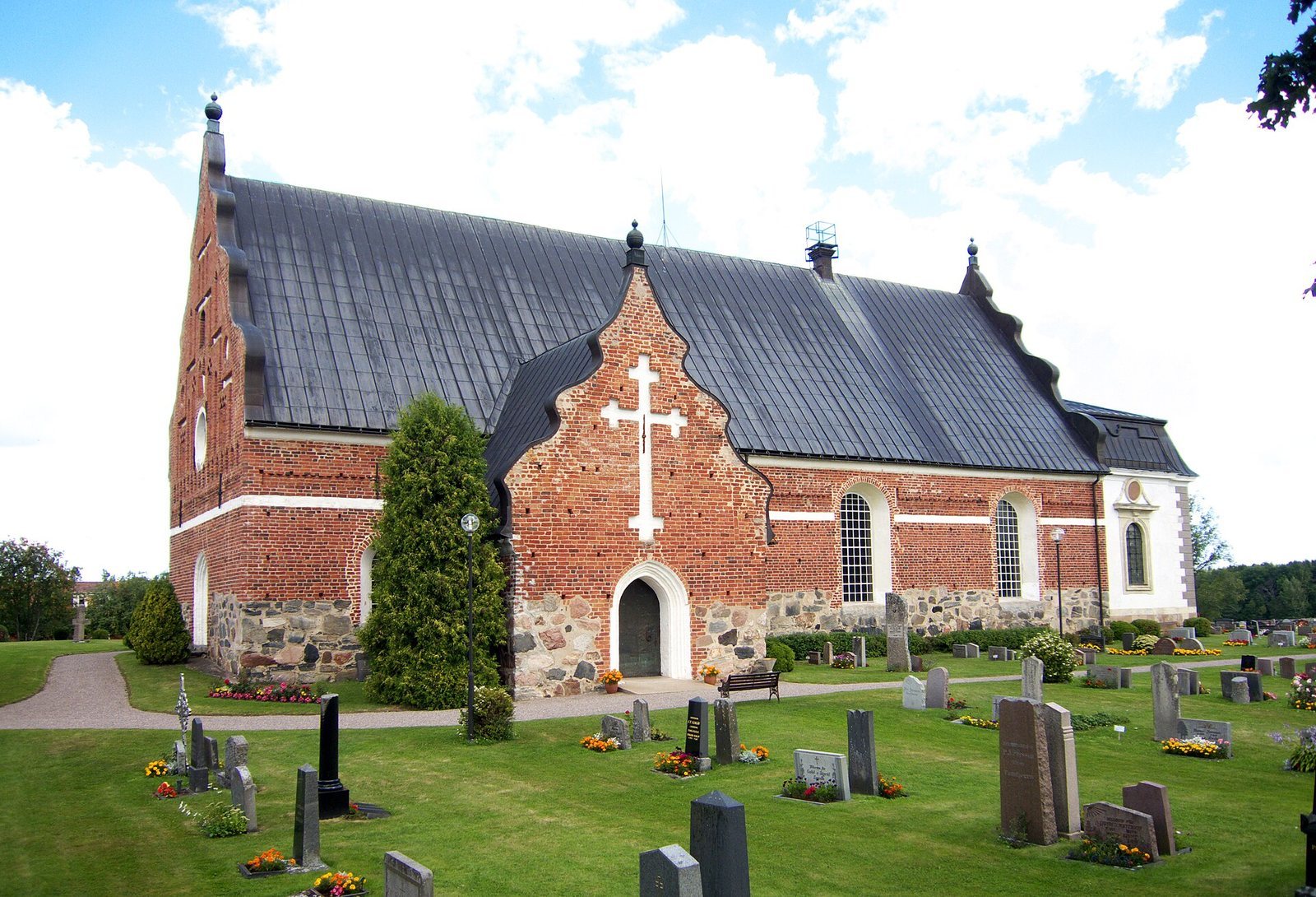
Österlövsta Church is a medieval parish church in Österlövsta, Sweden, consecrated in 1451 with a nave and chancel. The sacristy and porch were added later and may have been completed in 1468, the year indicated by a painted inscription. Andreas Eriksson, a member of the group of medieval church painters known as the Tierp School, made the church’s wall paintings in that year.
Alterations and fire
Work in 1664 included opening a window in the west gable and covering the wall paintings with whitewash. On 25 July 1719, Russian forces burned the church, destroying its furnishings and most of its paintings. The bell tower and parsonage also burned, while medieval paintings in the sacristy and porch survived.
Rebuilding and later restorations
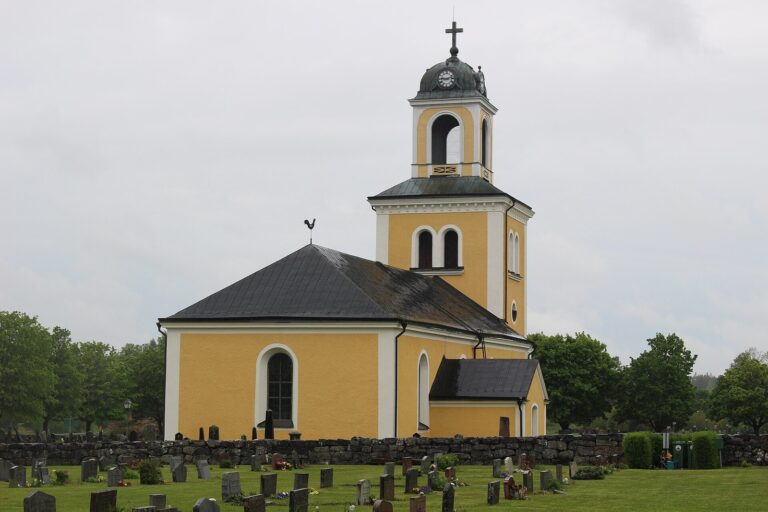
Charles De Geer, a Swedish baron, or nobleman, paid for repairs to the church. In recognition, he received patronage rights, privileges that gave him a role in the parish’s church affairs. New furnishings were in place by 1726, and a Baroque funerary chapel for De Geer was added at the church’s east end in 1733.
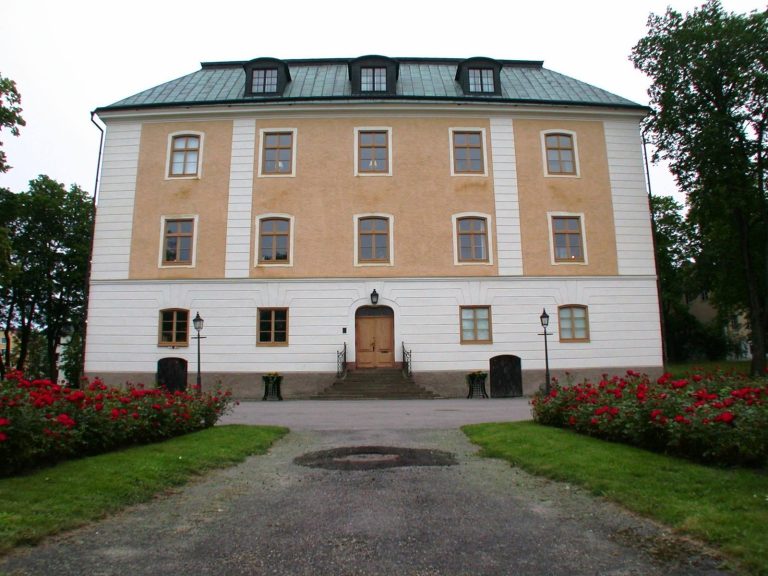
The present bell tower was probably erected around 1723. De Geer donated its middle and small bells in 1722, while C. F. Grönwall of Stockholm cast the large bell in 1813. De Geer also built the present parsonage in 1727.
In 1914, the interior was restored and the wall paintings reconstructed. A further restoration in 1956 removed these later overpaintings, giving the interior a more original character. The church belongs to the Evangelical Lutheran Church of Sweden, within the Diocese of Uppsala, a regional church district, and Hållnäs-Österlövsta Parish.
Remains
Church plan and masonry
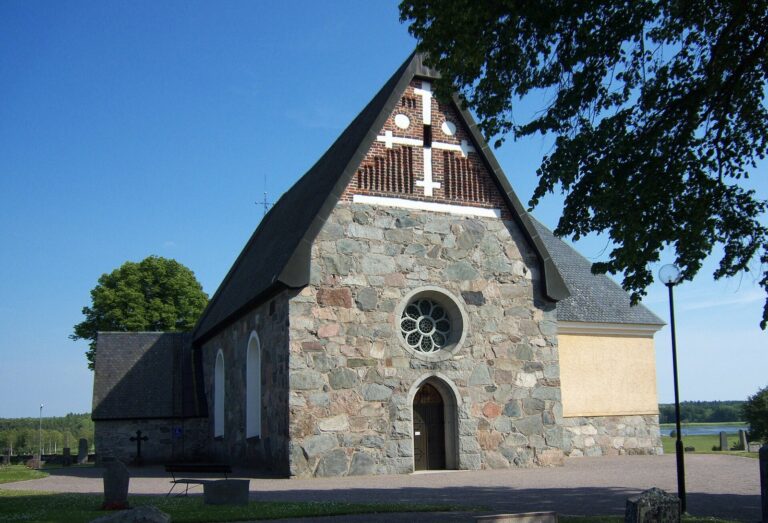
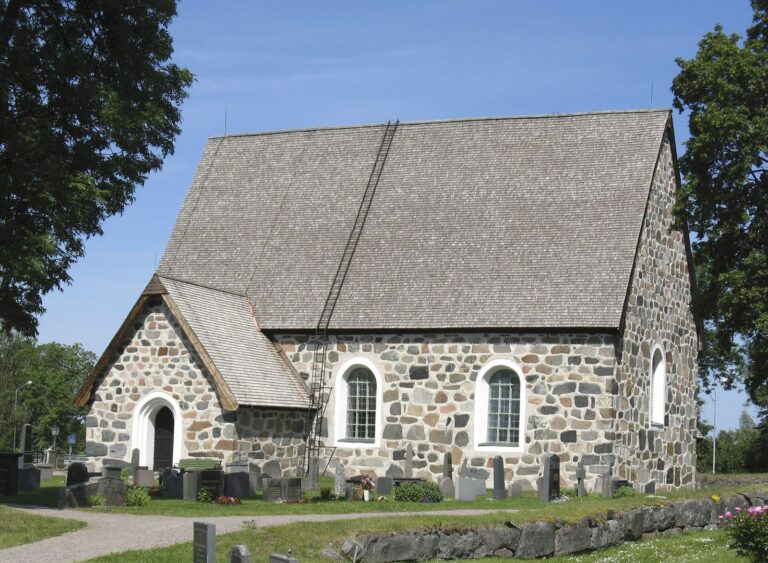
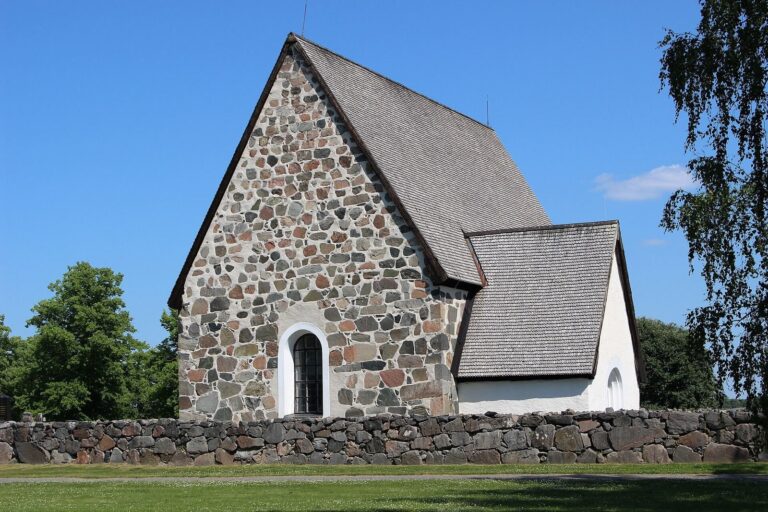
The church stands on a rise in the Strömarån valley, about five kilometres northwest of Lövstabruk. Its brick walls rest on a natural-stone base. The plan has a rectangular nave and a chancel of the same width, with the sacristy on the north side and the porch on the south. A Baroque funerary chapel is attached to the east end. The gables have an undulating outline and medieval blind arcading, decorative brick arches set against a wall without openings. The window in the west gable dates to the alteration of 1664.
Interior decoration and furnishings
Wall paintings
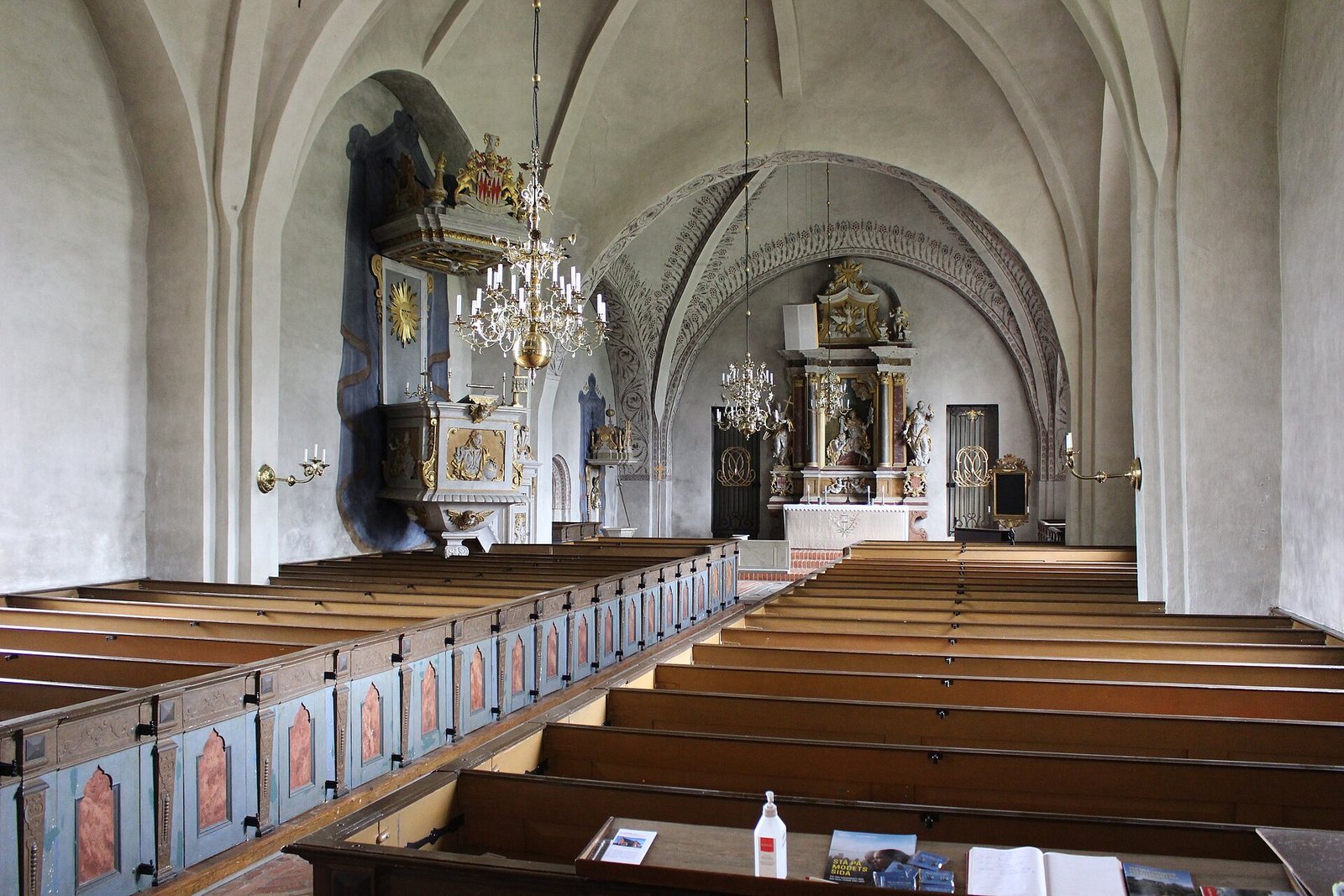
The paintings are chiefly ornamental, with winding foliage in red and green. Medieval paintings survive in the sacristy and porch.
Altarpiece and pulpit
An unidentified master made the altarpiece, pulpit, and organ façade. The altarpiece, consecrated in 1726, depicts the Baptism of Jesus; De Geer’s coat of arms and monogram appear at its base. A relief of Christ as ruler of the world decorates the front of the pulpit. Its sounding board is crowned by De Geer’s arms and a cartouche dated 1723.
Organ
The church had an organ made by Petrus Hongersson in 1440 by 1638. Its inscription stated that Hongersson completed the instrument in that year. Anders Bengtsson of Östervåla built another organ in 1667, but the congregation returned it the following year. In 1725, Johan Niclas Cahman of Stockholm built a nine-stop organ. The present instrument was made in 1883–84 by E. A. Setterquist & Son of Örebro and rebuilt and enlarged in 1959 by Marcussen & Son of Aabenraa, Denmark. It is mechanical and uses slider chests, which direct wind to selected pipes. Its façade and the Great division’s Principal 8-foot stop, which sounds at unison pitch, come from the 1725 organ; the stop was brought back into use during the 1959 rebuilding.
Bell tower and parsonage
Three bells hang in the present tower. The parsonage is a manor house in the Carolean style, a Swedish architectural tradition, with a traditional Swedish manor-house roof.
Earlier church
Remains of an earlier timber church lie about 200 metres southeast of the present church. They include a brick sacristy.