Alvesta Church: A Late-Medieval Hall Church in Sweden
Site at a Glance
- Country
- Sweden
- Primary era
- Medieval
- Eras represented
- Medieval, Early Modern, Modern
- Civilizations
- Swedish
- Site type
- Religious
- Remains
- Church
On this page13 sections
History
Medieval origins and decoration
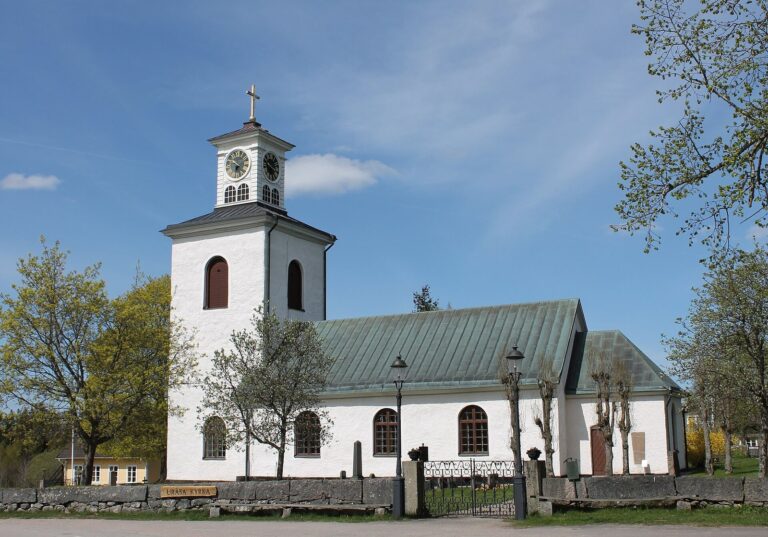
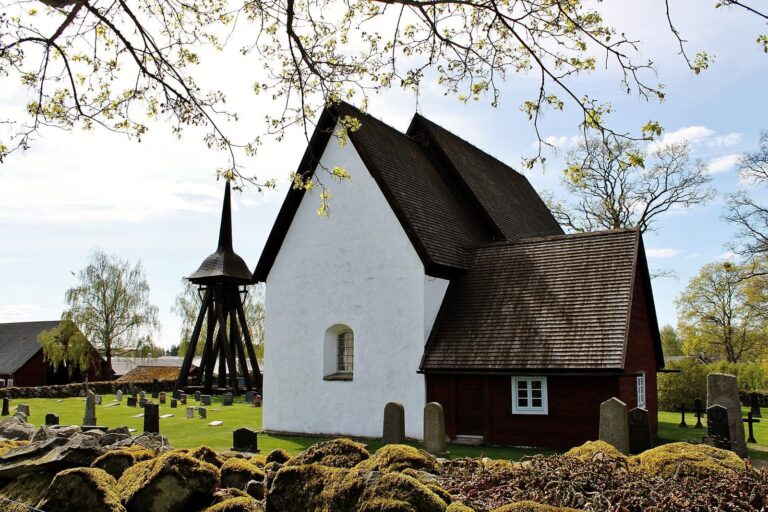
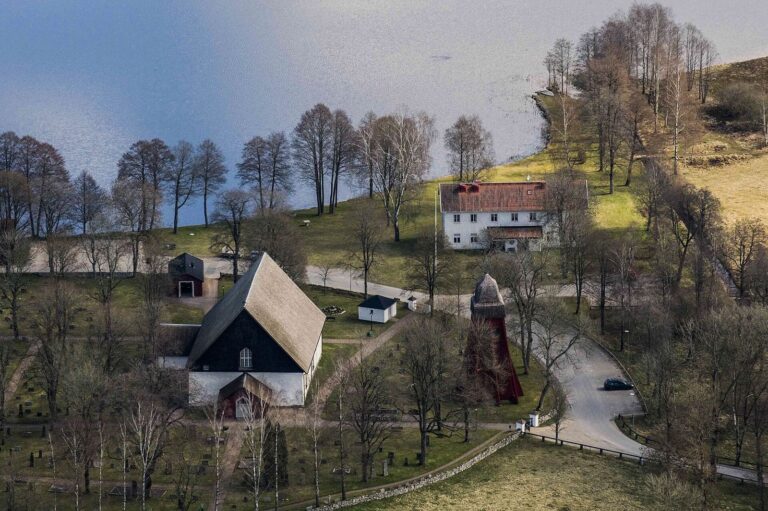
Alvesta Church is a late-medieval stone hall church in Alvesta, Sweden, built around 1440–1450. Two wooden churches stood here before it; the older was a stave church, built with upright structural posts. The church stands in Aringsås parish within Alvesta parish in Småland and belongs to the Church of Sweden’s Diocese of Växjö. It was formerly called Aringsås Church, after the parish’s earlier name.
Renaissance-style murals were added to the church’s interior and exterior around 1600. In the eighteenth century, paintings were also added to the choir ceiling.
Eighteenth-century changes
A porch was built during the 1740s, the choir was extended in 1746, and a sacristy was added in 1792. The church also acquired several organs over time. A four-stop pipe organ by Johan Niclas Cahman of Stockholm was donated by cavalry captain Koskull. Its four stops were selectable sets of pipes, and Jonas Solberg of Värnamo repaired the instrument in 1752.
Pehr Schiörlin built a mechanical organ for the church in 1778. Around the middle of the nineteenth century, its stops were rearranged, possibly by Johannes Magnusson of Nässja, Lemnhult. The Qvintadena 8′ stop was changed to Fugara 8′; 8′ denotes a pitch level.
Organ changes and modern work
Hammarberg of Gothenburg installed a 15-stop organ in 1911, with two manuals, or hand-operated keyboards, and a pedal keyboard. The following year, the Schiörlin positive organ, a compact pipe organ, was dismantled apart from its façade and stored in a churchyard building. The Hammarberg organ was taken out of use in 1962.
A separate mechanical five-stop positive, with independently operated bass and treble stops and an attached pedal, was bought from Olof Hammarberg of Gothenburg in 1963. It was later moved to Skogskyrkan in Alvesta. In 1964, the Schiörlin organ was restored and reinstalled by the Moberg brothers of Sandviken. They restored the Qvintadena stop, supplied missing pipes, reconstructed the case and expanded the pedal keyboard. The instrument was tuned to choir pitch, a historical organ-pitch standard, following a proposal by Stockholm cathedral organist Gotthard Arnér. Västbo Orgelbyggeri installed another mechanical organ behind it in 1975.
A renovation of the church took place in 2013–2014. One of its bells was renovated in 2015 and could then be used.
Remains
Church fabric and furnishings
Decoration and interior features
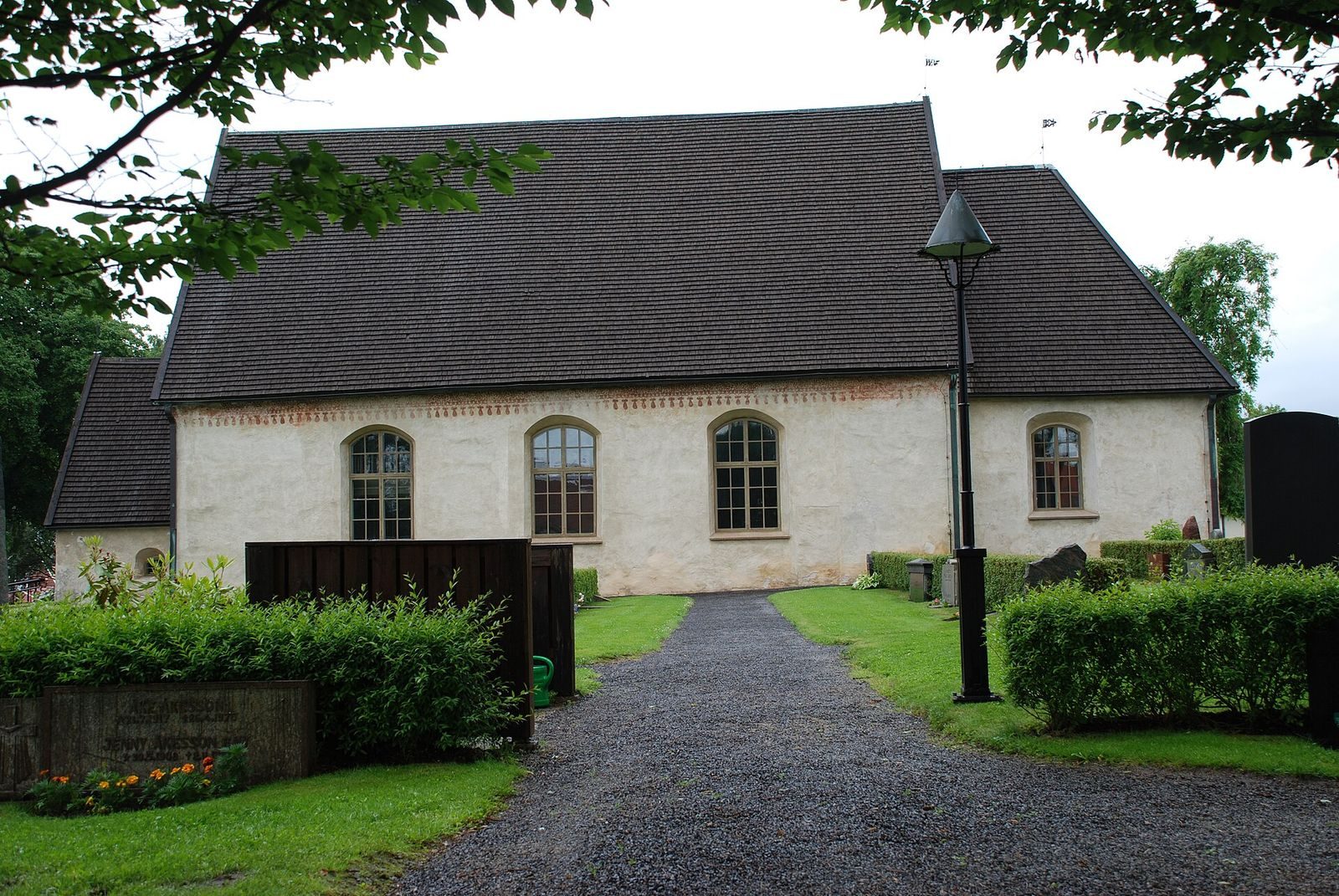
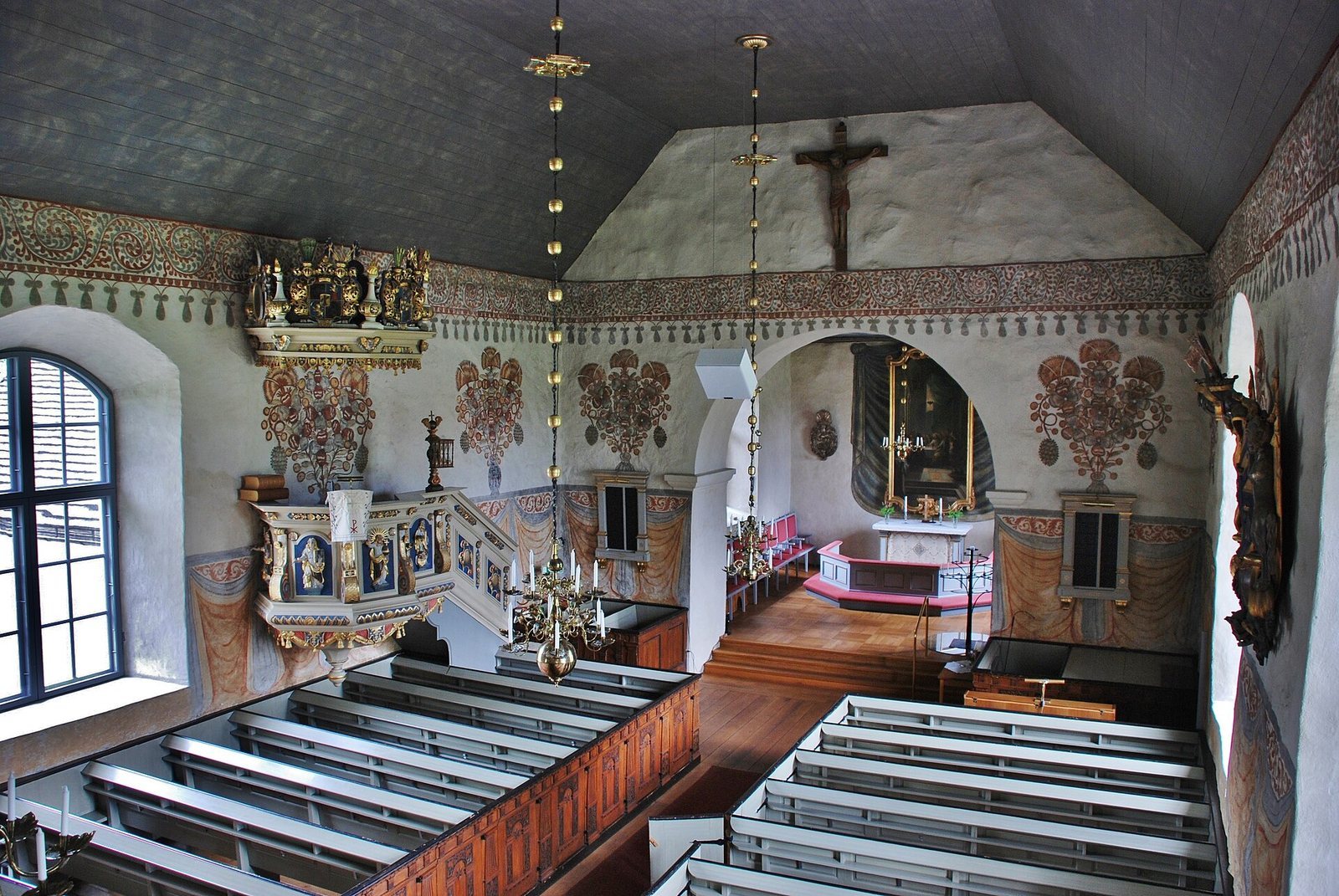
The church is a late-medieval hall church whose interior combines Renaissance and Baroque features. Colorful Renaissance-style murals dominate the interior, and decorative painting also survives on the exterior. Fragments of an acanthus frieze, an ornamental band with stylized leaves, remain beneath the eaves. The Renaissance-style pew screens and doors are well preserved. Johan Christian Zschotzscher of Växjö painted the choir ceiling; he taught the Swedish painter Pehr Hörberg for four years.
Altarpiece, pulpit and burial chapel
The altarpiece depicts the institution of the Eucharist. Lorens Gottman bought it in 1755, and Bengt Nordenberg restored it in 1856. The Baroque pulpit dates to 1747 and is attributed to diocesan sculptor Sven Segervall. Beneath the high choir is a burial chapel for the Koskull family.
Belfry
A separate Baroque-style belfry stands outside the church and holds three bells. One of them dates to 1555.
Churchyard wall
The churchyard wall incorporates a runestone listed as item 1 in the Småland runic-inscription corpus.
Organs
Schiörlin organ
The organ’s façade has a tall central section and lower side sections topped with oil lamps. Its design followed a proposal by Swedish architect Olof Tempelman. The flat front panels contain 8-foot pipes, while the raised sections contain 4-foot pipes, which sound an octave higher. The manual keyboard has black lower keys and a range from C to d³. Its original pedal range was C–a°, later expanded to f¹.
Organ behind the Schiörlin instrument
The mechanical organ positioned behind the Schiörlin organ has two manuals and a pedal keyboard.