Casa di Jacopo di Notar Nanni: A Fifteenth-Century Family Residence in L’Aquila
Site at a Glance
- Country
- Italy
- Primary era
- Medieval
- Eras represented
- Medieval, Early Modern
- Civilizations
- Kingdom of Naples, Spanish
- Site type
- Domestic
- Remains
- Elite Residence
On this page5 sections
History
Casa di Jacopo di Notar Nanni is a fifteenth-century residence in L’Aquila, Italy, and was one of the homes of the di Notar Nanni family. The family came from Civitaretenga and settled in the city’s Santa Maria quarter during the fifteenth century. The house is also known as Casa di Nicola di Notar Nanni.
Jacopo di Notar Nanni, the presumed owner, was a well-known local merchant who traded in livestock, silk, and saffron. He was a close friend of Bernardino da Siena, a Franciscan preacher and saint, and paid for the mausoleum where Bernardino rests in the basilica dedicated to him.
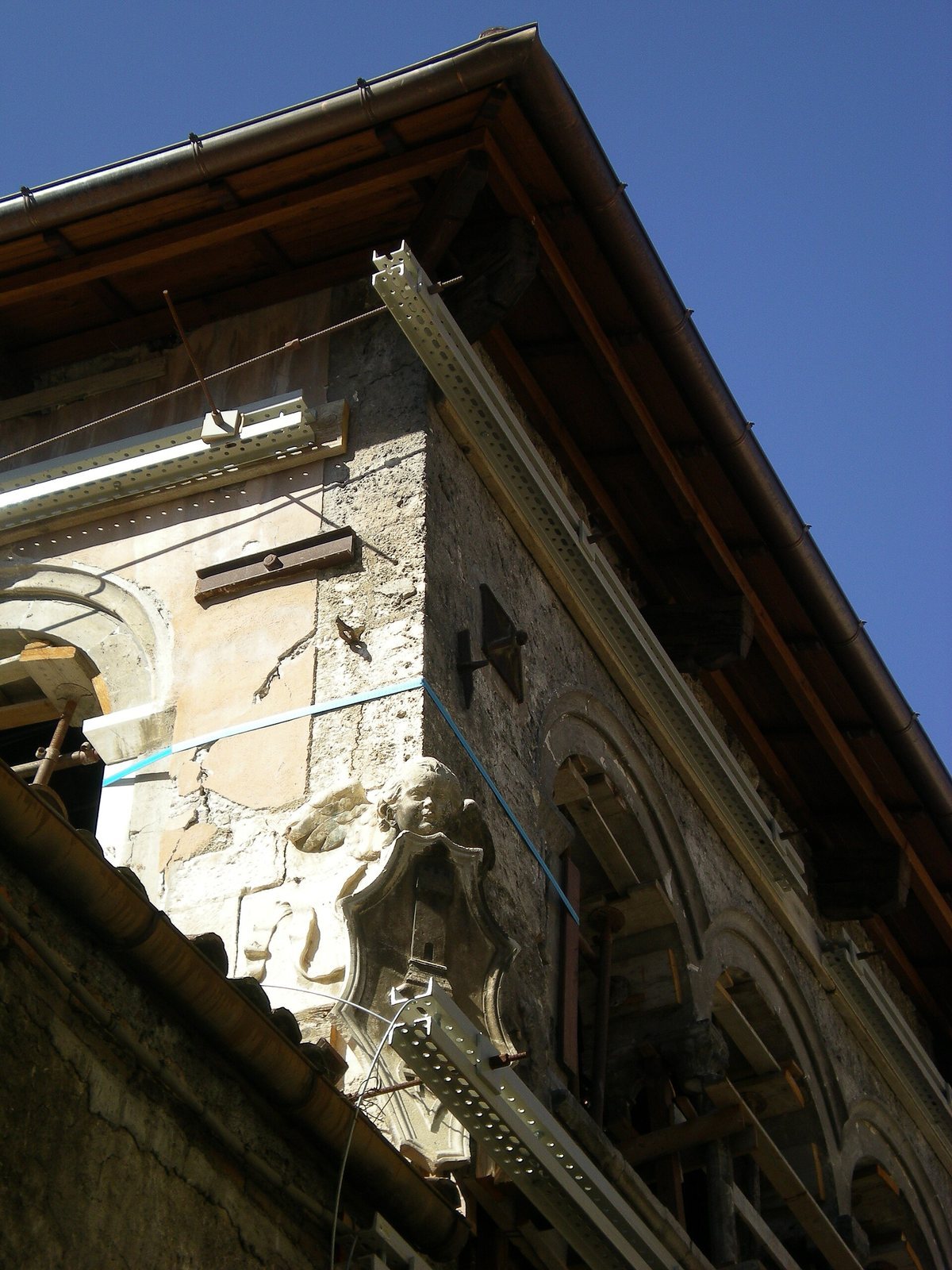
The 2009 earthquake damaged the house. Restoration work followed in 2016–2017.
Remains
Plan and architectural character
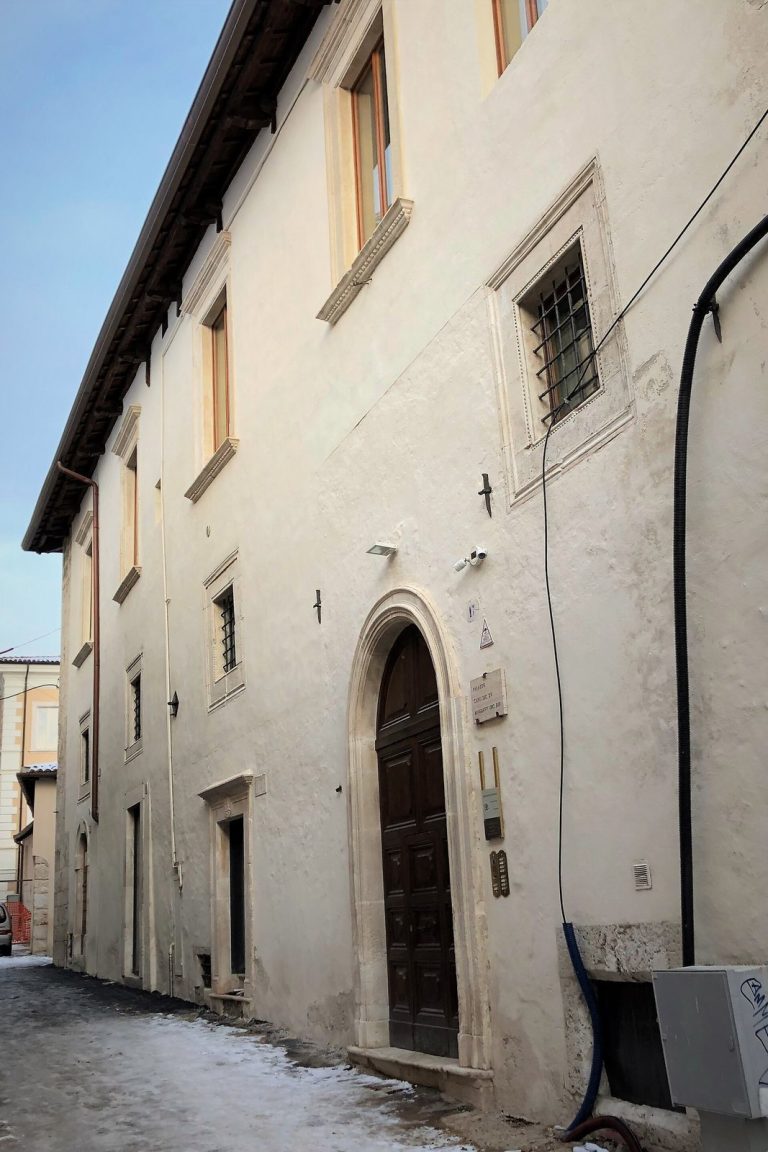
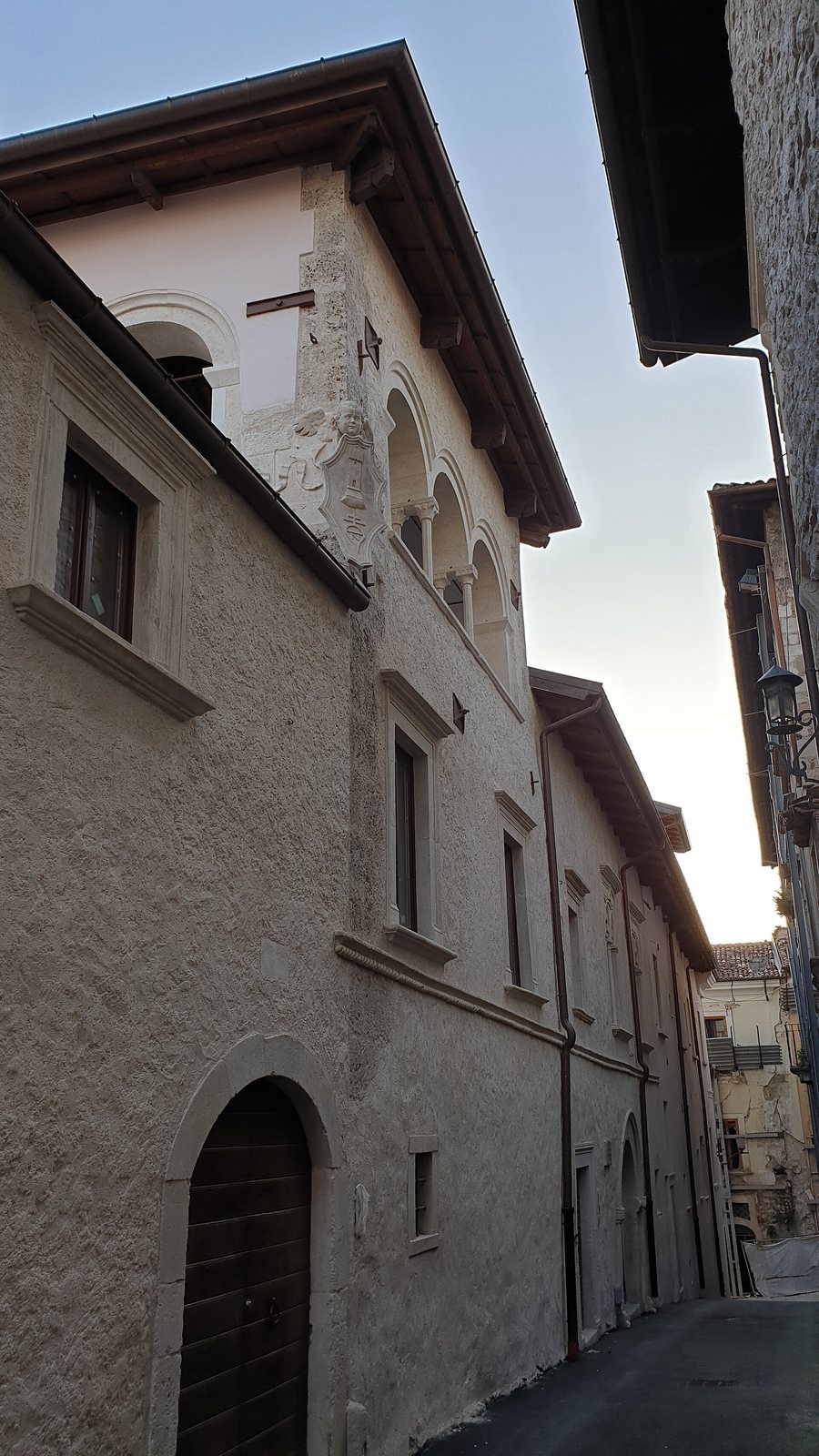
The residence has a complex plan formed from two adjoining houses. Its medieval features include the internal arrangement, a horizontal band carved in a twisted-rope pattern, and Ionic capitals, the carved tops of columns. The courtyard and distinctly sixteenth-century windows and open galleries reflect Renaissance design. Together, these elements represent a transition between L’Aquila’s medieval single-family houses and the palaces of the seventeenth and eighteenth centuries.
Entrances and upper floors
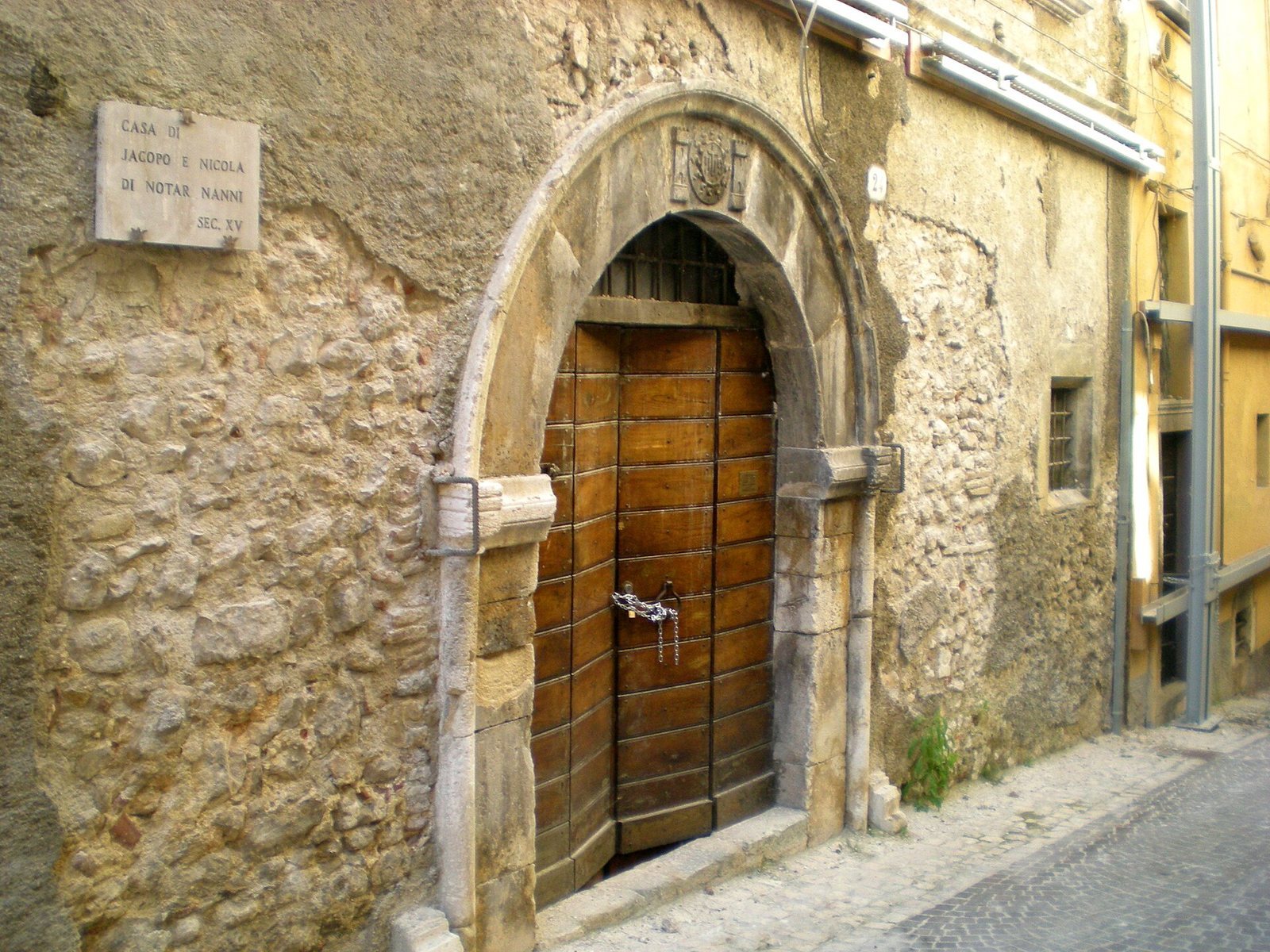
The main ground-floor entrance opens onto Via Bominaco. Its keystone bears the family arms, with two towers framing the Bernardine trigram, a Christian emblem associated with devotion to the name of Jesus. A twisted-rope band marks the principal formal floor, where Gothic-Renaissance windows each contain two openings within a single frame. The partial third floor has a gallery with three round arches, open on two sides and decorated with the family arms.
Courtyard and interior artworks
A secondary entrance on Via Bominaco passes through a portico with a roof terrace above and leads to a quadrangular courtyard, which may be the oldest in L’Aquila. Inside the house are an oil painting on canvas, Portrait of a Child, attributed to Teofilo Patini, and a copper engraving of the Madonna with Saint John the Baptist, Saint Luke, and Saint Peter Celestine. The engraving reproduces a better-known work by Marcantonio Franceschini. The building remains in use.