Kırkgöz Bridge: A Byzantine River Crossing in Türkiye
Site at a Glance
- Country
- Turkey
- Primary era
- Medieval
- Eras represented
- Classical, Medieval, Early Modern, Modern
- Civilizations
- Byzantine, Ottoman, Roman, Seljuk
- Site type
- Infrastructure
- Remains
- Bridge
On this page7 sections
History
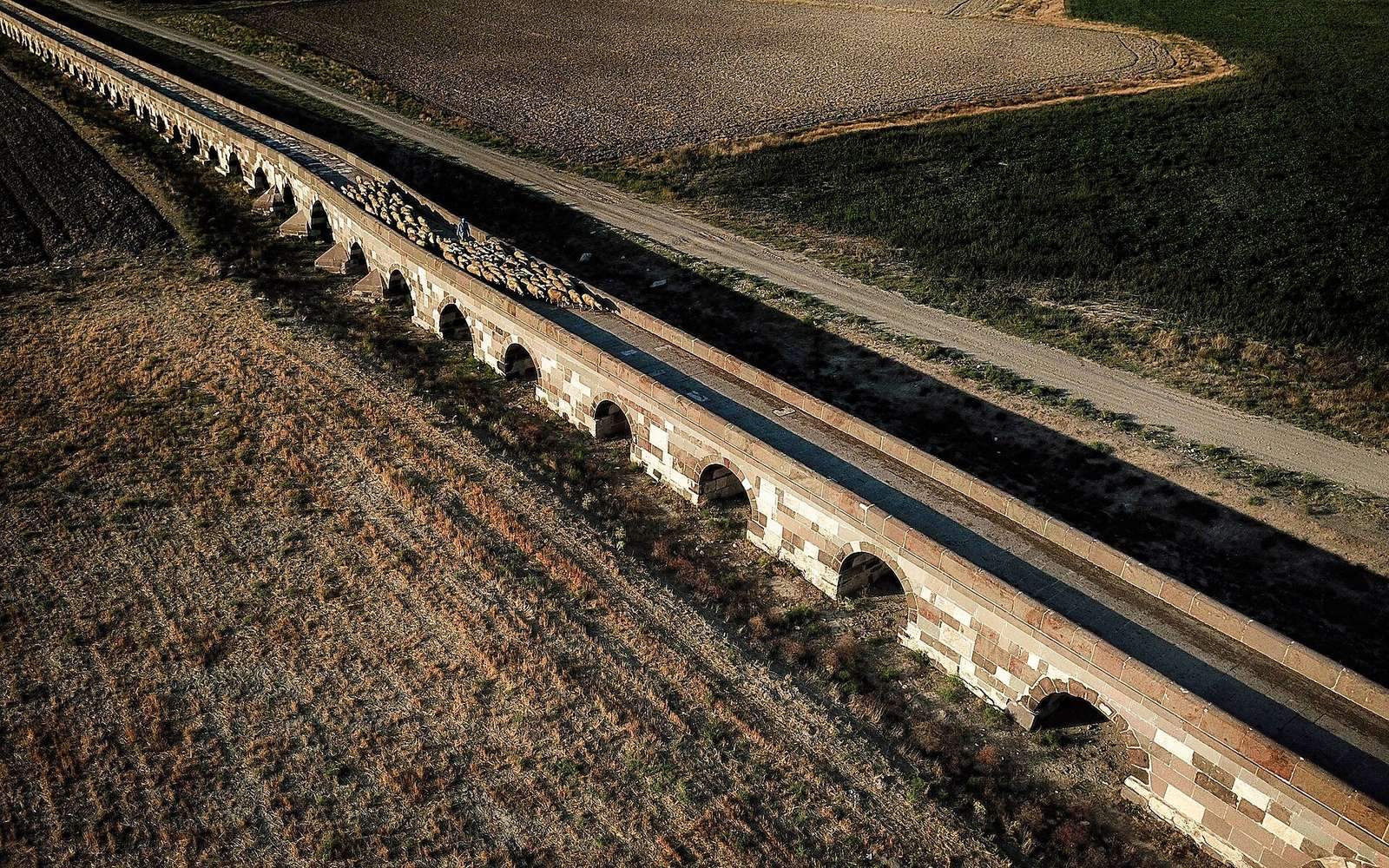
Kırkgöz Bridge crosses the Akarçay River near Bolvadin in Afyonkarahisar, Türkiye. Built in 1150 by Byzantine emperor Manuel I Komnenos, it originally had 40 arches and served a pilgrimage route. The route continued in use under the medieval Seljuk realms and the Ottoman Empire, and formed part of an Anatolian caravan road.
Seljuk and Ottoman periods
The bridge was repaired and lengthened during both the Seljuk and Ottoman periods. In the 16th century, as Sultan Suleiman I prepared for his Baghdad campaign, the leading Ottoman architect Mimar Sinan repaired the structure, extended it 200 metres to the north, and added 22 arches.
War damage and river works
Greek forces damaged the bridge during the Turkish War of Independence, the conflict that established the modern Republic of Türkiye. The damaged section was repaired in 1920. Later, Turkey’s State Hydraulic Works, the public agency responsible for water resources and infrastructure, changed the course of the Akarçay River, altering the bridge.
Remains
About 400 metres long, the bridge crosses the Akarçay, which flows into Lake Eber, roughly seven kilometres southeast of Bolvadin’s town centre. Its three sections reflect different periods of construction. The bridge’s inner core is rubble set in lime mortar, faced with orderly rows of marble and other stone. Its materials include marble, andesite, basalt, and tuff.
Central and Seljuk sections
The central section includes masonry from the era of Roman rule, with differently coloured tuff, chiefly black, alongside some basalt and white marble. The Seljuk sections use irregularly placed tuff stones and differ in material from the Byzantine-period work. Reused marble from earlier buildings was incorporated near parts of the bridge exposed to water.
Northern Ottoman section
The northern section, built during the Ottoman period, has more regular stonework. Basalt and reused marble appear in areas exposed to water and erosion, while porous tuff was used higher up. A prayer area and an inscription are associated with Sinan’s 16th-century work. The inscription states that Sultan Suleiman, son of Selim, ordered the bridge’s construction and includes a wish for his reign to endure. A couplet attributed to Ali refers to crossing safely and gives the date as 957. The inscription was recovered from the river and transferred to a museum.
Condition and surviving arches
A historical count gives the bridge 64 arches; it is now described as having 57, with some arches buried. Eight arches were demolished during the river works. The section damaged in the war was repaired with smaller, lower-quality tuff stones gathered locally. Illegal treasure hunting has damaged parts of the bridge, and nearby residents have removed stone for building materials.