Namhansanseong: A Joseon Fortress and Wartime Capital
Site at a Glance
- Country
- South Korea
- Primary era
- Early Modern
- Eras represented
- Medieval, Early Modern
- Civilizations
- Goryeo, Joseon, Silla
- Site type
- Military
- Remains
- Fortified Town
On this page16 sections
History
Namhansanseong is a Joseon mountain fortress in Gwangju-si, South Korea, whose construction began in 1624 under King Injo. It later served as a wartime emergency capital and, in peacetime, an administrative center. Its defenses drew on Korean traditions as well as Japanese and Chinese fortress designs.
Earlier fortifications and Joseon construction
The site had defensive works long before the present fortress. A 2005 excavation identified Jujangseong, a Silla-period stronghold built in the seventh century to house warriors and store supplies during conflict with the Tang dynasty. The area also held a Goryeo-period fortification known in English as Gwangju Fortress, which served as a base against Mongol incursions in the thirteenth century. The site continued to serve military purposes from the Silla period onward.
Work on Namhansanseong began during King Injo’s reign, in response to the Yi Gwal Rebellion of 1624 and amid the threat posed by the Later Jin, the regime that preceded the Qing. Buddhist monks organized for military service were recruited from all eight provinces to help build the fortress. Its defenses were expanded over the sixteenth to eighteenth centuries as warfare continued. Changes in weapons, including the use of gunpowder imported from Europe, influenced the design, which combined Joseon Korean, Japanese Azuchi-Momoyama, and Chinese Ming and Qing traditions.
Emergency capital and the 1636 siege
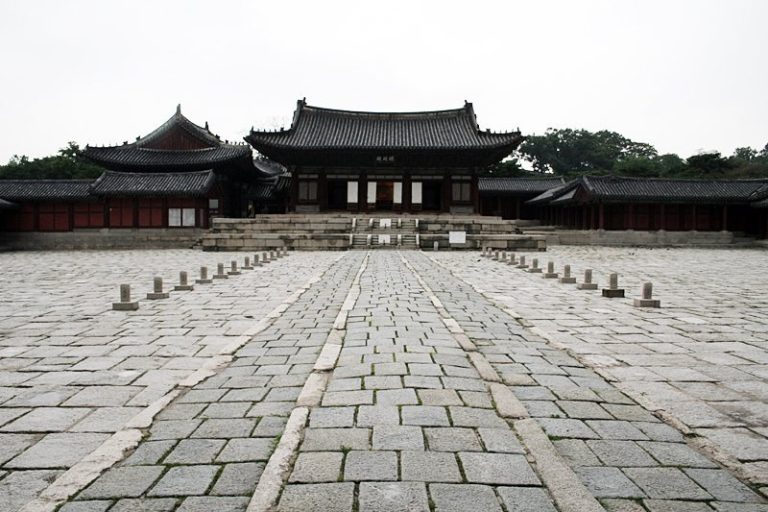
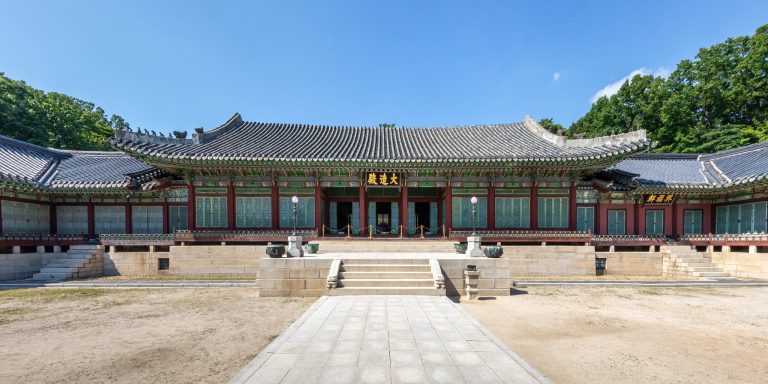
From the seventeenth century, the fortress combined military command with government and civilian life. Its plan accommodated both the ruling class and commoners, rather than serving chiefly as a refuge for rulers. An emergency palace, built in 1626, could house the king in wartime in place of the main palace until relief forces arrived. Later Joseon kings also stayed there while traveling to ancestral tombs in Yeoju and Icheon.
During the Qing invasion of 1636, Injo took refuge inside the fortress with his court and 13,800 soldiers. The Qing forces could not take the defenses by assault, but the siege lasted about six weeks and left the defenders without food. Injo surrendered, sent his sons as hostages, and renounced Joseon’s allegiance to the Ming dynasty. He also stayed at the Sueojangdae command post during the siege.
Community, worship, and resistance
More than 4,000 people lived within the fortress from the seventeenth century onward. Residents maintained it across generations, while the community also became a center of civilian resistance to invaders. Buddhist temples and monk-soldiers played a role as Joseon weakened and Japanese colonial rule approached.
Damage and restoration
In the early twentieth century, Korean volunteer resistance forces, known as righteous armies, fought Japanese troops at the fortress. In 1907, Japanese forces destroyed much of the site and closed its temples. During colonial rule, administrative activity moved elsewhere and military facilities were demolished. The settlement became an isolated mountain village, a change that helped preserve its earlier layout. The relocation of the Gwangju County Office in 1917 ended the fortress’s role as a town center.
The Korean War (1950–1953) brought population and material losses. Restoration began in 1954 after a period of neglect, followed by extensive work on the walls. The site became a provincial park in the 1970s, and studies from the 1990s onward informed restoration of the emergency palace and royal ancestral shrine. Namhansanseong became a South Korean historic site in 1963. Added to UNESCO’s World Heritage tentative list in 2010, it was inscribed as a World Heritage site in 2014. The inscription recognizes the exchange of fortress and weapons technology in East Asia during international conflicts, as well as the development of Korean fortress building adapted to rugged terrain.
Remains
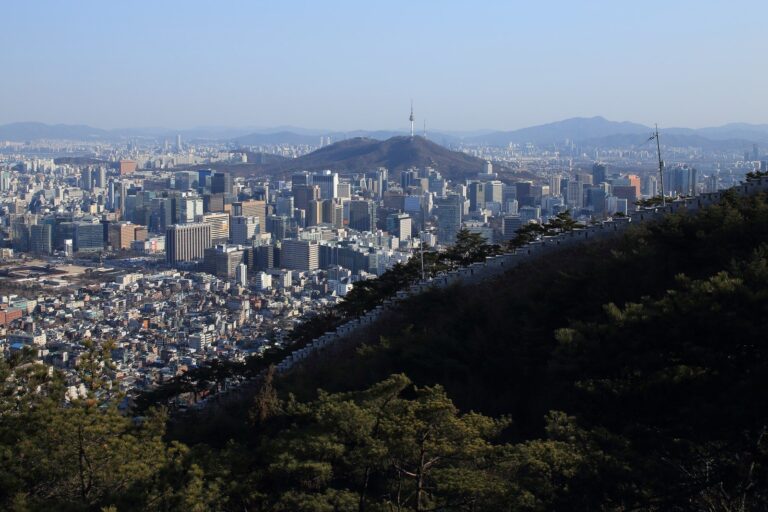
At about 480 metres above sea level, the fortress follows the mountain ridges around a broad, relatively level summit, with a lower central area and higher ground to either side. Its walls extend for about 12 kilometres. Excluding the outermost walls, the fortress has a circumference of 7.545 kilometres and an interior area of 212.6637 hectares. The World Heritage property covers 409.06 hectares, with a buffer zone of 8.53 square kilometres. Stone walls rise to about seven metres and include multiple gates. Much of the wall has been rebuilt, especially in the south, while some northern stretches are deteriorated and overgrown.
Palace and military precincts
Emergency palace complex
The emergency palace complex includes a royal ancestral shrine and an altar dedicated to deities associated with the land and agricultural abundance. It is the only known Korean emergency-palace complex described as containing both ritual facilities. Other governing components include Jwajeon Shrine, the site of Usil Shrine, Jwaseungdang Hall, and the site of Inhwagwan Guesthouse.
Sueojangdae command post
Sueojangdae served as a military command post. A second story was added in 1751, when the pavilion was renamed Mumangnu, meaning Pavilion of Never Forgetting. The name probably refers to the shame of surrendering to the Qing.
Arsenal and temples
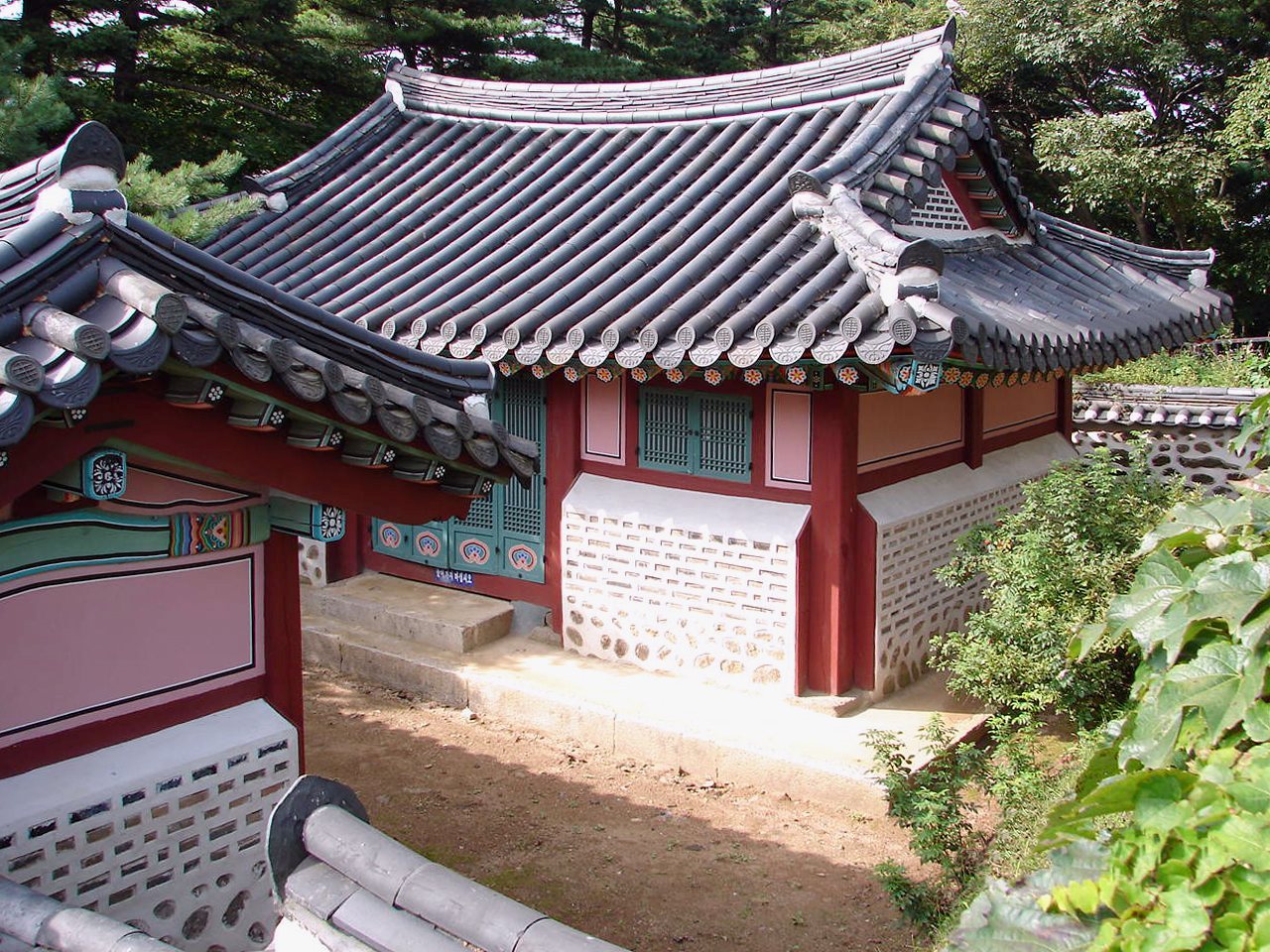
Chimgwaejeong is an arsenal within the fortress. Buddhist temples and other fortress structures formed part of its military facilities. Several newer temples stand along the approach to the southern gate and the fortress wall.
Shrines and commemorative features
Cheongryangdang and Falcon Rock
Cheongryangdang honors Yi Hoe, who supervised construction in the fortress’s southeast. Tradition says that this section remained unfinished while work on the flatter northern side was completed ahead of schedule, leading to Yi’s execution. In the story, a hawk circled over his body and settled on a rock after his death. The king later inspected the work and found it sound. Falcon Rock is associated with the hawk’s appearance.
Sungryeoljeon
Built in 1638, Sungryeoljeon is associated with King Onjo, traditionally regarded as the founder of Baekje. A local tradition tells that Onjo appeared to Injo in a dream to warn him of approaching enemies. After the danger passed, Injo built the shrine in gratitude. The story also says that Yi Seo was later honored there alongside Onjo. Annual worship takes place at the shrine.
Hyeonjeolsa
Hyeonjeolsa commemorates Hong Ik-han, Yun Jip, and Oh Dal-je, who urged resistance rather than surrender during the Qing invasion. After Joseon capitulated, they were taken to China and executed for continuing to refuse submission. Kim Sang-heon and Jeong On were later honored at the shrine, where worship is held annually.
Seongsu-tap
Seongsu-tap stood near the western wall. Topped by a metal phoenix, the tower was erected in 1955 for South Korea’s first president, Syngman Rhee, on his eightieth birthday. It was demolished in 1960 after student protests brought down his government.
Surrender monument, steles, and pavilions
A monument on the road south from Seoul toward the fortress commemorates the 1636 surrender. Pavilions and commemorative steles are also among the site’s folk features, and rites associated with the fortress form part of its intangible heritage.