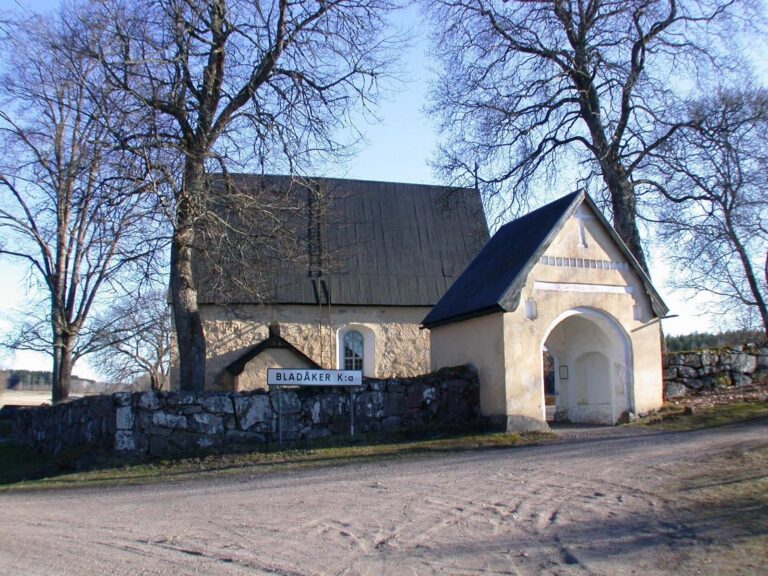
Börstil Church: A Medieval Church in Sweden
Site at a Glance
- Country
- Sweden
- Primary era
- Medieval
- Eras represented
- Medieval, Early Modern, Modern
- Civilizations
- Swedish
- Site type
- Religious
- Remains
- Church
On this page12 sections
History
Medieval origins
Börstil Church is a medieval church in Sweden, within Frösåker parish and the Diocese of Uppsala, a regional jurisdiction of the Evangelical Lutheran Church of Sweden. Construction probably began in the first half of the 14th century, and the church was consecrated during that century. In the latter half of the 15th century, vaults were built and the church was decorated with wall paintings.
War damage and eighteenth-century use
Russian forces burned the church in 1719 during the Great Northern War, a conflict between Sweden and a coalition that included Russia. The church was subsequently restored. Russian forces ravaged the locality again in 1749.
Olof Schwan built the gallery organ, which was inaugurated in 1783. A note inside its case gives the inauguration date as 29 September.
Nineteenth-century rebuilding
The gallery organ was repaired in 1831, possibly by Gustav Andersson. In the 1850s, county building master P. J. Pettersson, a regional official involved in building works, led a major rebuilding based on his own plans as revised by architect Johan Fredrik Åbom. The tower was raised, the roof lowered, and the old sacristy replaced with a new one.
Twentieth-century restoration and organ changes
Architect Sven Brandel led a major restoration in 1926. In 1933-34, organ builder John Vesterlund of Lövstabruk altered the gallery organ following a proposal by Bertil Wester. The work added four stops, controls selecting sets of pipes, and a foot keyboard. Air-pressure-operated wind chests were installed, and the original chest and stop controls were converted to pneumatic operation. An extra small wind chest extended the hand keyboard to the high F designated f3. Reed stops, which produce sound using vibrating reeds, were removed, and the console was detached from the organ case.
Oskar Sundström repaired the organ in 1945, and Bo Wedrup renovated it in 1948. Its pitch was probably lowered by a semitone during one of those interventions, when pipes were moved up one position and some open pipes were shortened. A. Magnusson Orgelbyggeri restored the instrument in 1978-79, removing the 1934 additions and restoring the original pitch. The work returned moved pipes, lengthened shortened pipes, reinstated reed stops, reconstructed missing pipes, and restored the mechanical connections using original parts. At the suggestion of organ voicer Herwin Troje, the organ was tuned using H. T. Scheffer’s 1748 temperament, a system for tuning intervals.
A five-stop choir organ supplied by Jehmlich Orgelbau Dresden in 1966 was later moved to Dannemora Church. In 1978-79, A. Magnusson Orgelbyggeri built a replacement choir organ. The church also received a thorough exterior renovation in 1984 and an extensive interior restoration in 1986.
Remains
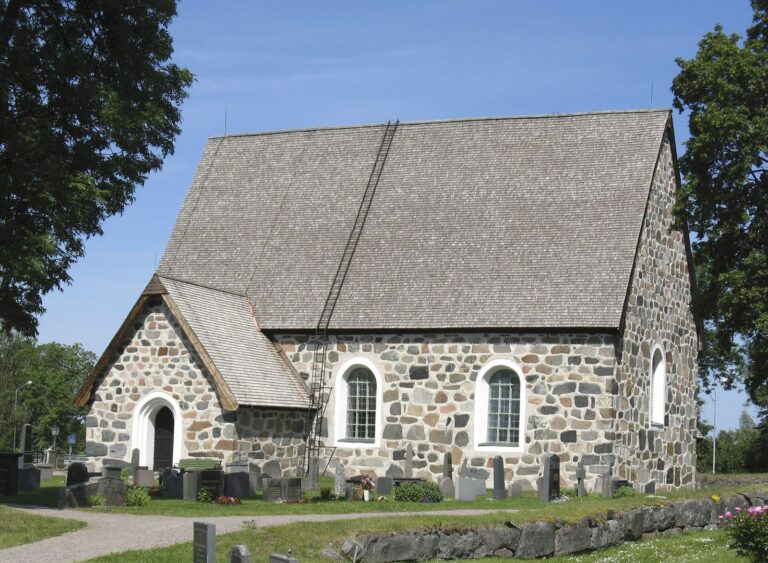
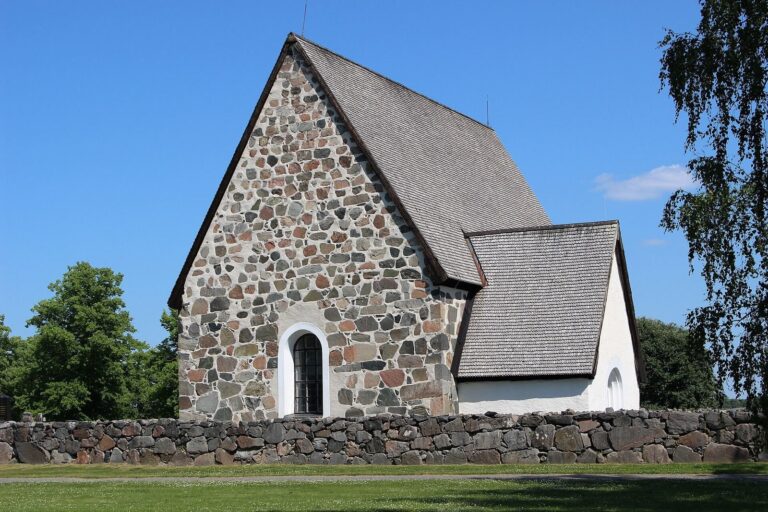
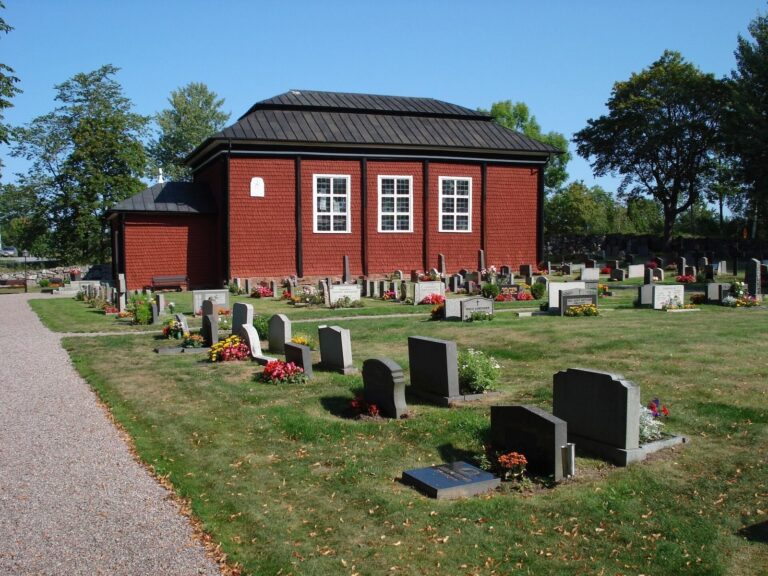
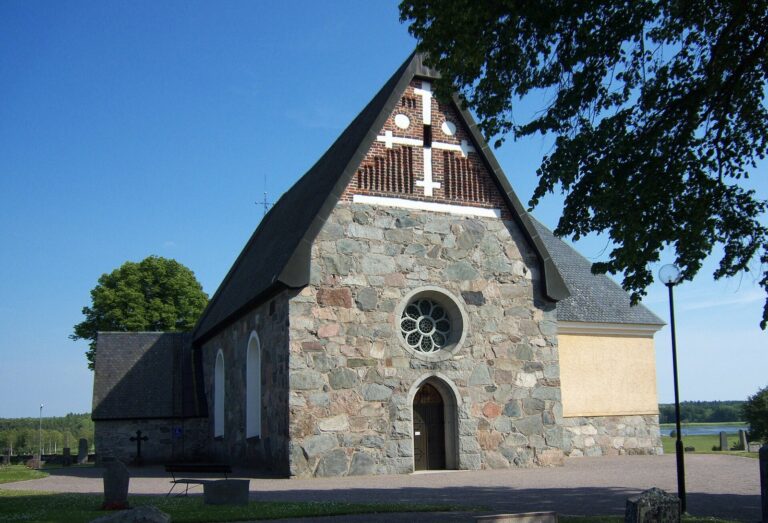
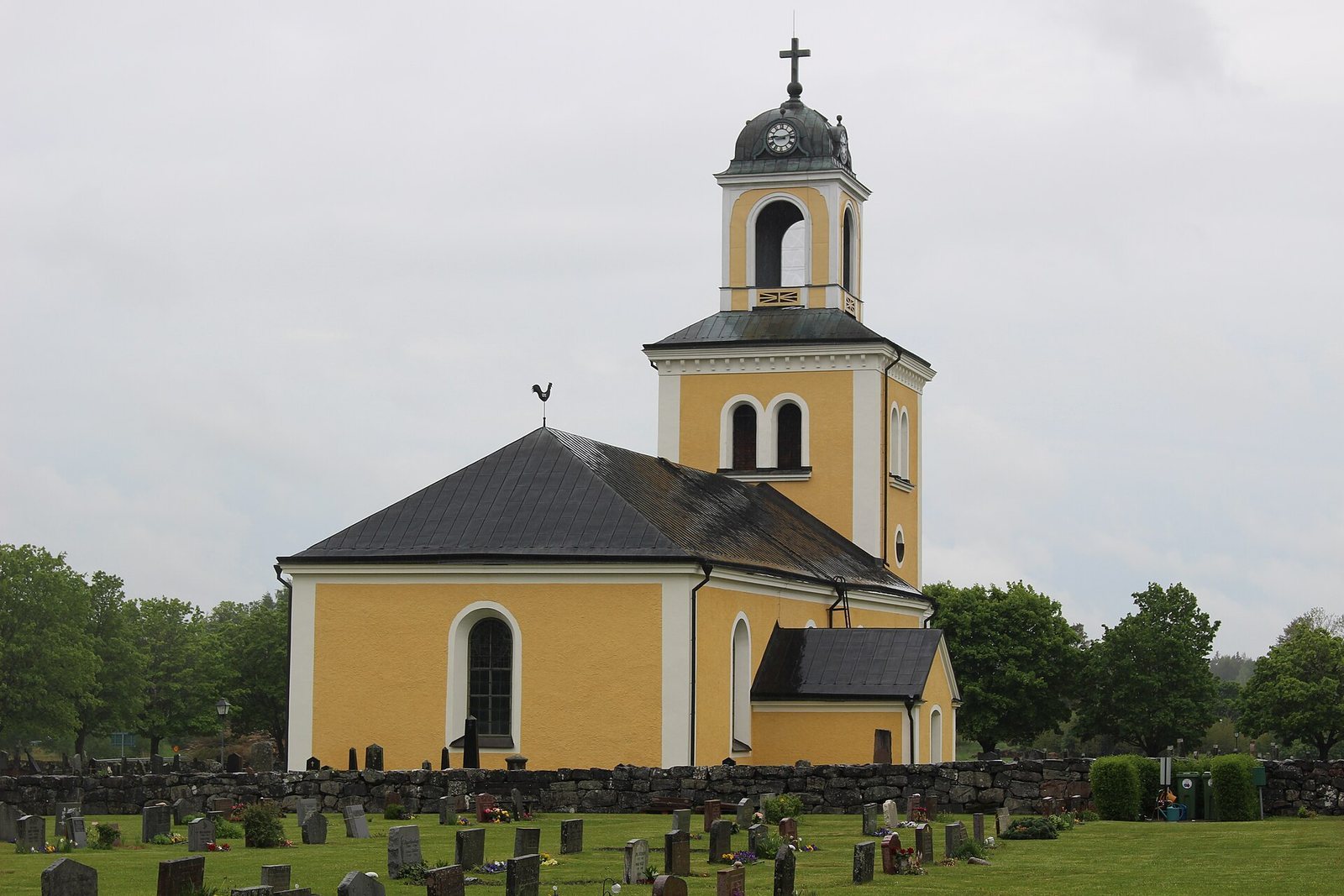
Built of fieldstone, the church has a long nave, a choir at the east end, and a tower with the entrance at the west end. A sacristy is attached to the north side of the choir. Its exterior resembles Neoclassical architecture, a style drawing on ancient Greek and Roman forms. The walls are covered with yellow rough plaster and have white surrounds. The nave has a ridged, gabled roof of seamed copper sheeting, while the roof over the choir slopes on all sides. The round-arched windows took their present size during the 1850s rebuilding.
Interior and furnishings
Vaults, paintings, and floor
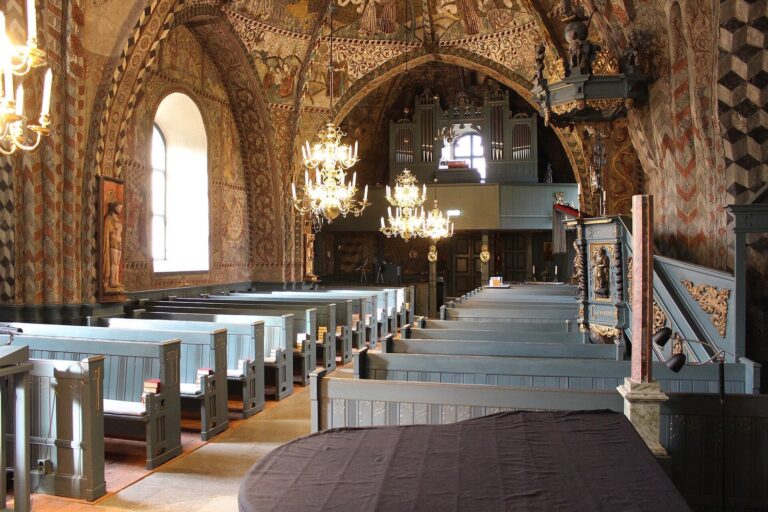
Medieval wall paintings survive in the eastern vault and the arch between the nave and choir. They came to light during the 1926 restoration. Limestone slabs were laid as flooring during that work. The tower chamber was fitted out as a museum in 1986.
Furnishings
The church’s furnishings include an altarpiece made by Swedish sculptor Olof Gerdman in 1737, a pulpit from 1725, and a baptismal basin from 1723. A bridal crown dates from 1640.
Organs
Gallery organ
The gallery organ has one hand keyboard and an attached foot keyboard. Its façade was designed by Jacob Wulff. Pipes in the façade towers sound, while the other pipes visible in the façade are silent. Inventories from 1829 and 1869 list thirteen stops. The restored instrument has mechanical connections between its keys, stop controls, and pipes, along with reinstated reed stops and reconstructed pipes.
Choir organ
The choir organ has two hand keyboards, an independent foot keyboard, and mechanical slider chests. In this system, sliding registers control which sets of pipes receive air.