Großkühnau Palace: An Eighteenth-Century Residence in Germany
Site at a Glance
- Country
- Germany
- Primary era
- Early Modern
- Eras represented
- Early Modern
- Civilizations
- Holy Roman Empire
- Site type
- Domestic
- Remains
- Elite Residence
On this page7 sections
History
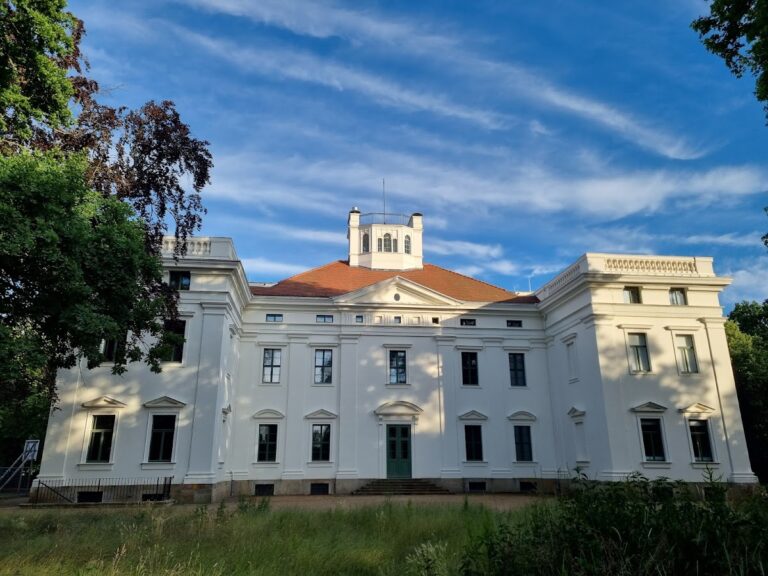
Großkühnau Palace is an eighteenth-century residence in Germany, built in 1754 for Prince Dietrich von Anhalt-Dessau. It forms part of the Dessau-Wörlitz Garden Realm, an ensemble of gardens and parks developed in the second half of the eighteenth century under Leopold III Friedrich Franz, the ruling prince of Anhalt-Dessau. The Garden Realm follows the English landscape tradition, which favors naturalistic scenery over strictly geometric layouts.
Eighteenth-Century Development
The palace’s architect is unknown, although Christian Friedrich Damm is considered a possible designer. In 1780, Prince Albert Friedrich of Anhalt-Dessau, son of the earlier prince Leopold II, had the building partly remodeled. The work introduced classicist design, drawing on ancient Greek and Roman forms and proportions.
Landscape designer Johann Leopold Ludwig Schoch designed the garden from 1753 to 1764. Kühnau Park is dated to 1805.
Twentieth-Century Use and Heritage
Beginning on 20 August 1932, the palace served as a school for the Reich Labour Service, a German labor-service organization formalized as a state institution under Nazi rule in 1935. Since January 1998, it has housed the main administration of the Dessau-Wörlitz Cultural Foundation. The wider Garden Realm was inscribed on the UNESCO World Heritage List in 2000.
Remains
The Palace
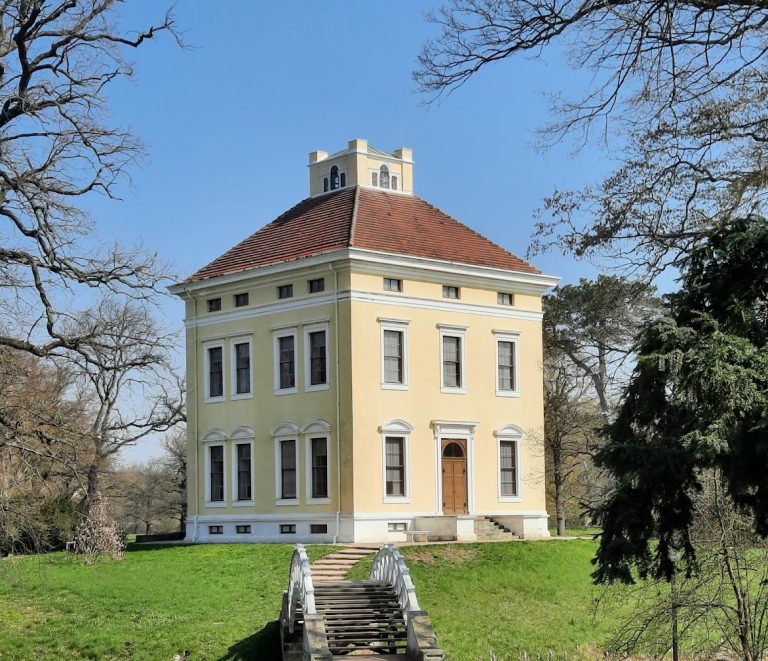
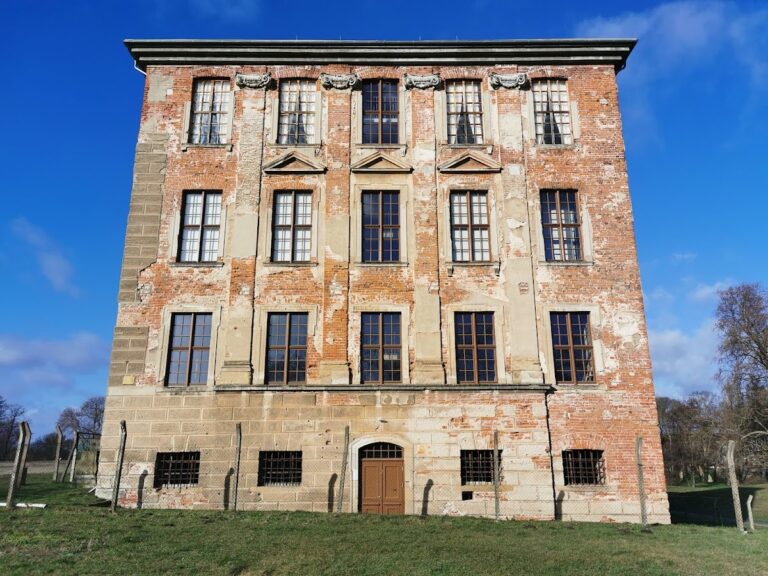
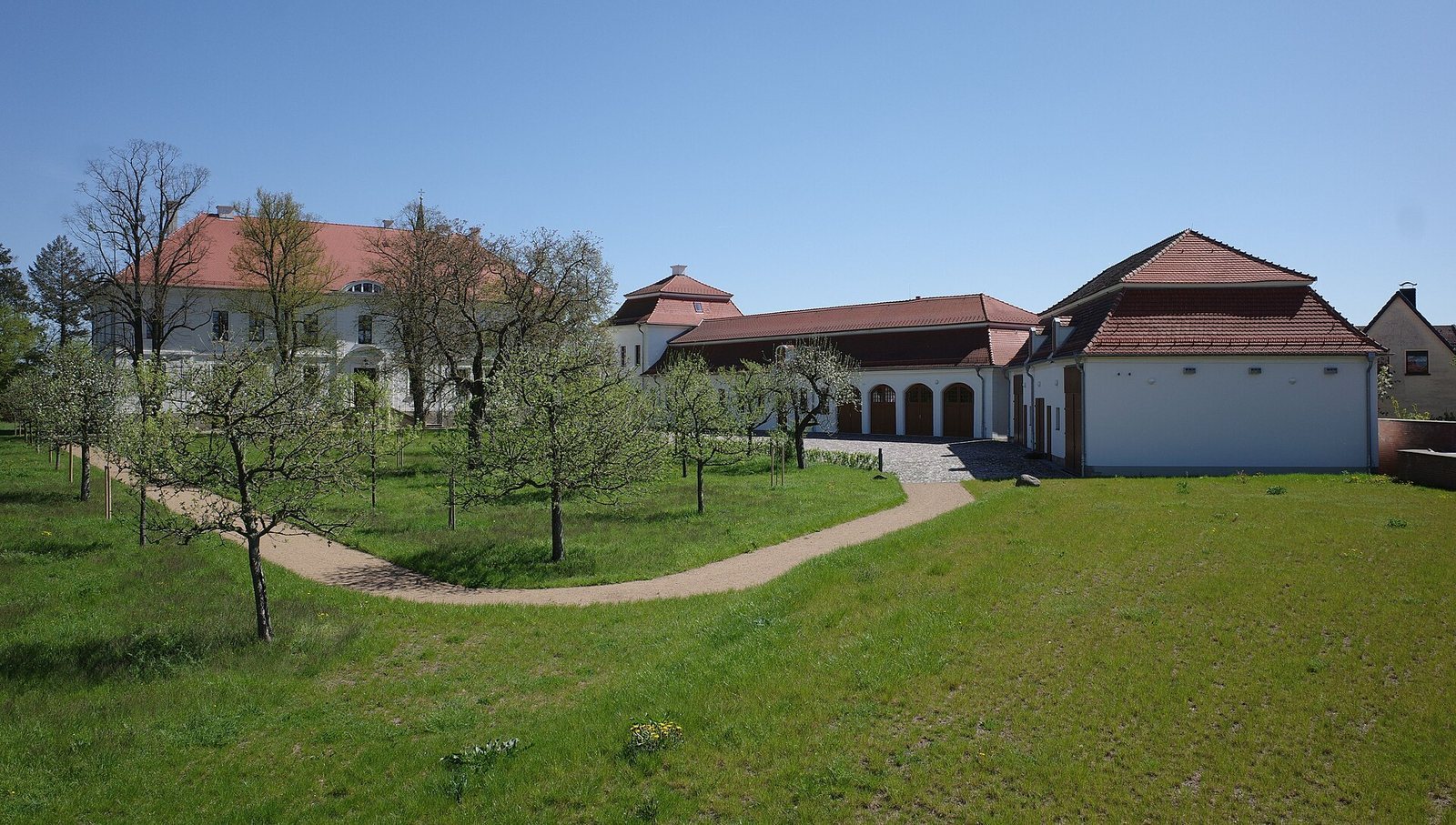
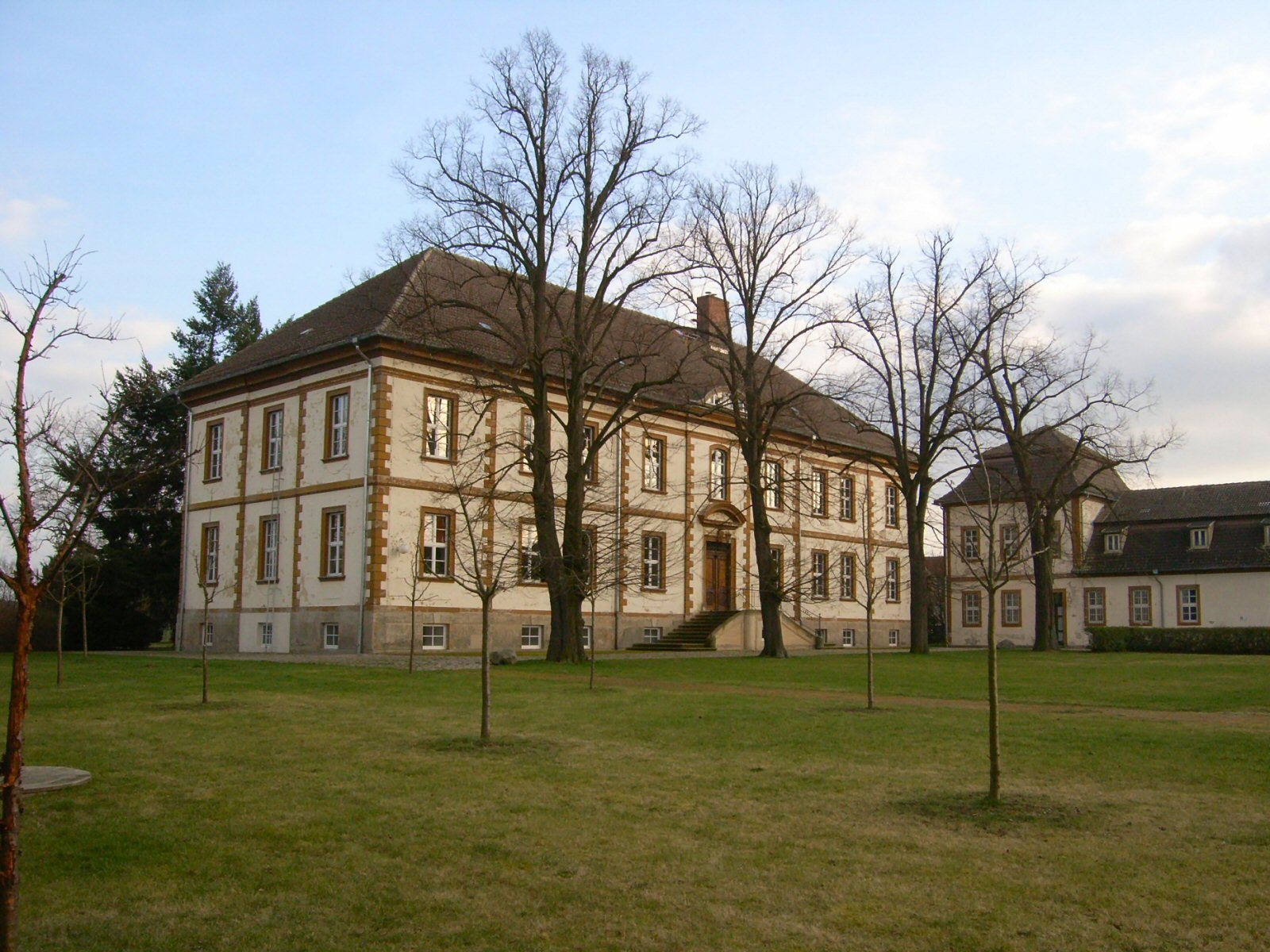
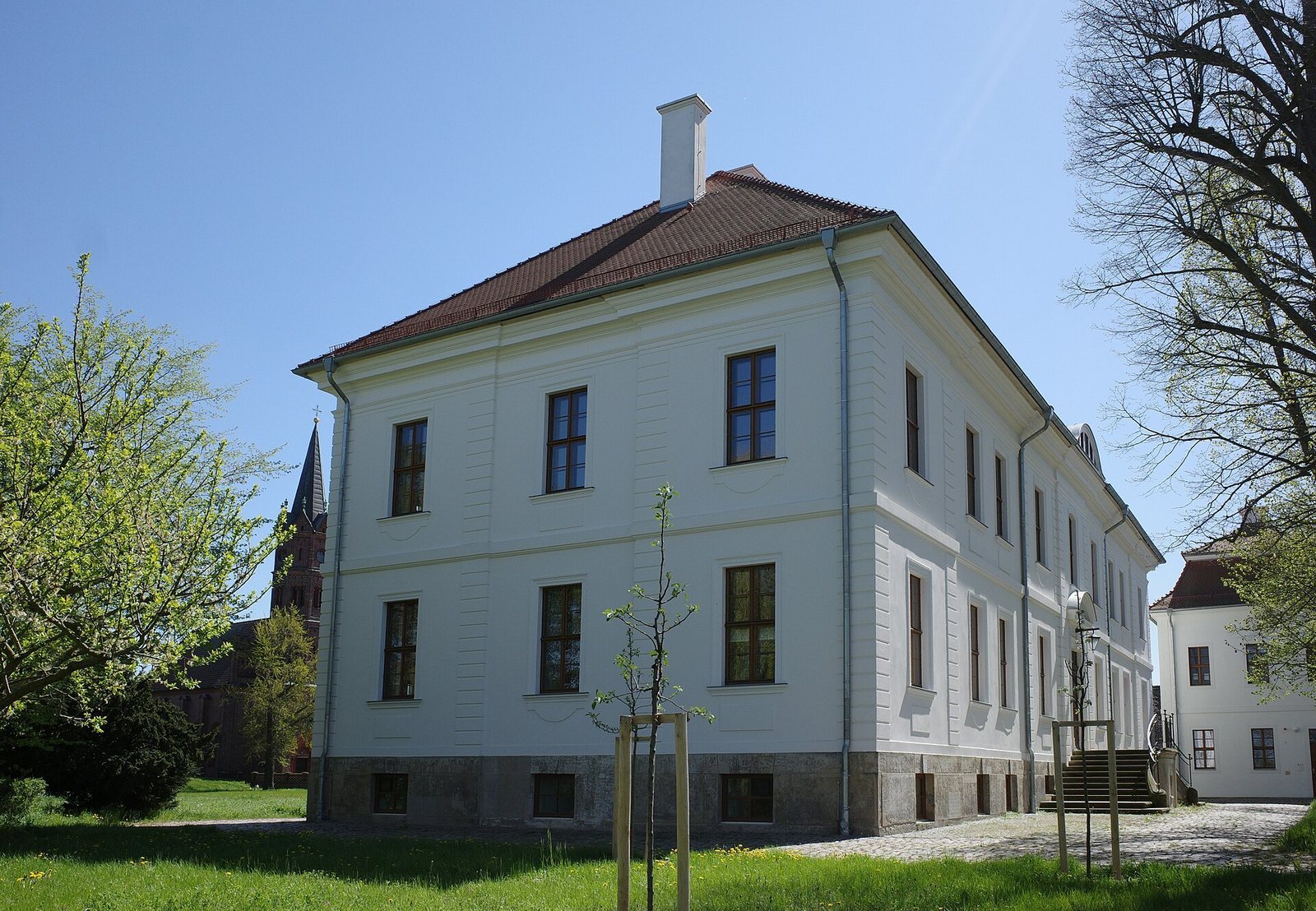
The plain, rectangular building is made of brick and rises two storeys above a sandstone base, with shallow projections in its walls. It stands at the northern edge of Großkühnau, south of Kühnau Lake. Inside, a spacious stairwell contains a two-flight wooden staircase, and a separate two-flight staircase stands outside. The portal, stairwell, and garden hall were partly redesigned in the classicist style. The upper-floor ceremonial hall has decorative painting based on designs by architect Friedrich Wilhelm von Erdmannsdorff.
Kühnau Park
The 77.5-hectare park extends along the southern shore of Kühnau Lake and onto artificial islands in the water, with views toward the islands. It forms the western boundary of the Garden Realm. Its features include a vineyard with a small palace on a hilltop, a vegetable garden, and a church described as Germany’s first to use both Neo-Romanesque forms, which revive Romanesque architecture, and Byzantine forms drawn from the Byzantine Empire’s architectural traditions.
Kühnau Rampart Castle
The remains of Kühnau rampart castle, a fortified site protected by earthworks, lie in the Burgwallwiesen about 300 metres northeast of the palace.