Tribunal de grande instance de Colmar: Colmar’s Former Judicial Palace
Site at a Glance
- Country
- France
- Primary era
- Early Modern
- Eras represented
- Medieval, Early Modern
- Civilizations
- French, Holy Roman Empire
- Site type
- Civic
- Remains
- Palace
On this page10 sections
History
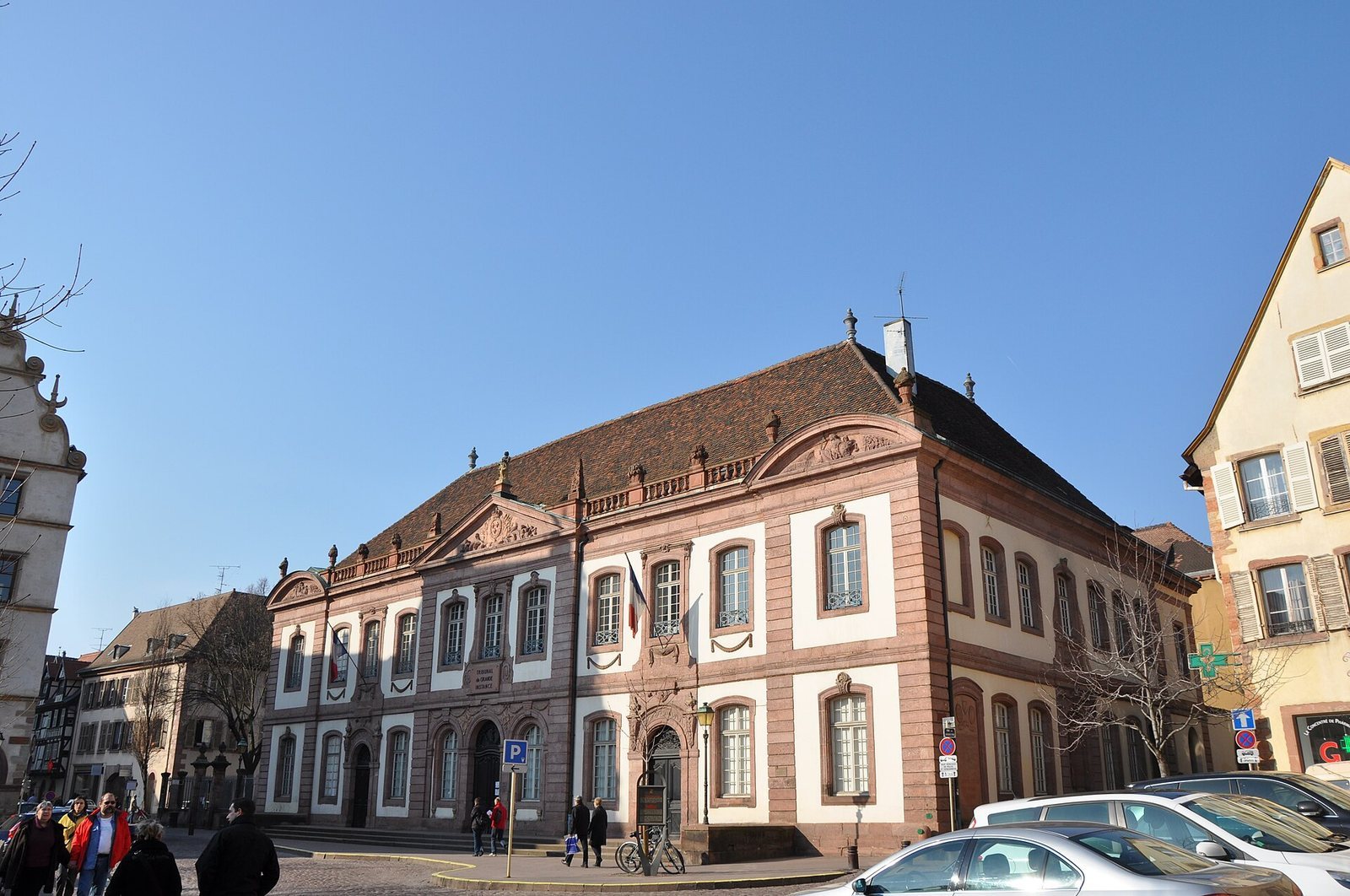
The Tribunal de grande instance de Colmar is a former judicial palace in Colmar, France, built between 1764 and 1771 for the Sovereign Council of Alsace. A town hall on the site had served Colmar since 1459.
Town hall and the Sovereign Council
After Alsace came under French rule in 1648, King Louis XIV established the Sovereign Council of Alsace as the region’s highest court and provincial parliament. In this context, parliament meant a judicial institution, not an elected legislature.
The council successively sat at Ensisheim in 1658, Vieux-Brisach in 1674, and Neuf-Brisach in 1681. It moved to Colmar on 1 May 1698, decades before the present palace was built.
The judicial palace
The palace later served as the seat of Colmar’s Court of Appeal until the early twentieth century. It subsequently housed the city’s court of first instance, now known as the Colmar Judicial Court.
The palace was entered on the historic-monument register in 1930, with some portions handled separately. Its facades, roofs, and two medieval chapels were classified in 1998, and a further registration followed in 2024.
Remains
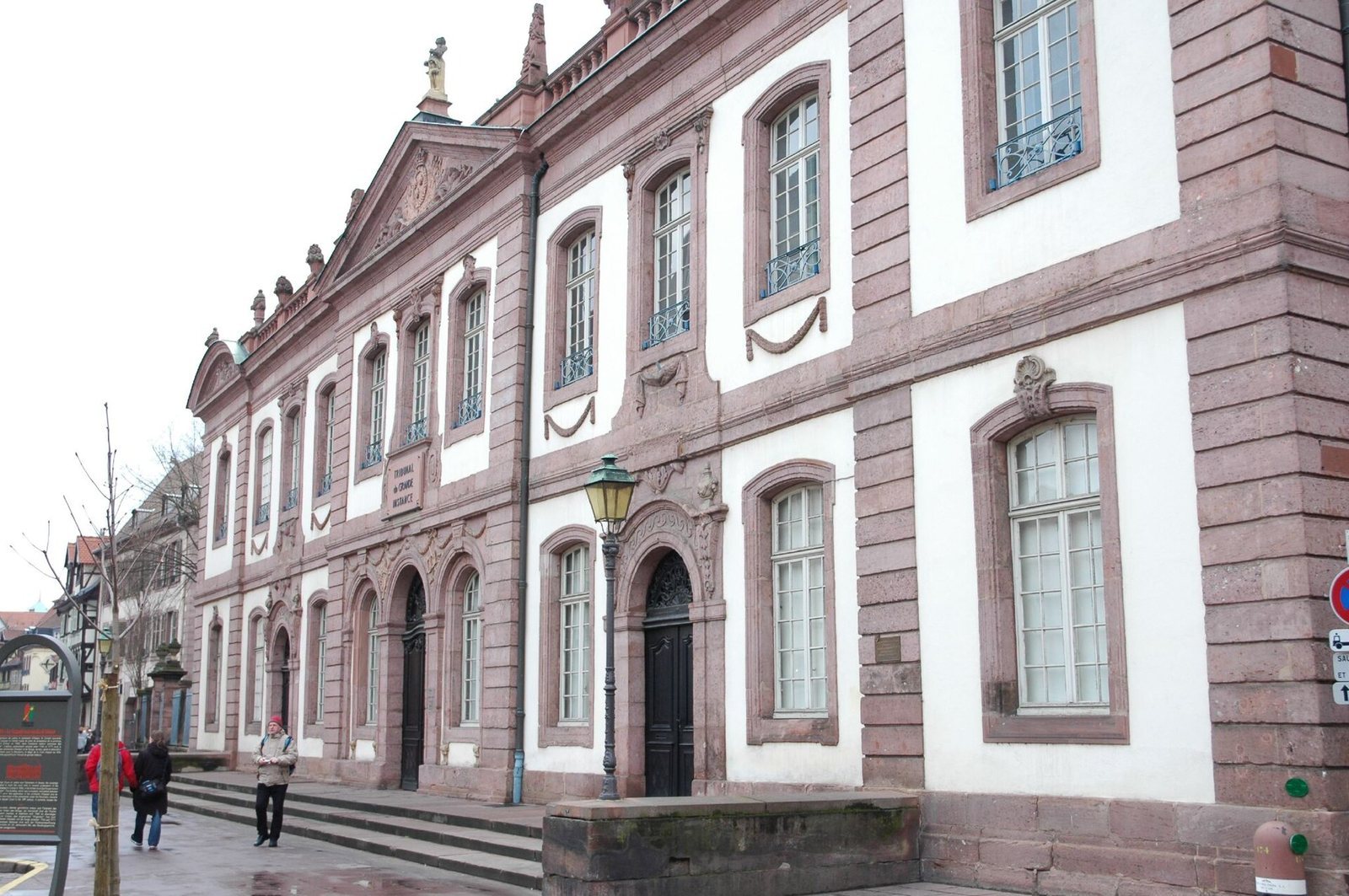
The surviving complex brings together the eighteenth-century judicial palace and older features associated with an Augustinian convent and a goods-weighing cellar. The palace is built of pink sandstone and brick beneath a rendered exterior, and has a ground floor and one upper storey.
The main palace
Entrance and facade
Four steps lead to the entrance. Most of the windows have segmental arches, shallow curves set across the tops of the openings.
Pediment and figure of Justice
The central facade is topped by a triangular pediment, the triangular feature crowning a building front, which bears a royal emblem. Above it stands an allegorical figure of Justice. The sculpture now in place is a replica made in 1970; the original, dated 1585, was signed by the sculptor Nicolas Börlin de Rorschach.
Earlier remains
Augustinian chapels
Two medieval chapels survive one above the other from the Augustinian convent. Augustinians belong to a religious order guided by the Rule of St Augustine. Most of the convent was replaced by a prison.
Facade of the former weighing cellar
A gable dating to 1532 survives on the rear section’s facade from the former goods-weighing cellar known as the Wagkeller. Horizontal bands and pilasters, shallow wall features resembling columns, divide the facade. It also has two groups of three openings framed by ogee arches, whose curves form an S shape, along with medallions bearing busts.