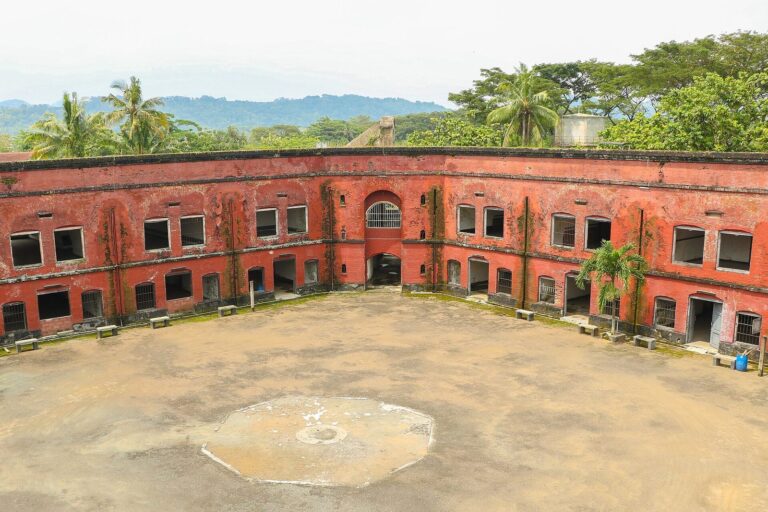
Pendem Cilacap Fort: A Dutch Coastal Battery in Indonesia
Site at a Glance
- Country
- Indonesia
- Primary era
- Modern
- Eras represented
- Modern
- Civilizations
- Dutch, Japanese
- Site type
- Military
- Remains
- Fort
On this page13 sections
History
Pendem Cilacap Fort is a Dutch coastal battery, a fortified position for defending a coast, on Java’s southern shore in Cilacap, Indonesia. Built between 1861 and 1879, it began operating in 1879 to protect the port.
Dutch construction and coastal defense
The Babad Banyumas, a Javanese chronicle of the Banyumas region, attributes an earlier fortress in the area to Pakubuwono IV, ruler of the Surakarta court, in the early nineteenth century. The later fort may have been built over that predecessor. The Dutch established the battery to defend Cilacap’s strategically important port and prevent rival powers from taking control of the area. A British ship, the Royal George, had stopped at Nusa Kambangan to take on water, raising Dutch concern about a possible attack. The port carried goods from Yogyakarta and Purworejo and was seen as a potential economic outlet from Banyumas to the Netherlands. Another Dutch fortification from this period stood at Karang Bolong on Nusa Kambangan. During Dutch rule, the fort also held civilian and military prisoners.
Wartime occupation and transfer
Japanese forces took control in 1942, during the occupation of the Dutch East Indies, the Netherlands’ colonial territory in the Indonesian archipelago. They found the fort unoccupied and used it as a defensive headquarters. After Japan surrendered in 1945, Allied forces occupied the site and used it for the same purpose. Dutch forces then returned and held the fort until sovereignty was transferred on 27 December 1949.
Indonesian military use and preservation
The fort stood unused for about two years from 1950, until the Indonesian Army took it over in 1952. A Central Java commando unit trained there in combat and amphibious landings; military use continued until 1965. Afterward, the site was abandoned and sand covered parts of it. Oil-storage facilities were built on land that had belonged to the fort. The Cilacap government began excavation in 1986. Sections judged dangerously dilapidated were fenced off in 2002 and 2005, and by 2013 the fort held Indonesia’s Cultural Property designation.
Remains
Layout and defenses
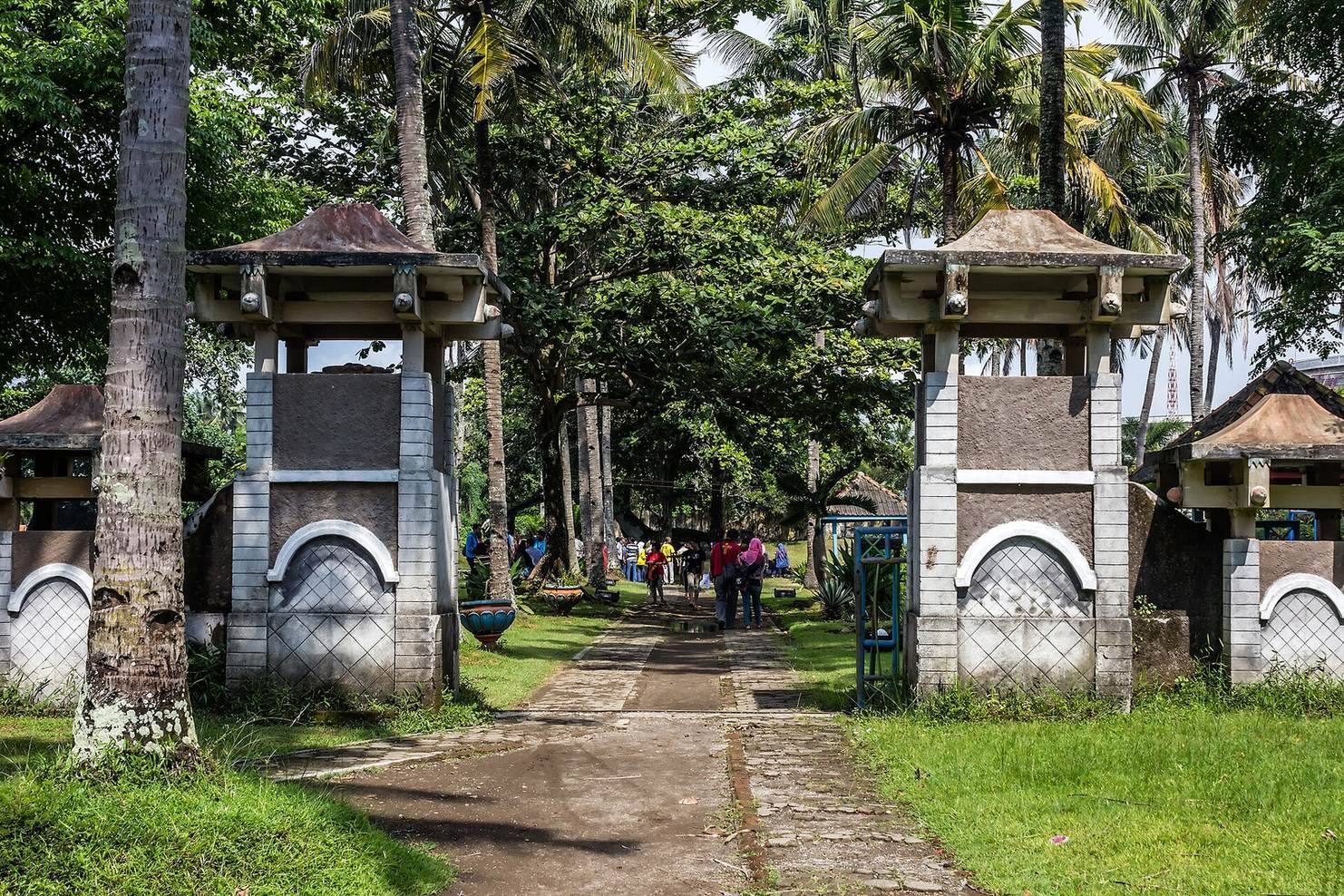
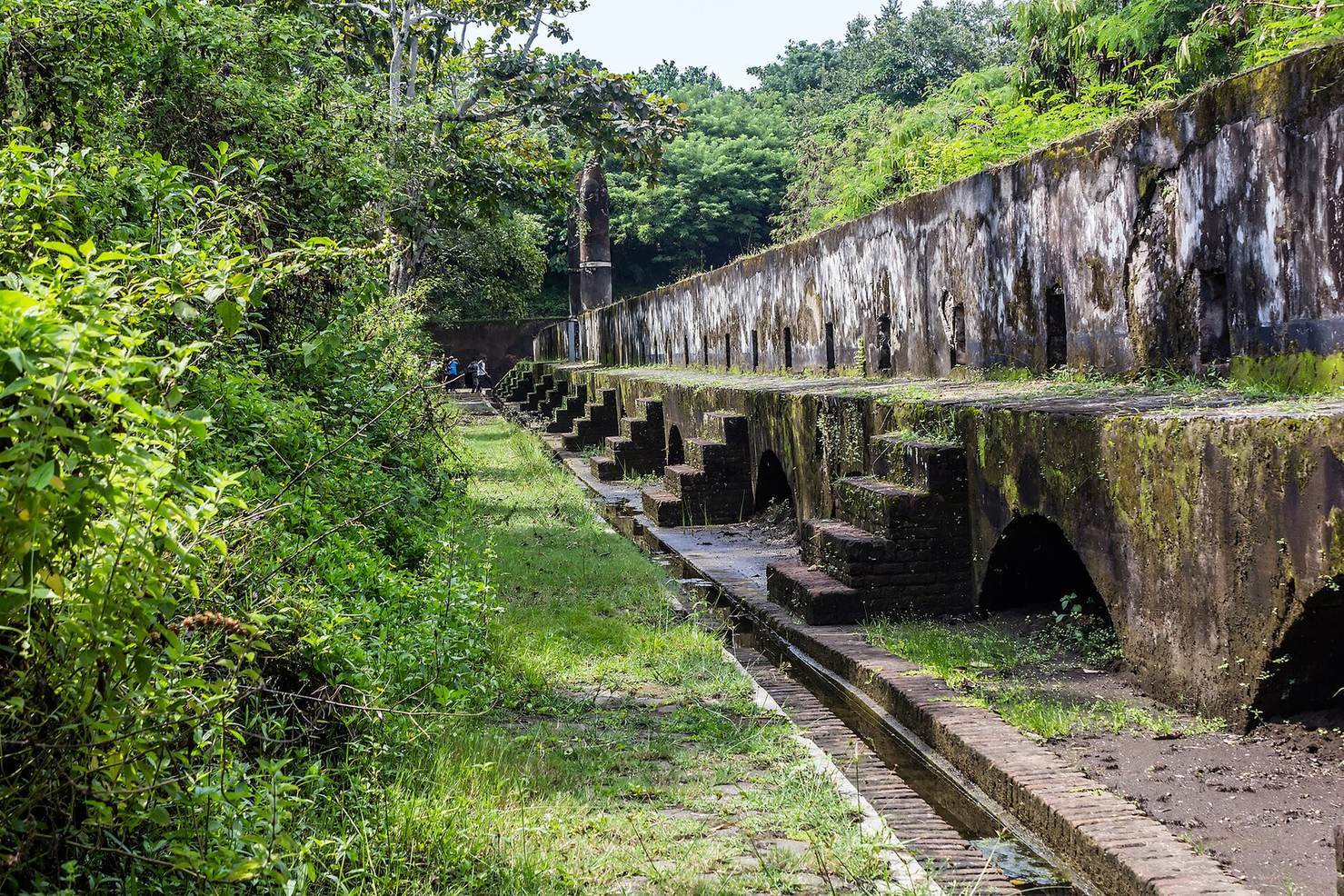
The pentagonal fort occupies 6.5 hectares within a larger area of 10.5 hectares, of which 4 hectares are used for oil storage. It stands in Kebonjati Hamlet, southeast of Cilacap. Oil facilities and a Dutch cemetery lie behind the former fort, Teluk Penyu Beach is to its east, and Nusa Kambangan lies across the bay. An excavated moat, once 10 metres deep, measures 500 metres long, 5 metres wide, and 2–3 metres deep today. Eleven positions around the fort were used for cannons, and the complex includes 330 metres of fortifications. After excavation, the government added an entrance on the eastern side, where the fort’s rear had originally been. A Bullet Monument stands at the main gate.
Buildings and internal spaces
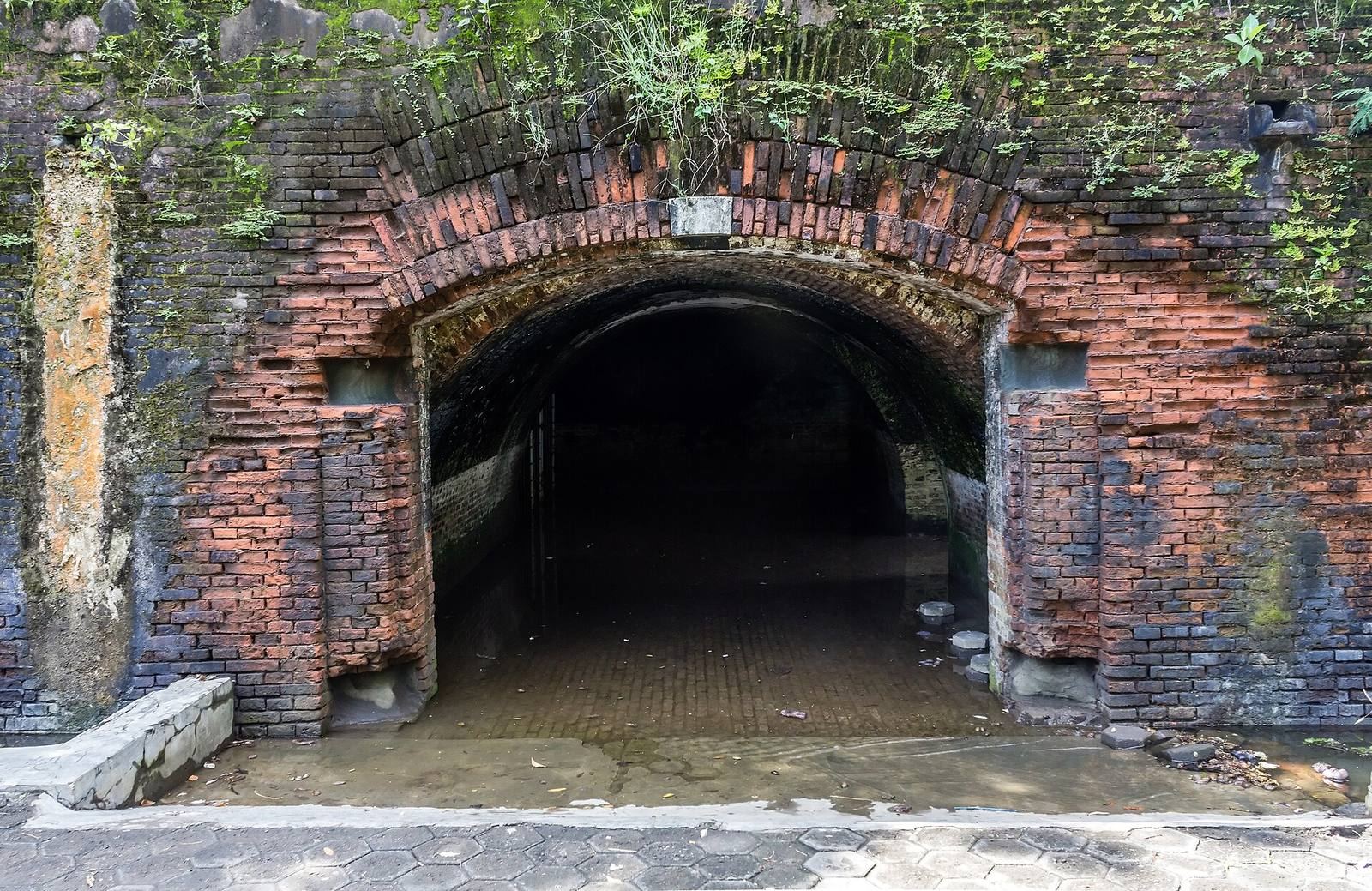
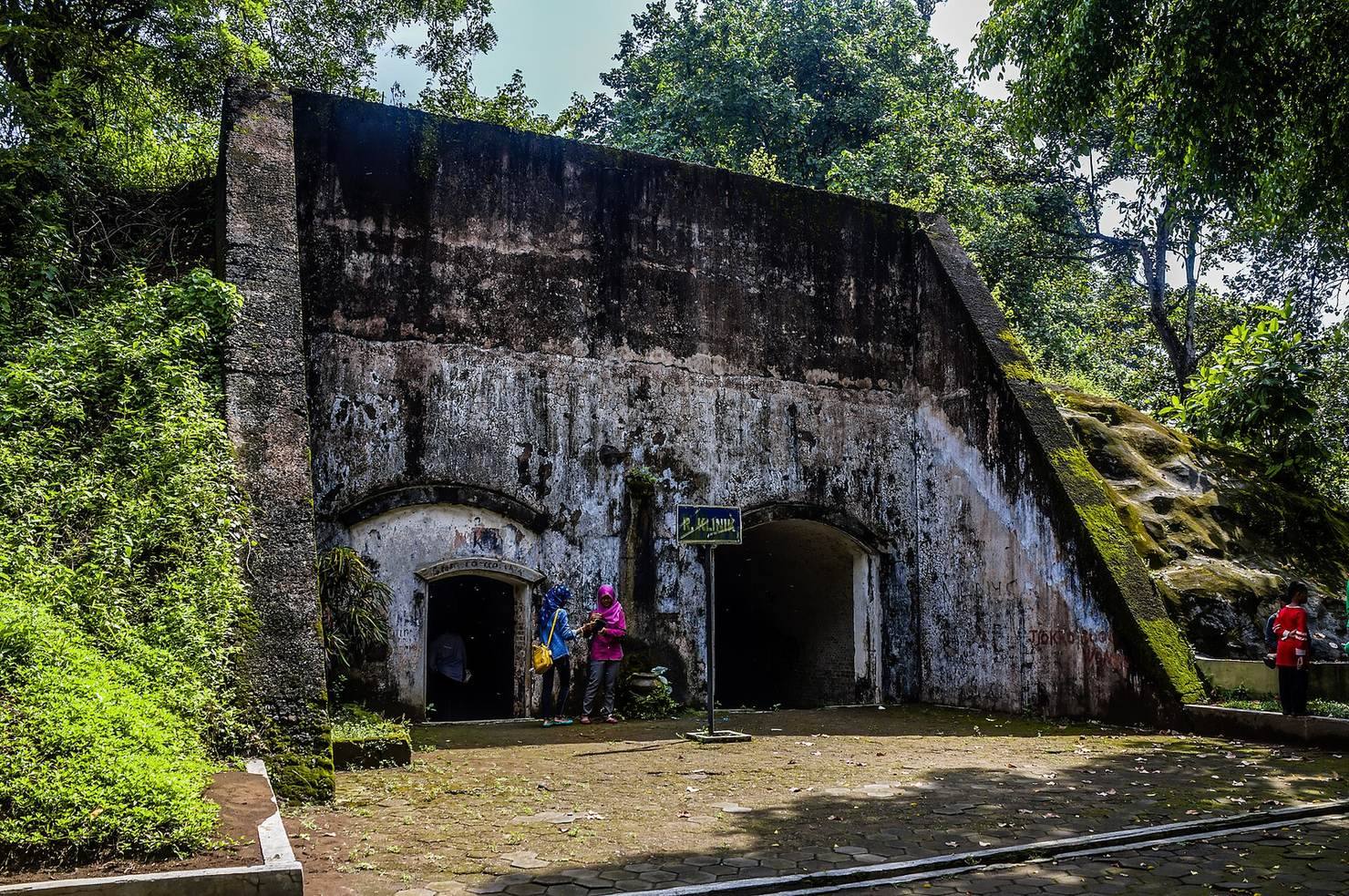
The buildings share an architectural style and are constructed of brick covered with plaster, with 1–3 metres of earth above them. From a distance, the earth-covered structures resemble mounds, a feature reflected in the popular name “Buried Fort.” Many are in poor condition, particularly because of exposure to seawater and moisture.
Prison
The complex includes a prison building, part of the fort’s range of internal structures.
Ammunition store
A two-storey ammunition store forms one of the site’s named buildings.
Barracks and service rooms
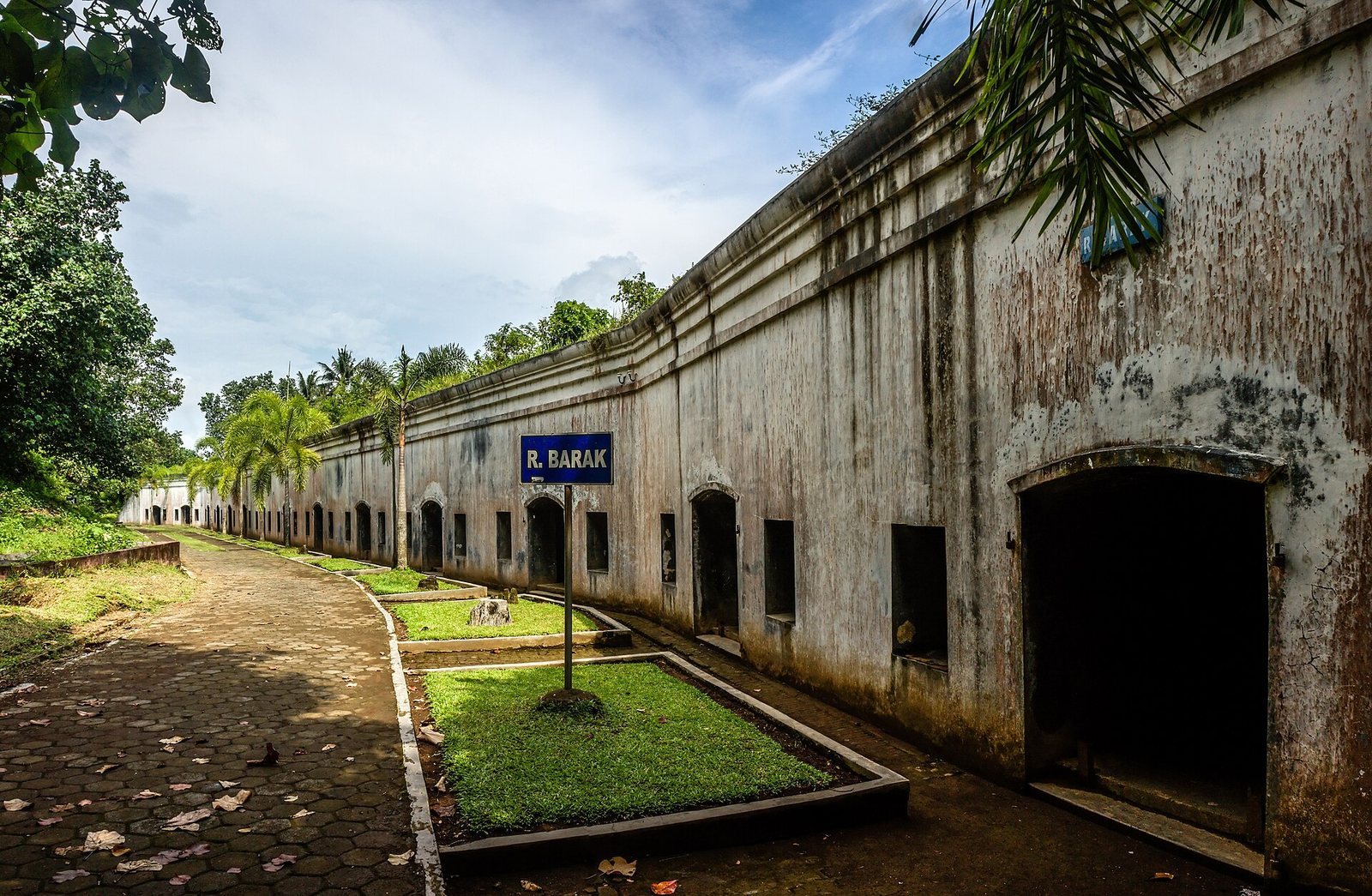
The barracks building contains fourteen chambers. Other identified spaces include a clinic, a meeting room, observation and defensive areas, weapons and powder stores, a kitchen, an officers’ room, and an ammunition room.
Tunnel
A 113-metre tunnel has four entrances. A tunnel beneath the sea to Nusa Kambangan is thought to remain buried, while proposed connections between the fort, other forts, and caves on the island remain unverified.
Japanese-period bunkers
Four bunkers added during the Japanese occupation stood on the upper part of the fort. They were built of concrete with iron frameworks.
Bullet Monument
The monument at the main gate commemorates the Regiment of Army Commandos’ use of the fort as a base. The unit trained there from 1956 to 1962.