Utsunomiya Castle: A Clan Stronghold and Edo-Period Administrative Center
Site at a Glance
- Country
- Japan
- Primary era
- Early Modern
- Eras represented
- Medieval, Early Modern
- Civilizations
- Tokugawa
- Site type
- Military
- Remains
- Castle
On this page15 sections
History
Utsunomiya Castle, also known as Kamegaoka Castle, is a Japanese castle in Utsunomiya, Japan, whose foundation is traditionally placed around 1063, in the late Heian period. It served as the Utsunomiya clan’s residence and base for controlling northern Kantō for about five centuries, from the Kamakura period through the Azuchi-Momoyama period. Later, it became a domain administrative center and lodging place for Tokugawa shoguns, Japan’s military rulers, traveling to Nikkō Tōshō-gū.
Clan rule and Sengoku conflict
The castle’s beginnings are attributed either to the Heian-period warrior Fujiwara Hidesato or to Fujiwara Sōen. Sōen established a residence south of Utsunomiya Futarayama Shrine and accompanied Minamoto no Yoriyoshi and Minamoto no Yoshiie during the Former Nine Years’ War. In return for his service, he received the chief priest’s position at the shrine-temple complex and control of territory around the Kinu River basin. He is regarded as the founder of the Utsunomiya clan. Clan members later held provincial-governor and military-governor offices, and the family belonged to the Kantō Eight Houses, a grouping of powerful warrior families in the region.
During the Sengoku period, the castle was drawn into conflict within the clan. Its 17th head, Utsunomiya Naritsuna, had senior retainer Haga Takakatsu killed as he sought to consolidate power. The castle also endured repeated assaults by the Odawara Hōjō and forces connected with the Mibu and Minagawa clans, and was temporarily occupied.
Toyotomi and early Edo transitions
After Toyotomi Hideyoshi’s campaign against the Hōjō, the castle hosted the political settlement known as the Utsunomiya disposition. Lords from northern Japan came there to meet Hideyoshi. During the Hōjō threat, the Utsunomiya clan had shifted its base to Tageyama Castle. Hideyoshi confirmed the clan’s holdings and ordered it to return to Utsunomiya, but dispossessed it in 1597. Gamō Hideyuki took control the following year and developed commercial districts in the castle town.
In late 1601, after the Battle of Sekigahara, Okudaira Iemasa became lord and worked to restore the town’s functions. Among his efforts was the rebuilding of Kōzenji, a temple associated with the Utsunomiya clan, across the Tagawa River.
Edo rule and shogunal use
Honda Masazumi became lord in 1619 and undertook major changes to the castle and town. He reorganized the town for defense, improved the Nikkō and Ōshū highways, and moved temples and shrines from within the castle to sites along the roads. Facilities for travelers and for the shogun’s journey to Nikkō were also developed. Masazumi had a palace built in the castle’s main enclosure for shogunal stays. Tokugawa rulers used Utsunomiya as lodging when traveling to Nikkō Tōshō-gū, the shrine dedicated to Tokugawa Ieyasu. Utsunomiya was counted among the Kantō region’s seven major castles.
In 1622, rumors that Masazumi was plotting against the shogun led to his removal and exile. The accusation, in the episode known as the Utsunomiya Ceiling Incident, was that he planned to kill Tokugawa Hidetada, the second shogun, with a falling ceiling in the shogunal guest quarters. The charges were politically motivated. Kamehime, a daughter of Ieyasu, was said to have alerted Hidetada; her grandson Okudaira Tadamasu later became lord.
The Ninomaru Palace burned in 1683. The Okudaira family ruled from 1622 to 1668, followed by the Okudaira-Matsudaira from 1668 to 1681 and the Honda from 1681 to 1685. The Okudaira returned from 1685 to 1697, then gave way to the Abe from 1697 to 1710, the Toda from 1710 to 1749, and the Fukōzu-Matsudaira from 1749 to 1774. The Toda governed again from 1774 until 1871, continuing into the late Edo period.
War, garrison, and public park
During the Boshin War, the 1868–1869 conflict between supporters of the Tokugawa shogunate and the new imperial government, Utsunomiya Domain backed the imperial cause. Pro-Tokugawa forces led by Ōtori Keisuke captured the castle, but new-government troops recaptured it and returned it to the domain authorities. The fighting destroyed most castle buildings, much of the town, and many temples. More than 2,000 of the town’s roughly 3,000 households were lost, and 48 temples were partly or wholly burned. The domain school Shūdōkan survived.
After the recapture, the castle became a base for the eastern government army’s campaign against Aizu. Itagaki Taisuke and other army leaders were stationed there, while Utsunomiya troops fought in Shimotsuke, Shirakawa, and Aizu. Administrative offices also occupied the grounds, including a regional pacification office transferred from Koga in 1868 and the Moka prefectural governor’s office in 1871. An army garrison took over in 1871; its unit moved to Sakura in 1884. The grounds were sold to private owners in 1890, after which the central area became a public park.
Postwar urban-reconstruction plans cleared and redeveloped the grounds. Moats remained into the postwar period, including a large one near the present Tōbu Utsunomiya department store, but were filled by 1972, partly for sanitary reasons. Some had been used for carp farming and lotus cultivation. Archaeological investigations took place in 1989, 1995, and 1999. The former castle park was renamed Utsunomiya Castle Ruins Park in 2002, and a partial exterior reconstruction was completed in 2007.
Remains
Layout and surviving earthworks
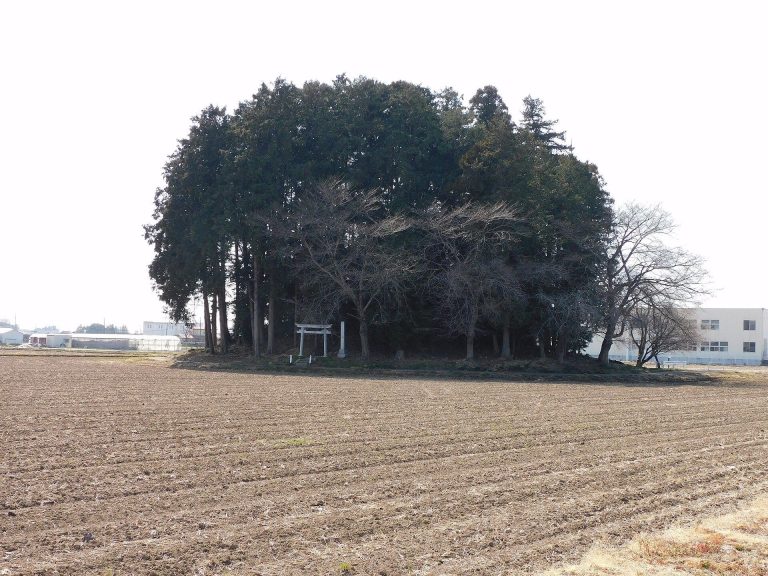
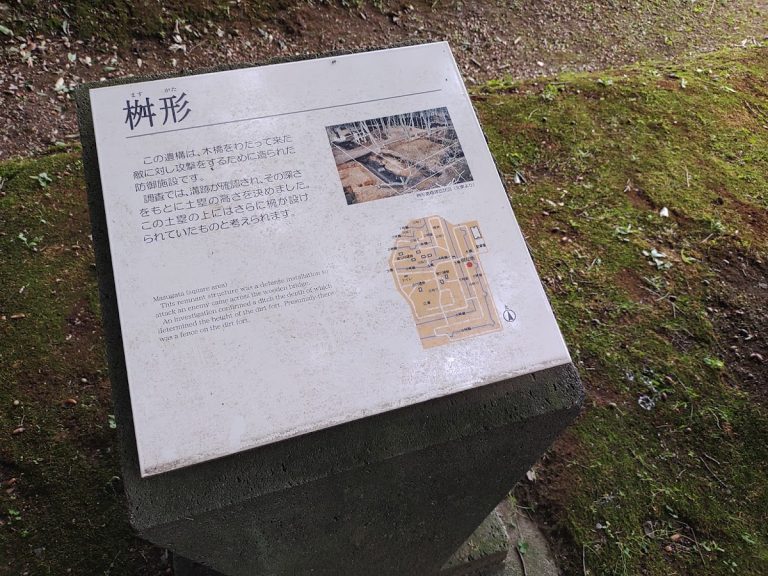
The castle occupied a small hill south of Utsunomiya Futarayama Shrine, near the junction of the Ōshū and Nikkō highways. It was a flatland castle with enclosures arranged in both concentric and stepped tiers. During its Sengoku-period expansion, the fortified area extended more than four kilometers across, with successive moats and high earthen ramparts, defensive banks of packed soil. Part of the main bailey, the castle’s principal enclosed area, survives as an earthen rampart, along with stone walls. A large ginkgo stands in its original position on the rampart of the former third bailey.
Reconstructed main-bailey features
Rampart and moat
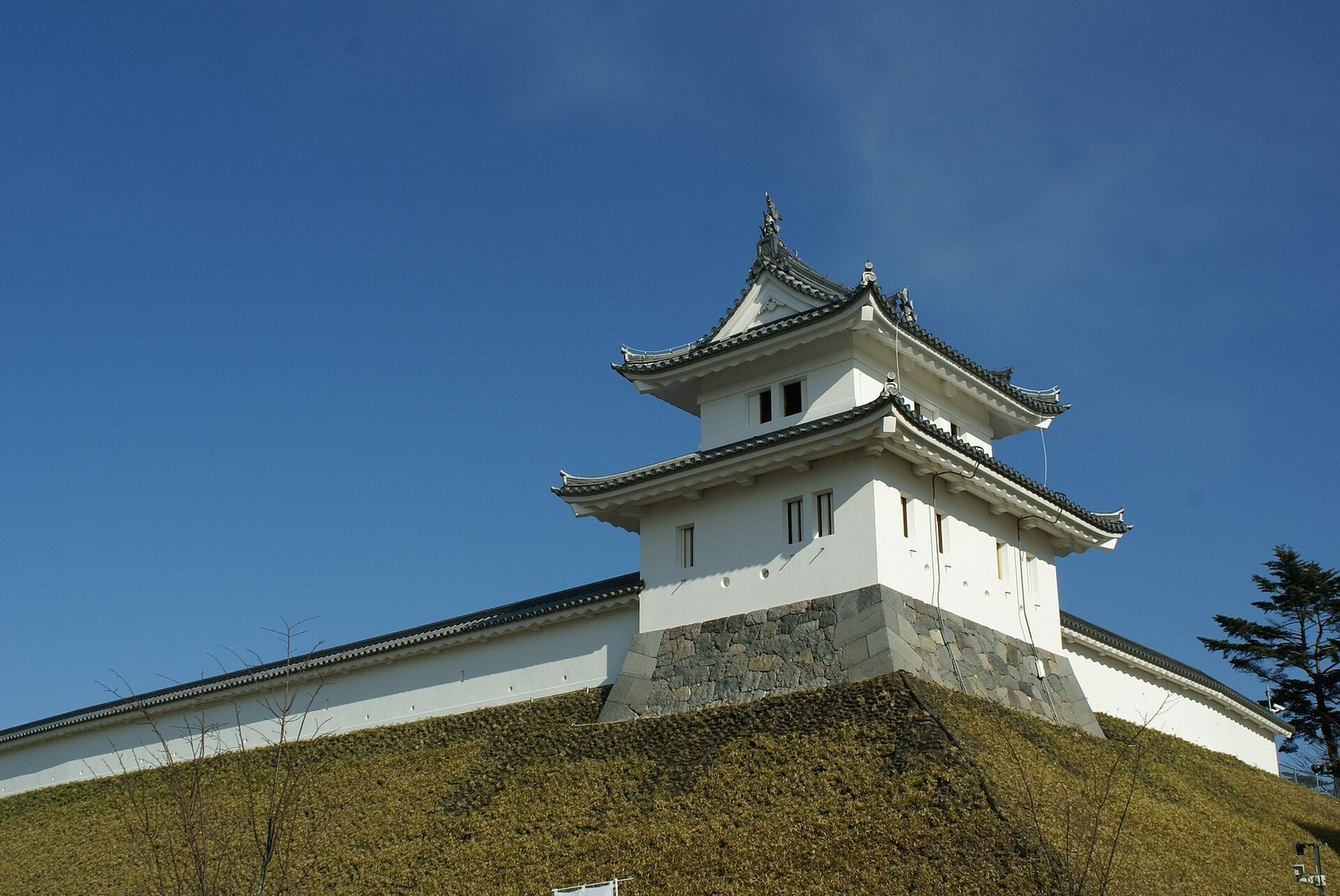
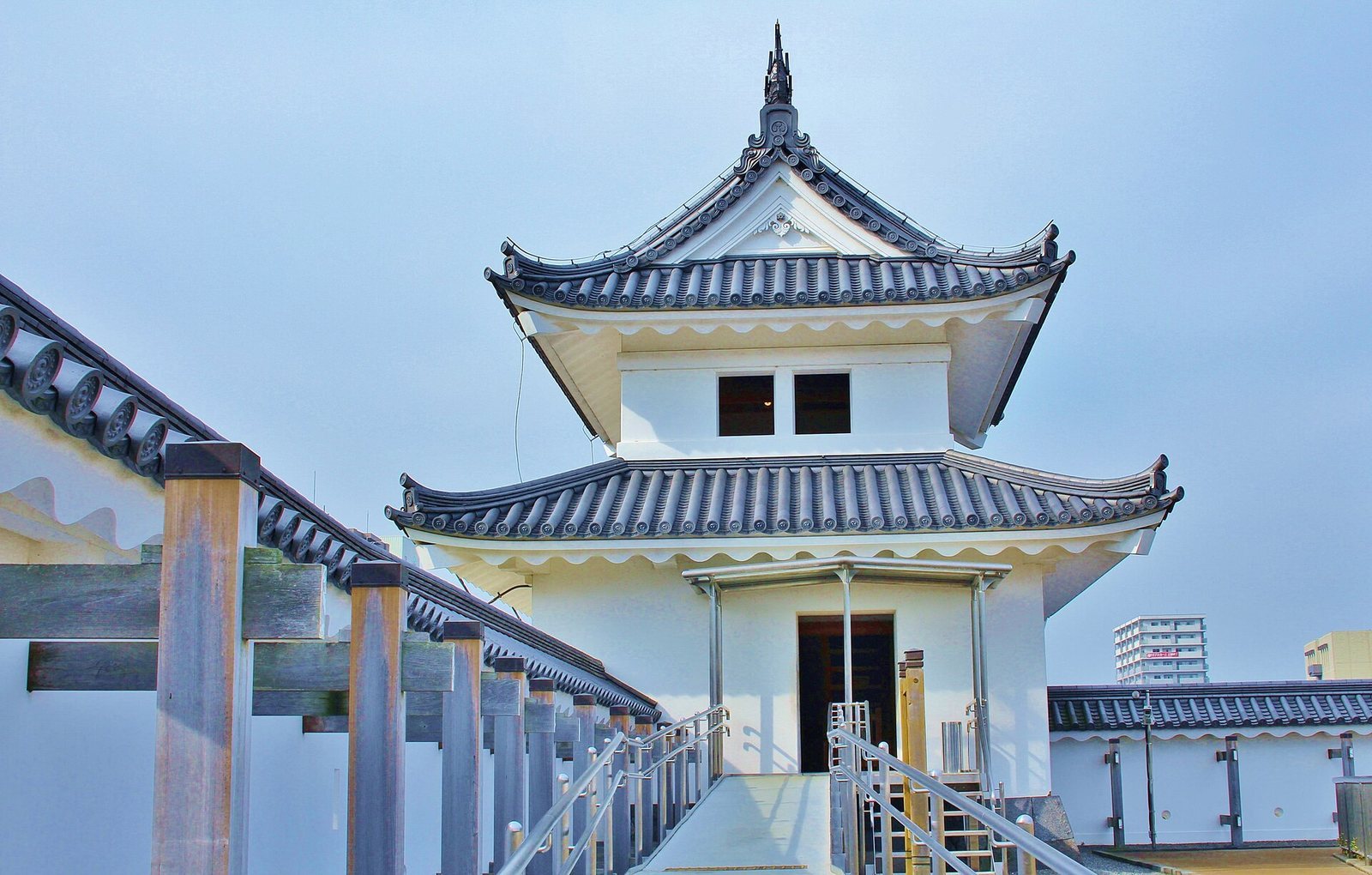
Parts of the main-bailey rampart and moat have been reconstructed. The rampart’s structural core is reinforced concrete. Reconstructed turrets and walls use timber framing and white-plastered exterior finishes, while the turrets have traditional tile roofs. Most of the timber is locally sourced cypress, cedar, and pine; posts and beams in the earthen walls use Aomori hiba. Displays about the castle are installed inside the rampart.
Seimeidai and Fujimi
The Seimeidai is a two-tiered, two-story turret, a tower used for defense or storage, designed to serve in place of the castle’s principal tower. Its steep stairs and narrow treads follow the historical form. The Fujimi turret is also part of the reconstructed group.
Main-bailey ground
The main-bailey ground is laid out as grass and forms part of a disaster-prevention park.
Gates associated with the castle
Shakujōji gate
A gate now at Shakujōji temple in Kawaguchi, Saitama, is believed to have been dismantled from Utsunomiya Castle and reassembled at the temple in 1908.
Banshōji gate
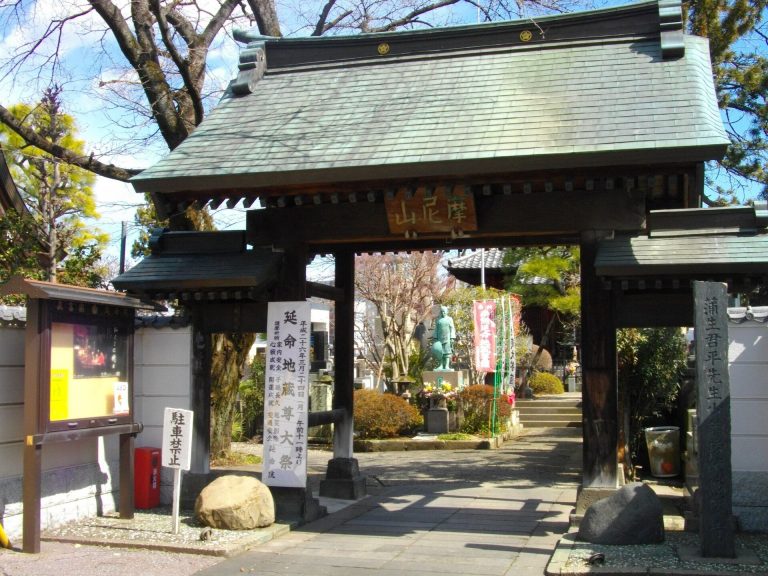
A gate at Banshōji temple in Utsunomiya is believed to have been moved from the castle to Seikōji during the Meiji period, then transferred to Banshōji. Its former thatched roof has been replaced with a tiled roof.
Imakōji Gate
Imakōji Gate is said to have been moved to a private residence in Utsunomiya when the castle grounds were sold in the Meiji period.