Hejdeby Church: A Medieval Parish Church on Gotland
Site at a Glance
- Country
- Sweden
- Primary era
- Medieval
- Eras represented
- Medieval, Early Modern, Modern
- Civilizations
- Unclassified
- Site type
- Religious
- Remains
- Church
On this page12 sections
History
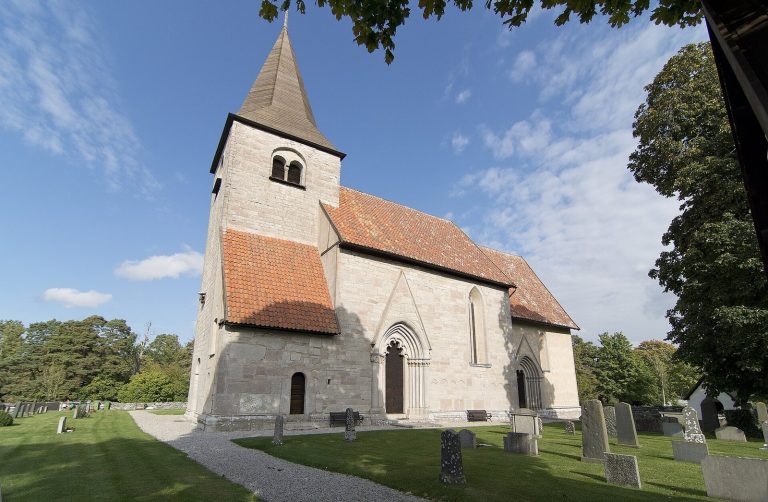
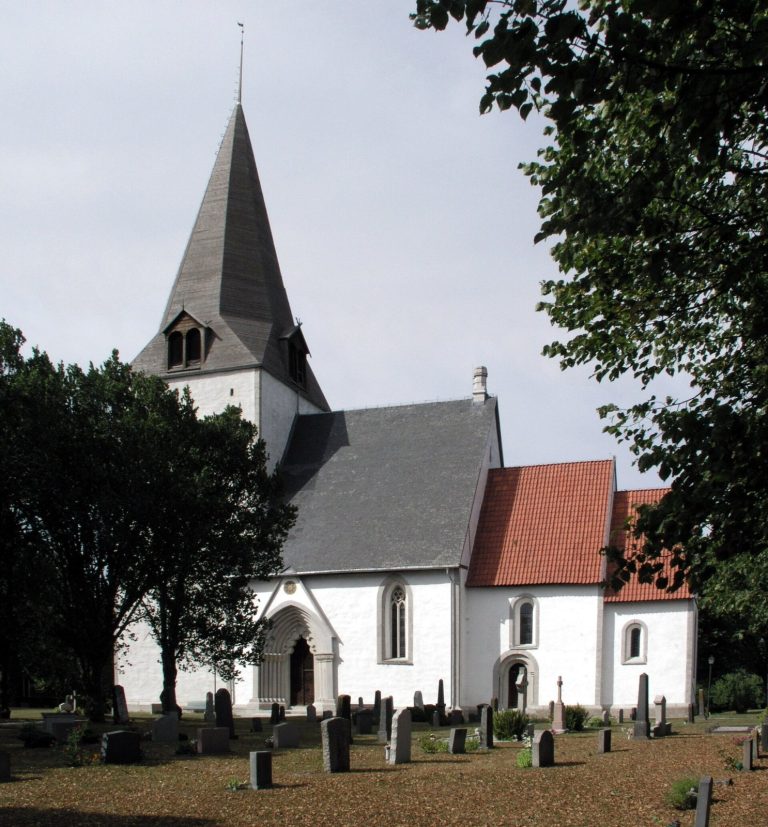
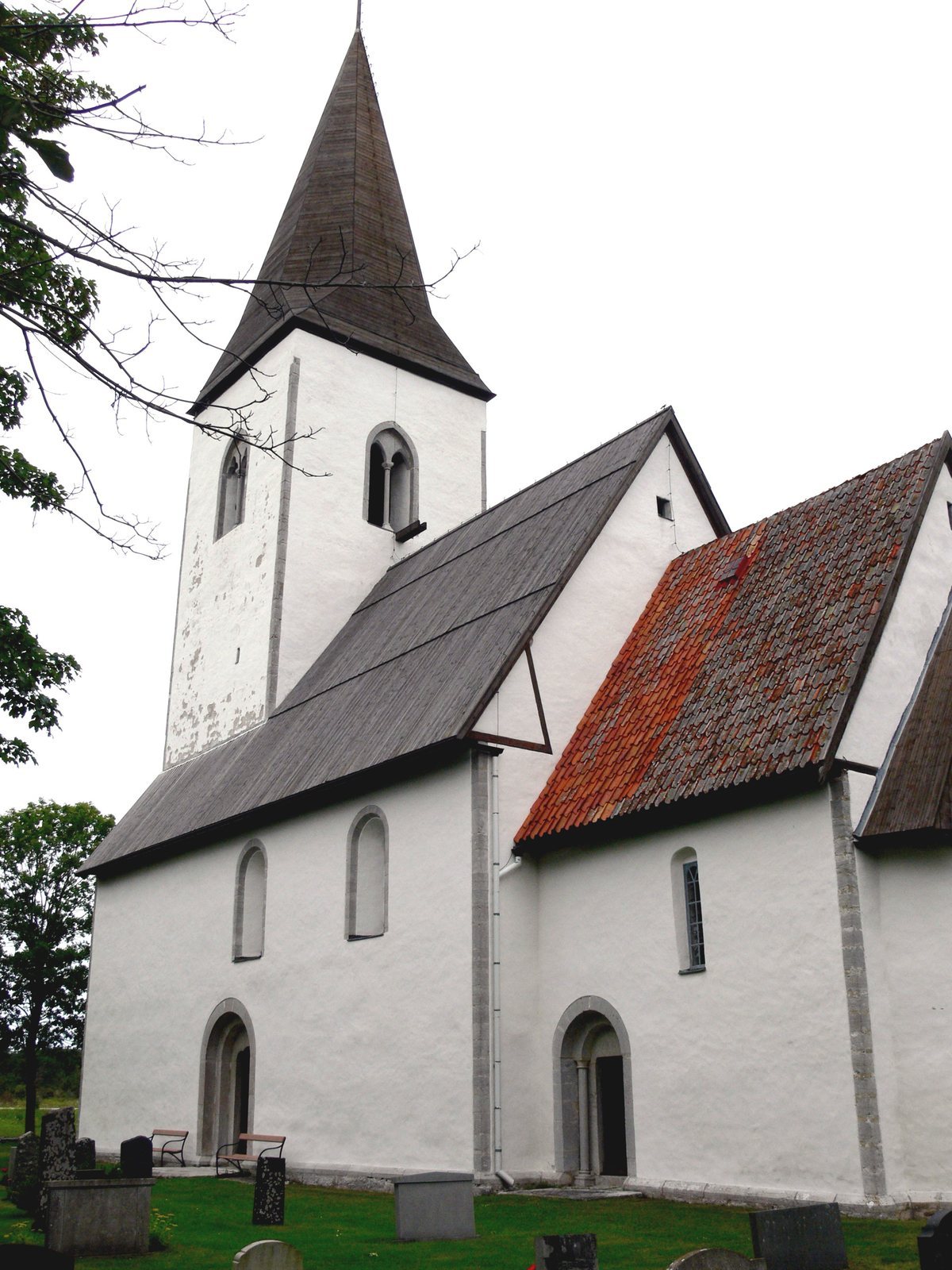
Hejdeby Church is a medieval parish church in Hejdeby, on the island of Gotland, Sweden. Consecrated around 1200, it is one of Gotland’s 92 medieval churches. Its architecture combines Romanesque forms, known for rounded shapes, with early Gothic influence, associated with pointed forms and vertical emphasis. The church belongs to the Church of Sweden, an Evangelical Lutheran church, and serves Hejdeby Parish, a local congregation within the Diocese of Visby, a regional church jurisdiction.
Restoration and later changes
A restoration carried out from 1966 to 1971 followed proposals by Professor Erik Lundberg and architect Per-Erik Nilsson. Work uncovered medieval paintings beneath plaster. Removing the 1745 altarpiece revealed the choir, and painted drapery behind the pulpit was also taken away.
The church’s present organ was brought from Ardre Church in 1995. It followed the use of a harmonium and then an electric organ.
Remains
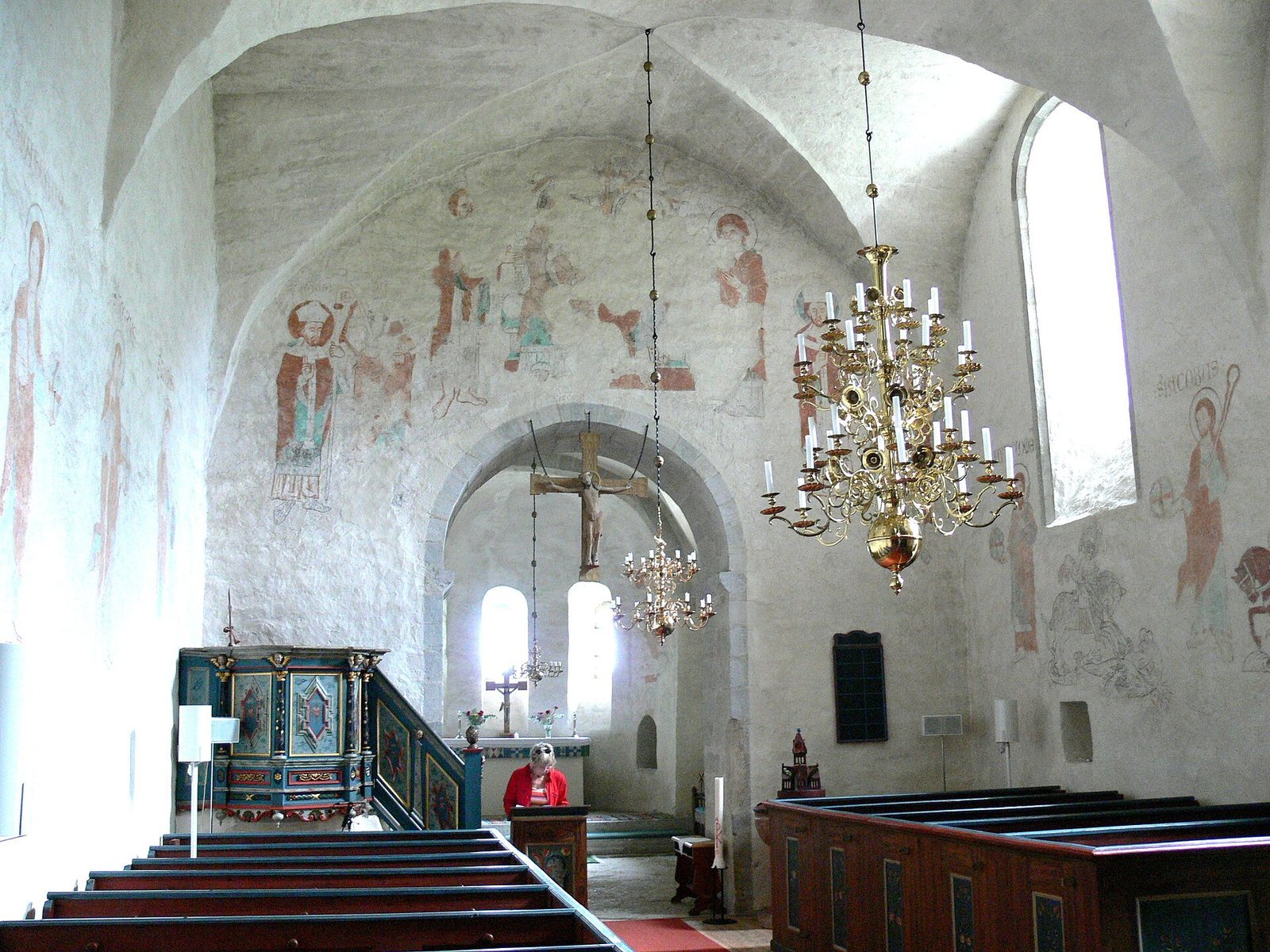
Built of limestone, the church is arranged around a rounded choir, a nave and a tower. Its parts were constructed in stages, and the building contains medieval paintings alongside later furnishings.
Building and wall paintings
Church structure
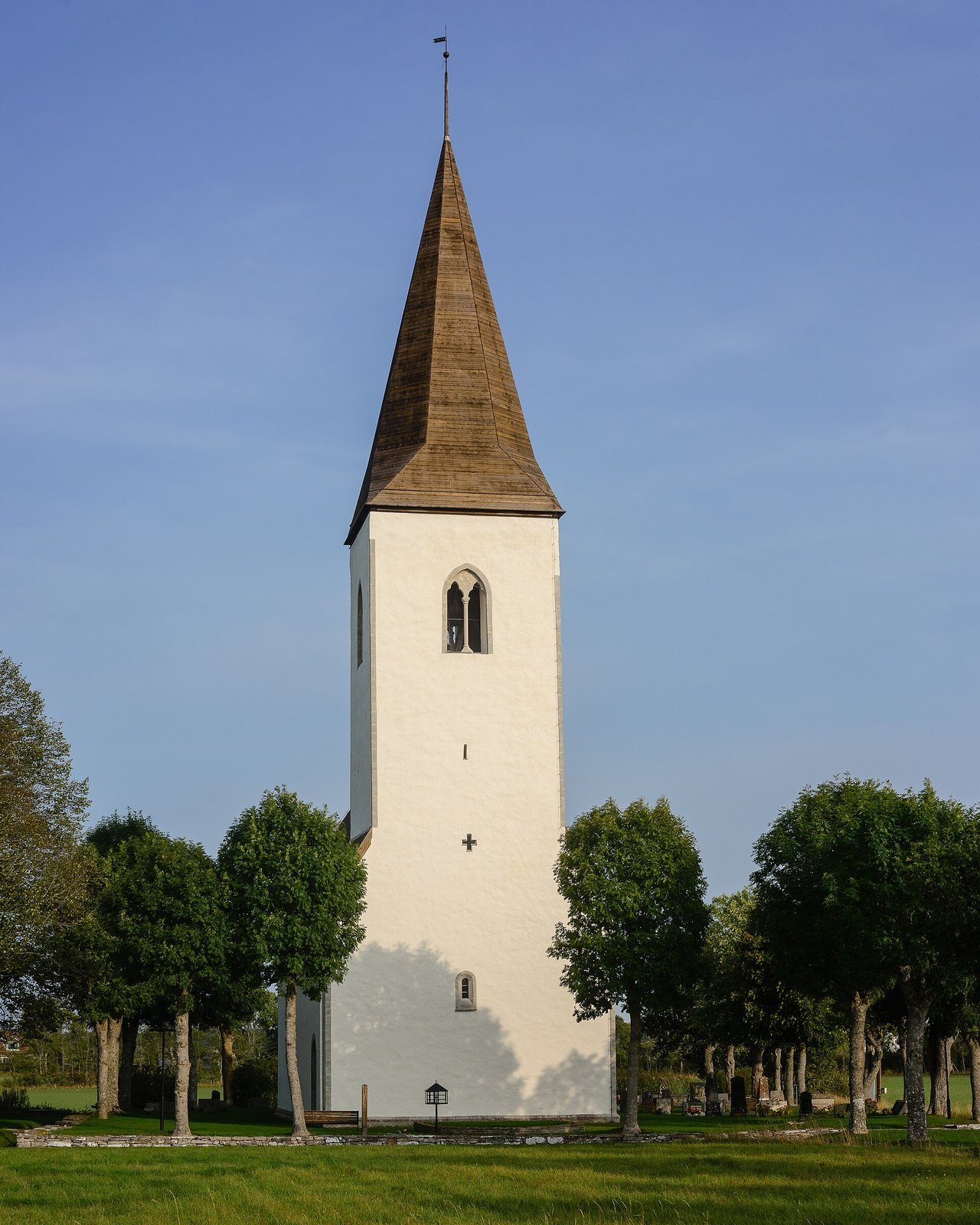
The choir, the oldest part of the church, was built in the early 13th century. The Romanesque nave, with its rounded forms, followed somewhat later, and the tower was built around the middle of the century. The tower shows early Gothic influence.
Medieval paintings
Murals from the 13th and 15th centuries decorate the church. Among the earlier paintings, apostles carry crosses associated with the church’s consecration, while the Crowning of Mary above the arch between nave and choir depicts Jesus’s mother crowned in heaven. Other 13th-century images show Martin of Tours, a fourth-century bishop; Nicholas, traditionally a bishop of Myra; Lawrence, a Christian deacon and martyr; Catherine of Alexandria, a traditionally venerated martyr; and John the Baptist, the preacher who baptized Jesus. Later paintings include scenes of the Passion of Christ, meaning Jesus’s suffering and death. A 15th-century image of St Martin, attributed to the Passion Master, an art-historical name for an unidentified medieval artist, is flanked by 13th-century apostles.
Furnishings and sculpture
Font and triumphal cross
An early 13th-century triumphal cross, a crucifix traditionally placed at or near the arch between nave and choir, belongs to the church’s medieval furnishings. The limestone baptismal font, a basin used for Christian baptism, dates from the 1250s. It has a scallop-cup form and a richly carved wooden lid.
Altarpiece and pulpit
A carved altarpiece showing the Crucifixion was made in 1745 and formerly stood in the choir. The pulpit was donated in 1766 by Abraham Lange, mayor of Visby, and painted in 1793. Some of its boards came from a pulpit made in 1593, and an hourglass was donated to it in 1770.
Benches and organ loft
One 13th-century wooden bench was assembled from ring-turned staves, turned wooden pieces joined in rings. Another bench of the same century was reused as the parapet, or low protective barrier, of the organ loft. Paintings on the benches gave the church the alternative name “Church of Roses.” The pew fittings date from 1734.
Organ
The organ was built by Åkerman & Lund Organ Builders in 1900. Its façade is Neo-Gothic, a later revival of Gothic design.
Sculptures now in the Gotland Museum
Several sculptures that came from Hejdeby Church are now in the Gotland Museum in Visby. They include a late-12th-century image of Mary, the mother of Jesus; an apostle figure, probably St Peter, made around 1325 in the Fabulator’s workshop or under its influence, with that name referring to an unidentified workshop; and a bishop figure, probably St Nicholas, made around 1310 by the Bunge Master, an art-historical name for an unidentified artist. A seated sculpture of St Olaf, a Norwegian king later venerated as a Christian saint, dates from around 1370 to 1410 and is associated with the artistic circle of the Gammelgarn altarpiece.